


Conversational CRM Intelligence: Natural Language Processing for Customer Intent Recognition

Your customer service team just fielded a message: "My account isn't working right." Simple enough, except it's not. Does the customer want a password reset? Are they reporting a technical bug? Looking for a refund? Before, your team would spend time asking follow-up questions, clicking through customer histories, and hoping they got it right. Now, there's a better way.
Natural language processing in CRM systems can analyze customer interactions to understand intent, sentiment, and context in real time. The technology reads between the lines of what customers are actually saying and figures out what they need before anyone wastes time guessing.
Here’s what you need to know…
When Machines Finally Get What We're Saying

Remember when voice assistants first came out? You'd ask for the weather and somehow end up with a recipe for waffles. Early chatbots weren't much better. They'd loop you through the same menu options until you gave up and called a human.
Intent recognition uses machine learning and natural language processing to connect what customers say with what they actually want to accomplish. The difference between old systems and new ones comes down to understanding. Old chatbots matched keywords. New systems understand meaning.
When someone types "I can't log in," the system knows they might have forgotten their password, or their account could be locked, or maybe there's a technical issue on your end. Modern systems can have natural, flowing conversations without robotic prompts, dynamically planning the discussion without pre-programmed paths. They ask the right follow-up questions and get to the answer faster.
What Your CRM Actually Learns From Conversations

Most companies are sitting on mountains of customer conversations. Email threads, chat logs, support tickets, phone transcripts. It's all just sitting there. Conversational intelligence software uses AI to analyze these human-to-human interactions and collect data from speech and text.
Here's what happens behind the scenes. A customer sends a message. The system breaks down the text, analyzes the words in context, checks the customer's history, and identifies patterns. Is this person frustrated? Are they asking about a feature or reporting a problem? Have they contacted support before about something similar?
The system analyzes customer messages whether they're chats, emails, or calls and determines exactly what the customer wants from the interaction. Your support team gets this information instantly, before they even start typing a response. No more playing detective.
Five Ways Intent Recognition Changes How Support Teams Work
1. Faster responses without the guessing game
When you recognize customer needs instantly, you can provide solutions without frustrating back-and-forth exchanges. Customers explain their issue once. The system understands it. Your team solves it. Nobody repeats themselves five times.
2. Routing that actually makes sense
Not every question needs the same level of expertise. Intent classification ensures queries go to appropriate agents or automated responses that can resolve them efficiently. Simple password resets go to self-service. Complex technical issues go straight to specialists. Your senior agents stop wasting time on basic questions.
{{cta-banner}}
3. Personalization that doesn't feel creepy
Systems can tailor suggestions and recommendations based on the quality of a customer's prior engagement and interaction. Someone who's been a customer for years gets different treatment than someone on their first day. The system knows the difference and adjusts accordingly.
4. Catching problems before they explode
Understanding patterns in customer intent helps businesses identify recurring issues, leading to improvements in product design or support processes. When fifty customers ask about the same confusing feature, that's not fifty separate problems. That's one design flaw you can fix.
5. Support agents who can actually focus on helping
NLP collects, centralizes, and delivers the right customer information to the right people, eliminating the need for customers to repeat their problems. Agents spend less time gathering information and more time solving actual problems. That's what they signed up for anyway.
The Technical Stuff Without the Technical Headache

You don't need a computer science degree to understand how this works. The process starts with data collection from emails, video calls, and chat transcripts, followed by preprocessing to clean and prepare the information. It’s like organizing a messy filing cabinet before you can actually find anything useful.
Natural language understanding techniques extract meaning and context from conversational data through voice recognition, sentiment analysis, intent detection, and topic modeling. The system figures out what words mean in context, picks up on emotional cues, and identifies the core issue.
Modern NLP systems can differentiate between similar phrases that require completely different responses by understanding context and nuance. "I need to return this order" and "When will my order return to stock?" both use the word "return," but they're not asking the same thing. The system knows that.
What This Means For iGaming and Online Casino Platforms

Customer interactions in iGaming move fast. Players contact support about bonuses, payment processing, game features, and account verification. Often at 2 AM. Often when they're frustrated. NLP enables CRM platforms to analyze customer feedback and sentiment across various channels, understanding emotions, opinions, and intent from text.
Someone messages: "Where's my withdrawal?" The system instantly knows this is a payment inquiry, checks if there's a pending transaction, reviews verification status, and provides the agent with everything they need to answer in one message. No back-and-forth about which payment method or when they submitted the request.
The same tech handles bonus inquiries, game technical issues, and account questions. Each one gets routed to the right team with the right context. Players get answers faster. Support teams handle more inquiries without burning out. Everyone wins.
When Automation Helps Instead of Frustrating

The goal isn't to replace human support teams. AI-based chatbots with NLP capabilities can handle a wide range of customer queries, provide product information, and assist with problem-solving, communicating with customers in natural language. Simple questions get instant answers. Complex problems go to humans who have the full context.
Systems can provide natural, dynamic conversations that reduce the chance of escalation by narrowing down the customer's reason for calling and identifying the best solution. When automation works right, customers don't even realize they're talking to a bot until the conversation's over. And when they do need a human, that human already knows what's going on.
The Privacy Question Nobody Wants to Ask

Here's the uncomfortable part. These systems analyze every customer conversation. They learn from interactions. They store information. NLP can detect and mask identifying information like account numbers and birthdates to protect customer privacy in recorded conversations.
The technology exists to protect sensitive data even while learning from it. But you need to actually use it. Security and privacy can't be afterthoughts when you're processing thousands of customer conversations daily. Build it in from the start or deal with the consequences later.
Making the Technology Actually Work

Installing conversational intelligence software isn't like flipping a switch. AI-powered systems need proper configuration, custom intent labels, training data, business-specific routing rules, and confidence thresholds adjusted to risk levels. You need to teach the system what matters for your business.
Start with your most common customer questions. Train the system on those. Get it working well for basic issues before you tackle complex edge cases. The AI algorithm only needs to be trained once and improves continuously over time, outperforming standard keyword automation. You'll spend time on setup, but it pays off quickly.
Smartico.ai: Where Conversational Intelligence Meets CRM Automation
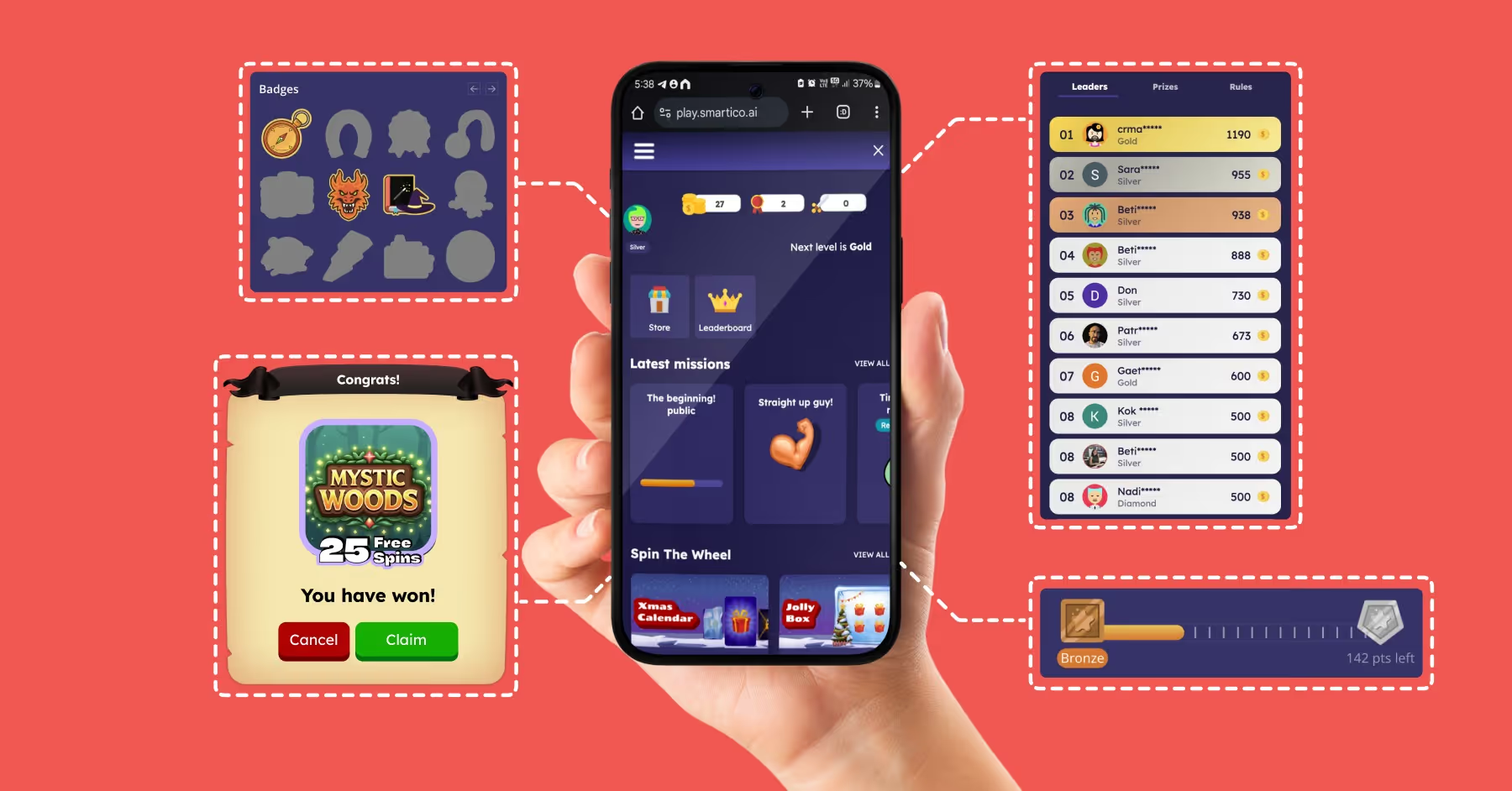
When you need all of this to work together in one system, Smartico.ai delivers. It's the first unified platform that combines Gamification with CRM Automation, and conversational intelligence is built into how it handles customer interactions.
Smartico does much more than merely recognize customer intent. It uses that information to trigger automated workflows, personalize player experiences, and give your team the insights they need to turn casual players into loyal customers. Everything from real-time communication analysis to automated response suggestions happens in one place.
For iGaming operators, that means understanding player behavior patterns, identifying churn risks before they happen, and delivering personalized bonus offers based on actual player intent rather than generic triggers. The system learns what works for your players specifically.
Want to see how conversational CRM intelligence actually performs with real player data? Book your free demo of Smartico.ai below and watch it analyze customer interactions in real time.
{{cta-banner}}
FAQ

- How accurate is intent recognition compared to human agents?
Modern systems achieve accuracy rates comparable to human interpretation for common queries. However, they excel at consistency across thousands of interactions where human attention might waver. The combination of AI intent recognition with human oversight typically outperforms either approach alone. - Can intent recognition work with languages other than English?
Yes. Advanced NLP systems support multiple languages and can even detect when customers mix languages in the same conversation. The accuracy varies by language, with more commonly spoken languages generally performing better due to larger training datasets. - What happens when the system misidentifies customer intent?
Most platforms include feedback mechanisms where agents can flag incorrect predictions. The system learns from these corrections and improves over time. Additionally, confidence thresholds can be set so that ambiguous requests automatically route to human agents rather than risk a wrong automated response. - How long does it take to implement conversational intelligence in an existing CRM?
Implementation timelines vary based on your existing infrastructure and customization needs, but basic functionality can often be operational within a few weeks. Full optimization including custom intent training and workflow integration typically takes two to three months. - Does this technology replace the need for human customer service agents?
No. Intent recognition augments human agents rather than replacing them. It handles routine inquiries automatically and provides agents with better context for complex issues. This allows human agents to focus on problems that genuinely require human judgment, creativity, and empathy. - What's the ROI of implementing NLP-based intent recognition?
Organizations typically see reduced response times, lower support costs through better routing and automation, and improved customer satisfaction scores. The specific ROI depends on your current support volume and costs, but many companies report the technology pays for itself within the first year through efficiency gains alone.
Conclusion
Customer service doesn't have to involve endless back-and-forth just to figure out what someone needs. Natural language processing and intent recognition give your team the ability to understand customers immediately, route inquiries correctly, and solve problems faster.
The technology exists. It works. And companies using it are already seeing better response times, happier customers, and support teams that can focus on actually helping people instead of playing detective. The question isn't whether conversational CRM intelligence is worth it. The question is how much longer you want to waste time guessing what your customers mean.