


Edge Computing Revolution: How Real-Time Processing is Transforming Live Casino Gaming

The world of live casino gaming just got faster. Way faster.
While most online casinos still rely on distant servers that add precious milliseconds to every bet, spin, and card deal, a new technology is quietly revolutionizing the industry. Edge computing is moving game processing closer to players, and the results are nothing short of remarkable. Combined with widespread 5G rollouts, this shift toward real-time processing is creating gaming experiences that feel more like sitting at a physical casino table than ever before.
What Makes Edge Computing Different

Think about the traditional setup for a moment. When you place a bet on a live blackjack game, your action travels hundreds or thousands of miles to a central server, gets processed, then travels all the way back to your device. That journey takes time – often 50 to 100 milliseconds or more. For most internet activities, that delay is barely noticeable. But in live casino gaming, where timing affects everything from dealer interactions to bonus rounds, those milliseconds matter.
Edge computing changes this fundamental equation. Instead of sending data across continents, game processing happens on servers located much closer to players – sometimes within 20 to 50 miles. The result is latency reduction of 65-80% compared to traditional cloud-only setups. Players experience response times that drop to just 10-40 milliseconds, creating interactions that feel instantaneous.
{{cta-banner}}
The technology works by distributing computing power across multiple edge locations rather than centralizing everything in a few massive data centers. When a player in London joins a live roulette game, their data gets processed at an edge server in or near London, not at a facility in another country. This proximity eliminates the delays that have long frustrated both players and operators.
5G: The Missing Piece of the Puzzle

The edge computing revolution in iGaming wouldn't be possible without another crucial development: the global rollout of 5G networks. Where 4G networks typically deliver latency in the 30-50 millisecond range, 5G brings that down to as low as 1 millisecond in ideal conditions.
For live casino gaming, this improvement is transformative. Players using 5G connections report latency measurements between 19-39 milliseconds, which approaches the responsiveness of wired broadband connections. This means mobile players no longer face the connectivity disadvantages that once made desktop gaming clearly superior.
The combination proves especially powerful for live dealer games. High-definition video streaming from casino studios requires substantial bandwidth, and even small delays can disrupt the flow of gameplay. With 5G's enhanced capabilities, operators can stream live dealer games in ultra-HD without interruption, creating more immersive and authentic experiences. Players see dealer actions and game results in real-time, with minimal lag between placing bets and seeing outcomes.
5G networks also support the massive device connectivity that modern iGaming platforms require. A single cell tower can handle millions of connected devices per square kilometer, ensuring stable performance even during peak gaming hours or major tournament events.
Real-Time Player Interactions Transform Gaming
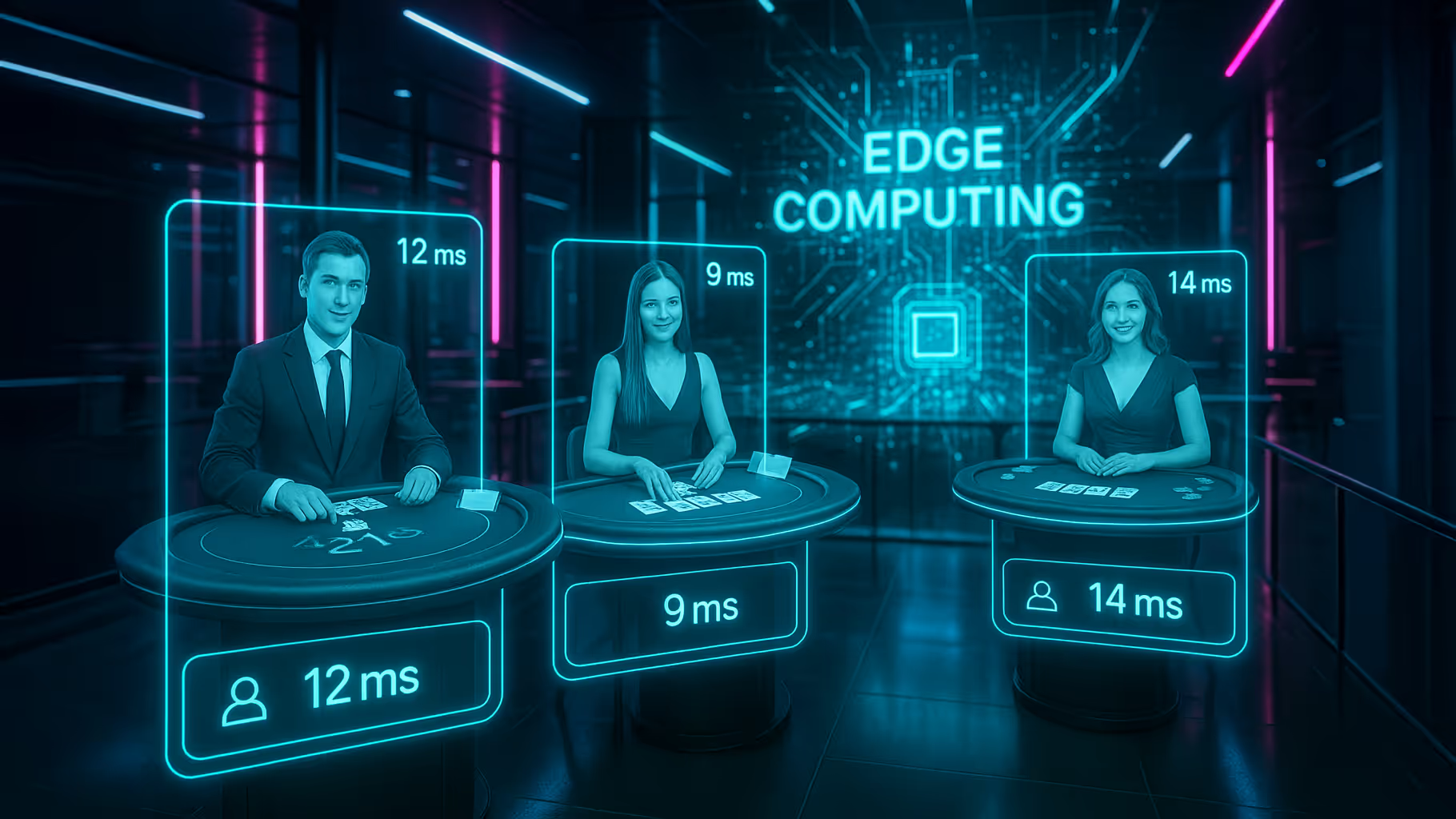
Edge computing enables a new category of player engagement that was impossible with traditional server setups. Real-time processing allows operators to respond to player actions within milliseconds, creating dynamic experiences that adapt instantly to user behavior.
Live casino games benefit tremendously from this capability. Players can interact with dealers through chat features with virtually no delay, making conversations feel natural rather than stilted by lag. Betting windows remain open longer because processing delays no longer eat into available time. Multi-player games synchronize perfectly, ensuring all participants see the same game state simultaneously.
The technology also enables sophisticated features like real-time personalization. Edge servers can analyze player behavior and adjust game recommendations, bonus offers, and interface elements without waiting for distant cloud servers to process the data. This creates experiences that feel tailored to individual preferences while maintaining the speed necessary for engaging gameplay.
Tournament and competition features become far more viable with edge computing. When latency drops to single-digit milliseconds, skill-based elements like timing challenges or reaction-based mini-games work properly. Players compete on equal footing regardless of their geographic location, since everyone enjoys similarly low latency to the edge servers.
CRM Systems Get an Edge Computing Upgrade
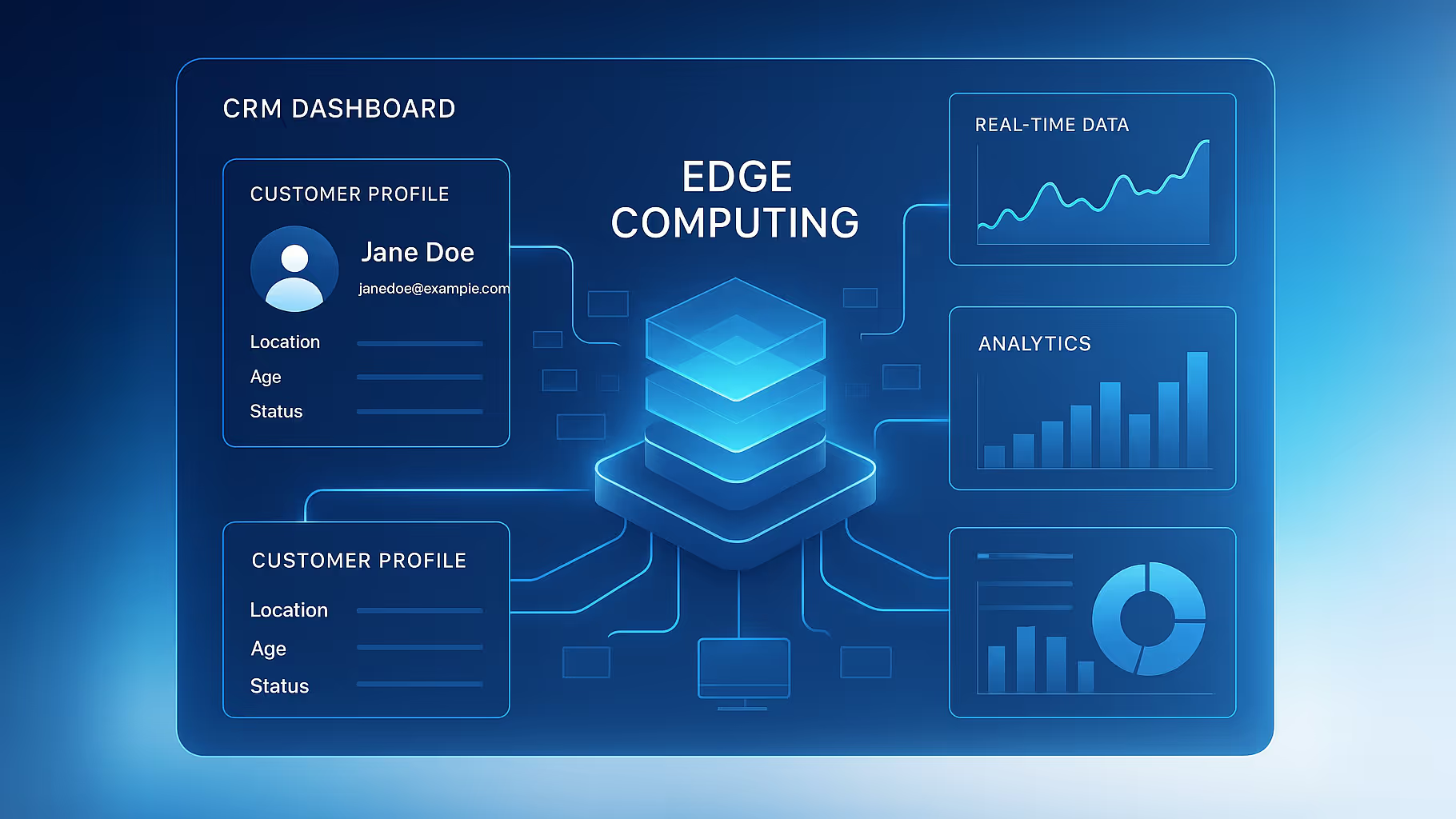
Customer relationship management takes on new dimensions when powered by edge computing. Traditional CRM systems update player information in batches, often with delays measured in minutes or hours. Edge-enhanced CRM systems process player data in real-time, creating opportunities for instant engagement and support.
Automated case management represents one of the most impactful applications. When edge systems detect unusual patterns in player behavior – such as extended losing streaks or rapid betting increases – they can automatically trigger appropriate responses within seconds rather than waiting for human intervention. This might include customized bonus offers, responsible gambling check-ins, or proactive customer support outreach.
Real-time notifications become far more effective with edge processing. Instead of generic promotional messages sent to all players, edge-enhanced CRM systems can deliver personalized communications based on immediate gameplay context. A player who just hit a significant win might receive offers for higher-stakes games, while someone experiencing losses might get encouragement messages or responsible gambling resources.
The data capture improvements are substantial as well. Traditional CRM systems often lose operational observations due to processing delays or network issues, with some setups missing 23% of player interactions. Edge-enhanced systems capture data locally before transmitting summaries to central servers, ensuring minimal data loss and more complete player profiles.
The Tech Behind the Magic
Several key technologies work together to make edge computing effective for live casino gaming. Game Control Units (GCUs) serve as the bridge between physical casino equipment and digital streams. These small devices encode video broadcasts and ensure smooth streaming services, allowing players to view dealer actions clearly in real-time.
Optical Character Recognition (OCR) technology captures every card deal, dice roll, and roulette spin, converting physical actions into digital data instantly. This transparency builds player trust while enabling features like automated game verification and statistical tracking.
High-definition live streaming technology forms the visual foundation, with many operators now offering 4K video quality from multiple camera angles. When combined with edge computing's reduced latency, players can follow game action from different perspectives without delays that break immersion.
Encoders compress high-definition video files for efficient transmission over networks. Edge computing allows these encoders to work closer to the source, reducing the bandwidth requirements for individual player connections while maintaining video quality.
Global Deployment Challenges and Solutions
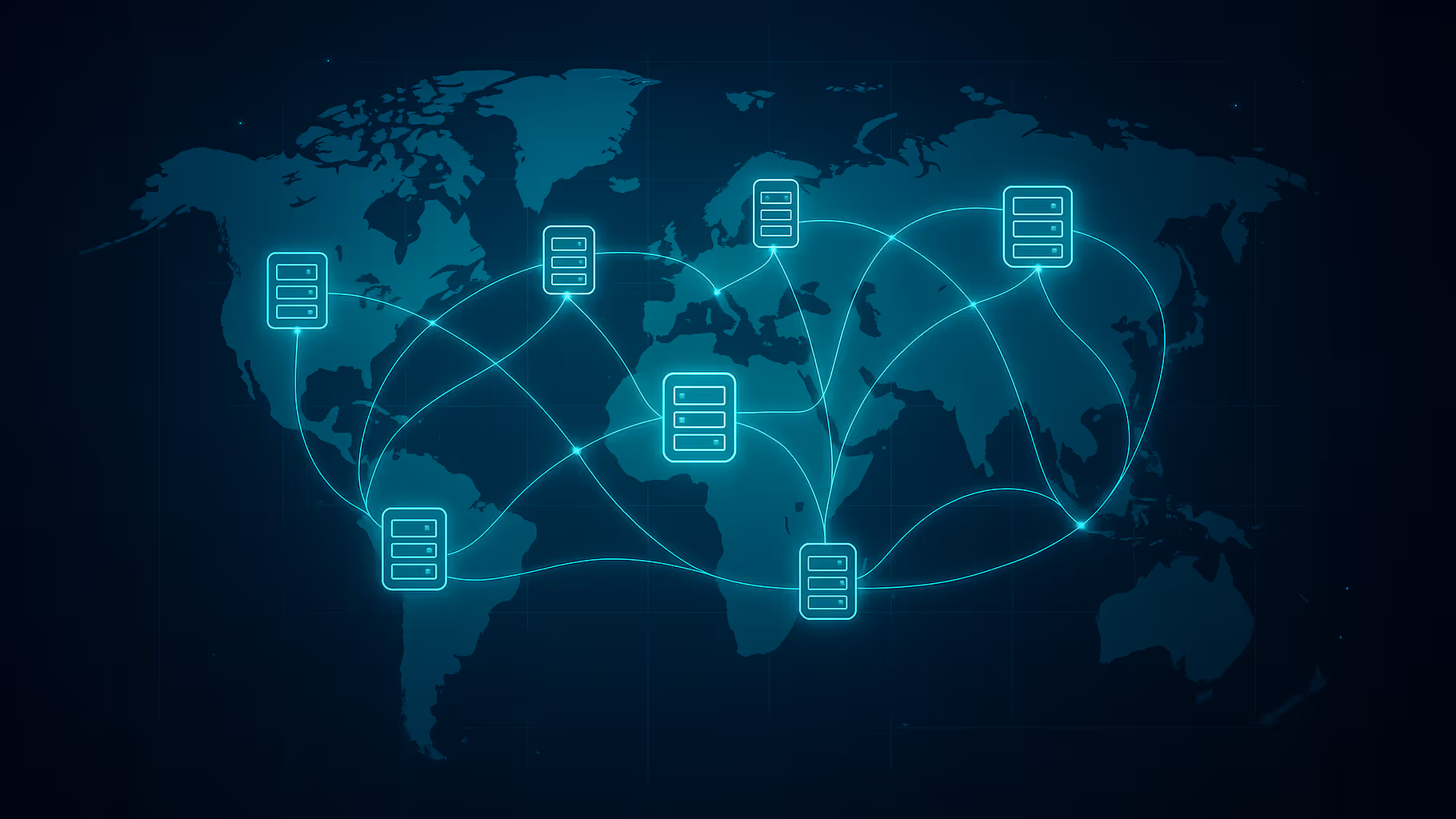
Implementing edge computing across global iGaming operations presents unique challenges. Different regions have varying network infrastructure, regulatory requirements, and player expectations. Edge computing addresses these issues by allowing localized processing that complies with regional regulations while maintaining consistent performance standards.
Multi-region architectures become essential for operators serving international markets. By deploying edge servers in strategic locations worldwide, gaming companies can deliver consistent experiences regardless of player location. This geographic distribution also provides redundancy – if one edge location experiences issues, traffic can route to alternative servers without significant performance degradation.
Network optimization techniques help maximize edge computing benefits. Software-defined networking (SDN) and network functions virtualization (NFV) allow operators to prioritize gaming traffic and ensure consistent performance for critical applications. These technologies work particularly well with edge deployments, since local processing reduces the complexity of managing data flows across long distances.
The Smartico.ai Advantage
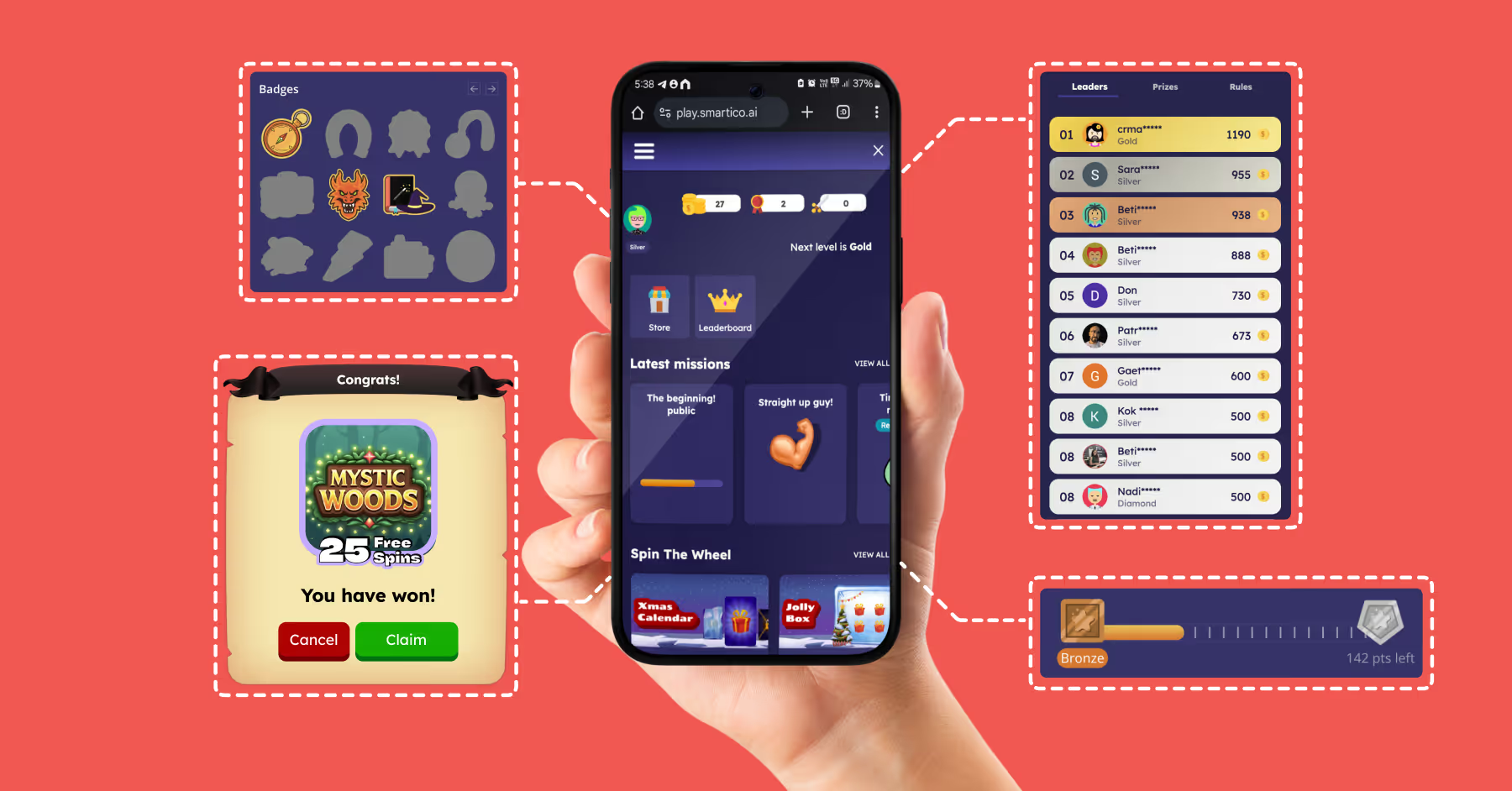
As a leading unified Gamification/CRM Automation software in the iGaming industry, Smartico.ai has developed comprehensive player engagement tools that leverage modern technology infrastructure. The platform combines AI-powered CRM automation with real-time gamification features, enabling operators to deliver personalized experiences with enhanced performance and responsiveness.
Smartico.ai's approach differs from traditional solutions by using advanced real-time processing capabilities to trigger instant gamification responses. When a player achieves a milestone or completes a challenge, rewards and recognition appear immediately rather than after processing delays. This real-time responsiveness significantly increases player engagement and satisfaction.
The platform's unified architecture means operators don't need separate systems for CRM and gamification management. Everything integrates through a single interface, simplifying operations while maximizing performance benefits. As technology infrastructure continues advancing globally, Smartico.ai's real-time approach positions operators to take full advantage of next-generation connectivity and processing capabilities.
Book your free in-depth demo below to find out how Smartico can help raise your business profits specifically.
{{cta-banner}}
The Road Ahead

Edge computing in live casino gaming is still in its early stages, but the trajectory is clear. As 5G networks achieve broader coverage and edge infrastructure costs continue declining, more operators will adopt these technologies. The competitive advantages – reduced latency, improved player engagement, enhanced CRM capabilities – are simply too significant to ignore.
Future developments will likely include more sophisticated AI processing at edge locations, enabling real-time game personalization and dynamic content adaptation. Blockchain integration for transparent game verification may also benefit from edge computing's reduced latency. As virtual and augmented reality features become more common in iGaming, edge processing will prove essential for maintaining the low latency these technologies require.
The transformation is already underway. Operators implementing edge computing report measurable improvements in player satisfaction, session duration, and overall engagement metrics. As the technology matures and becomes more accessible, it will likely become a standard requirement rather than a competitive differentiator.
Frequently Asked Questions
How does edge computing specifically improve live dealer games?
Edge computing reduces the delay between player actions and dealer responses by processing data closer to both parties. Instead of sending betting decisions to distant servers, edge computing handles these interactions locally, reducing latency from 50-100 milliseconds to 10-40 milliseconds. This creates more natural conversations and interactions with dealers.
What internet connection speed do players need to benefit from edge computing?
Players don't need exceptionally fast internet speeds to benefit from edge computing. The technology primarily reduces latency rather than requiring higher bandwidth. A stable connection of 10-25 Mbps is typically sufficient for high-quality live casino gaming with edge computing, compared to the 50+ Mbps often needed with traditional setups.
Can edge computing work with existing casino software platforms?
Most modern edge computing solutions integrate with existing casino platforms through APIs and standard protocols. However, operators may need to upgrade certain backend systems to take full advantage of edge computing benefits. The integration complexity varies depending on the current technology stack.
How does edge computing affect game fairness and regulation compliance?
Edge computing maintains the same fairness standards as traditional setups while actually improving audit capabilities. Local processing creates more detailed logs of game events, and real-time monitoring can detect irregularities faster than centralized systems. Regulatory compliance remains intact since edge servers follow the same certification and oversight requirements.
What's the difference between edge computing and simply having faster internet?
Faster internet improves bandwidth but doesn't address the fundamental issue of distance. Data still needs to travel to distant servers and back, creating latency regardless of connection speed. Edge computing reduces the physical distance data travels, eliminating delays that even the fastest internet connections cannot overcome.
Conclusion
Edge computing represents more than a technical upgrade—it's a fundamental shift in how live casino gaming operates. By moving processing closer to players and leveraging 5G connectivity, operators can create experiences that rival physical casinos for responsiveness and engagement. As this technology becomes more widespread, players will expect the instant interactions and personalized experiences that edge computing enables. The casinos that adapt first will define the future of online gaming.
Did you find this article helpful? If so, consider sharing it with other industry professionals such as yourself.
Ready to use Smartico?
Join hundreds of businesses worldwide engaging players with Smartico.