


Gamified Financial Literacy: Educational iGaming for Responsible Spending

Money talk isn't exactly fun for most people. But what if learning about bankroll management felt more like beating a video game than sitting through a lecture? That's exactly what's happening in the world of educational iGaming, where interactive tutorials and gamified simulations are changing how players develop responsible spending habits.
The numbers tell a cool story. Companies implementing gamified financial education programs see a major increase in participation rates. Even more impressive? Knowledge retention also jumps significantly compared to traditional training methods. When financial education gets the gaming treatment, people actually stick with it.
Why Traditional Financial Education Falls Short
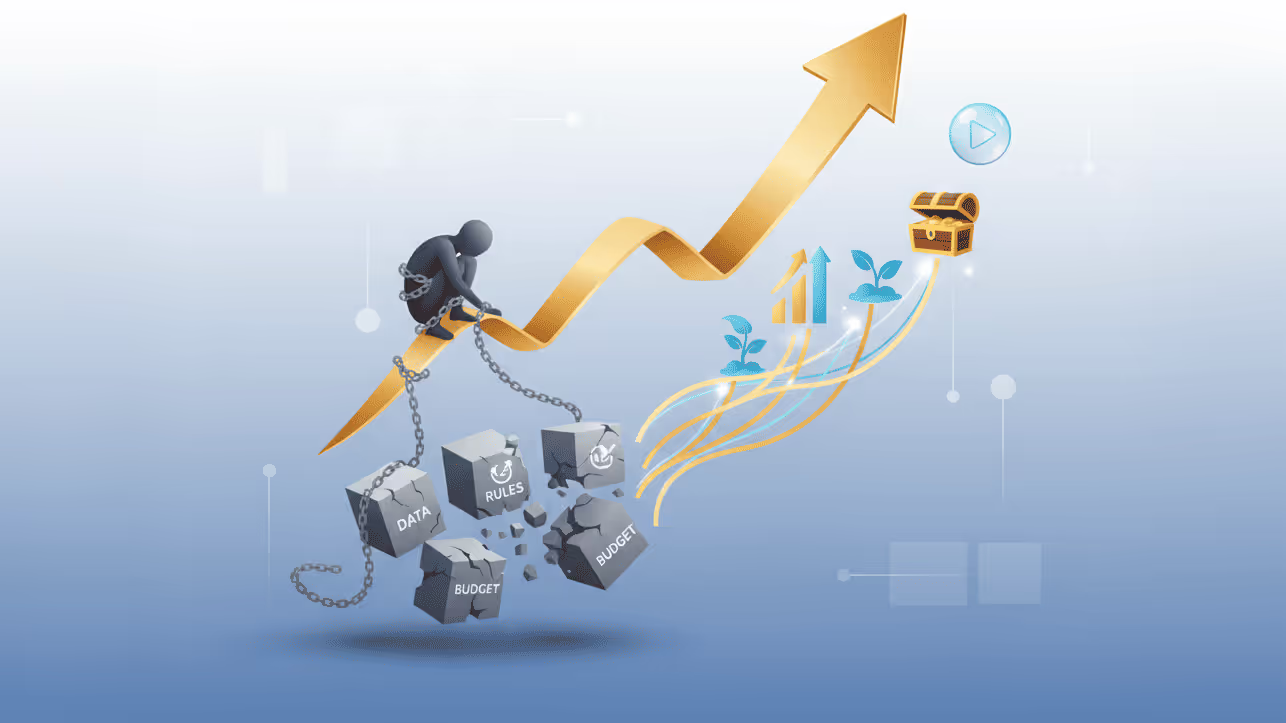
Here's the problem with most financial literacy programs: they're boring. Really boring. Most people feel intimidated by financial topics. Traditional methods involve dense worksheets, lengthy presentations, and abstract concepts that feel disconnected from real-world scenarios. No wonder only 57% of Americans are considered financially literate.
{{cta-banner}}
The disconnect becomes even more apparent in the iGaming world. Players who understand pot odds and betting strategies somehow struggle with basic bankroll management. They can calculate expected value in seconds but panic when setting monthly spending limits. This contradiction highlights a fundamental flaw in how financial education is typically delivered.
The Power of Learning Through Play

Educational games work because they tap into something powerful: experiential learning. When players make decisions in a simulated environment, they experience consequences without real-world financial damage. This creates what researchers call a "safe space to fail" while building practical skills through repetition and feedback.
Digital educational games positively influence learning motivation, with engagement serving as a key mediator. Students using game-based learning show 70% higher knowledge retention compared to traditional methods. The interactive nature keeps players invested in the learning process, transforming what could be dry material into engaging challenges.
The mechanics that make games addictive (points, levels, achievements, immediate feedback) become powerful teaching tools when applied to financial education. Players progress through increasingly complex scenarios, earning rewards for smart decisions and facing consequences for poor choices.
Interactive Tutorials That Actually Work

Modern educational iGaming platforms incorporate sophisticated learning mechanics that go far beyond simple quizzes. These systems create personalized learning paths based on individual player behavior and skill levels.
Real-Time Decision Making

Players face realistic scenarios where they must allocate funds across different activities. Should they chase a big win or stick to their predetermined limits? The tutorial doesn't just tell them the right answer – it shows them the long-term consequences of each choice through dynamic simulations.
Progressive Complexity

Effective programs start with basic concepts and gradually introduce more sophisticated financial principles. Players might begin with simple budgeting exercises before moving on to complex risk assessment scenarios.
Immediate Feedback Systems

Unlike traditional education where feedback comes days or weeks later, gamified systems provide instant results. Players see how their decisions impact their virtual bankroll in real-time, reinforcing positive behaviors and highlighting mistakes before they become habits.
Simulated Bankroll Management: Learning Without Losing

The most effective educational tools simulate real-world bankroll management scenarios. Players start with virtual funds and must navigate through various challenges that mirror actual gaming situations.
Session Budgeting Challenges

Players learn to divide their bankroll into session-based portions, experiencing firsthand how proper allocation extends playing time and reduces risk. The simulation shows what happens when someone bets their entire bankroll on a single outcome versus spreading risk across multiple smaller wagers.
Loss Limit Training

Interactive scenarios teach players to set and stick to loss limits. The system presents emotionally charged situations, like being down significantly and feeling the urge to chase losses, and guides players through healthy decision-making processes.
Win Goal Implementation

Many players struggle with knowing when to walk away after a winning session. Educational simulations present scenarios where players must decide whether to continue playing or lock in profits, demonstrating the mathematical realities behind different strategies.
Key Features of Effective Educational iGaming Tools

Successful financial literacy platforms in the iGaming space share several characteristics that make them genuinely educational rather than merely entertaining:
- Realistic Scenarios: Programs use actual gaming situations rather than theoretical examples
- Emotional Decision Points: Systems simulate the psychological pressures that lead to poor financial choices
- Progress Tracking: Players can see their improvement over time through detailed analytics
- Community Learning: Leaderboards and social features create positive peer pressure
- Expert Guidance: Built-in coaching provides personalized advice based on player behavior
Data-Driven Personalization
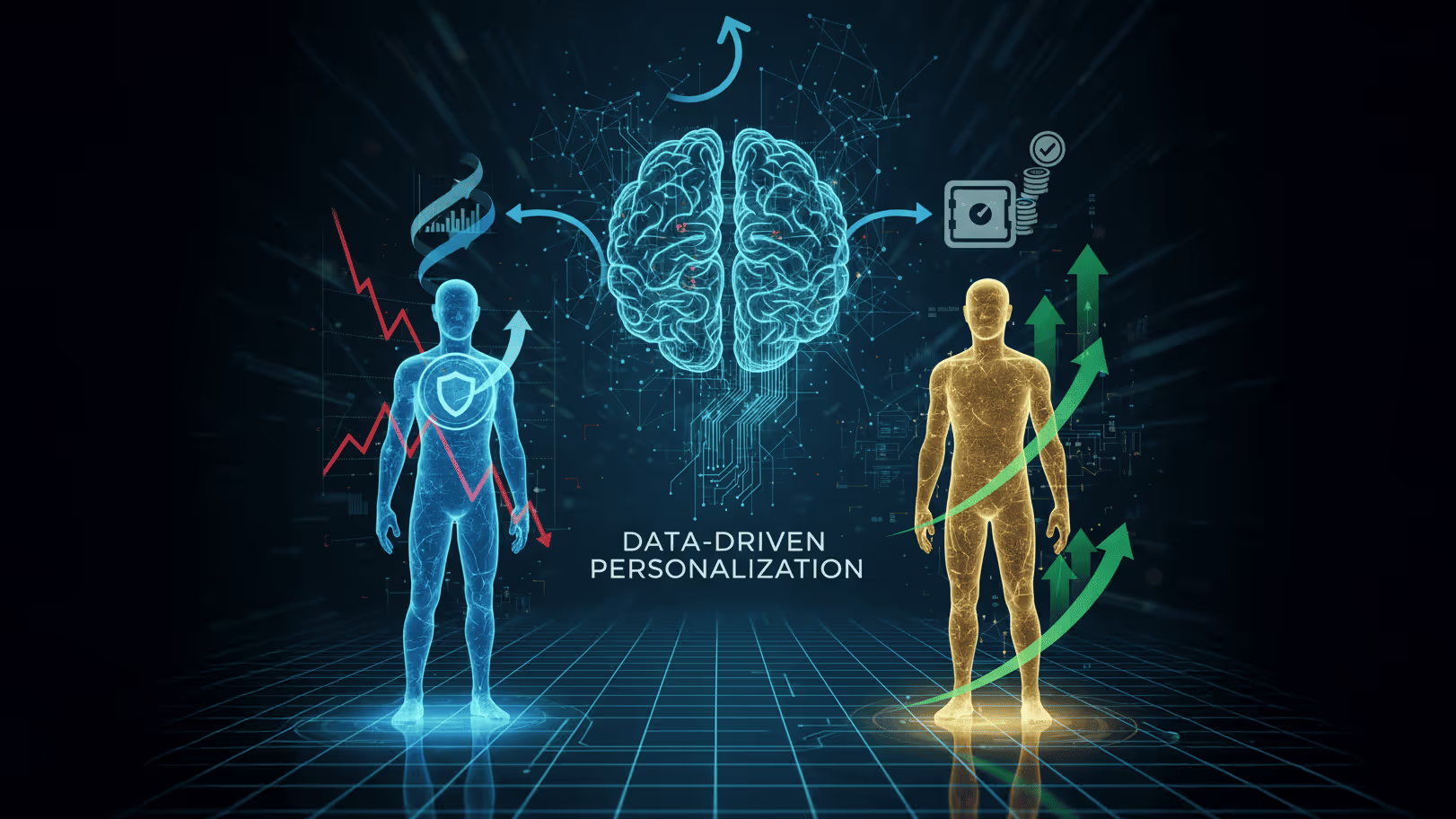
Advanced platforms analyze player behavior to identify areas where individuals struggle most. Someone who consistently overspends during losing streaks receives targeted training on loss management, while players who struggle with win goals get specific scenarios focused on profit preservation.
Behavioral Nudges
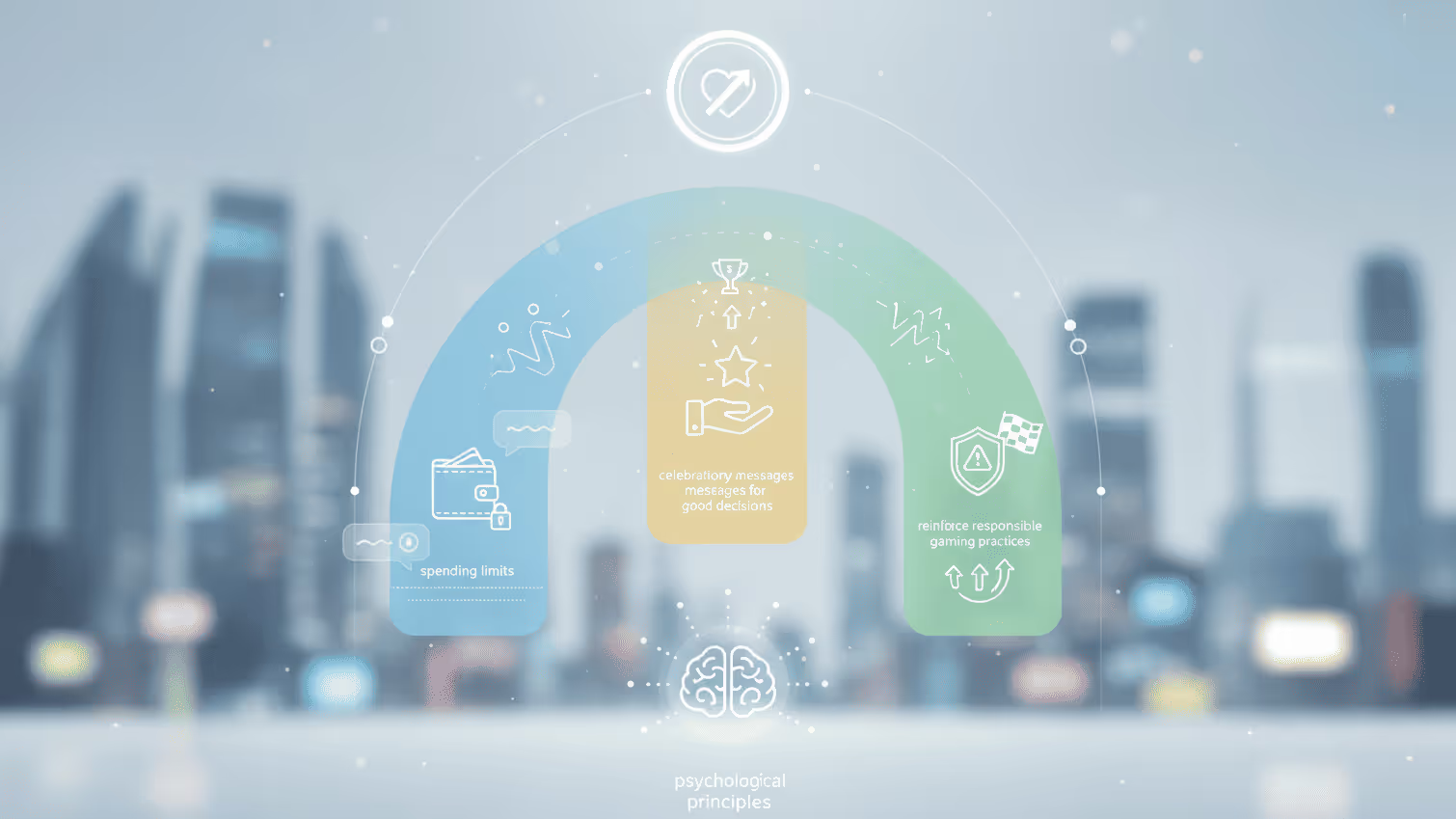
These systems incorporate psychological principles to promote healthy habits. Gentle reminders about spending limits, celebratory messages for good decisions, and warnings about risky behavior patterns help reinforce responsible gaming practices.
Measuring Success: What Works and What Doesn't

Educational effectiveness is all about behavioral change. The most successful programs track real-world outcomes, not just completion rates.
Participants in gamified financial programs demonstrate:
- 20% improvement in actual budgeting behavior
- 50% better adherence to predetermined spending limits
- 30% reduction in financial stress related to gaming activities
Programs that focus purely on entertainment without solid educational foundations show limited long-term impact. The key is balancing engagement with substantive learning objectives that translate into real-world behavior changes.
The Psychology Behind Gamified Learning

Understanding why gamification works helps explain its effectiveness in financial education. Games activate multiple psychological mechanisms that traditional learning methods often miss.
Intrinsic Motivation

Well-designed educational games satisfy players' needs for competence and autonomy. Rather than being told what to do, players discover optimal strategies through their own experimentation and experience. This intrinsic motivation leads to deeper engagement and better retention.
Social Learning

Many platforms use social elements that leverage peer influence. Players compare their progress with others, learn from community discussions, and receive recognition for achievements. This social dimension makes learning feel less like work and more like collaboration.
Progressive Mastery

Games excel at breaking complex topics into manageable chunks. Players master basic concepts before moving to advanced strategies, building confidence through incremental success. This progression prevents the overwhelm that often accompanies traditional financial education.
Industry Applications and Real-World Results

Financial institutions and iGaming operators are increasingly adopting gamified education approaches. The results speak for themselves: companies using game-based learning report much higher employee engagement with financial training programs.
Educational gaming platforms demonstrate how interactive experiences can teach complex financial concepts effectively. These platforms show that when learning feels like playing, people invest more time and effort in developing crucial skills.
The iGaming industry specifically benefits from these approaches because they address the unique challenges operators face in promoting responsible gaming. Rather than relying on static warnings and disclaimers, interactive education creates genuine understanding of risk management principles.
Technology Integration and Future Developments

Modern educational platforms use advanced technology to create more immersive and effective learning experiences. Artificial intelligence personalizes content based on individual learning patterns, while real-time data analytics optimize educational outcomes.
Virtual reality and augmented reality applications are beginning to emerge, offering even more immersive educational experiences. These technologies allow players to experience financial scenarios in three-dimensional environments, further enhancing the realism and educational impact..
Mobile-first design ensures accessibility across all devices, recognizing that most players access iGaming platforms through smartphones and tablets. This accessibility is crucial for reaching audiences who might not engage with traditional desktop-based educational programs.
Smartico.ai: Advanced Gamification and Behavioral Analytics
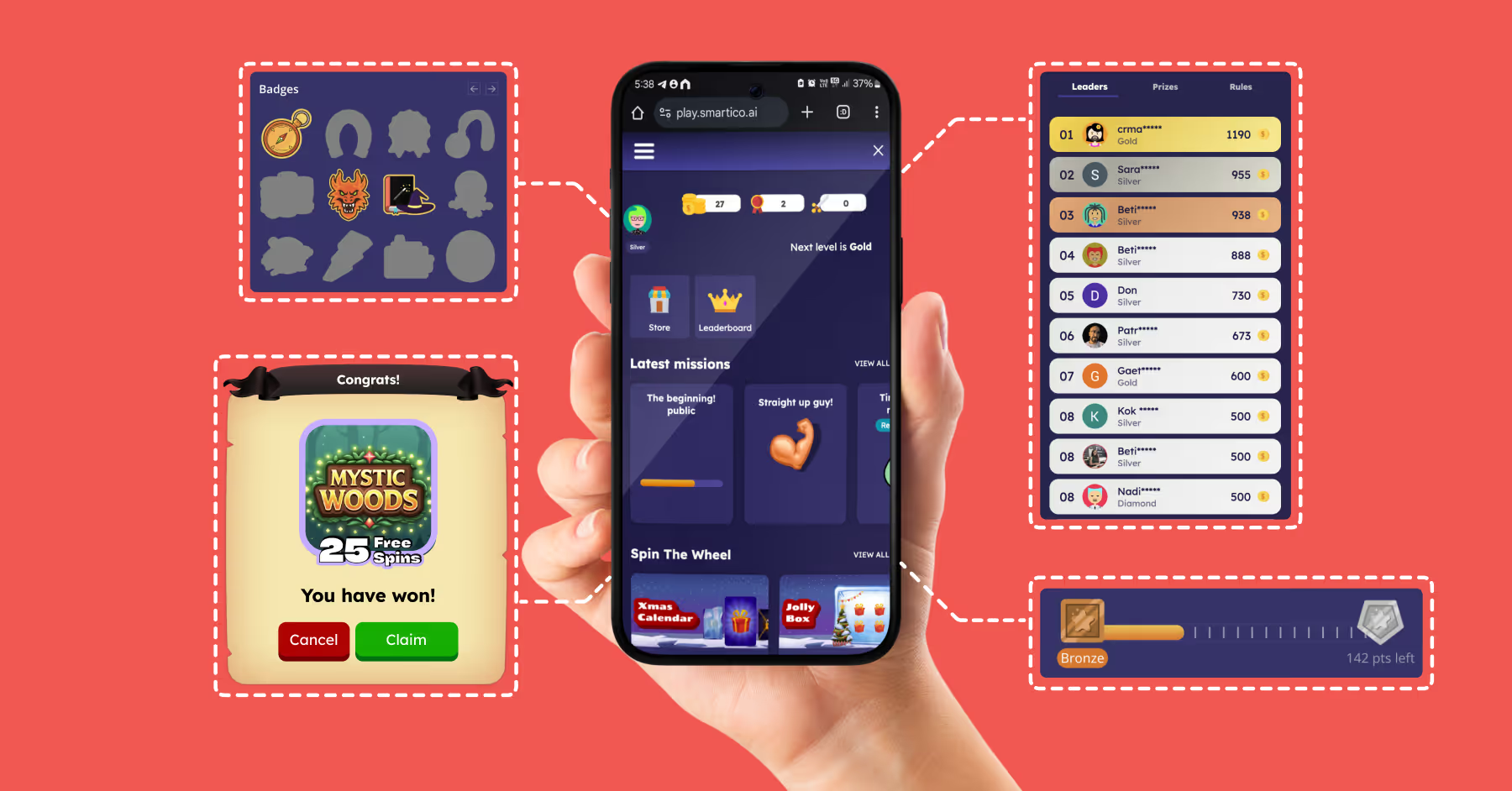
Supporting this educational revolution is Smartico.ai, the first unified Gamification/CRM Automation software. It combines advanced gamification mechanics with sophisticated customer relationship management tools. Smartico provides the technological foundation that enables operators to implement the kind of engaging, data-driven experiences discussed throughout this article.
Smartico.ai's strength lies in its comprehensive behavioral analysis capabilities. The system continuously monitors player behavior patterns and assigns real-time behavioral tags, enabling operators to identify players who might benefit from additional support or intervention. This behavioral intelligence creates opportunities for implementing the educational approaches outlined in this article.
The software’s real-time automation capabilities help operators deliver targeted interventions based on individual player behavior patterns. When players exhibit concerning spending behaviors, the system can automatically trigger appropriate responses - whether that's gentle reminders about predetermined limits, personalized challenges that reinforce healthy habits, or connecting players with educational resources. This proactive approach represents a significant advancement over traditional reactive measures.
Rather than waiting for problems to escalate, operators using advanced gamification platforms can create environments where responsible gaming behaviors are naturally reinforced through game mechanics, personalized experiences, and timely interventions based on real behavioral data.
Want to find out how Smartico can help raise your loyalty, retention, and revenue ethically like nothing you’ve tried before? Book your free, in-depth demo below.
{{cta-banner}}
Frequently Asked Questions

1. What makes gamified financial education more effective than traditional methods?
Gamified education works because it provides immediate feedback, creates safe environments for experiential learning, and uses intrinsic motivation rather than external pressure. Players learn by doing rather than just reading or listening.
2. How do educational iGaming tools measure actual behavioral change?
Effective platforms track real-world metrics like adherence to spending limits, session duration management, and long-term financial behavior patterns. The focus is on actual behavior change rather than just engagement metrics.
3. Can gamification help with existing problem gaming behaviors?
While educational games can provide valuable tools and awareness, they work best as preventive measures combined with other support systems. Players with existing problematic behaviors should also seek professional support.
4. What role does social learning play in gamified financial education?
Social elements like leaderboards, community discussions, and peer comparisons create positive peer pressure and collaborative learning environments. These features help normalize responsible gaming practices.
5. How do operators balance education with entertainment value?
The most successful approaches integrate educational content seamlessly into engaging game mechanics. The key is ensuring that learning objectives drive game design rather than treating education as an afterthought.
Conclusion
Educational iGaming represents a fundamental shift in how we approach financial literacy and responsible gaming. By combining the engagement of games with solid educational principles, these platforms create learning experiences that stick. The evidence is clear: when financial education feels like play rather than work, people learn better and make smarter decisions. As the industry continues to evolve, gamified education will likely become the standard approach for promoting responsible gaming practices.
Did you find this article helpful? If so, consider sharing it with other industry professionals such as yourself.