
iGaming Trends 2026: What Every Operator Needs to Know

If you've been running an iGaming operation for more than a few years, you already know that the industry doesn't slow down. But 2026 is gearing up to be different from the usual "things are changing" cycle. This year, the gap between operators who get their marketing and retention strategies right and those who don't is growing fast.
The top marketing trends for 2026 are all about doing the fundamentals better, faster, and with way more precision than before. So whether you're trying to figure out where to put your budget or just want to know what's actually working right now, this is worth your time.
Why Marketing Is the #1 Priority in iGaming Right Now
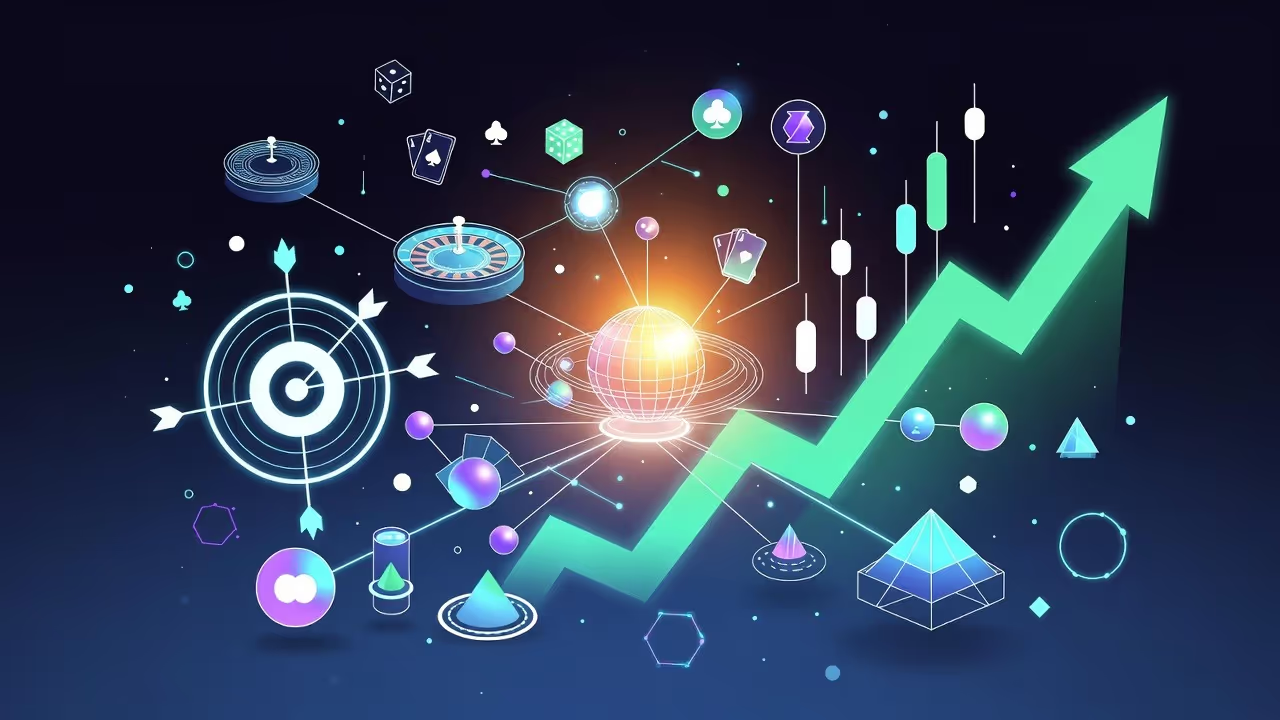
Here's something that caught a lot of people's attention: marketing has jumped to the number one strategic priority for iGaming operators, climbing from fifth place just a year ago. That's a big shift. And it makes sense when you think about it. Acquisition costs keep going up. Regulations keep tightening. New markets are opening while others are getting more competitive by the day.
So what changed? Operators realized that chasing new players at all costs isn't sustainable. The smarter play is holding onto the ones you already have. And holding onto players, it turns out, requires a completely different kind of marketing than the spray-and-pray approach that worked five years ago.
{{cta-banner}}
The global online iGaming market is on track to grow significantly over the next few years, but that growth won't be shared equally. The operators who capture the biggest slice will be the ones using data, automation, and personalization in ways that actually make a difference to individual players.
The Big Marketing Trends Shaping 2026

AI Is No Longer Optional
AI has become the backbone of how top operators attract, convert, and keep players. Predictive analytics can segment audiences before a player even logs in. Machine learning powers CRM systems that personalize offers and bonus timing in real time.
Here's what that actually looks like in practice: dynamic bonus optimization that adjusts rewards based on each player's value and engagement level. Content creation that gets localized and adapted automatically, cutting production time significantly. Predictive churn analysis that triggers personalized outreach before a player disappears. And ad fraud detection that catches fake traffic before it burns through your budget.
The operators who are seeing the biggest results aren't just using AI as a tool. They've built it into how they think about marketing at every stage.
Personalization Has Raised the Bar (Again)
Players in 2026 don't want generic slop. They want things that feel like they were made for them, because they were. And McKinsey's research backed this up, having found that personalization most often drives 10 to 15 percent revenue lift, with company-specific lift spanning 5 to 25 percent depending on the sector and ability to execute. That's not a small number.
What's changed in iGaming specifically is the speed. Personalization used to mean sending a player a slightly different email based on what games they liked. Now it means real-time decisioning that adapts to their behavior, their risk profile, and what they've been doing in the last few minutes. Game recommendations, bonus offers, loyalty program tiers, even the layout of the platform itself can shift based on who's looking at it.
The operators doing this well aren't just running better campaigns. They're building relationships at scale, which is exactly what keeps players coming back.
Mobile-First Is Table Stakes
If your platform isn't built around mobile, you're already behind. The majority of iGaming activity is happening on smartphones now, and that number keeps climbing. This means everything from app performance to in-app notifications to the way loyalty programs display on smaller screens needs to be thought through carefully.
Push notifications, in-app leaderboards, and instant reward delivery on mobile aren't extras anymore. They're core parts of how players interact with your brand day to day.
Social and Creator-Led Marketing Is Growing Fast
The way iGaming brands reach new audiences is shifting. Social media platforms have become a serious channel for both player acquisition and engagement. Streaming platforms are playing a bigger role than ever, with live gameplay, tournaments, and influencer partnerships driving real engagement.
The key insight here is that authenticity matters more than polish. Players can tell the difference between content that's genuinely entertaining and content that's just trying to sell them something. The brands winning on social are the ones that invest in real storytelling, community building, and creator relationships.
8 Signs Your iGaming Marketing Strategy Needs an Overhaul

Not sure if your current approach is keeping up? Here are eight signs it might be time to rethink things:
1. You're spending more on acquisition than retention.
If the bulk of your marketing budget is going toward getting new players instead of keeping existing ones, you're swimming upstream. Retaining current players is significantly cheaper and delivers better long-term value.
2. Your bonus offers are one-size-fits-all.
If every player gets the same promotion regardless of their behavior or preferences, you're leaving money on the table. Personalized rewards outperform generic ones, and not by a little.
3. You don't know why players are leaving.
If you can't pinpoint the moment or reason a player disengages, you don't have the data infrastructure you need. Predictive churn models exist for a reason.
4. Your CRM campaigns feel like an afterthought.
CRM should be the engine of your retention strategy, not something that runs on the side. If it's not integrated tightly with your gamification and bonus systems, it's not working as hard as it could.
5. You're not using gamification, or you're using it poorly.
Slapping a points system on your platform doesn't count. Real gamification means missions, progress tracking, tournaments, and rewards that actually make players feel like they're achieving something.
6. Your mobile experience is a scaled-down version of desktop.
Mobile players don't want a shrunken website. They want an experience designed for how they actually play, which is on the go, in short sessions, and with quick decisions.
7. You're ignoring the data you already have.
Most operators collect more player data than they know what to do with. If that data isn't feeding back into your marketing decisions in real time, it's wasted.
8. Your loyalty program is basically just a tier chart.
If your loyalty offering doesn't include interactive elements, personalized milestones, or meaningful rewards that feel earned rather than automatic, players will eventually stop caring about it.
Why Gamification and CRM Need to Work Together

This is one of the most important shifts in iGaming marketing right now, and it's surprisingly straightforward to understand even if it's harder to execute.
Gamification on its own is fun. Points, badges, leaderboards, mini-games. Players enjoy them. But without a CRM backing them up, gamification is just entertainment with no real business strategy behind it.
CRM on its own is powerful. Automated workflows, segmentation, triggered communications. But without gamification layered in, CRM campaigns can start to feel transactional and impersonal.
When the two work together, something clicks. Here's what it looks like:
- A player completes a mission and earns points. The CRM immediately recognizes that behavior and sends a personalized follow-up that's relevant to what they just did.
- A player starts to disengage. The CRM detects the drop in activity, and instead of sending a generic "we miss you" email, it triggers a gamified challenge or offer that's specifically tailored to bring them back.
- A loyalty program tier advances, and the CRM automatically adjusts the communications, offers, and gamification challenges that player sees, creating a feeling of progression that actually means something.
The result is a retention system that feels alive and personal, not automated and formulaic. And that's exactly what players in 2026 expect.
How Smartico.ai Puts This Into Practice
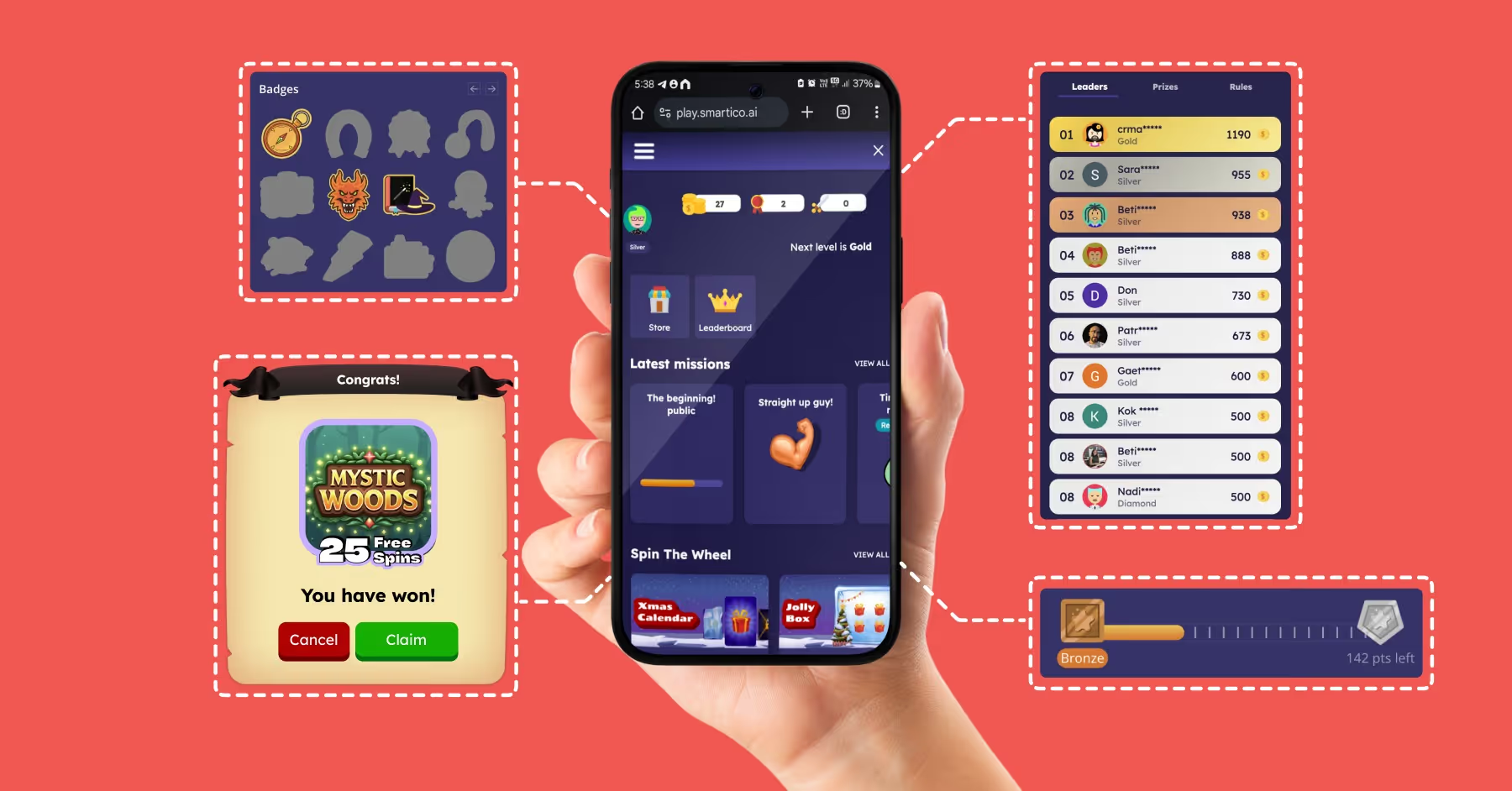
All of the trends we've covered above point to the same conclusion: operators need a system that combines gamification, CRM automation, and personalization in one place. That's exactly what Smartico.ai was built to do.
Founded in 2019, Smartico is the first and leading unified Gamification and CRM Automation platform for iGaming. It's trusted by over 1,000 brands worldwide, and it brings together every piece of the retention puzzle under one roof.
Here's what that looks like in practice. Smartico's CRM Automation handles the full player journey, from first visit to long-term loyalty, with hyper-personalized messaging and automated workflows that respond to real-time player behavior. Its Gamification tools add missions, levels, tournaments, and rewards that are customizable and deeply integrated with the CRM, so they don't just look good but actually drive engagement.
On top of that, Smartico offers free-to-play mini-games like loyalty wheels, scratch cards, and daily loot boxes that keep players interacting between sessions. Its Bonus Engine optimizes reward costs by tailoring bonuses to individual player behavior. And its AI Models predict player behavior and engagement patterns, feeding that intelligence directly into the platform's decision-making.
What sets Smartico apart is the partnership side of things. You also get dedicated success managers, tailored onboarding, and ongoing strategic support designed to help your team actually get results. Most operators go from integration to fully functional gamification in about 30 to 60 days, with measurable improvements showing up within 90 days.
If you want to see how this works in action, book your free, in-depth demo below.
{{cta-banner}}
What to Focus On for the Rest of 2026

The trends are clear, but strategy still comes down to priorities. Here's a practical way to think about where to focus your energy:
Short term (next 30 days): Audit your current CRM workflows. Are they personalized or generic? Are they connected to your gamification and bonus systems? If not, that's your starting point.
Medium term (next 90 days): Implement or upgrade your gamification layer. Start with missions and a basic loyalty structure if you don't have one. Add tournaments and mini-games as you build confidence with the system.
Longer term (next 6 months): Build out your AI and predictive analytics capabilities. Start with churn prediction and bonus optimization. These are the areas where data-driven decisions will have the biggest impact on your bottom line.
The operators who will win in 2026 aren't necessarily the ones with the biggest budgets. They're the ones who build systems that treat every player as an individual and keep getting smarter over time.
FAQ
What are the most important iGaming marketing trends for 2026?
The biggest shifts are toward AI-powered personalization, unified gamification and CRM systems, mobile-first experiences, and creator-led marketing on social platforms. Operators who combine these elements into a cohesive retention strategy will have a significant advantage over those still relying on broad, untargeted campaigns.
How does gamification improve player retention in iGaming?
Gamification turns passive playing into active participation. Missions, achievements, progress bars, and rewards give players a sense of purpose and progression. When combined with CRM automation, these mechanics keep players engaged between sessions and create stronger emotional connections to the platform.
What is CRM automation and why does it matter for iGaming operators?
CRM automation is the system that manages personalized player communications, triggered offers, and engagement workflows at scale. In iGaming, it's critical because it allows operators to respond to player behavior in real time, from welcome sequences to reactivation campaigns, without manual intervention.
How does personalization in loyalty programs work in practice?
Modern loyalty programs use player behavior data to customize everything from reward offers to tier advancement criteria. Instead of a generic points chart, personalized loyalty programs deliver milestones, challenges, and rewards that feel specific to each player's activity and preferences.
What's the difference between a basic CRM and a unified gamification CRM platform?
A basic CRM tracks player data and sends communications. A unified gamification CRM combines that with interactive engagement mechanics like missions, tournaments, and mini-games, so the whole system works as one integrated retention engine rather than a collection of separate tools.
How quickly can an iGaming operator see results from implementing gamification?
It depends on the platform and setup, but with a well-structured implementation, operators can typically go live within 30 to 60 days and start seeing measurable improvements in engagement and retention metrics within 90 days.
Did you find this article helpful? If so, consider sharing it with other industry professionals such as yourself.