


Micro-Betting Revolution: Second-by-Second Wagering Opportunities

The next evolution in iGaming has arrived, and it runs faster than a New York minute. Micro-betting transforms every heartbeat of live sports into a wagering opportunity, letting players place bets on outcomes that resolve in seconds rather than hours. Where traditional sports betting asks you to predict the winner of an entire game, micro-betting zooms in on the granular moments that make up that journey.
It’s like the difference between betting on who wins the marathon versus betting on whether the next runner will stumble at the water station. Both matter, but one keeps you glued to your screen with pulse-pounding immediacy.
What Makes Micro-Betting Tick

Traditional sports betting operates like a slow-cooked meal. You place your wager, sit back, and wait for results that might take hours to unfold. Micro-betting flips this entirely, serving up bite-sized betting opportunities that resolve faster than you can refresh your browser.
The mechanics center on specific, quickly resolved moments during live events. Instead of betting on whether the Yankees win their game, you might wager on whether the next pitch lands in the strike zone, or if the batter swings on the first offering. Each prediction carries its own odds, updated in real-time as the action develops.
{{cta-banner}}
Baseball exemplifies how micro-betting transforms spectator experience. A single nine-inning game can generate hundreds of micro-betting opportunities - from pitch outcomes to at-bat results to defensive plays. Football offers similar richness, with micro-bets on whether the next play results in a run, pass, or punt, creating continuous engagement throughout the contest.
The Technology Behind Real-Time Wagering

Modern micro-betting platforms depend on sophisticated infrastructure that processes thousands of data points per second. Real-time data streaming forms the backbone, with platforms using technologies like Apache Kafka to ingest live sports feeds and adjust odds within milliseconds of events occurring.
AI-powered algorithms analyze incoming data streams to recalculate probabilities and update betting lines faster than human traders ever could. When a quarterback gets injured during a drive, or a tennis player double-faults at a crucial moment, machine learning models instantly adjust related micro-betting odds to reflect the new reality.
These systems process structured historical data alongside real-time inputs like player performance, weather conditions, and even social media sentiment to create accurate odds for micro-moments. The technology enables what industry experts call "sub-second latency" - the ability to offer bets and settle results almost instantaneously.
AI-Powered Odds Adjustment in Action

The secret sauce lies in artificial intelligence models that don't just predict outcomes, but also adapt to changing circumstances faster than any human could react. These AI systems monitor dozens of variables simultaneously, from player fatigue levels detected through biometric data to momentum shifts measured through scoring patterns.
Modern sportsbooks use gradient boosting algorithms and deep neural networks to process hundreds of features in real-time. A baseball pitcher's recent performance, the batter's historical success rate against left-handed pitching, wind conditions, and even the umpire's strike zone tendencies all feed into the calculation for the next pitch outcome.
The technology becomes especially powerful during live events where conditions change rapidly. Bayesian updating techniques allow the AI to instantly refine probability estimates when new information arrives, while reinforcement learning helps the system improve its predictions over time based on actual outcomes.
Engagement During Live Events

The psychological hook of micro-betting stems from its ability to maintain constant engagement throughout an event. Traditional pre-game betting creates one moment of excitement - when you place the wager - followed by potentially hours of passive waiting. Micro-betting transforms that entire viewing experience into an interactive journey.
Platforms offering micro-betting see session durations increase by up to 30% compared to traditional betting formats. Players who might normally place one or two bets per game end up placing dozens of micro-wagers, keeping them actively engaged with every play, pitch, or point.
The format particularly appeals to younger demographics, with 68% of micro-betting users falling between ages 21-34. This generation expects instant gratification and interactive entertainment, making the quick-resolution format of micro-betting a natural fit for their preferences.
Market Growth and Revenue Impact

The numbers tell a compelling story about micro-betting's rapid ascent. The 2024 Global Gaming Monitor reported a 214% year-over-year growth in micro-betting revenue. Industry analysts predict that micro-betting could account for billions in handle worldwide by the mid-2020s, representing a fundamental shift in how people engage with sports.
Current data shows micro-betting now represents 38% of all in-play wagers across major platforms. This growth accelerates during high-profile sporting events, where the combination of large audiences and continuous action creates ideal conditions for micro-betting engagement.
BetMGM reported over 200% growth in specific outcome wagers after expanding their live betting options and same-game parlays tied to real-time action. Similar success stories emerge from operators worldwide who've embraced the micro-betting model as a core differentiator rather than an add-on feature.
Sports That Shine in Micro-Betting

Not all sports translate equally well to micro-betting, but those that do create remarkable engagement opportunities. Baseball leads the pack due to its discrete, sequential nature - every pitch represents a clear betting opportunity with instant resolution.
American football provides another rich environment, with its structured play sequences and natural pauses between downs. Each snap offers multiple micro-betting possibilities: will it be a run or pass, will the play gain positive yards, will the quarterback get sacked.
Tennis excels in micro-betting because of its point-by-point structure and frequent momentum shifts. Bettors can wager on individual points, service games, or whether the next point will end in an ace, creating continuous betting opportunities throughout the match.
Cricket, particularly in shorter formats like T20, generates substantial micro-betting interest due to ball-by-ball outcomes that can dramatically shift match dynamics. Each delivery presents multiple betting angles, from runs scored to wicket possibilities.
Implementation Challenges for Operators

The technical requirements for successful micro-betting implementation extend far beyond traditional sportsbook capabilities. Operators need ultra-fast data feeds, typically sourcing information from multiple providers to ensure redundancy and accuracy. Even minor delays can render micro-betting ineffective, as odds must update before players can react to visible game developments.
Risk management becomes exponentially more complex when handling hundreds of micro-markets per game instead of a handful of traditional outcomes. Operators must balance books across dozens of related micro-bets while monitoring for unusual betting patterns that could indicate fraud or match manipulation.
The human element also requires adjustment. Traditional sportsbook traders who manually set odds for major markets can't possibly keep pace with micro-betting's speed requirements. Success demands automated systems with human oversight rather than human-driven processes with automated assistance.
Player Experience and Interface Design

The user interface challenge for micro-betting platforms centers on presenting rapidly changing betting opportunities without overwhelming users. Successful implementations focus on clean, intuitive designs that highlight the most relevant betting options while keeping secondary choices accessible but not distracting.
Mobile optimization becomes crucial since most micro-betting occurs on smartphones during live viewing. The tap-swipe-confirm workflow needs to complete faster than the underlying sporting action, requiring streamlined interfaces that minimize steps between seeing an opportunity and placing a wager.
Successful platforms also incorporate features like one-click betting for favorite wager types and quick-access bet history to help players track their numerous micro-bets throughout an event.
Risk Management for Operators

Managing risk across dozens of simultaneous micro-markets requires sophisticated algorithms that can identify and respond to unusual patterns faster than traditional manual oversight. AI-powered risk management systems monitor betting flows across related micro-markets to detect potential manipulation or fraud attempts.
The rapid-fire nature of micro-betting also creates new challenges around player protection. Operators must implement controls to prevent excessive wagering while maintaining the fast-paced experience that makes micro-betting appealing. This often involves automated spending limits and cooling-off periods triggered by specific behavioral patterns rather than simple time-based restrictions.
The Future Landscape

As micro-betting continues evolving, expect to see integration with emerging technologies like augmented reality overlays and voice-activated betting. The next frontier involves predictive micro-betting, where AI systems offer wagers on outcomes several plays ahead based on current game flow and historical patterns.
Esports represents a particularly promising expansion area for micro-betting, with games like League of Legends and Counter-Strike offering rich data streams and frequent micro-events perfect for this betting format. The digital nature of esports also eliminates many of the data feed challenges that complicate traditional sports micro-betting.
Smartico.ai: Pioneering Unified Gamification and CRM Automation
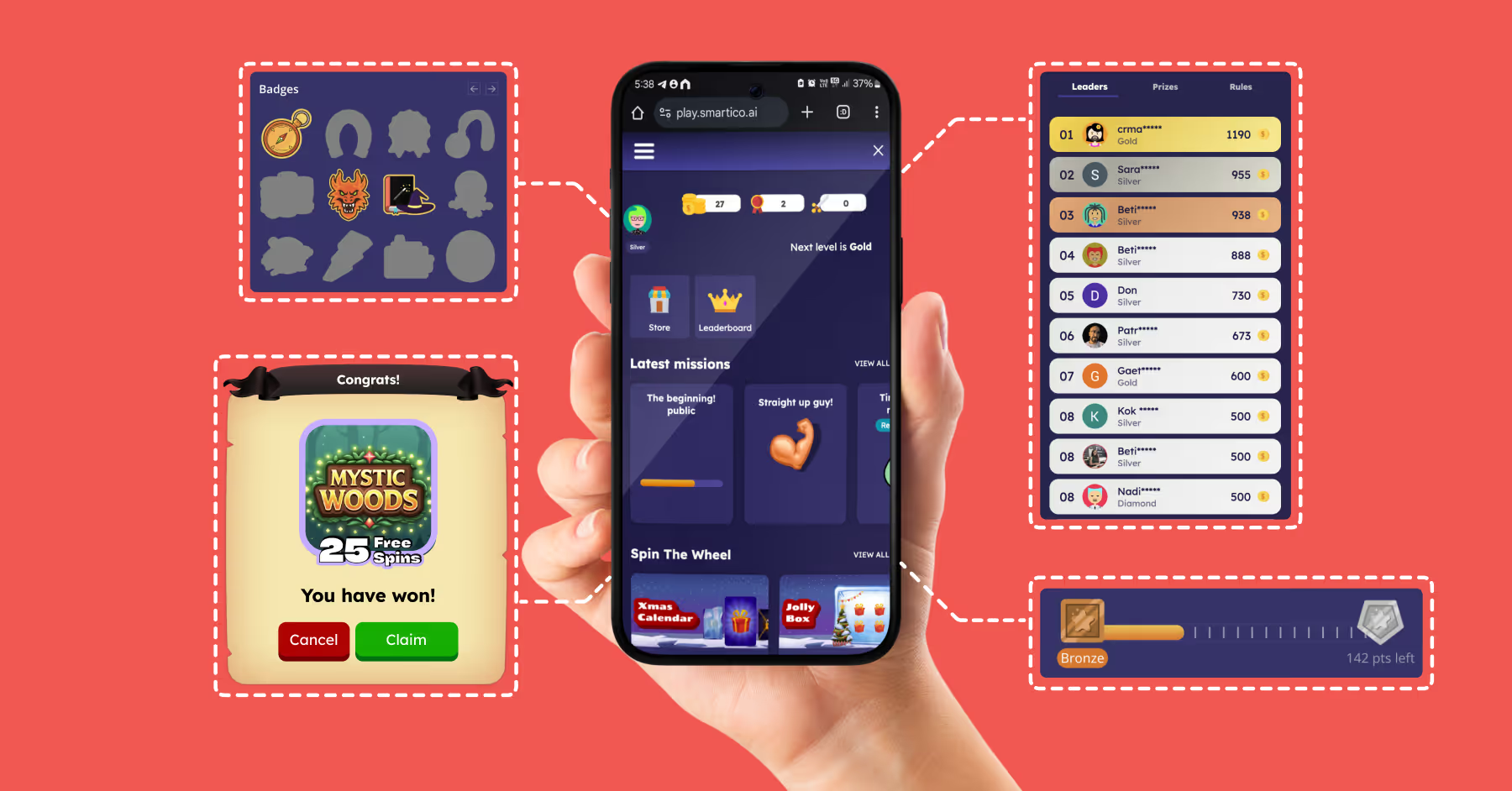
At the forefront of this micro-betting revolution stands Smartico.ai, the industry's first unified Gamification and CRM Automation software specifically designed for modern iGaming operators. While others focus on individual components, Smartico.ai smoothly integrates real-time player engagement tools with advanced behavioral analytics to create comprehensive retention strategies.
Smartico.ai's AI-powered system processes player behavior in real-time, automatically adjusting gamification elements and promotional offers based on individual engagement patterns. The software’s predictive models achieve stunning accuracy in lifetime value forecasting while identifying at-risk players early enough for effective intervention.
For operators implementing micro-betting strategies, Smartico.ai provides the engagement infrastructure needed to maximize player retention during high-frequency betting sessions. Its mission system, real-time leaderboards, and personalized reward structures complement micro-betting's fast-paced nature by maintaining player interest between betting opportunities.
If you want to know how you can raise your revenue higher than you thought possible, book your free in-depth demo below.
{{cta-banner}}
Frequently Asked Questions

1. What's the difference between micro-betting and traditional in-play betting?
Traditional in-play betting focuses on overall game outcomes with odds that update as the match progresses. Micro-betting targets specific moments within games - like individual pitches, plays, or points - that resolve within seconds or minutes rather than waiting for the entire event to conclude.
2. How do operators ensure fair odds when markets change so quickly?
Advanced AI algorithms process real-time data streams and historical patterns to adjust odds within milliseconds of relevant events. These systems use machine learning models that continuously refine their accuracy based on actual outcomes, while risk management protocols monitor for unusual betting patterns that might indicate manipulation.
3. Which demographics show the strongest interest in micro-betting?
Users aged 21-34 represent 68% of micro-betting participants, with this younger demographic drawn to the format's instant gratification and interactive nature. These players typically prefer fast-resolution betting opportunities over traditional long-term wagers.
4. What technical infrastructure do operators need for successful micro-betting?
Operators require ultra-low latency data feeds, real-time streaming technology like Apache Kafka, AI-powered odds calculation systems, and mobile-optimized interfaces. The entire technology stack must process data and update odds faster than players can react to visible game developments.
5. How does micro-betting affect traditional sports betting volumes?
Rather than cannibalizing traditional betting, micro-betting typically increases overall engagement and betting frequency. Durations can increase by 30% when micro-betting options are available, with players placing significantly more total wagers per sporting event.
Conclusion
Micro-betting represents more than just another wagering option - it's a fundamental reimagining of how players engage with live sports entertainment. By transforming every moment of athletic competition into potential betting opportunities, this technology creates deeper, more sustained engagement that benefits both players and operators. As AI-powered systems continue advancing and sports data becomes increasingly granular, micro-betting will likely evolve from innovative feature to industry standard, reshaping expectations around real-time sports entertainment interaction.
Did you find this article helpful? If so, consider sharing it with other industry professionals such as yourself.