


Player Health Scoring: Fixing Churn and Problem iGaming

Let’s be honest. Running an online iGaming operation is a weird job.
You spend a fortune to get players in the door. As an industry, we’re talking roughly $15 billion every year on acquisition. And then… most of those players disappear. Fast.
Some studies show 75% of new players churn, they're just gone, within the first 24 hours. After 30 days, 90% have vanished.
For the few who stay, you have a second, massive job: a deep, legal, and moral responsibility to keep them safe.
You're forced to be a hype-man and a guardian, all at the same time. But what happens when your technology forces you to choose one over the other? That's the core problem. And it’s where a new idea, player health scoring, comes in.
Why Player Churn Is So High (And Why Generic "Personalization" Fails)

Most loyalty programs are just... boring.
Players are drowning in generic "come back" emails and pointless pop-ups. They want real, tangible value. And while most people want personalized loyalty rewards, not even half of brands are actually offering them.
It’s not for lack of trying. The real issue is a "perception gap."
One report from Deloitte found that while brands claim to personalize 61% of their customer experiences, customers report that only 43% of those experiences feel personal.
{{cta-banner}}
That gap is the exact place your revenue is leaking. It’s what experts at McKinsey call a "disjointed experience". It's the result of bad crm automation that sends the same "personal" offer to 10,000 people.
And that's why even expensive personalization in loyalty programs so often fails to stop churn. It feels fake.
The Two Sides of "Player Health"
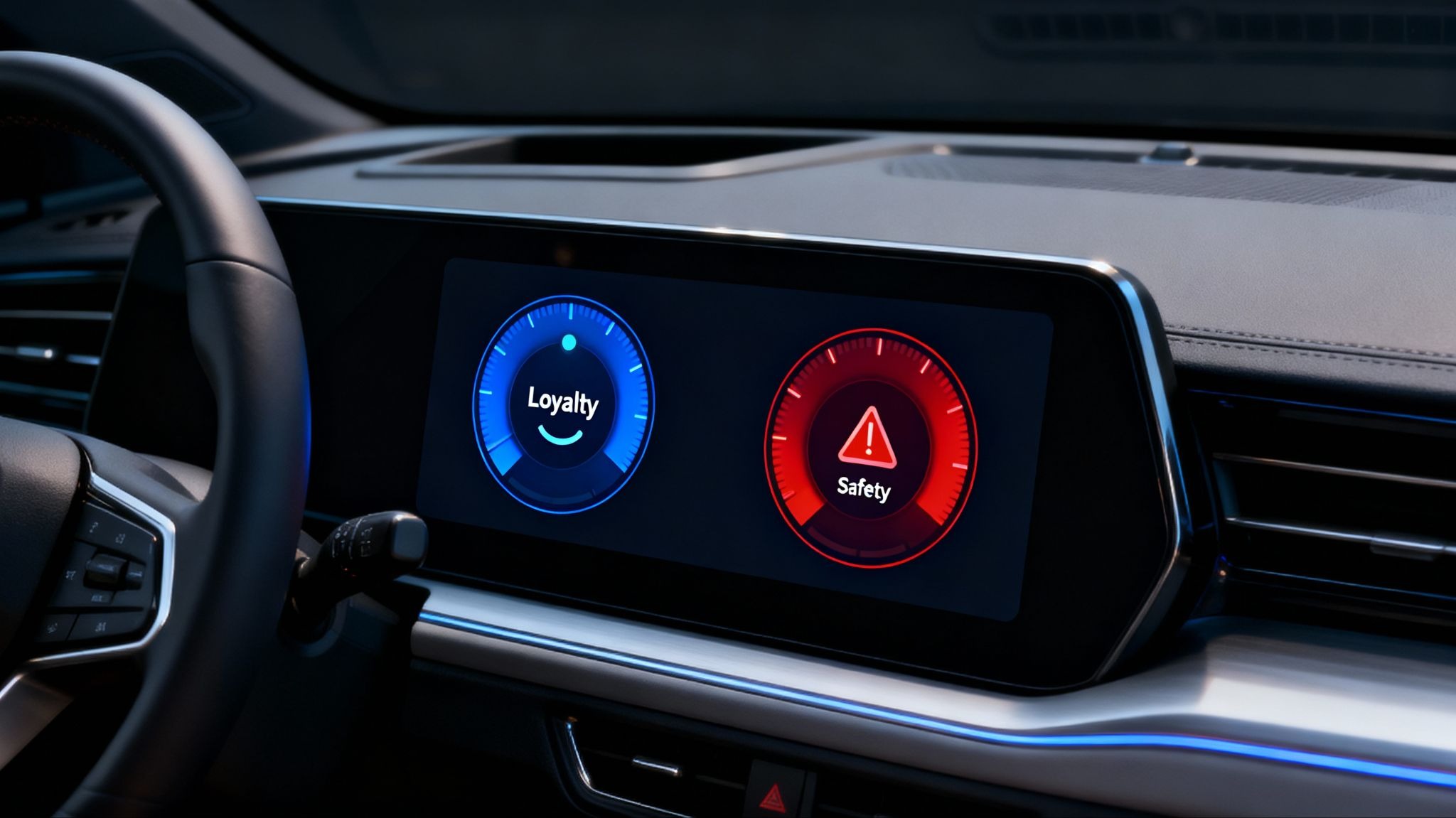
Think of your player's health like a car's dashboard. For years, operators have been driving with two separate, incomplete dashboards.
Dashboard 1 is for Marketing: This is the "Loyalty" gauge. Is the player happy? Are they engaged? Are they about to leave?.
Dashboard 2 is for Compliance: This is the "Safety" gauge. Is the player in control? Are they playing safely? Are they showing signs of risk?.
The problem is, no one is looking at both at the same time.
Your marketing team is staring at the Loyalty gauge, terrified it will hit "Empty." Your compliance team is staring at the Safety gauge, terrified it will hit "Overheat." And they are in different rooms, using different tools.
But it's not two dashboards. It's two readouts on one unified dashboard. They are both measuring the same thing: the player's holistic relationship with your brand.
Spotting the Churn Risk (The First Warning Light)
So, how do you know a player is fading? The AI sees the clues. It's like a detective for boredom.
This is the early churn detection side of the health score. The AI isn't waiting for a player to be "lapsed for 30 days." That's an autopsy. Instead, it looks for the tiny, real-time clues that signal a player is checking out:
- A sudden, unexplained drop in activity
- Skipped regular deposits
- Session times that are getting shorter and shorter
- A general decline in activity
In an old, "dumb" CRM, these clues might get compiled into a report that a manager reads next Tuesday.
In a smart system, the AI assigns a real-time churn rank: Low, Medium, High, or Critical. The second a player's behavior moves them from "Low" to "High," the system fires an event. That event instantly and automatically triggers a personalized retention campaign.
That is real crm automation.
Spotting the Compliance Risk (The Second Warning Light)

On the flip side, the AI is also your most important compliance officer. It's looking for a totally different set of clues, all at the same time.
This is the responsible gaming AI side of the health score. It's programmed to spot the behavioral patterns that signal a player may be losing control.
- Frequent and unusually intense playing sessions
- Chasing losses (a pattern of immediately re-depositing after a loss)
- Suddenly using different credit cards
When the AI sees these clues, it triggers a completely different, tiered set of actions.
A low-risk flag might trigger a simple pop-up reminder. A moderate-risk flag could suggest a temporary timeout. A high-risk flag can trigger a personalized care call or automatically offer exclusion options.
But here is the most important part of a smart system: it knows when to shut up.
The best iGaming CRMs are built to "Integrate auto-stop promotions on risky play". They are designed to monitor losing trends and "freeze all bonus messages" the moment risk escalates.
Think about that. The most important feature of a smart CRM isn't knowing when to send a bonus. It's knowing when NOT to.
The Problem: Why Most Platforms Fail at This (The "Disjointed" Mess)
So what happens at most companies? It's a mess.
The Marketing team has their CRM, bought to maximize engagement. The Compliance team has their risk tool, bought to satisfy regulators. And they never, ever talk. Even when a platform lists "Responsible Gambling" as a feature, it's often a dead-end module, not truly integrated into the marketing logic.
Experts call this a "disjointed" strategy, and it leads to a "disjointed experience".
And here's the nightmare:
Marketing's "automated" churn-saver bonus – the one meant to save a valuable player – gets sent to the exact same player that Compliance just flagged for high-risk behavior.
This is a brand-destroying, license-threatening catastrophe. It is the direct, inevitable result of using two different "brains" to manage one player.
The Fix: A Unified Gamification CRM
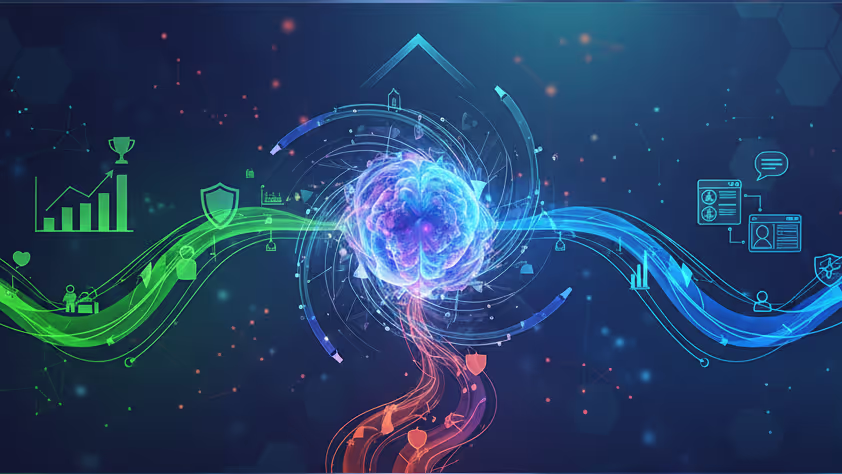
So, what's the fix?
It's simple. You need one brain.
You need a single, unified gamification crm. One platform where the AI-driven health score, the marketing automation, and the player-facing gamification engine all live together and talk to each other in real-time.
This igaming software uses the same gamification tools to solve both problems, pivoting its strategy based on that single player health score.
Here’s how that works:
- If a player is at "High Churn Risk": The AI health score tells the gamification engine to get them re-engaged. It automatically triggers retention tools like personalized missions, a spin on a loyalty wheel, or points they can spend in a marketplace.
- If a player is at "High Compliance Risk": The AI health score tells the same gamification engine to "freeze bonuses". Instead, it triggers helpful tools, like "gamified self-assessments" or even rewards the player with badges for setting deposit limits.
The platform is smart enough to pivot its entire player experience, per player, in milliseconds. It's not just a CRM. It's an adaptive player experience engine.
Enter Smartico.ai: The First and Leading Unified Solution
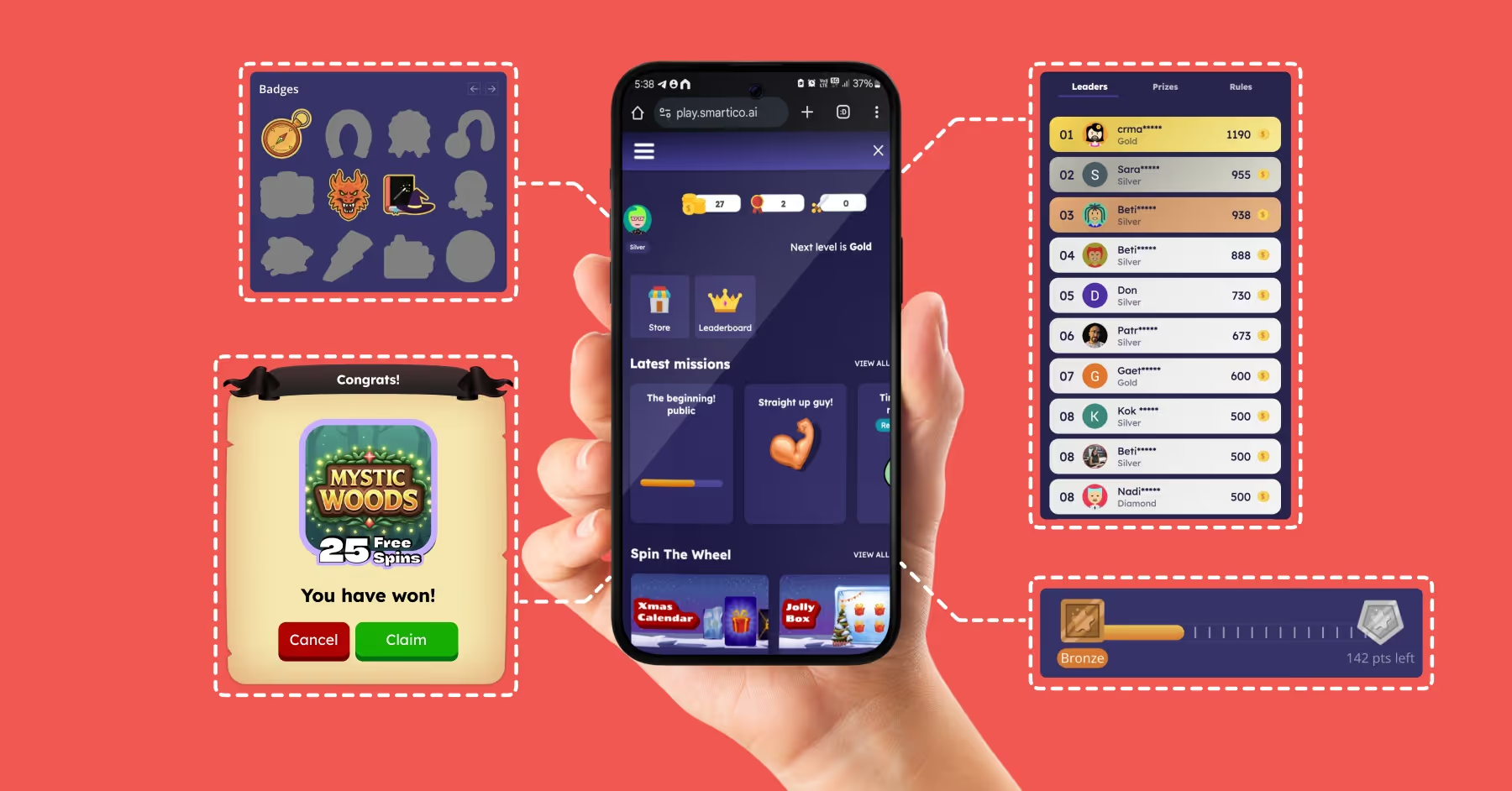
Smartico.ai was the first and leading unified gamification crm in history. It was designed from the ground up to solve this exact problem. It's not a bunch of separate tools duct-taped together.
Here's how it works.
Smartico's AI-powered engine looks at all player behavior. It gives every single player a 'health score' that updates constantly.
If their churn risk hits 'Critical', the system's crm automation doesn't just send a sad email. It automatically triggers a personalized mission or a mini-game to get them re-engaged.
If their compliance risk goes up, the system automatically 'freezes bonuses' and delivers a responsible gaming pop-up or a limit-setting tool instead.
It’s one platform, one player view, and two massive problems solved.
Stop juggling platforms. Stop guessing. See how a single, unified player health score can fix churn and compliance.
If you want to find out how Smartico can help your business specifically raise retention, loyalty, and revenue like nothing you’ve tried before, book your free, in-depth demo below.
{{cta-banner}}
Frequently Asked Questions (FAQ)
1. What is player health scoring?
Player health scoring is a single metric, powered by AI, that measures a player's complete relationship with your platform. It tracks both their loyalty (retention risk) and their well-being (responsible gaming risk) at the same time.
2. How does responsible gaming AI help with churn?
It's often the same core technology. The same AI that identifies compliance risk patterns is also looking for churn patterns, like changes in play habits, deposit frequency, and session length. This allows it to flag a player as a churn risk before they've left, so you can act.
3. Can gamification be used for responsible gaming?
Absolutely. A smart gamification crm doesn't just mean more bonuses. It can be used to create "gamified self-assessments", reward players with points for setting deposit limits, or create non-wagering "missions" that keep them engaged with your brand in a safe way.
4. Why is a unified CRM so important for iGaming?
A unified system prevents critical errors. It ensures your marketing (CRM) and compliance (RG) teams are working from the same real-time data. This is what stops you from accidentally sending a large bonus to a high-risk player – an error that "disjointed" systems make every day.
Conclusion
Running an operation today means you have to be great at two things: retention and compliance. The old way was to treat them as separate jobs, with separate tools. But you can't.
The key is seeing they are two sides of the same coin: player health.
A single player health scoring system, built into a unified gamification crm, is how you master both. It's the only way to get early churn detection while also building personalization in loyalty programs that is 100% safe.
Ready to use Smartico?
Join hundreds of businesses worldwide engaging players with Smartico.