


Predictive Behavioral Trigger Architecture: From Reactive to Anticipatory CRM Automation
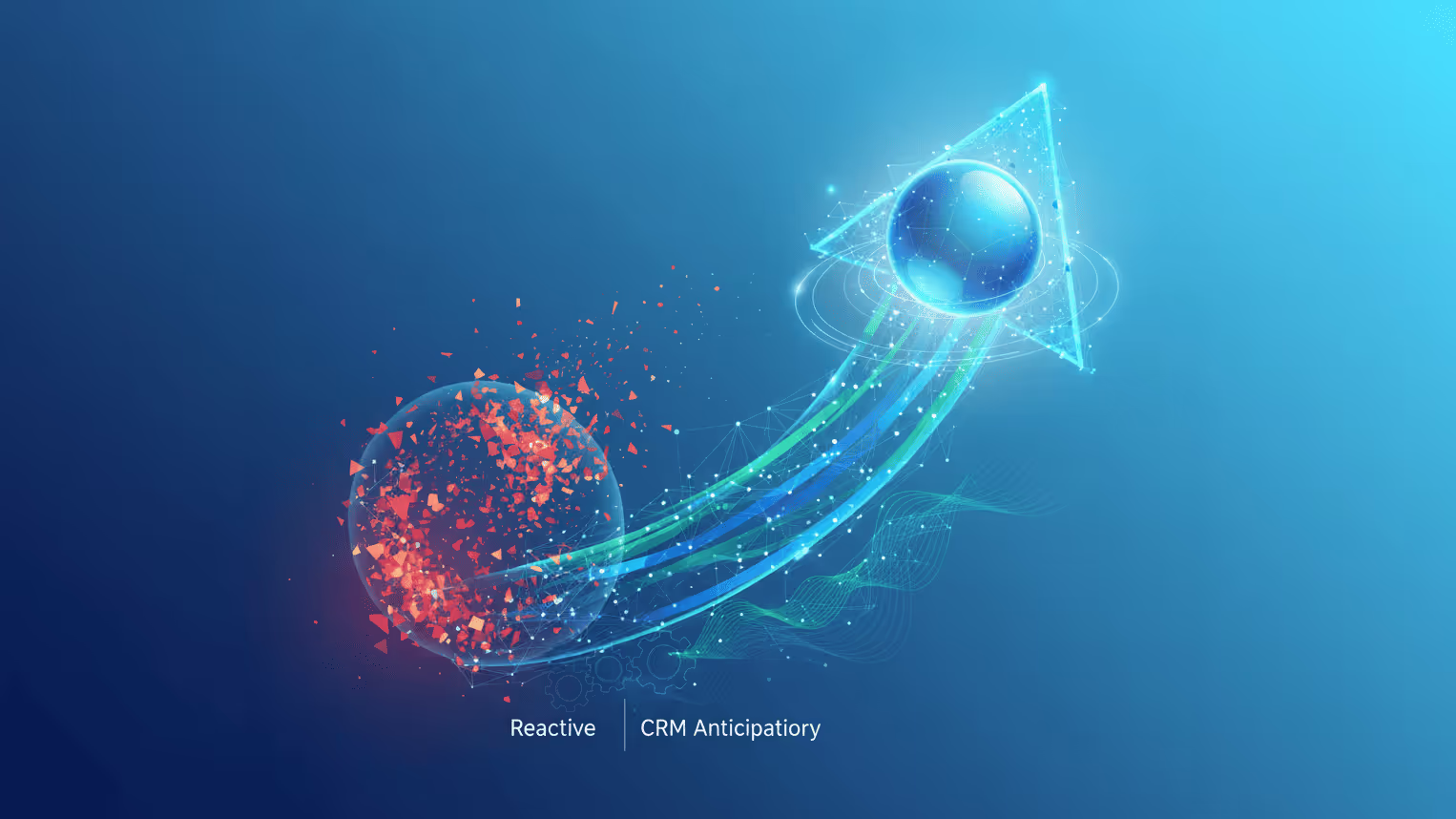
Your CRM system is probably thinking like a caveman. It waits for customers to do something, then it reacts. But what if your CRM could read minds instead?
That's exactly what predictive behavioral trigger architecture does. It doesn't wait for customers to abandon their cart or skip their renewal. It sees these moments coming from a mile away and steps in with the right message at the perfect time.
The difference between reactive and anticipatory CRM automation is like the difference between a fire department and a smoke detector. One shows up after your house is burning down. The other prevents the fire from starting.
The Problem with Playing Defense
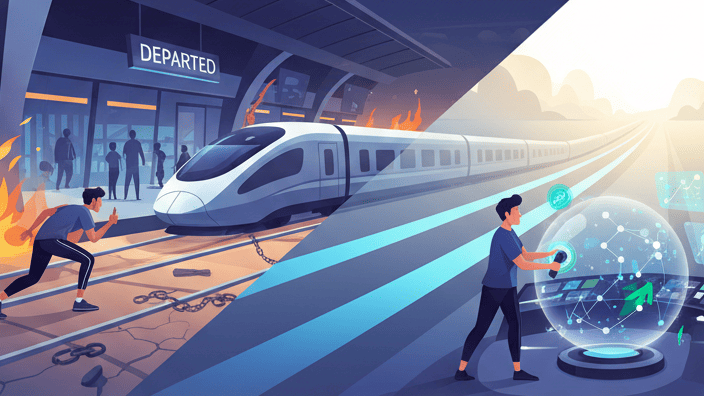
Most CRM systems today are playing defense. They track what customers did yesterday and respond to problems that already happened. A customer hasn't logged in for two weeks? Send them a generic "we miss you" email. Someone abandoned their shopping cart? Fire off a discount code.
{{cta-banner}}
This reactive approach misses the point entirely. By the time your system notices someone is about to churn, they're probably already shopping with your competitors. Traditional CRM is like trying to catch a train that has already left the station.
What Makes Predictive Triggers Different

Predictive behavioral triggers flip the script. Instead of waiting for bad things to happen, they use machine learning to spot the warning signs before customers even know they're unhappy.
These systems analyze hundreds of data points simultaneously. They look at login patterns, feature usage, support ticket frequency, payment behavior, and dozens of other signals. When someone's behavior starts matching the patterns of customers who previously churned, the system automatically triggers personalized interventions.
The magic happens in real-time. A customer skips their usual weekly session, and the system doesn't wait to see if they'll return. It immediately sends a personalized message based on their specific interests and past behavior.
Seven Ways Predictive Triggers Transform Customer Relationships
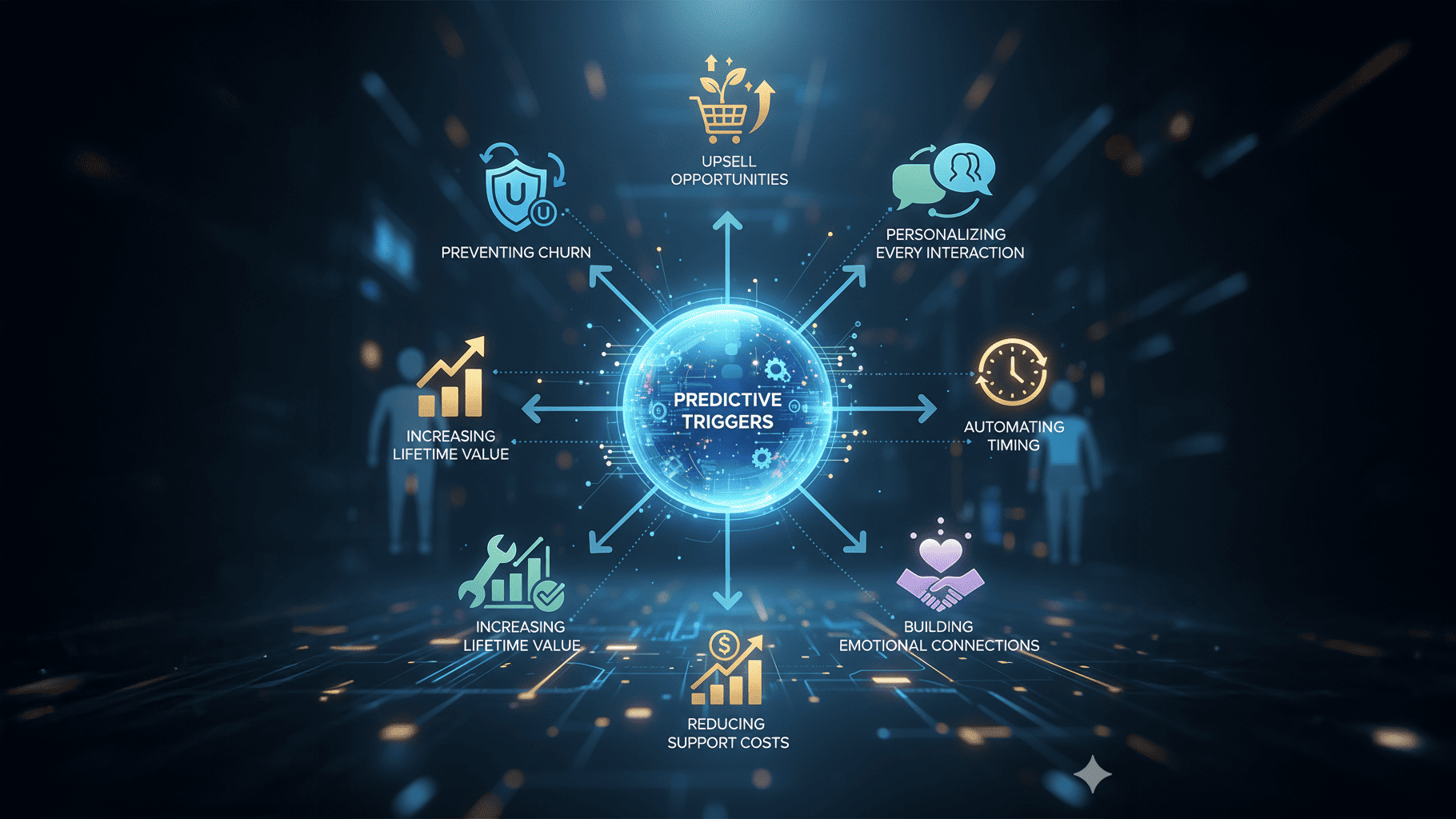
1. Preventing Churn Before It Happens
Traditional systems notice churn after it's too late. Predictive triggers identify at-risk customers weeks before they consider leaving. When someone's engagement drops to levels that historically predict churn, the system automatically triggers personalized retention campaigns.
2. Finding Upsell Opportunities in Real-Time
Instead of sending random upgrade offers, predictive systems identify the exact moment when customers are most likely to buy additional services. They track usage patterns and trigger upgrade suggestions when customers are hitting their current plan limits.
3. Personalizing Every Interaction
Generic messages get ignored. Predictive triggers use individual behavior data to craft messages that feel personally relevant. A customer who frequently uses feature A gets different messaging than someone who prefers feature B.
4. Automating Perfect Timing
Timing matters more than most people realize. Predictive triggers don't just know what to say – they know when to say it. They learn from past successful interactions to deliver messages at optimal moments.
5. Reducing Support Costs
By anticipating problems before they escalate, predictive triggers reduce the number of support tickets. They proactively address common issues and guide customers toward solutions.
6. Increasing Customer Lifetime Value
Early intervention keeps customers engaged longer and encourages them to spend more. Companies using predictive triggers report significant increases in customer lifetime value.
7. Building Emotional Connections
When your system anticipates needs and solves problems before customers ask, it creates positive emotional responses that build lasting loyalty.
How Predictive Trigger Architecture Actually Works
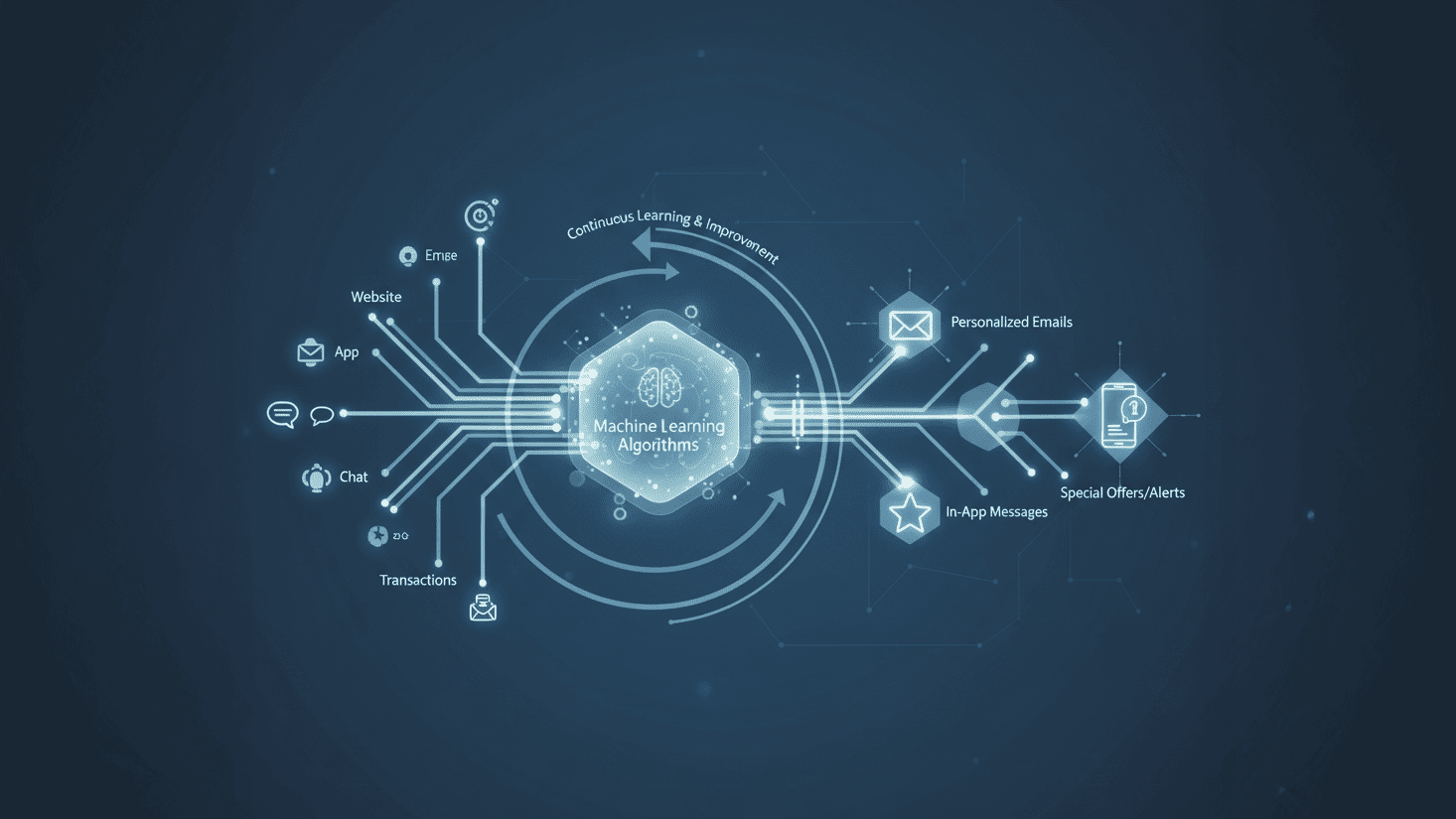
The technical foundation starts with data collection. Modern systems gather behavioral signals from every customer touchpoint – website interactions, app usage, email engagement, support conversations, and transaction history.
Machine learning algorithms then process this data to identify patterns. They compare current behavior against historical data from thousands of similar customers to predict future actions. The system builds individual behavioral profiles and assigns risk scores to each customer.
When specific threshold conditions are met, the system automatically triggers predefined responses. These might include personalized emails, in-app messages, special offers, or alerts to customer success teams.
The system continuously learns and improves. Every interaction provides feedback that helps refine the predictive models and improve trigger accuracy over time.
Real-World Results That Matter
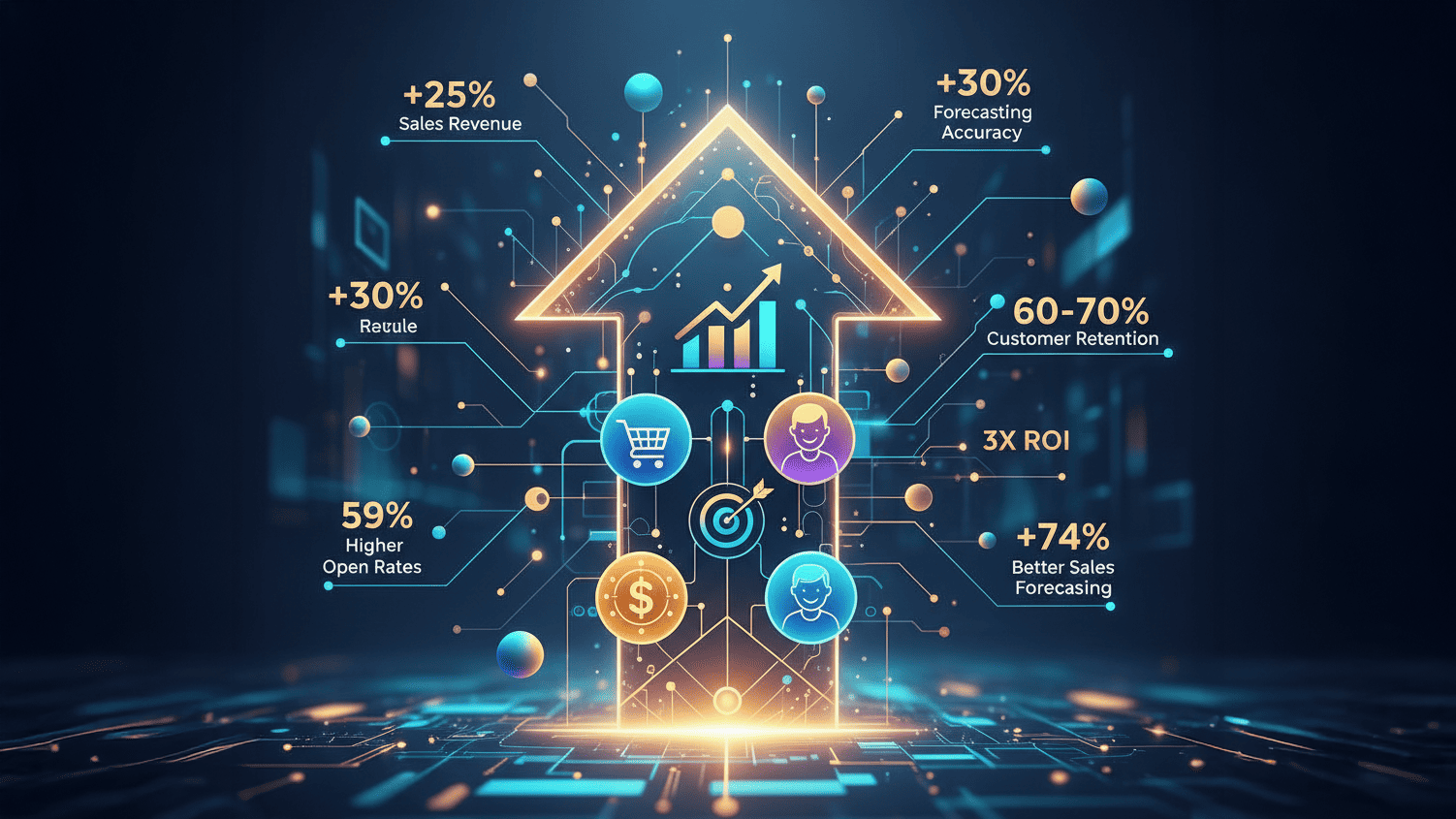
Companies implementing predictive behavioral triggers are seeing dramatic improvements across key metrics. Businesses report 25% increases in sales revenue and 30% improvements in sales forecasting accuracy. Customer retention rates jump from around 50% to 60-70% with personalized triggers.
The ROI numbers are equally impressive. Well-designed trigger campaigns deliver 3× return on investment compared to generic marketing messages. Email campaigns using behavioral triggers achieve 59% higher open rates than standard promotional emails.
Even simple implementations show results. ASOS recovered 10-15% more sales through triggered cart reminder campaigns. Companies using predictive analytics in their CRM systems report 74% better sales forecasting accuracy.
The Technical Challenge Most Companies Miss
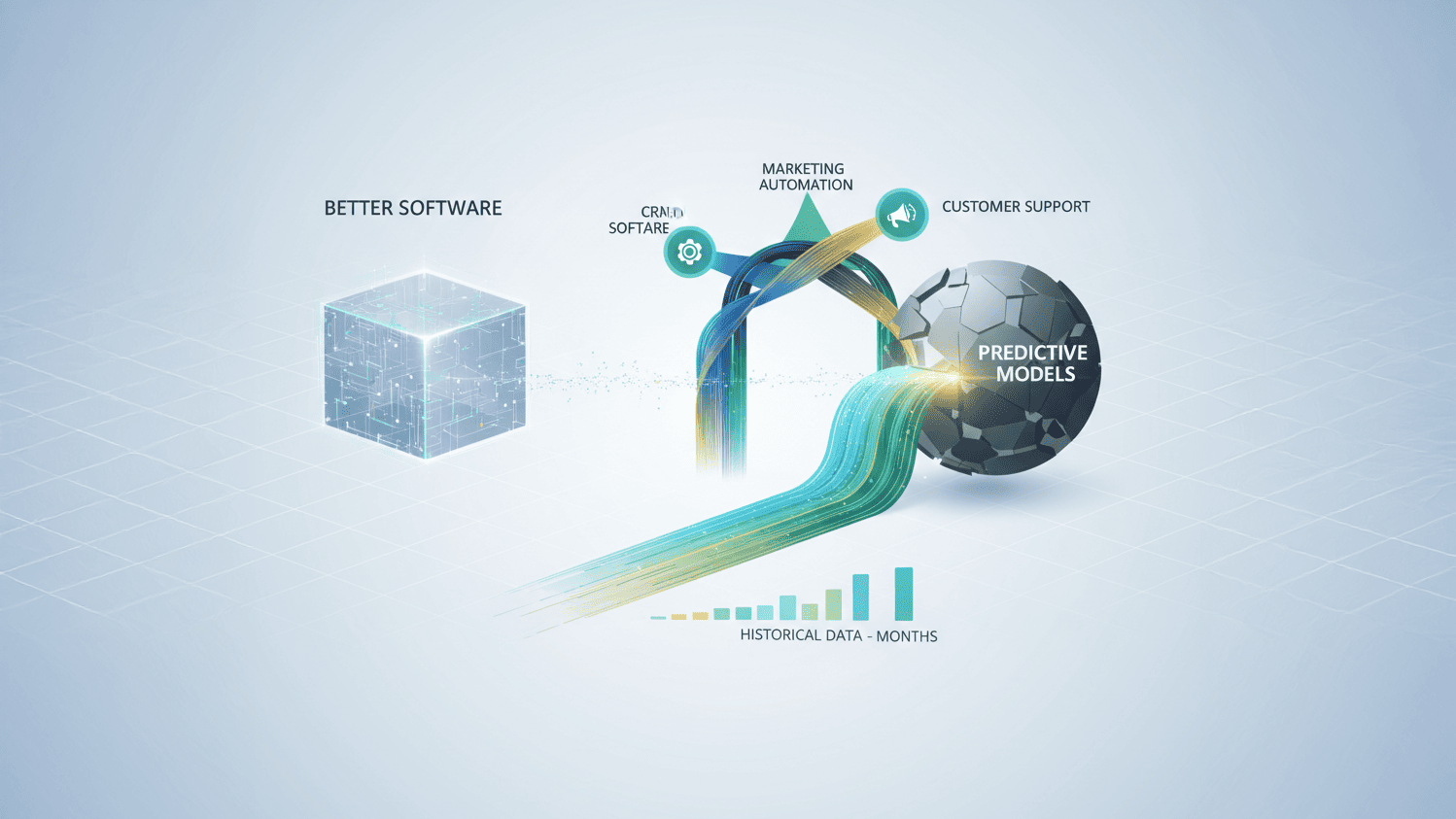
Building effective predictive triggers isn't just about buying better software. The biggest challenge is data quality and integration. Your predictive models are only as good as the data feeding them.
Many companies have customer data scattered across multiple systems – CRM platforms, marketing automation tools, customer support software, and analytics platforms. Creating a unified view requires significant integration work.
The second challenge is model accuracy. Predictive systems need enough historical data to identify meaningful patterns. This means companies need several months of clean, comprehensive customer data before they can build reliable predictive models.
Why Most Companies Get Triggers Wrong
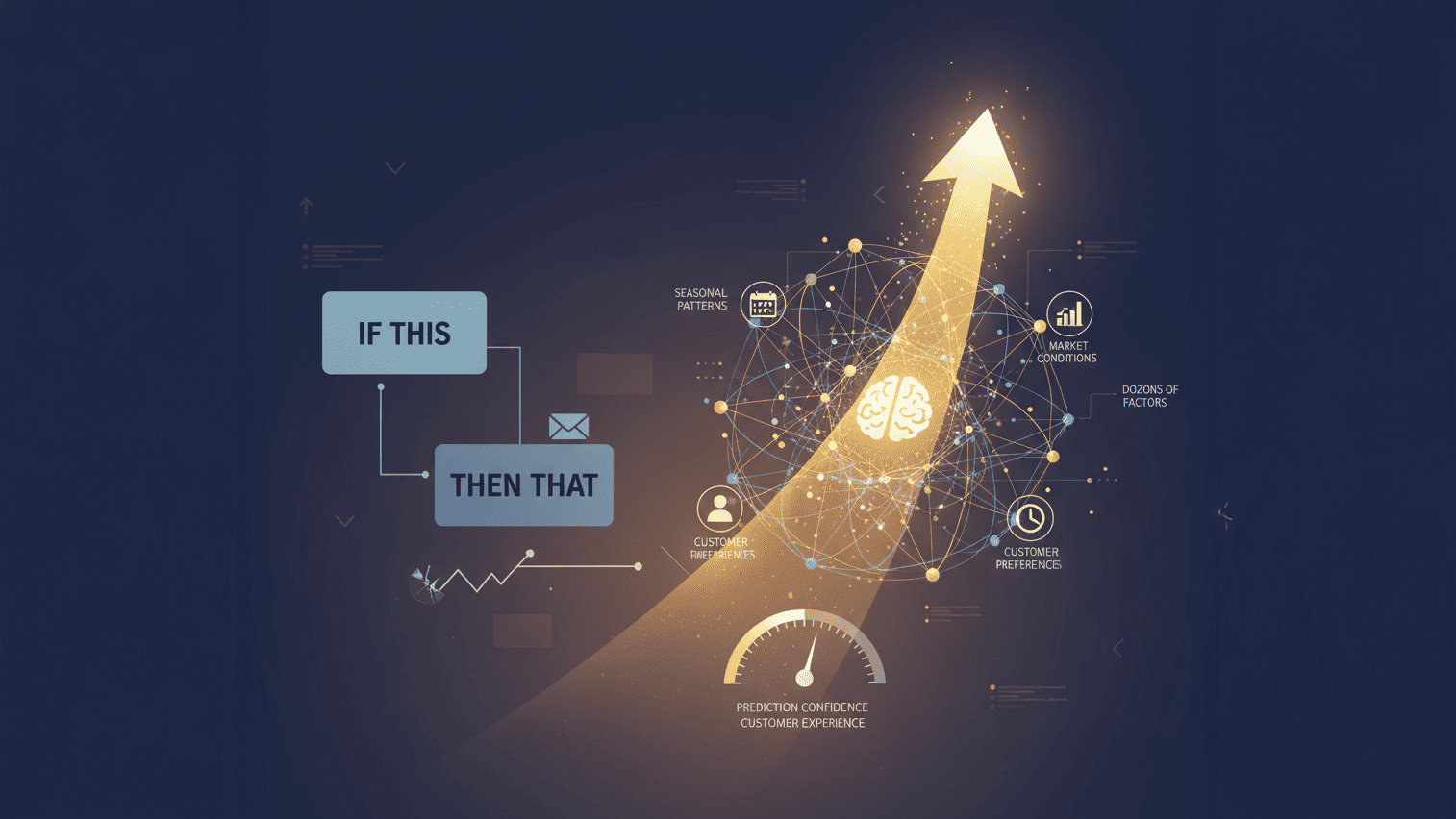
The biggest mistake companies make is treating behavioral triggers like glorified email campaigns. They set up simple "if this, then that" rules and expect miracles.
Real predictive triggers require sophisticated machine learning models that can process multiple variables simultaneously. They need to account for individual customer preferences, seasonal patterns, market conditions, and dozens of other factors.
Another common mistake is over-triggering. Just because your system can predict something doesn't mean it should act on every prediction. The best systems balance prediction confidence with customer experience considerations.
What This Means for Your Business
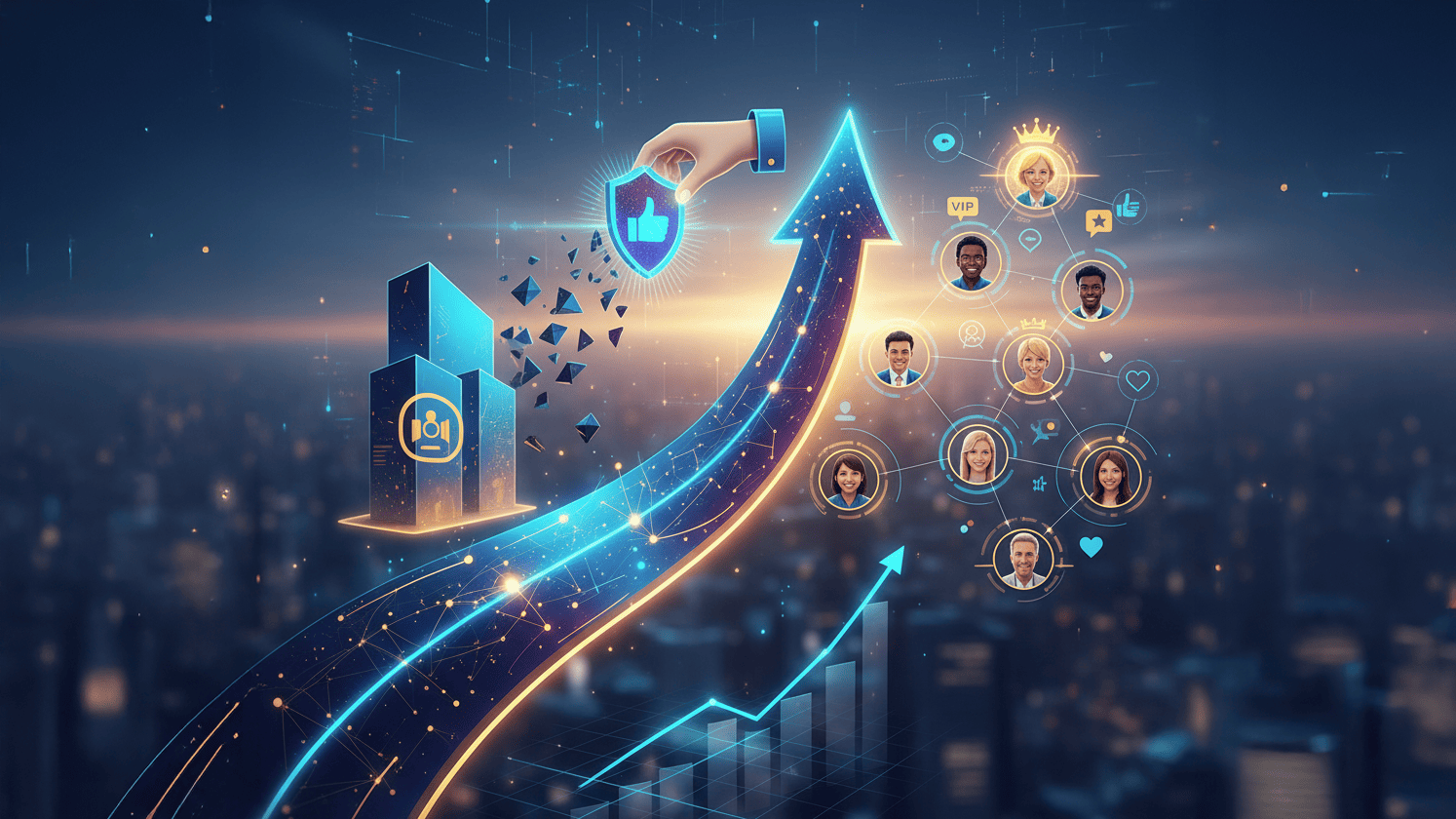
Predictive behavioral triggers represent a fundamental shift in how companies build customer relationships. Instead of reacting to problems, you're preventing them. Instead of sending generic messages, you're delivering personalized experiences at scale.
The competitive advantage is significant. While your competitors are still playing defense, you're anticipating customer needs and exceeding expectations. This proactive approach builds the kind of customer loyalty that's nearly impossible for competitors to break.
For iGaming and online casino operators, predictive triggers are especially powerful. They can identify players at risk of developing problematic playing habits and trigger responsible gaming interventions. They can spot high-value players early and provide VIP treatment before competitors even know these customers exist.
The Future Belongs to Anticipatory Systems

The evolution from reactive to predictive CRM isn't just a technical upgrade but a complete reimagining of customer relationships. Companies that master anticipatory customer engagement will dominate their markets. Those that don't will find themselves constantly playing catch-up.
The technology exists today. Machine learning algorithms are sophisticated enough to make accurate predictions about individual customer behavior. The question isn't whether predictive triggers work – the question is how quickly you can implement them.
About Smartico.ai
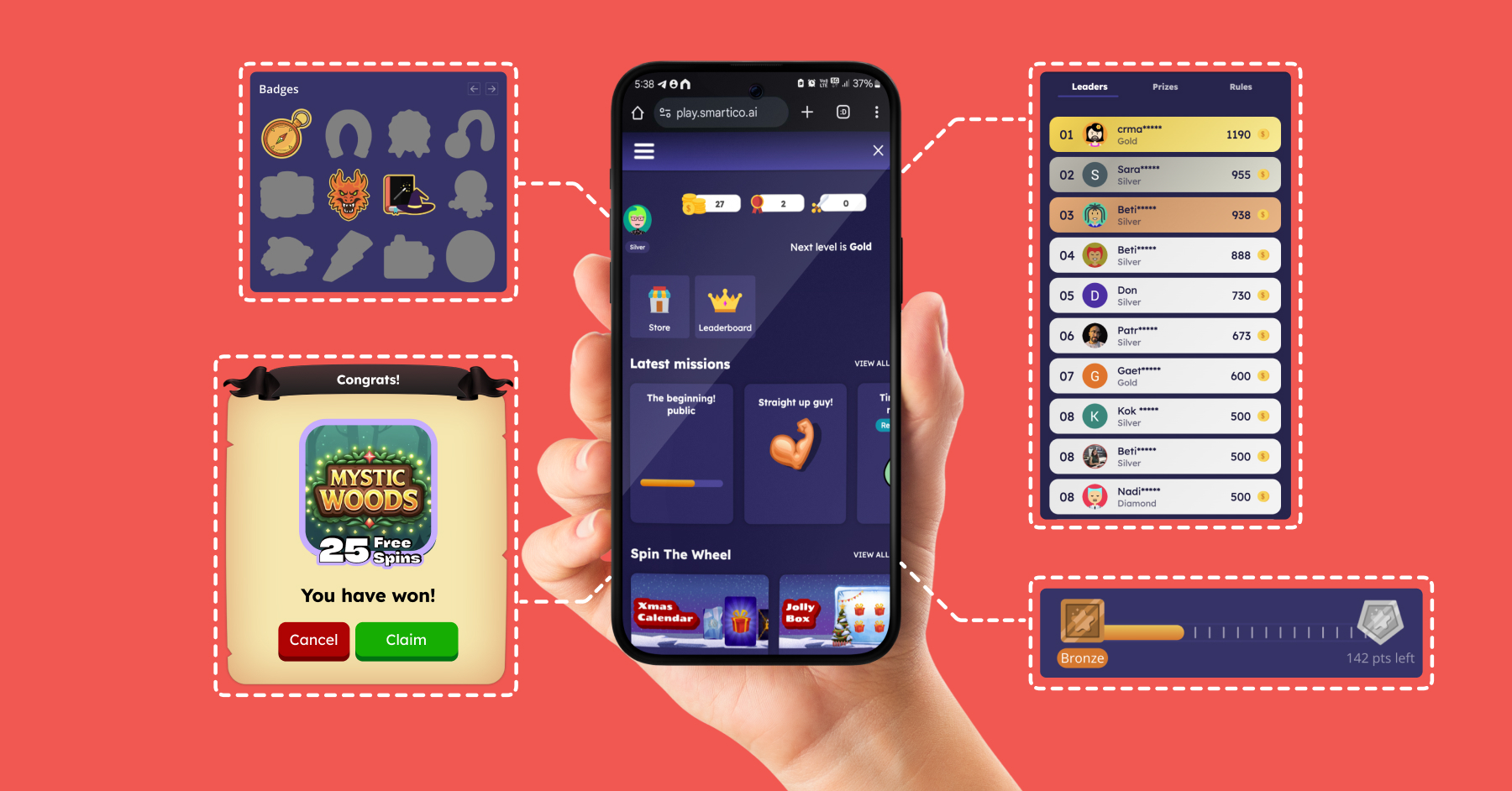
Smartico.ai stands as the first and leading unified Gamification/CRM Automation software in history, pioneering the integration of predictive behavioral triggers with comprehensive customer engagement tools. It combines AI-powered CRM automation with advanced gamification features, enabling companies to anticipate customer needs and respond with personalized experiences that drive engagement and loyalty.
The system's predictive engine analyzes real-time player behavior across multiple touchpoints, automatically triggering customized gamification elements like loyalty wheels, achievement systems, and personalized rewards. This anticipatory approach transforms traditional reactive customer management into proactive relationship building, delivering measurable improvements in retention rates and customer lifetime value for businesses across multiple industries.
Book your free, in-depth demo of Smartico below to see how you can raise your iGaming business’ revenue like nothing you’ve tried before.
{{cta-banner}}
FAQ
- How accurate are predictive behavioral triggers?
Modern machine learning models achieve 70-90% accuracy in predicting customer behaviors like churn and purchase intent. Accuracy improves over time as the system processes more data and refines its models. - What types of customer data are needed for predictive triggers?
Effective predictive triggers require comprehensive behavioral data including website/app usage patterns, transaction history, support interactions, email engagement metrics, and demographic information. The more data sources you integrate, the more accurate your predictions become. - How long does it take to see results from predictive trigger implementation?
Most companies see initial improvements within 4-6 weeks of implementation, with measurable ROI typically achieved within 3-4 months. Full optimization usually occurs within 6-12 months as the machine learning models mature. - Can predictive triggers work for small businesses?
Yes, predictive triggers are particularly valuable for small businesses because they automate personalized marketing that would otherwise require significant manual effort. Many platforms offer entry-level solutions that can provide immediate value even with limited data. - What's the difference between rule-based triggers and predictive triggers?
Rule-based triggers follow simple "if-then" logic (if a player hasn't logged in for 7 days, send email). Predictive triggers use machine learning to analyze hundreds of variables and predict future behavior, enabling much more sophisticated and personalized responses. - How do predictive triggers protect customer privacy?
Ethical predictive trigger systems prioritize customer privacy by anonymizing personal data, providing clear opt-out options, and focusing on delivering value rather than manipulation. The best implementations prioritize customer needs over business objectives.
Conclusion
Predictive behavioral trigger architecture is the foundation of modern customer relationship management. Companies that embrace anticipatory automation will build stronger customer relationships, reduce churn, and drive sustainable growth. The technology is ready. The only question is whether you'll use it before your competitors do.
Did you find this article helpful? If so, consider sharing it with other industry professionals such as yourself.
Ready to use Smartico?
Join hundreds of businesses worldwide engaging players with Smartico.