


Real-Time Customer Lifecycle Orchestration: Dynamic Journey Management at Scale

Most companies think they know their customers. They send birthday emails on schedule. They have automated welcome sequences. They've mapped out the "typical" customer journey on a whiteboard somewhere.
And then a player logs in at 2 a.m., abandons their cart, comes back three hours later from a different device, and the whole system falls apart.
But the problem here isn't automation, but that the automation is stuck in 2015, running on predetermined paths that ignore what's actually happening right now. Real-time customer lifecycle management changes that. It watches what people do and adjusts the experience as they move through it. Not tomorrow, not in the next batch job, but right now.
What Real-Time Customer Lifecycle Orchestration Actually Means

Customer lifecycle management used to be simple. Someone signs up, you send them a welcome email. They make a purchase, you send a thank-you message. They go quiet for 30 days, you send a "we miss you" campaign.
That approach worked when everyone followed the same basic path. It doesn't work anymore.
Real-time customer lifecycle orchestration uses live data at the individual customer level to analyze current behavior, predict what might happen next, and adjust the journey in the moment. When someone starts filling out a loan application and stops halfway through, the system notices. It doesn't wait for a scheduled campaign to run. It sends a message right then, through whatever channel that person actually uses.
{{cta-banner}}
The difference between old-school automation and real-time orchestration is like the difference between following a map and using GPS. One tells you the route before you start. The other adjusts when you hit traffic or miss a turn.
Why Static Customer Journeys Don't Work Anymore

Imagine you’ve built the perfect onboarding sequence. Five emails over two weeks. Each one carefully timed and tested. Then someone goes through three of them in 20 minutes because they're actually excited and ready to engage.
Your system keeps sending the remaining emails on schedule anyway. By the time they get email four, they've already figured things out and moved on. Or worse, they've gotten frustrated and left.
Modern customer journey orchestration helps companies deliver relevant experiences at every stage by using real-time and historical customer data together. If someone completes onboarding in an hour instead of a week, the system sees that and moves them forward. If they struggle with a specific step, it offers help instead of moving to the next scheduled message.
Static journeys assume everyone moves at the same pace. They assume everyone wants the same thing. They assume nothing changes mid-journey. None of these assumptions hold up in practice.
How Dynamic Journey Management Actually Works
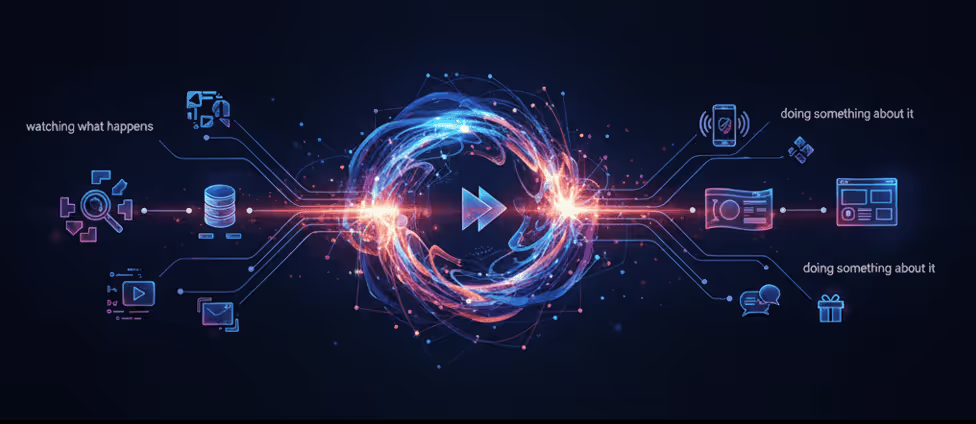
Dynamic journey orchestration runs on three things: watching what happens, figuring out what it means, and doing something about it.
The watching part is straightforward. Modern platforms listen for behaviors and data changes across every channel, including website activity, app events, CRM updates, API calls, even IoT signals. Someone logs in. They click around. They add something to their cart. They pause for 30 seconds on a particular page. All of this gets tracked.
The figuring-out part is where things get interesting. The system does more than merely collect data. It interprets it. Is this person confused or just browsing? Are they ready to buy or still researching? Are they about to churn or just taking a break?
Predictive analytics and AI help identify critical paths in the customer journey, determine context and intent, and enable real-time decision making to deliver relevant, personalized experiences. Machine learning models look at patterns from thousands of other customers and say "okay, when someone does this combination of things, here's what usually happens next."
The doing-something part is where it all comes together. Based on what the system sees and what it predicts, it takes action. Maybe that's sending a push notification. Maybe it's adjusting what shows up on the homepage. Maybe it's routing them to a different support channel or offering a specific bonus at exactly the right moment.
The Building Blocks of Adaptive Customer Experiences
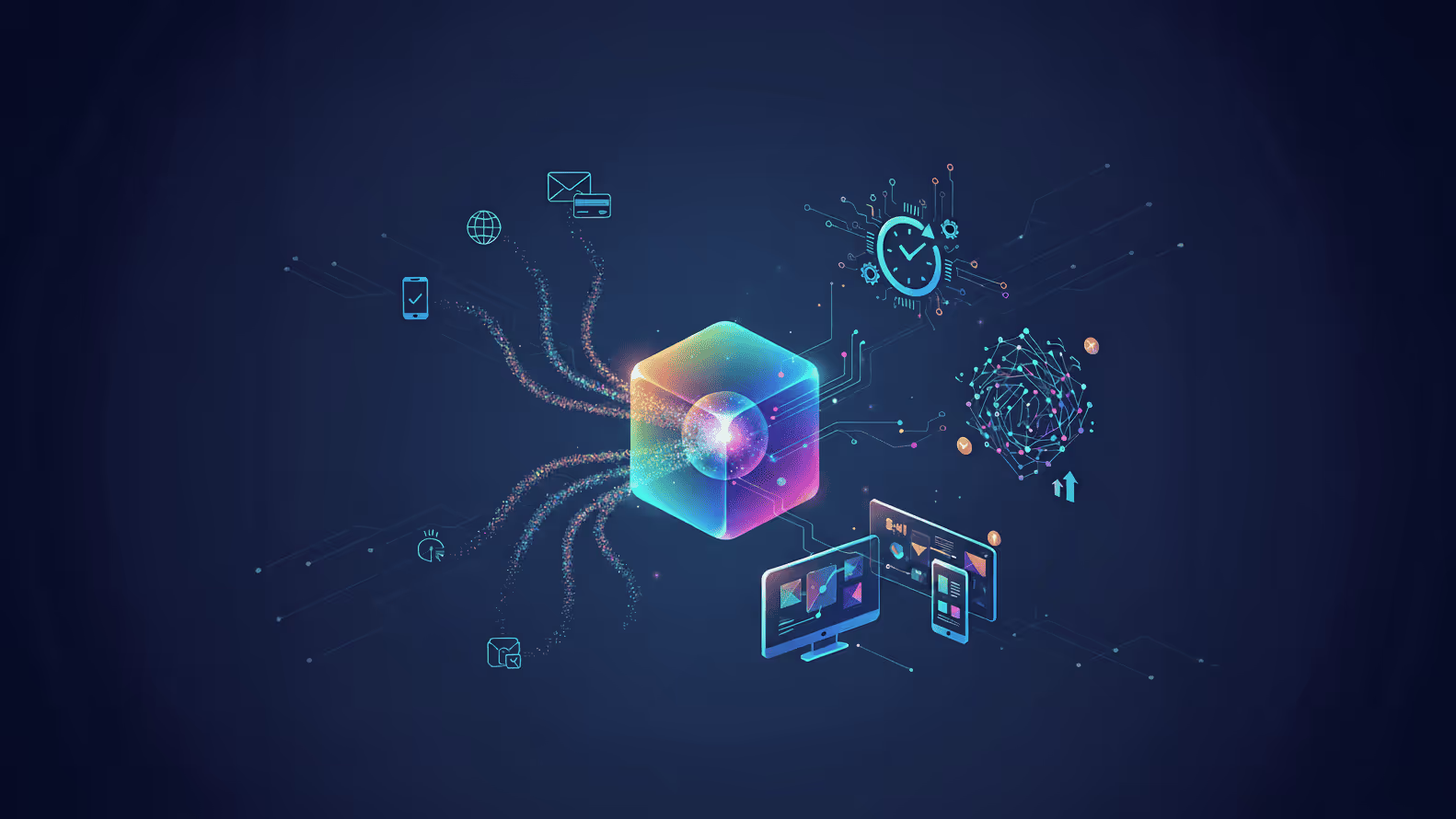
Real-time orchestration platforms handle a lot of moving parts. Here's what matters:
- Unified Data Collection
Everything needs to connect. Your website, your app, your email platform, your payment processor, your customer support system. This creates a single view of the customer that allows for flexible journey planning regardless of where the customer interacts with your brand. When someone switches from desktop to mobile mid-session, the system needs to know they're the same person. - Real-Time Decisioning
The platform can't wait for batch processing or overnight updates. A decisioning engine adjusts message delivery based on each customer's interactions, acting like an air traffic controller for all communications to prevent sending conflicting messages or messages at the wrong time. If someone just contacted support about an issue, don't send them a renewal notice five minutes later. - Multi-Channel Execution
People don't live on one channel anymore. They start on mobile, continue on desktop, get notifications via email, and might interact through in-app messages or SMS. The orchestration system needs to deliver the right message through the right channel based on what actually works for each person. - Continuous Learning
The system gets smarter over time. Every interaction adds data. Every outcome. No matter if someone converted, bounced, or ignored a message, it teaches the models something. This allows marketing teams to recognize and interact with customers across channels in real time and deliver highly correlated, one-to-one content and product recommendations.
Where This Makes the Biggest Difference
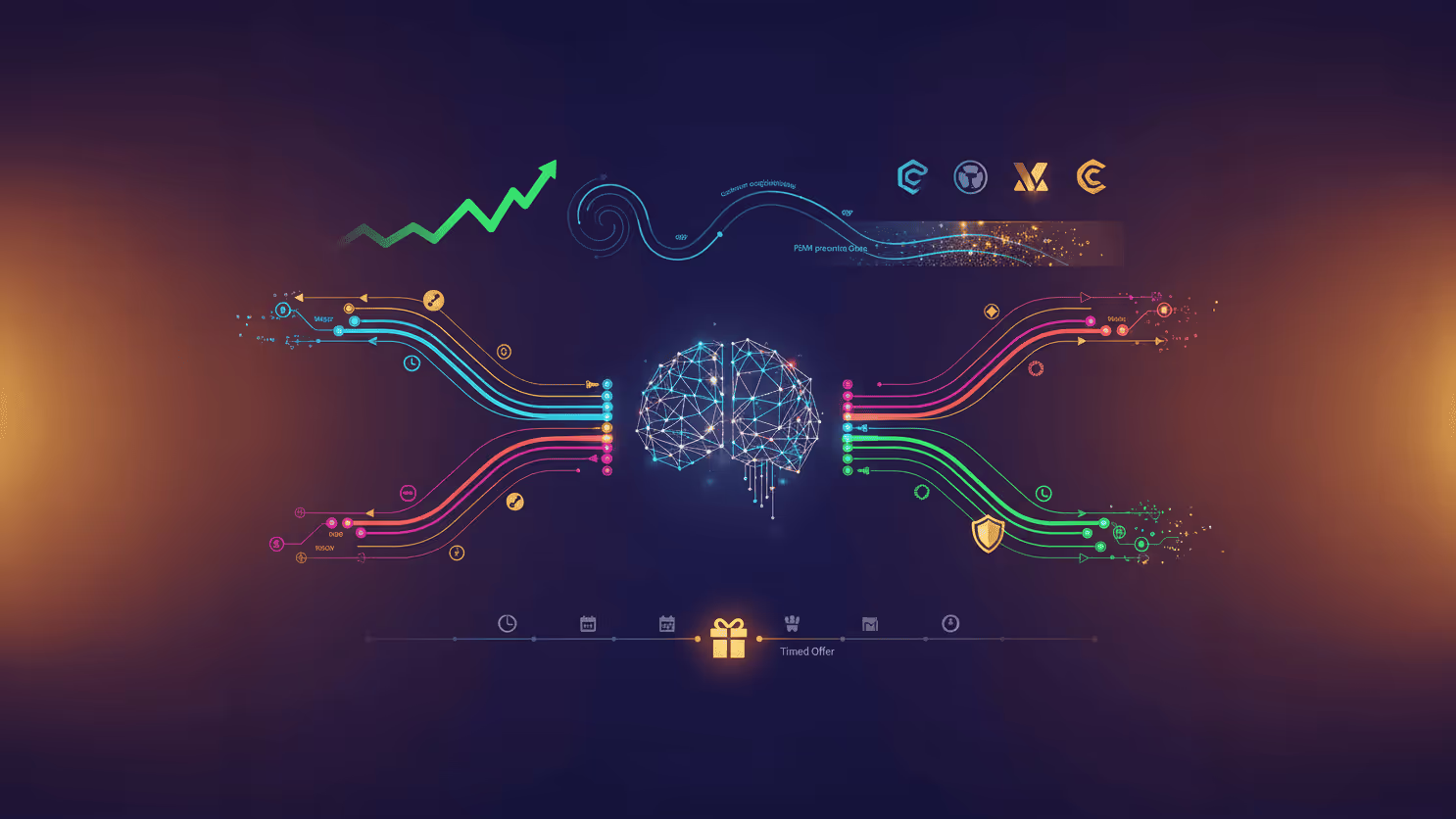
Some industries benefit more from real-time orchestration than others. Online casino gaming is one of them.
Modern iGaming CRMs integrate AI and predictive algorithms to map player journeys with precision, where every click, wager, and pause becomes a data point feeding into models that identify patterns. When someone changes their betting pattern, the system notices. When they show signs of losing interest, it responds before they leave.
CRM automation in iGaming helps businesses map out the customer journey for every point of engagement, using data to develop more customer-oriented campaigns that drive loyalty and retention. If a player consistently plays slots on weekday evenings, the system learns this and can time offers accordingly. If someone usually plays for 20 minutes but suddenly plays for two hours straight, that's a signal worth acting on.
The stakes are different in iGaming. Customer acquisition costs run high. Player lifetime value varies dramatically. The cost of winning over new users can be far higher than retaining existing ones, making CRM one of the best ways to prevent them from turning to competitors. Getting the timing and personalization right directly impacts revenue.
Common Challenges and What Actually Solves Them
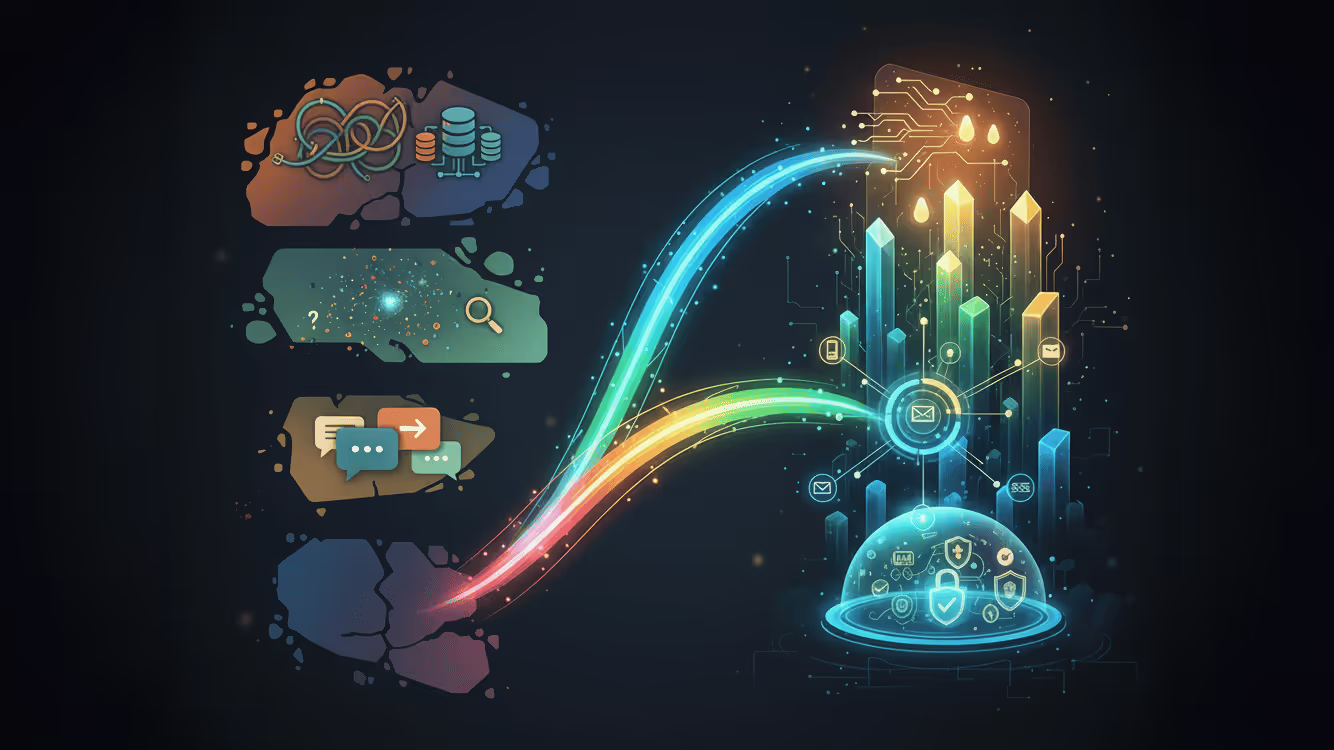
Real-time orchestration sounds great in theory. In practice, companies run into the same problems repeatedly.
- Data Integration Headaches
Your customer data lives in 12 different systems. Getting them to talk to each other takes months of IT work. Organizations need solutions with out-of-the-box data integrations to enable immediate use without extensive IT integration work. Modern platforms handle this through pre-built connectors and APIs that link to common tools without custom development. - Too Much Data, Too Little Insight
You're collecting thousands of data points per customer. You don't know which ones actually matter. Marketing teams need the ability to prioritize insights and automate reporting so they can react to customer engagement in real time. The system should surface what's important and hide the noise. - Channel Conflicts
Your email system wants to send one thing. Your app wants to show something else. Your SMS tool has its own ideas. Journey orchestration acts like an air traffic controller, coordinating all communications to prevent conflicting messages. One platform manages everything so customers don't get bombarded or confused. - Compliance and Privacy Concerns
Real-time personalization needs data. Data comes with rules. Solutions must adhere to the highest standards for privacy, regulatory compliance, and ethical data use. The platform needs built-in safeguards for responsible use, especially in regulated industries.
What Results Look Like in Practice
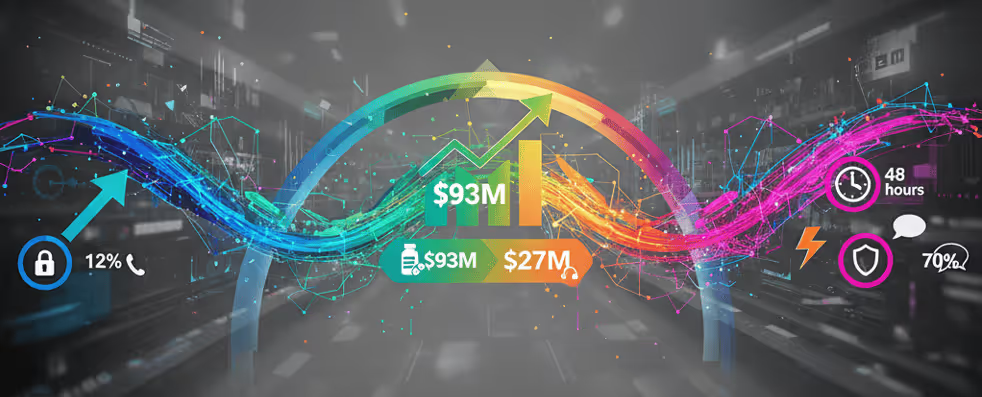
Organizations implementing real-time customer lifecycle orchestration with artificial intelligence and automation are reporting credible, verified improvements across major industries.
For example, the Commonwealth Bank of Australia achieved a 30% drop in customer-reported frauds and a 50% reduction in scam losses after deploying advanced AI-powered alerts and safety features. Deploying AI-powered messaging also helped reduce call center wait times by 40%.
A card-issuing bank using Hazelcast prevented approximately $100 million in annual fraud losses by using real-time machine learning models for instant fraud detection at scale.
In healthcare, hospital automation and AI-powered medication management have led to a reduction of medication dispensing errors by as much as 64.7%, with some departments reporting the elimination of dispensing errors entirely after adopting automated robots and advanced dispensing cabinets.
Within iGaming, AI and machine learning have enabled operators to realize significant performance boosts. For example, according to recent aggregated industry data, AI-powered churn prediction tools have reduced player attrition by up to 20%. Modern churn analytics solutions are now capable of predictive accuracy rates between 92–96%, giving companies the data-driven ability to retain high-value customers through proactive interventions.
This is what happens when you move from treating all customers the same to adapting to what each person actually does.
Making It Work at Scale
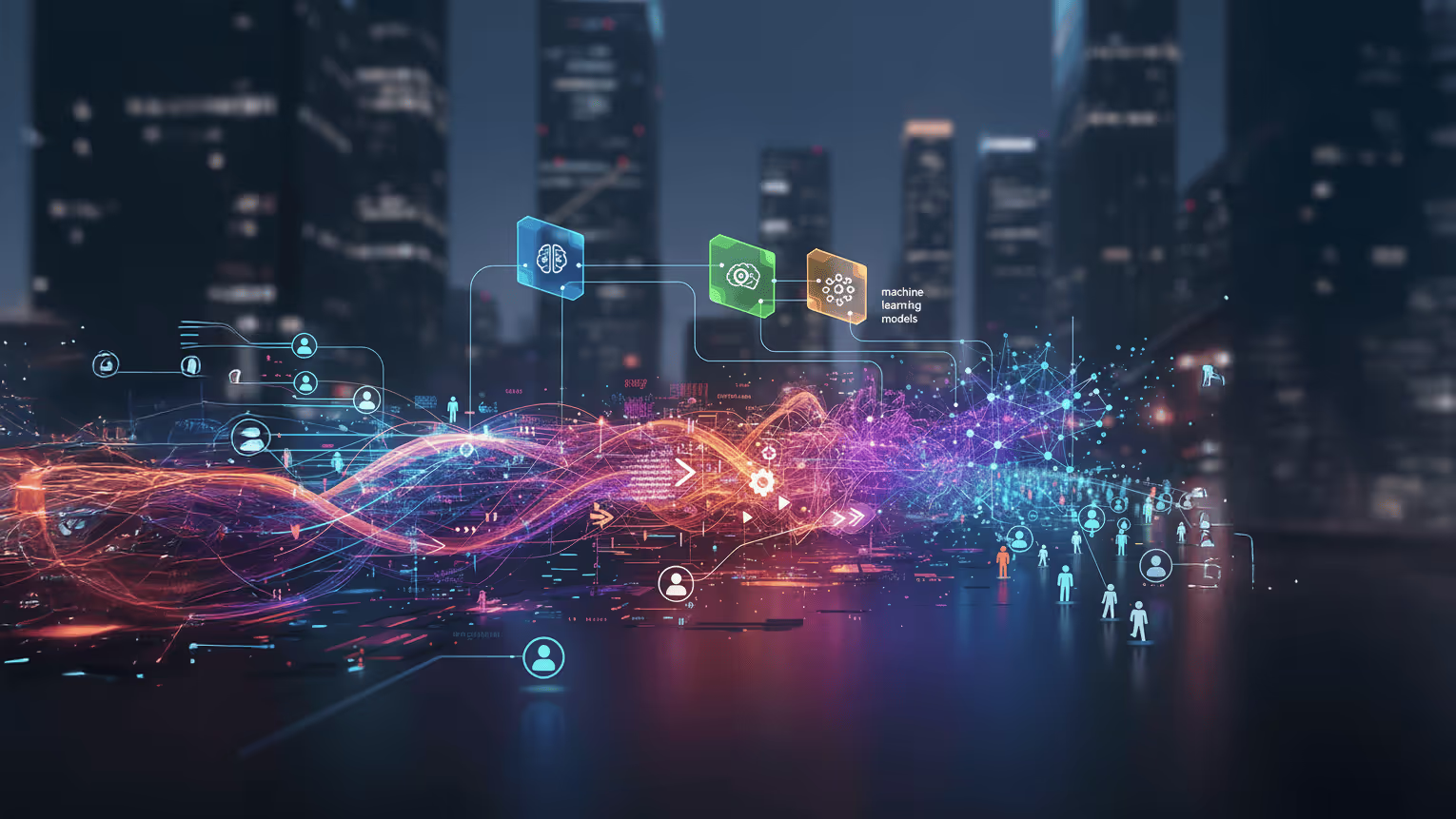
Small-scale personalization is easy. You can manually segment customers and create targeted campaigns for each group. But that approach breaks down fast.
When you're dealing with thousands or millions of customers, each on their own journey, moving at their own pace, you need automation that can handle the complexity. Modern platforms provide real-time data engines that give instant access to player behavior, which allows operators to respond to user actions as they happen.
The key is setting up the rules and triggers once, then letting the system execute them automatically. No-code journey builders with real-time data updates and triggered automated workflows let marketers design complex paths without IT support. When someone hits a specific milestone or shows certain behavior, the system knows what to do.
Scale also means the system needs to learn from every interaction across your entire customer base. Machine learning models select the optimal content, timing, and channel for each customer interaction based on patterns from all previous interactions. The more customers you have, the smarter the system gets.
The Technical Reality Behind the Scenes

Real-time orchestration requires serious infrastructure. You're processing events as they happen, running predictive models in milliseconds, and coordinating actions across multiple systems simultaneously.
Modern platforms connect via lightweight API feeds with less than 100ms latency, syncing with gaming platforms for instant bonus triggers. Speed matters because the moment passes quickly. Someone abandoning a transaction needs a response within seconds, not minutes.
The platform also needs to handle massive throughput. During peak times, you might have thousands of customers active simultaneously, each generating dozens of events. The system processes all of this, runs the predictions, and executes the right actions without slowing down.
Built-in A/B testing with direct attribution and smart goal conversion tracking reveals the true impact of efforts without manual work. The technical complexity happens behind the scenes. Marketers see a clean interface for building journeys and reviewing results.
How Smartico.ai Handles Dynamic CRM Orchestration
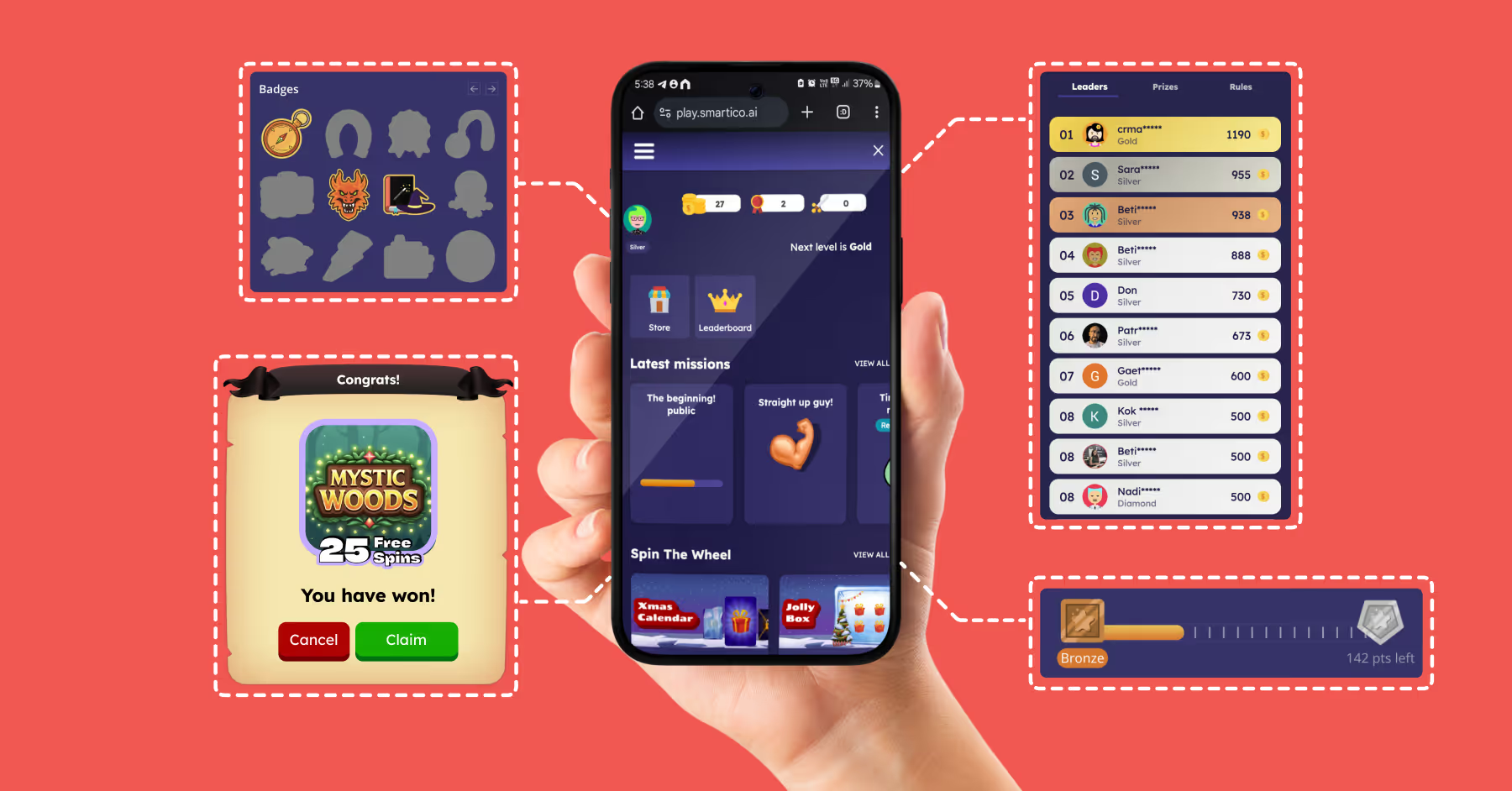
Smartico.ai was the first platform to unify Gamification and CRM Automation specifically for iGaming. Founded in 2019 by four friends with over 40 years of combined experience, the company created a unified platform after seeing how overly complex and fragmented existing tools were.
Smartico combines real-time CRM automation with engagement tools in a single system. Operators can streamline every step of the player journey from onboarding to loyalty using hyper-personalized messaging and automated workflows. Everything from segmentation to bonus management to multi-channel communication runs through one interface.
Smartico brings CRM and gamification together, which allows operators to engage players through personalized campaigns while rewarding their actions in real time, including tailored messages to points, missions, and achievements, all managed in one place. When someone completes a mission, the CRM can automatically trigger the next relevant offer. When behavior suggests they might churn, the system can deploy retention tactics immediately.
The software uses real-time journey builders that let operators engage players at the perfect moment, triggering rewards when they hit milestones and sending push notifications during live events. Operators report seeing retention rates increase significantly through personalized gamified experiences, with campaign efficiency improving through automated workflows.
Smartico focuses on personalization and efficiency by blending real-time automation, gamification, and actionable insights to help operators optimize every interaction. The system is built as a no-code platform, making it configurable without development work. Every feature was shaped by customer feedback from iGaming operators.
To find out how Smartico can help your business specifically raise loyalty and retention like nothing you’ve tried before, book your free, in-depth demo below.
{{cta-banner}}
FAQ

1. How is real-time orchestration different from marketing automation?
Marketing automation sends scheduled messages based on predetermined triggers. Real-time orchestration continuously analyzes behavior and adjusts the journey as it happens. Think of one as following a script, the other as improvising based on what the customer actually does.
2. Does real-time personalization require a data science team?
Not anymore. Modern platforms handle predictive modeling and decision-making automatically. Marketers set up the business rules and goals. The AI handles the technical analysis and execution.
3. Can small companies benefit from lifecycle orchestration?
Absolutely. The technology scales down as well as up. Even with a few hundred customers, being able to respond to individual behavior in real time improves outcomes. The systems are designed to work for businesses of all sizes.
4. What happens if the system makes the wrong decision?
Orchestration platforms learn from outcomes. If an action doesn't work, that feeds back into the model. Over time, the system gets better at predicting what works for different customer types and situations. You can also set guardrails and approval workflows for certain high-stakes actions.
5. How long does implementation typically take?
It varies by complexity, but many platforms offer pre-built integrations and templates. Some companies see initial results within weeks. Full implementation across all channels and use cases might take a few months as teams learn the system and refine their strategies.
Final Words
Customer lifecycle management is moving from static planning to dynamic adaptation. The companies winning today aren't the ones with the fanciest journey maps on their wall, but the ones whose systems can see what customers actually do and respond in the moment.
Real-time orchestration turns customer data into action. It takes the guesswork out of timing and personalization. And it works at scale without requiring armies of people to manage it. For industries where timing and relevance matter, especially iGaming, this isn't optional anymore. It's how modern customer relationships work.