


The Retention Economics of Free-to-Play Mini-Games: Converting Non-Depositors

Here's something most iGaming operators know but don't talk about: roughly 95 to 98% of people who sign up for your platform will never make a deposit. They'll browse. They'll click around. Maybe they'll even play a few free games. Then they're gone.
That's a lot of lost potential sitting in your database. Think about it. You paid good money to acquire these players through ads, affiliates, or SEO. They registered. They verified their emails. They showed interest. But when it came time to pull out a credit card, they bounced.
The question is not whether these non-depositors exist, but what you're going to do about them.
Here’s how you should approach it...
The Non-Depositor Problem Nobody Wants to Address

The iGaming industry has a conversion problem. Player acquisition costs keep climbing while first-time deposit rates stay stubbornly low. Operators spend anywhere from $200 to $300 per player in competitive markets, only to watch most of them disappear without spending a cent.
Traditional approaches don't work here. You can't just throw another welcome bonus at these players. They've already seen your deposit match offer. They ignored it. Sending them endless emails about promotions won't help either. That just trains them to hit the unsubscribe button faster.
{{cta-banner}}
Non-depositors need something different. They need a reason to stick around that doesn't involve opening their wallets right away. They need to feel like they're getting value before they commit. Most importantly, they need to have fun.
That's where free-to-play mini-games come in.
What Free-to-Play Mini-Games Actually Do

Free-to-play mini-games are exactly what they sound like: small, quick games that players can access without making a deposit. We're talking about Loyalty Wheels, Scratch Cards, Daily Loot Boxes, and similar mechanics.
These are lighter than your main casino games. Faster. More casual. But they serve a specific purpose in your retention strategy.
Here's how they work:
- Loyalty Wheels give players a daily or weekly spin for rewards. Simple mechanic. Visual appeal. Instant gratification. Players log in, spin the wheel, collect whatever prize lands, and move on with their day. Takes maybe 30 seconds.
- Scratch Cards tap into that lottery-ticket psychology. Players scratch off virtual panels to reveal prizes underneath. The anticipation builds as each panel gets revealed. Will it be bonus spins? Free credits? A bigger reward?
- Daily Loot Boxes offer rewards for simply showing up. Open the box. Get your prize. Come back tomorrow for another one. The streak mechanic keeps players returning day after day.
- Prediction Games let players guess outcomes of real-world events or game results. Right prediction equals rewards. Wrong prediction equals try again tomorrow.
These mini-games cost operators almost nothing to run. There's no game provider taking a cut. No licensing fees for each play. You control the entire economy. But more importantly, they give non-depositors a reason to keep coming back.
The Psychology Behind the Economics

The economics of free-to-play mini-games don't make sense until you understand the psychology. When someone plays your mini-games regularly, several things happen in their brain:
1. They start building a habit.
Daily login becomes part of their routine. Check email. Scroll social media. Spin the loyalty wheel. The action becomes automatic.
2. They accumulate virtual assets.
Maybe it's loyalty points. Maybe it's entries for a bigger prize draw. Whatever the reward structure, they're building something up in your ecosystem. And once someone has invested time building something, walking away feels like a loss.
3. The variable reward schedule kicks in.
Sometimes the wheel lands on a big prize. Sometimes it's small. That unpredictability keeps the brain engaged in a way that consistent rewards can't match. It's the same principle that makes slot machines work.
4. There's the endowment effect.
When players receive free rewards through mini-games, they value those rewards more than they would if you just gave them a flat bonus. The act of "winning" something through the mini-game creates ownership and attachment.
Three Ways Mini-Games Drive Conversion

1. Building Familiarity and Trust
Non-depositors are usually skeptical. They don't know your brand yet. They're not sure if they'll actually get paid if they win. They're testing the waters.
Mini-games let them experience your platform without risk. They interact with your interface. They see rewards being credited to their account. They might even use some free bonus spins you awarded them. Everything works smoothly. The skepticism fades.
After a few weeks of daily logins and small wins, your platform stops feeling like a stranger. It feels familiar. Safe. When they finally decide to make that first deposit, you're the obvious choice because they're already comfortable there.
2. Creating Value Before the Ask
Think about how most relationships work. You don't propose marriage on the first date. You don't ask someone to invest thousands of dollars in your business the first time you meet. You build value first.
Mini-games front-load the value exchange. Players get entertainment, rewards, and engagement before you ask them for money. By the time they've been spinning your loyalty wheel for three weeks, they've received real benefits from your platform. Now when you present an offer to deposit, it doesn't feel like a cold transaction. It feels like the natural next step.
3. Identifying the Right Moment
Here's something interesting: Not all non-depositors are the same. Some will never deposit no matter what you do. Others are just waiting for the right moment or the right offer.
Mini-game engagement data helps you spot the difference. A player who logs in daily to spin the wheel is showing consistent interest. A player who just claimed your welcome bonus and vanished probably isn't coming back. The data tells you who's worth nurturing and who's a lost cause.
This matters because you can time your deposit promotions better. Instead of blasting everyone with the same offer, you target active mini-game players with personalized incentives based on their behavior. Someone who's been building up loyalty points for two weeks might respond well to an offer that converts those points into deposit bonus funds. Someone who loves scratch cards might appreciate a deposit offer that includes extra scratch cards.
The Numbers That Actually Matter
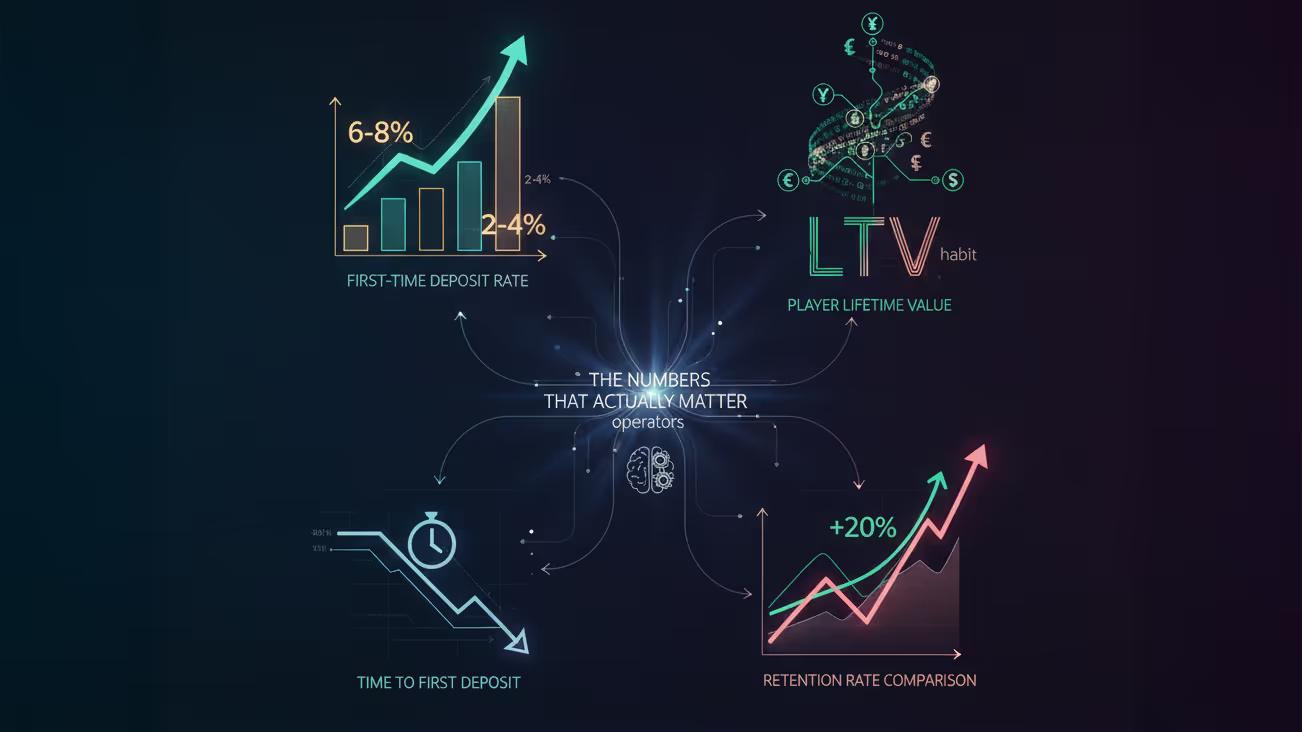
Most operators focus on the wrong metrics when evaluating mini-games. They look at engagement rates and session times. Those numbers are fine, but they don't tell you what you actually need to know.
The metrics that matter for non-depositor conversion are:
First-Time Deposit Rate Among Mini-Game Users - What percentage of players who engage with mini-games eventually make their first deposit? Compare this to your overall first-time deposit rate. The gap between these numbers tells you if mini-games are working.
Time to First Deposit - How long does it take mini-game users to convert compared to users who don't engage with mini-games? If mini-games are working correctly, they should reduce this timeline even if they don't increase the overall conversion rate, because they keep players engaged longer.
Player Lifetime Value by Engagement Level - Players who use mini-games regularly before depositing often have higher lifetime values than players who deposit immediately. They've already formed a habit of daily logins. That habit doesn't disappear after they become depositors.
Retention Rate Comparison - Do players who engage with mini-games stick around longer after their first deposit? This number usually surprises operators. The answer is almost always yes, and sometimes dramatically so.
Industry data shows that gamification elements can boost engagement rates by roughly 20% and improve retention significantly. For mini-games specifically, operators who implement them properly see conversion rates from registration to first deposit improve from the typical 2-4% range to 6-8% among engaged users.
Common Mistakes That Kill ROI

Mini-games aren't magic. Plenty of operators implement them and see zero results. Usually, it's because they made one of the following mistakes:
Making Rewards Too Stingy - If your loyalty wheel only gives out worthless prizes, players stop spinning it. The rewards need to feel valuable enough to justify the daily login, even if they're small.
Making Rewards Too Generous - On the flip side, if you give away so much through mini-games that players never need to deposit, you've defeated the purpose. The rewards should enhance the experience, not replace actual gameplay.
Ignoring the Data - Mini-games generate valuable behavioral data. Players who spin the wheel every day at 9 PM are telling you something. Players who only claim rewards on Fridays are telling you something different. Ignoring these patterns means missing conversion opportunities.
Not Integrating With CRM - Mini-games shouldn't exist in a silo. They need to connect to your broader CRM and marketing automation. A player who just won a big prize from a scratch card should immediately receive a personalized message about depositing to use that prize in real games.
Forgetting About the Main Product - Mini-games are a tool for engagement and retention. They're not the main attraction. If your mini-games are more fun than your actual casino games, something has gone wrong.
Building a Mini-Game Strategy That Works

Start with one or two mini-games. Test them. Measure the results. Then expand.
Your first mini-game should be simple. A daily login wheel works well because it's visual, quick, and easy to understand. Set it up so players get one free spin per day. Award a mix of prizes: small amounts of bonus funds, free spins, loyalty points, and occasionally something bigger.
Track who's using it daily. After a week, send those daily users a personalized message acknowledging their engagement. After two weeks, offer them a special first-time deposit bonus that builds on what they've already won through the wheel. Something like: "You've collected 500 loyalty points from daily spins. Deposit now and we'll add 50% more to kick-start your real money play."
The key is creating a natural bridge from free play to real money play. Mini-games build the bridge. Your deposit offers get them to cross it.
Why This Matters More Than Ever

Player acquisition costs aren't going down. Competition isn't getting easier. Operators who can't convert non-depositors efficiently will lose ground to operators who can.
The old playbook of bigger welcome bonuses and more aggressive marketing doesn't work anymore. Players are saturated with offers. They've developed banner blindness. They expect value upfront before committing.
Free-to-play mini-games answer that expectation. They give players a reason to engage without demanding money first. They build habits, trust, and familiarity. Most importantly, they turn your database of inactive registrations into a pipeline of warm prospects who actually convert.
The economics are simple: You've already paid to acquire these players. Getting even 10% of them to convert instead of 2% is like getting a 400% return on your acquisition spend. That's the kind of math that changes a business.
Smartico.ai: The Platform That Makes It Possible
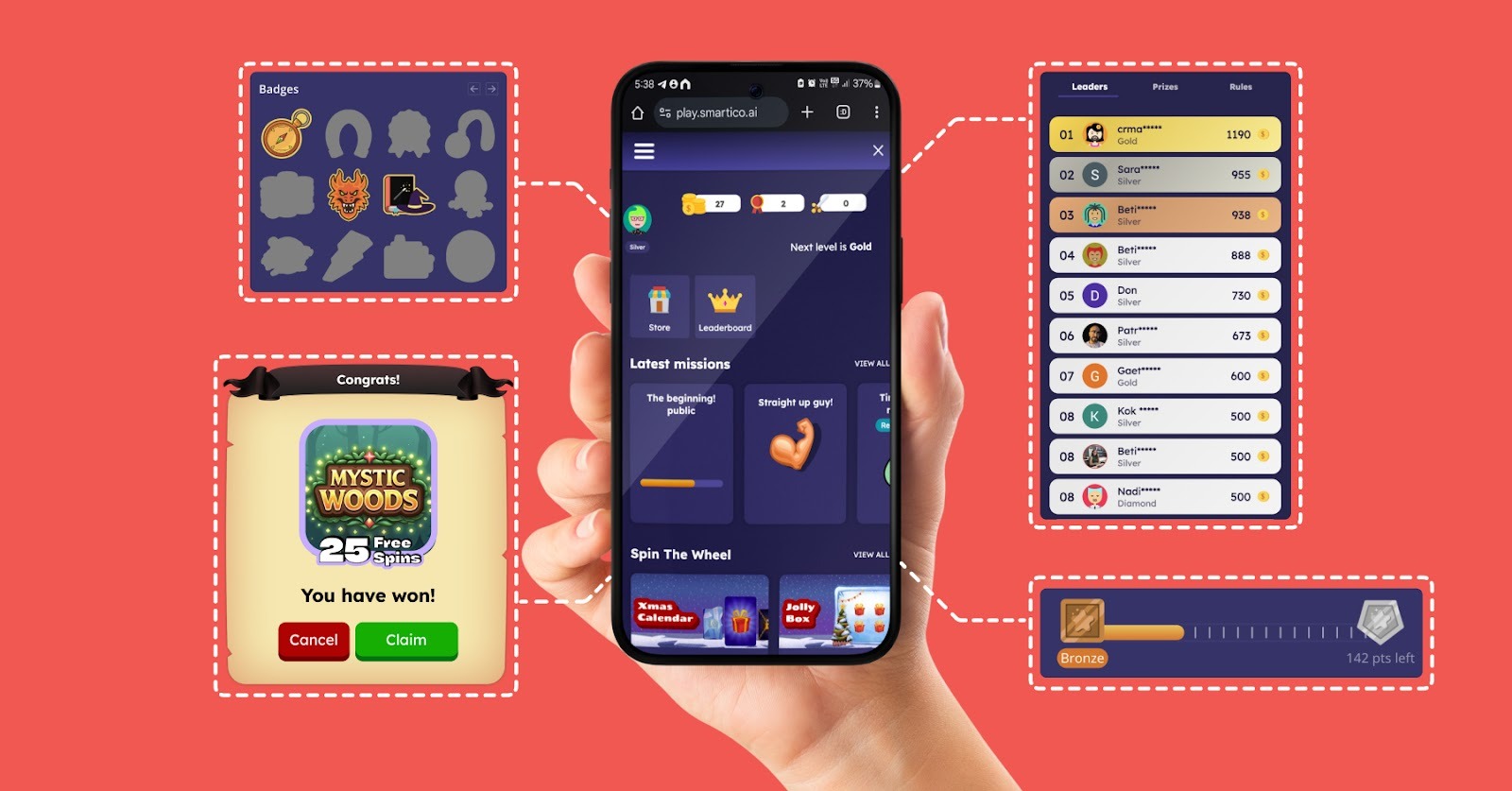
Smartico.ai pioneered unified Gamification and CRM Automation for the iGaming industry. The platform combines everything operators need to implement effective mini-game strategies: loyalty wheels, scratch cards, daily loot boxes, and more, all integrated with powerful CRM automation tools.
The platform's AI models predict player behavior, identify conversion opportunities, and automate personalized messaging based on mini-game engagement. Operators can create custom mini-games, set reward structures, and track performance through a single dashboard. Integration with existing casino platforms takes minimal development effort, and the system scales from small operators to enterprise-level deployments with hundreds of brands.
Book your free, in-depth demo of Smartico below and find out how it can help raise your loyalty, retention, and revenue levels like nothing you’ve tried before.
{{cta-banner}}
FAQ: Converting Non-Depositors With Mini-Games

How long should I run mini-games before expecting conversion results?
Give it at least 30 days to see meaningful patterns. Some players convert quickly, but the real value shows up in the 30-90 day window when habit formation takes effect.
What's the ideal reward value for daily mini-games?
Aim for rewards worth roughly 1-5% of your target first deposit amount. So if your typical first deposit is $50, daily mini-game rewards should range from $0.50 to $2.50 in value.
Can mini-games reduce my overall bonus costs?
Yes. Many operators find they can reduce traditional welcome bonus amounts because mini-games provide ongoing value. Players are less focused on the upfront bonus number when they're already receiving daily rewards.
How do I prevent mini-game abuse or bonus hunters?
Implement daily claim limits, require verification before significant rewards, and track player patterns. Legitimate players show consistent engagement over time. Bonus hunters show erratic spikes and usually disappear after claiming maximum rewards.
Should mini-games be available to depositors too?
Absolutely. Mini-games work for retention across your entire player base. Just adjust the reward structure so depositors get additional benefits that reflect their higher value.
What happens if players only use mini-games and never deposit?
That's fine. Not everyone will convert. But data consistently shows that active mini-game users convert at much higher rates than inactive users. Focus on the players who do convert rather than worrying about the ones who don't.
The Bottom Line
Non-depositors are not a lost cause, but an opportunity sitting in your database waiting for the right approach. Free-to-play mini-games give these players a reason to stay engaged without asking for money upfront. The mechanics are simple. The psychology is proven. The economics work. Start with one mini-game. Track the results. Build from there. Your competitor down the street is already doing this. The question is whether you'll catch up before they've converted all the players you're ignoring.