


CRM в маркетинге: стратегия, инструменты и лучшие практики на 2026 год
.avif)
Если вы управляете маркетинговыми кампаниями в 2026 году без правильная стратегия CRM, по сути, вы пытаетесь запомнить сотни разговоров клиентов, жонглируя горящими факелами. Не идеально.
Управление взаимоотношениями с клиентами в маркетинге превратилось из простых баз данных контактов в интеллектуальные системы, которые прогнозируют поведение, автоматизируют персонализацию и фактически помогают строить масштабные отношения. Разница между успешными компаниями и компаниями, испытывающими трудности, часто заключается в том, насколько хорошо они используют CRM для связи с клиентами.
В этом руководстве описано все, что вам нужно знать о маркетинговой стратегии CRM, от выбора правильных инструментов до внедрения действительно эффективной автоматизации. Независимо от того, управляете ли вы платформой iGaming, управляете программами лояльности или просто пытаетесь предотвратить исчезновение потенциальных клиентов в пустоте, здесь вы найдете практические ответы.
Что на самом деле означает CRM для маркетинговых команд
По своей сути CRM — это одновременно инструмент и стратегия управления каждым взаимодействием с текущими и потенциальными клиентами на протяжении всего их пути к вашему бренду. Для маркетинговых команд это означает наличие точных и доступных данных, лежащих в основе каждого принимаемого вами решения по рекламной кампании.
Подумайте о ваша CRM как центральная нервная система вашей маркетинговой операции. Он объединяет данные клиентов из электронных писем, посещений веб-сайтов, взаимодействий в социальных сетях, истории покупок и обращений в службу поддержки в один унифицированный профиль. Когда кто-то открывает ваше письмо в 2 часа ночи, покидает корзину, а затем возвращается через три дня, ваша CRM-система отслеживает всю историю, чтобы маркетинговые агентства могли отреагировать разумно.
{{cta-баннер}}
Возможности, ориентированные на маркетинг, выходят за рамки простого управления контактами. Современные CRM обеспечивают сегментацию на основе поведенческих и демографических данных, отслеживание эффективности кампаний по всем каналам, оценку потенциальных клиентов для выявления наиболее перспективных потенциальных клиентов и автоматизацию рабочих процессов, позволяющих налаживать отношения без ручных усилий. Они также предоставляют аналитику, показывающую, какие маркетинговые стратегии действительно приносят доход, а какие просто выглядят на панели управления.
Вот что отличает CRM от инструментов автоматизации маркетинга: CRM управляет всем жизненным циклом клиентов и данными о взаимоотношениях, а автоматизация маркетинга отвечает за выполнение кампаний и повторяющиеся задачи. CRM — это ваша энциклопедия клиентов; автоматизация маркетинга — это линия по сборке ваших кампаний. Вам нужны и те, и другие, и они работают лучше всего, когда они интегрированы.
Почему вашей маркетинговой стратегии нужна CRM в 2026 году
Цифры рассказывают интересную историю. Компании, использующие CRM-системы, сообщают о средней окупаемости инвестиций около 8,71 долл. США за каждый вложенный доллар, при этом некоторые внедрения приносят доход, превышающий 100%. Маркетинговые команды, использующие CRM, видят производительность рост на 14,6%, а также те, которые включают функции искусственного интеллекта сообщить о ростах на 10-15% в исполнении.
Но помимо статистики, CRM решает реальные маркетинговые проблемы. Это не позволяет вам отправлять рекламные электронные письма клиентам, которые уже купили продукт. Это предотвращает потерю потенциальных клиентов из-за того, что кто-то забыл подписаться на них. Это гарантирует, что ваша команда не использует устаревшую информацию о клиентах, которая приводит к досадным ошибкам.
CRM обеспечивает персонализацию, которую клиенты теперь ожидают в стандартной комплектации. В 2026 году обычные рассылки электронной почты принесут ужасные результаты, потому что люди привыкли получать информацию, адаптированную к их поведению и предпочтениям. CRM — это база данных, позволяющая выполнять персонализированные решения в нужном масштабе — например, отправлять рекомендации по продуктам на основе истории просмотров или подлинные подарки ко дню рождения.
Руководителям маркетинга CRM дает представление о том, что на самом деле работает. Вы можете отслеживать, какие кампании привлекают квалифицированных клиентов, точно рассчитывать затраты на привлечение клиентов, оценивать стоимость жизни клиентов по сегментам и прогнозировать доход на основе данных о конвейере. При принятии решения о том, куда распределить бюджет, такой подход, основанный на данных, позволяет вместо догадок полагаться на факты.
Альтернатива CRM — разбросанные данные по нескольким электронным таблицам, разрозненные команды, работающие с разной информацией, выполняемые вручную задачи, отнимающие много часов в неделю, и упущенные возможности из-за того, что вы не знали, что клиент готов совершить покупку. Это не совсем рецепт успеха в маркетинге.
Основные основы CRM, которые должен освоить каждый маркетолог
.jpg)
Понимание Основы CRM помогает эффективно использовать систему, а не просто собирать пыль. Начните с этих основных компонентов, которые способствуют успеху в маркетинге.
- Централизация данных образует основу. Ваша CRM должна хранить контактную информацию, историю общения, записи о покупках, поведенческие данные и показатели вовлеченности в одном доступном месте. Чистые и организованные данные не подлежат обсуждению — плохие данные приводят к неправильным решениям, тратам на рекламу впустую и разочарованию клиентов.
- Сегментация клиентов позволяет группировать людей по общим характеристикам или поведению, чтобы вы могли отправлять релевантные сообщения вместо универсальных кампаний. Вы можете проводить сегментацию по частоте покупок, уровню вовлеченности, интересу к продукту или этапу жизненного цикла. Чем точнее вы сегментируете, тем выше эффективность вашей кампании.
- Управление лидами и оценка помогает вашей маркетинговой команде определить, какие потенциальные клиенты заслуживают немедленного внимания, а какие нуждаются в большем внимании. Присваивайте баллы за такие действия, как посещение веб-сайта, открытие электронных писем, загрузка контента или запросы на демонстрационные версии. Набрав пороговое значение, пользователь автоматически переходит к продажам.
- Автоматизация рабочего процесса избавляет вас от повторяющихся ручных задач. Настройте триггеры так, чтобы определенные действия автоматически вызывали ответные действия — например, отправка серии приветственных писем, когда кто-то подписался, или оповещение вашей команды, когда ценный клиент проявляет признаки отказа от участия. Автоматизация обеспечивает стабильность и скорость, с которыми не могут сравниться ручные процессы.
- Аналитика и отчетность превращайте необработанные данные в полезную информацию. Ваша CRM должна отображать показатели эффективности кампаний, коэффициенты конверсии по каналам, затраты на привлечение клиентов, расчеты стоимости за весь срок службы и данные прогнозирования продаж. Панели управления позволяют сразу увидеть эту информацию, чтобы вы могли выявлять тенденции и быстро корректировать их.
- Возможности интеграции подключите свою CRM к другим маркетинговым инструментам, таким как платформы электронной почты, управление социальными сетями, рекламные системы и аналитическое программное обеспечение. Простая интеграция предотвращает разрозненность данных и создает единое представление о взаимодействии с клиентами во всех точках взаимодействия.
Создание эффективной маркетинговой стратегии CRM на 2026 год
.jpg)
A надежная стратегия CRM начинается с четких целей, связанных с бизнес-результатами. Задайте себе вопрос, чего вы хотите достичь — улучшить удержание клиентов, повысить коэффициент конверсии, повысить стоимость обслуживания клиентов на протяжении всего срока службы или снизить затраты на приобретение. Расплывчатые цели, такие как «улучшение маркетинга», не дают вам ничего измеримого, к достижению которых можно было бы стремиться.
Определив цели, составьте план взаимодействия с клиентами, чтобы понять каждую точку соприкосновения, в которой CRM может улучшить качество обслуживания. Определите, где потенциальные клиенты в настоящее время терпят неудачу, какие этапы занимают слишком много времени и где персонализация окажет наибольшее влияние. Ваша стратегия CRM должна решать эти конкретные проблемы, а не внедрять функции просто потому, что они существуют.
Согласование продаж и маркетинга станет критически важным в 2026 году. Компании со сплоченными командами см. до Процент выигрышей вырос на 38%, а уровень удержания — на 36%. Используйте CRM для разработки общих определений для квалифицированных потенциальных клиентов, создания прозрачных процессов передачи данных, постановки совместных целей по доходам и обеспечения прозрачности всей воронки. Когда маркетинг и продажи используют одни и те же данные и совместно разрабатывают стратегию, клиенты получают стабильный опыт, а коэффициент конверсии повышается.
{{cta-баннер}}
Качество данных заслуживает постоянного внимания, потому что ваша стратегия работает только в том случае, если она основана на точной информации. Внедрите правила управления, которые стандартизируют ввод данных, вводят обязательные поля для предотвращения неполных записей, планируйте регулярные аудиты для выявления и устранения проблем и автоматизируйте обогащение данных там, где это возможно. Посвятите кого-нибудь управлению данными, чтобы качество постепенно не ухудшалось.
Выберите правильную CRM платформа, оценивая ваши конкретные потребности, а не просто выбирая самый популярный вариант. Учитывайте такие факторы, как простота использования для вашей команды, интеграция с существующими инструментами, масштабируемость по мере роста, гибкость настройки, доступность мобильных устройств и общая стоимость, включая внедрение и обучение. Запросите демонстрационные и пробные версии, чтобы проверить, насколько каждая платформа соответствует вашим реальным рабочим процессам.
Планируйте внедрение поэтапно, а не пытайтесь запускать все одновременно. Начните с управления основными контактами и базовой автоматизации, а затем постепенно усложняйте работу по мере повышения квалификации пользователей. Поэтапный подход снижает нагрузку, позволяет учиться и адаптироваться, а также повышает уверенность в себе, прежде чем приступить к использованию расширенных функций.
Функции автоматизации CRM, которые трансформируют маркетинговые результаты
.jpg)
Автоматизация — это то, где CRM переходит от базы данных к двигателю роста. Правильные функции автоматизации экономят огромное количество времени и улучшают качество обслуживания клиентов.
Привлечение потенциальных клиентов и автоматизация назначения гарантирует, что новые потенциальные клиенты с вашего веб-сайта, рекламы или событий мгновенно попадают в вашу CRM и направляются к соответствующему члену команды в зависимости от территории, интереса к продукту или других критериев. Больше не нужно вводить данные вручную и не искать потенциальных клиентов целыми днями.
Автоматизация почтового маркетинга рассылает персонализированные кампании, инициированные поведением клиентов, а не произвольным графиком. Когда кто-то загружает руководство, он автоматически вводит последовательность рассылки с соответствующим контентом. Когда они покидают корзину, они получают напоминание с поощрением. Такой поведенческий подход значительно превосходит обычные пакетные письма.
Автоматизация управления трубопроводами треки проходят через этапы и запускают действия при движении. Сделка, переходящая на «переговоры», может автоматически создавать задачи для юридической экспертизы, уведомлять менеджера по работе с клиентами и отправлять шаблоны контрактов — и все это без ручного согласования.
Рабочие процессы по привлечению потенциальных клиентов вовлекайте потенциальных клиентов своевременным и актуальным контентом в зависимости от их позиции на пути к покупателю. Кто-то, кто только начинает исследование, получает образовательный контент, а кто-то, кто активно сравнивает решения, получает тематические исследования и калькуляторы окупаемости инвестиций. Автоматизация адаптирует подход к воспитанию на основе вовлеченности.
Автоматизация прогнозирования продаж анализирует конвейерные данные и исторические закономерности доходов проекта с большей точностью, чем ручные методы работы с электронными таблицами. Прогнозирование с использованием технологий искусственного интеллекта позволяет выявлять риски, предсказывать, какие сделки будут закрыты, и рекомендовать оптимальные сроки проведения разъяснительной работы.
Автоматизация задач и напоминания убедитесь, что в трещины ничего не упадет. Ваша CRM автоматически создает последующие задачи, назначает встречи, отправляет внутренние оповещения о затягивании сделок и проводит проверки через соответствующие промежутки времени. Ваша команда сохраняет организованность без постоянного ручного отслеживания.
Автоматизация отчетности создает панели управления эффективностью и предоставляет информацию заинтересованным сторонам в соответствии с заданным вами графиком. Вместо того чтобы тратить часы на составление отчетов, вы настраиваете автоматические отчеты, предоставляющие ключевые показатели еженедельно или ежемесячно.
Выгоды существенны. Команды, использующие автоматизацию CRM, экономят до 200 часов в год на выполнении ручных задач, уменьшают количество человеческих ошибок при вводе данных и отслеживании действий, повышают скорость реагирования на запросы клиентов и повышают коэффициент конверсии благодаря постоянному и своевременному взаимодействию. Автоматизация позволяет маркетологам сосредоточиться на стратегии и творчестве, а не на административной работе.
Персонализация в программах лояльности через CRM

Программы лояльности превратились из простого сбора баллов в сложные механизмы персонализации, а CRM — это технология, которая делает эту трансформацию возможной.
Современные способы персонализации лояльности Данные CRM для сегментирующих участников на уровни, основанные на ценностях, поведении, предпочтениях и уровне вовлеченности. Вместо того чтобы относиться ко всем участникам одинаково, вы адаптируете вознаграждения и сообщения к тому, что каждый сегмент ценит больше всего. Те, кто тратит большие деньги, получают эксклюзивные впечатления, постоянные покупатели получают бонусы за объем продаж, а случайные клиенты получают стимулы для повышения вовлеченности.
Данные, собираемые вашей CRM, позволяют выполнять персонализацию по принципу «один на один» в любом масштабе. Вы можете награждать именинников специальными подарками, основанными на прошлых покупках, рекомендовать товары с учетом истории просмотров, настраивать множители баллов по категориям, которые покупает каждый покупатель чаще всего, и отправлять сообщения, приуроченные к индивидуальным схемам покупок. Такой уровень персонализации позволяет пользователям чувствовать, что их понимают, а не просто рекламируют.
Элементы геймификации, интегрированные с CRM, создают увлекательный опыт, стимулирующий участие. Такие функции, как шкалы прогресса, показывающие продвижение к наградам, задания с бонусными баллами за определенные действия, таблицы лидеров, позволяющие проводить дружеские соревнования, и празднование важных достижений — все это повышает вовлеченность участников программы. Когда геймификация персонализирована на основе анализа CRM о том, что мотивирует каждого участника, эффективность возрастает.
Персонализация в реальном времени использует данные CRM для адаптации текущего опыта. Участник, совершающий покупки в Интернете, видит баланс своих баллов, вознаграждения, которые он почти заработал, и персонализированные рекомендации по продуктам — и все это в профиле CRM. Эта мгновенная и актуальная информация способствует конверсии и повышению лояльности.
Поведенческие триггеры автоматизируют персонализированные действия лояльности. Ваша CRM определяет, когда участник приближается к следующему уровню, и поощряет его. Она замечает снижение вовлеченности и запускает предложение о повторном привлечении. Она выявляет ценных клиентов и автоматически приглашает их на эксклюзивные мероприятия. Эти своевременные и актуальные действия происходят автоматически на основе аналитики CRM.
Для операторов iGaming В частности, персонализация на основе CRM меняет удержание игроков. Платформы могут предоставлять игровые рекомендации, основанные на игровом стиле, бонусных предложениях, приуроченных к срокам пополнения счета, вознаграждении за лояльность, адаптированном к поведению игроков, и информации, адаптированной к индивидуальным предпочтениям в отношении частоты и канала. Такая гиперперсонализация значительно повышает стоимость жизни и снижает отток игроков.
Геймификация и CRM: мощная маркетинговая комбинация
.jpg)
Геймификация в CRM создает увлекательные впечатления, которые мотивируют как вашу команду, так и ваших клиентов. При продуманном применении игровые механики превращают рутинное общение в полезные занятия, которыми люди действительно хотят заниматься.
Для внутренних команд геймификация способствует внедрению CRM и повышению качества данных. Представители отдела продаж и маркетинга зарабатывают баллы за регистрацию действий, обновление записей или заключение сделок. Таблицы лидеров создают дружескую конкуренцию, которая повышает мотивацию. Значки присуждаются за такие этапы, как прохождение обучения или выполнение квот. Этот игривый подход решает распространенную проблему низкого использования CRM, делая систему более приятной в использовании.
Результаты бизнеса ощутимы. Компании, внедряющие геймификацию CRM, отмечают значительное повышение производительности, улучшение показателей удовлетворенности клиентов и сокращение текучести кадров. Когда ваша команда постоянно использует CRM и хранит точные данные, ваш маркетинг основан на более качественной информации и обеспечивает превосходные результаты.
Для клиентов геймифицированный опыт CRM повышает вовлеченность и лояльность клиентов. Системы начисления баллов, эмблемы достижений, повышение по уровням и задачи позволяют клиентам работать над достижением поставленных целей и получать признание по мере их достижения. Психологический принцип переменных вознаграждений, предполагающий разные сроки и размер вознаграждений, позволяет заинтересовать людей, потому что им интересно, что будет дальше.
В частности, в iGaming геймификация меняет впечатления игроков. Такие функции, как игры с прогнозами, турниры, таблицы лидеров и системы испытаний, интегрируются с CRM, обеспечивая персонализированную игровую механику, основанную на поведении и предпочтениях игроков. Когда игрок выполняет задание, CRM обновляет его профиль, корректирует уровень вовлеченности и автоматически получает соответствующие награды.
Ключ к успешной геймификации — привязка игровых механик к реальным бизнес-целям. Баллы должны поощряться не только за вход в систему, но и за полезные действия, такие как привлечение рефералов или привлечение новых пользователей к контенту. Значки должны быть отмечены значимыми вехами, которые соответствуют жизненной ценности клиента. Таблицы лидеров должны поощрять поведение, приносящее пользу как клиенту, так и вашему бизнесу. Геймификация, которая доставляет удовольствие, но не влияет на результаты, становится уловкой, напрасной тратой ресурсов.
Персонализация повышает эффективность геймификации. Используя данные CRM, вы можете регулировать сложность задания в зависимости от уровня навыков, предлагать награды в соответствии с индивидуальными предпочтениями, отправлять уведомления о достижениях по предпочтительным каналам и организовывать соревновательные матчи между похожими игроками. Обычная геймификация приносит удовольствие, персонализированная геймификация приносит пользу.
Smartico.ai: унифицированная геймификация и CRM для онлайн-гейминга
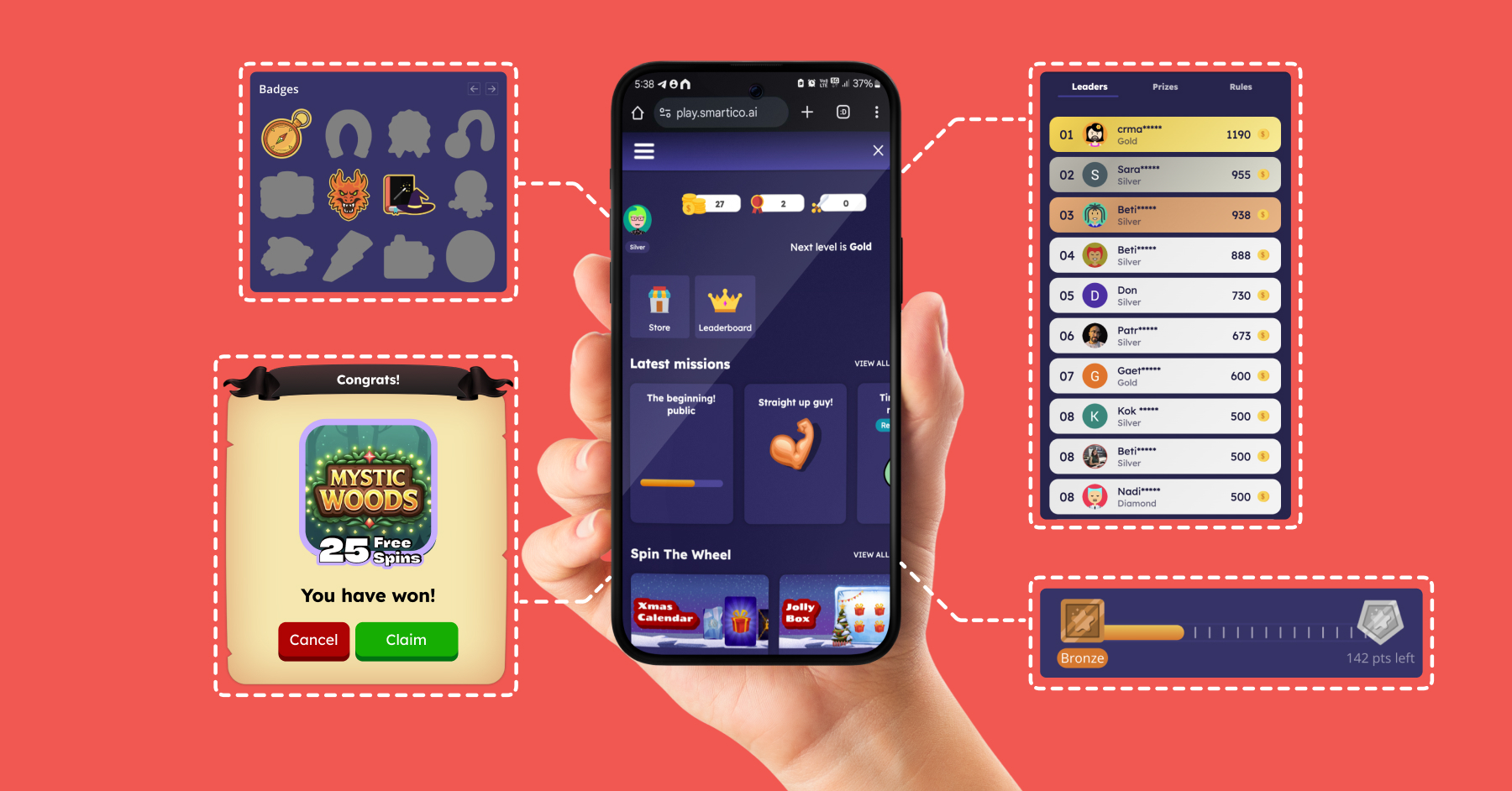
Для операторов онлайн-гемблинга, стремящихся максимально удержать и привлечь игроков, Smartico.ai представляет собой мощное решение, сочетающее в себе Автоматизация CRM с расширенная геймификация в единой системе.
Основанная в 2019 году, Smartico является первым унифицированным программным обеспечением для геймификации и автоматизации CRM, созданным специально для индустрии iGaming. Вместо того чтобы объединять отдельные системы управления клиентами, автоматизации маркетинга и механики взаимодействия, операторы объединяют все данные в режиме реального времени на одной платформе.
Возможности автоматизации CRM упрощают весь путь игрока. Вы можете настроить гиперперсонализированный обмен сообщениями на основе поведения игроков, создать автоматизированные рабочие процессы для привлечения новых игроков, точно сегментировать аудиторию с использованием данных в реальном времени и управлять многоканальными кампаниями с помощью единого интерфейса. Эта автоматизация работает непрерывно, гарантируя игрокам своевременное получение актуальных сообщений без ручных усилий со стороны вашей команды.
Инструменты геймификации способствуют вовлечению пользователей с помощью настраиваемых механик, которые делают каждую сессию более увлекательной. К вашим возможностям относятся колеса лояльности, скретч-карты, ежедневные лутбоксы, турниры и таблицы лидеров, системы достижений и конкурсные кампании — и все это можно настроить в соответствии с вашим брендом и предпочтениями игроков. Эти элементы легко интегрируются с профилями игроков, поэтому награды и испытания адаптируются к индивидуальным моделям поведения.
Что делает Smartico особенно ценным, так это то, что геймификация и CRM работают вместе, а не как отдельные системы. Когда игрок выполняет задание, его профиль CRM мгновенно обновляется и запускает соответствующие последующие кампании. Когда метрики вовлеченности указывайте на потенциальный отток клиентов, геймифицированные предложения по повторному вовлечению развертываются автоматически. Благодаря такому унифицированному подходу игроки чувствуют себя более персонализированными, а не роботизированными.
Программное обеспечение обеспечивает управление несколькими брендами в одном экземпляре, позволяя операторам проводить унифицированные кампании по всем объектам или создавать персонализированные решения для конкретных брендов — и все это без дополнительных затрат. Такая гибкость способствует росту без необходимости отдельных внедрений CRM для каждого объекта недвижимости.
Внедрение простое: специальные менеджеры по работе с клиентами помогают операторам в настройке и текущей оптимизации. Система проста в использовании, поэтому маркетинговые команды могут настраивать кампании и настраивать геймификацию, не нуждаясь в технических знаниях или постоянной ИТ-поддержке.
Для операторов онлайн-гемблинга, которые серьезно относятся к удержанию персонала, Smartico предоставляет инструменты для создания привлекательных и персонализированных игровых интерфейсов в любом масштабе. Унифицированная архитектура обеспечивает беспрепятственный обмен данными между CRM и геймификацией, что позволяет проводить сложный маркетинг, ориентированный на поведение и заставляющий игроков возвращаться к игре.
Чтобы узнать, как Smartico может помочь именно вашему бизнесу, закажите бесплатную подробную демонстрацию ниже.
{{cta-баннер}}
Распространенные ошибки CRM-маркетинга и способы их избежать
Даже при использовании лучшей платформы CRM некоторые ошибки могут подорвать ваши результаты. Распознавание этих ловушек поможет вам их избежать.
Плохое качество данных это самая распространенная проблема. Когда ваша CRM содержит дубликаты, устаревшую информацию, неполные записи или противоречивое форматирование, все, что построено на этих данных, страдает. Решение заключается в том, чтобы с самого начала устанавливать правила управления данными, определять основные поля, проводить регулярные аудиты и четко распределять ответственность за качество данных. Чистые данные требуют постоянной дисциплины, а не однократной очистки.
Недостаточное обучение пользователей приводит к низкому внедрению и неправильному использованию функций. Ваша команда не может использовать непонятные им возможности CRM. Инвестируйте в комплексную адаптацию, проводите обучение по конкретным ролям, создавайте простые справочные материалы и предлагайте непрерывное обучение по мере добавления новых функций. Сделайте обучение увлекательным, а не воспринимайте его как упражнение с чекбоксом.
Чрезмерное усложнение системы слишком большое количество функций, настроек или рабочих процессов ошеломляет пользователей и снижает эффективность. Начните с простого, сосредоточившись на основных функциях, направленных на решение ваших приоритетных проблем. Постепенно усложняйте игру по мере того, как пользователи обретут уверенность в себе и продемонстрируют владение основами. Сложность сама по себе порождает разочарование, а не ценность.
Отсутствие четких целей означает, что вы внедряете CRM без определенной цели. Прежде чем выбрать платформу или настроить рабочие процессы, определите конкретные измеримые цели, связанные с бизнес-результатами. Какие проблемы вы решаете? Как вы будете измерять успех? Четкие цели определяют решения по конфигурации и служат ориентирами для оценки окупаемости инвестиций.
Игнорирование управления изменениями рассматривает CRM как чисто технологический проект, а на самом деле это организационная трансформация. Люди сопротивляются новым процессам, особенно когда они привыкли к существующим методам. Преодолевайте сопротивление, четко информируя пользователей о преимуществах, привлекая пользователей к планированию, поощряя первые победы и оказывая мощную поддержку руководству. Управление изменениями определяет, CRM становится бесценным инструментом или дорогие стеллажи.
Пренебрежение текущей оптимизацией предполагает, что первоначальной настройки достаточно. Ваш бизнес развивается, поведение клиентов меняется, появляются новые функции. Регулярно анализируйте эффективность CRM, собирайте отзывы пользователей, анализируйте, что работает, а что нет, и вносите постепенные улучшения. Относитесь к CRM как к живой системе, требующей постоянного внимания, а не как к решению по принципу «настроил и забыл».
Неспособность интегрироваться с другими инструментами создает бункеры данных и дублирует работу. Ваша CRM должна подключаться к платформам электронной почты, автоматизации маркетинга, поддержке клиентов, аналитике и другим критически важным системам. Интеграция обеспечивает бесперебойный поток данных, сокращает ввод данных вручную, обеспечивает всестороннее представление о клиентах и повышает эффективность работы команды. Изолированные внедрения CRM теряют значительную ценность.
Измерение успеха CRM-маркетинга: ключевые показатели

Нельзя улучшить то, что вы не измеряете. Эти показатели помогают оценить, приносит ли ваша маркетинговая стратегия CRM результаты.
Коэффициент конверсии лидов отслеживает процент лидов, которые становятся клиентами. Сравнивайте коэффициенты конверсии до и после внедрения CRM между разными сегментами и различными источниками потенциальных клиентов, чтобы определить, что работает. Повышение конверсии даже на несколько процентных пунктов значительно влияет на доход.
Стоимость привлечения клиентов (CAC) рассчитывает, сколько вы тратите на привлечение каждого нового клиента. Разделите общие расходы на маркетинг и продажи на количество привлеченных клиентов. CRM со временем должна снизить CAC, сделав кампании более целенаправленными, а процессы более эффективными. Рост CAC, несмотря на инвестиции в CRM, указывает на проблемы, требующие изучения.
Пожизненная ценность клиента (ЦВ) измеряет общий доход, который клиент получает за время своих отношений с вашим бизнесом. CRM помогает увеличить CLV за счет улучшения удержания персонала, перекрестных продаж и дополнительных продаж. Отслеживайте CLV по сегментам, чтобы выявлять самых ценных клиентов и соответствующим образом распределять ресурсы.
ROI маркетинговой кампании оценивает, какие кампании приносят положительную отдачу. Отслеживайте полученный доход по сравнению с расходами на кампанию, включая расходы, связанные с CRM. Эти данные помогают распределять бюджет и удвоить эффективность принимаемых решений, устраняя при этом неэффективные инициативы.
Продолжительность цикла продаж измеряет время от первого контакта до заключения сделки. Эффективное использование CRM обычно сокращает циклы продаж, предоставляя отделам продаж более качественную информацию, автоматизируя последующие действия и выявляя потенциальных клиентов, готовых к покупке. Удлинение цикла продаж может указывать на технологические проблемы или низкое качество потенциальных клиентов.
Коэффициент удержания клиентов показывает процент клиентов, которых вы удерживаете за определенный период. Более высокий уровень удержания свидетельствует о том, что ваши коммуникации и услуги, основанные на CRM, эффективно поддерживают отношения. Низкий уровень удержания персонала, несмотря на инвестиции в CRM, говорит о том, что ваши стратегии взаимодействия требуют корректи
Показатели взаимодействия по электронной почте включая показатели открываемости, кликабельности и конверсии, показывают, насколько ваши кампании на основе CRM находят отклик у получателей. Сегментируйте эти показатели по аудитории, чтобы определить, какие сообщения подходят для каких групп.
Уровень внедрения CRM измеряет, насколько последовательно ваша команда действительно использует систему. Отслеживайте частоту входа в систему, завершение ввода данных, использование функций и использование мобильных устройств. Низкий уровень внедрения подрывает все остальное и указывает на необходимость решения проблем, связанных с удобством использования или обучением.
Скорость трубопровода оценивает, насколько быстро сделки перемещаются по вашей воронке продаж. Более высокая скорость означает, что ваши процессы эффективны, а ваша команда эффективно привлекает потенциальных клиентов. Замедление скорости трубопровода указывает на узкие места, которые необходимо устранить.
Настройте информационные панели, на которых эти показатели будут видны, и регулярно просматривайте их вместе со своей командой. Используйте данные для выявления закономерностей, проверки гипотез и постоянной оптимизации маркетингового подхода CRM.
Выбор подходящей платформы CRM для маркетинга
Поскольку доступны десятки вариантов CRM, выбор подходящей платформы требует тщательной оценки ваших конкретных потребностей, а не просто следования популярным рекомендациям.
Начните с документирования ваших требований. Какие проблемы вы пытаетесь решить? Какие функции абсолютно необходимы, а какие не приятны в использовании? Скольким пользователям нужен доступ? Каков ваш бюджет, включая затраты на внедрение и обучение? Какие существующие инструменты необходимо интегрировать с вашей CRM? Этот анализ требований не позволяет вам платить за ненужные возможности или выбирать платформу, не имеющую критически важных функций.
Рассмотрим эти ключевые критерии оценки. Простота использования имеет огромное значение, потому что сложные интерфейсы снижают уровень внедрения. Закажите демонстрационные версии и посмотрите, насколько интуитивно понятна система. Гибкость настройки позволяет адаптировать CRM к вашим процессам, а не заставлять процессы соответствовать программному обеспечению. Возможности интеграции определите, насколько хорошо платформа связана с вашим существующим маркетинговым стеком. масштабируемость гарантирует, что CRM может расти вместе с вашим бизнесом без необходимости миграции в будущем.
Функциональность мобильных устройств незаменима в 2026 году, когда командам нужен доступ в любом месте. Отчетность и аналитика должен предоставлять необходимую информацию, не требуя опыта в области науки о данных. Поддержка и обучение Качество сильно различается у разных поставщиков; узнайте, что включено, а что стоит дополнительно. Безопасность и соответствие нормативным требованиям функции должны соответствовать отраслевым требованиям, особенно для регулируемых отраслей.
Для особых потребностей выбирайте отраслевые платформы. Операторам iGaming следует оценить такие платформы, как Smartico, которые учитывают специфические требования к играм, такие как сегментация игроков, управление бонусами и соответствие требованиям ответственной игры. Для работы с этими специализированными рабочими процессами стандартные CRM-системы требуют обширных настроек.
Не стоит недооценивать сложность внедрения. Некоторые платформы можно быстро настроить самостоятельно; для других требуются консультанты и месяцы настройки. При принятии решения учитывайте время и стоимость внедрения, а не только стоимость подписки.
Конфиденциальность данных и соответствие требованиям в маркетинге CRM

Работа с CRM-системой требует тщательного соблюдения правил конфиденциальности данных, регулирующих сбор, хранение и использование информации о клиентах.
Общий регламент по защите данных (GDPR) распространяется на любую деловую обработку данных резидентов ЕС, независимо от того, где находится ваша компания. Ключевые требования включают получение явного согласия перед сбором персональных данных, предоставление прозрачных политик конфиденциальности, объясняющих использование данных, предоставление клиентам доступа к своим данным, исправление или удаление их, а также сообщение об утечках данных в течение 72 часов. Ваш CRM должен включать функции, поддерживающие управление согласием, запросы о правах субъекта данных, журналы аудита и минимизацию данных.
Закон штата Калифорния о защите прав потребителей (CCPA) и аналогичные законы штата предъявляют требования к компаниям, обслуживающим клиентов из США. Вы должны раскрывать методы сбора данных, разрешать потребителям отказываться от продажи данных и избегать дискриминации в отношении лиц, пользующихся правами на неприкосновенность частной жизни. По мере того как все больше штатов принимают законы о конфиденциальности, соблюдение требований усложняется.
Внедрение конфиденциальности с помощью дизайна означает встраивание защиты данных в CRM с самого начала, а не добавление ее позже. Настройте параметры по умолчанию, чтобы собирать только необходимые данные, внедрить надежное шифрование хранимых и передаваемых данных, применять многофакторную аутентификацию для доступа пользователей и устанавливать четкие политики хранения данных с автоматическим удалением. Эти технические меры защищают информацию о клиентах и демонстрируют вашу приверженность конфиденциальности.
Для международных операций при передаче данных между регионами требуются стандартные договорные положения или другие утвержденные механизмы. Убедитесь, что ваш поставщик CRM обеспечивает надлежащие меры безопасности и имеет сертификаты соответствия, относящиеся к вашей отрасли.
Регулярные аудиты соответствия помогают выявлять пробелы до того, как они перерастут в нарушения. Документируйте свои методы обработки данных, ведите учет операций по обработке данных, назначьте ответственного за надзор за конфиденциальностью и обучайте сотрудников требованиям соответствия требованиям. Упреждающее соблюдение требований обходится гораздо дешевле, чем устранение нарушений после их возникновения.
Выбирайте платформы CRM, которые обеспечивают соответствие требованиям с помощью встроенных функций, вместо того, чтобы все обрабатывать вручную. Обратите внимание на детальные средства контроля доступа, автоматизированные политики хранения данных, возможности отслеживания согласия, функции шифрования и безопасности, а также ведение журнала аудита всех обращений к данным. CRM, готовые к соответствию требованиям, делают управление конфиденциальностью управляемым, а не утомительным.
Часто задаваемые вопросы
1. В чем разница между CRM и автоматизацией маркетинга?
CRM управляет отношениями с клиентами и хранит исчерпывающие данные о контактах, взаимодействиях и продажах на протяжении всего жизненного цикла клиента. Автоматизация маркетинга позволяет проводить кампании и автоматизировать повторяющиеся маркетинговые задачи, такие как последовательности электронных писем, публикации в социальных сетях и оценка потенциальных клиентов. CRM — это ваша база данных клиентов и менеджер по работе с клиентами; автоматизация маркетинга — это механизм реализации ваших кампаний. Они служат разным целям, но лучше всего работают в интегрированном виде, что позволяет автоматизации маркетинга использовать данные CRM для персонализированных кампаний, одновременно добавляя данные о вовлеченности в профили клиентов.
2. Сколько времени обычно занимает внедрение CRM?
Малые предприятия с простыми потребностями могут внедрить базовую CRM за 1-3 месяца. Организациям среднего размера с умеренной сложностью следует планировать на 3-6 месяцев. Крупным предприятиям с высокими требованиями и обширной интеграцией часто требуется 6-12 месяцев или дольше. Время внедрения зависит от сложности миграции данных, количества интеграций, степени настройки, размера и готовности команды, а также от того, используете ли вы собственные ресурсы или консультантов. Поэтапное внедрение, которое начинается с основных функций и постепенно усложняет их, обычно оказывается более успешным, чем пытаться запустить все одновременно.
3. Какую окупаемость инвестиций я могу ожидать от инвестиций в CRM?
Компании обычно видят окупаемость инвестиций в 8-9 долларов на каждый доллар, вложенный в CRM, при этом некоторые внедрения приносят прибыль, превышающую 100%. Автоматизация маркетинга, интегрированная с CRM, часто приносит прибыль в размере 5,44 доллара на каждый потраченный доллар. Однако окупаемость инвестиций значительно варьируется в зависимости от того, насколько хорошо вы внедрили и используете систему. Компании, которые инвестируют в качество данных, проводят тщательное обучение, интегрируют CRM с другими инструментами и постоянно оптимизируют их, получают более высокую прибыль, чем компании, рассматривающие CRM как очередную покупку программного обеспечения. Большинство организаций сообщают об ощутимой окупаемости инвестиций уже в первый год, когда внедрение внедряется в соответствии с передовыми практиками.
4. Как улучшить внедрение CRM в своей команде?
Сосредоточьтесь на ценности, а не на мандатах. Когда CRM автоматически собирает данные, обогащает записи и предоставляет действительно полезную информацию, люди хотят использовать ее, потому что это облегчает их работу. Другие стратегии внедрения включают вовлечение пользователей в выбор и настройку платформы, обучение по конкретным ролям, посвященное реальным рабочим процессам, начиная с простых основных функций, а затем усложняя их, отмечая первые победы и признавая лучших пользователей, а также регулярный сбор отзывов и внесение улучшений на основе информации, полученной от пользователей. Внедрение CRM терпит неудачу, когда CRM создает дополнительную работу, но не приносит очевидных преимуществ. Успешное внедрение происходит тогда, когда система явно экономит время и улучшает результаты.
5. Должен ли я использовать одну платформу как для CRM, так и для автоматизации маркетинга?
Интегрированные платформы, объединяющие CRM и автоматизацию маркетинга в одной системе, предлагают значительные преимущества, включая унифицированные данные, устраняющие проблемы с синхронизацией, постоянное взаимодействие с пользователями, сокращение потребностей в обучении, упрощенное управление поставщиками с помощью единого контактного лица и часто более низкую общую стоимость по сравнению с отдельными системами. Однако лучшие в своем классе подходы с использованием специализированных инструментов превосходны в определенных областях и могут лучше соответствовать сложным потребностям. Для большинства компаний в 2026 году интегрированные платформы обеспечат правильный баланс возможностей и простоты. Главное — обеспечить надежную интеграцию, обеспечивающую бесперебойную передачу данных между системами, какой бы подход вы ни выбрали.
6. Как геймификация повышает эффективность CRM?
Геймификация увеличивает использование CRM, делая систему более привлекательной для вашей команды. Такие функции, как баллы за выполнение заданий, таблицы лидеров, создающие дружественную конкуренцию, и значки, подтверждающие достижения, мотивируют людей постоянно регистрировать данные и в полной мере использовать функции CRM. Это приводит к повышению качества данных, что улучшает весь маркетинг, основанный на этих данных. Игровые интерфейсы, интегрированные с CRM, повышают вовлеченность клиентов, стимулируют к желаемому поведению, например, к рекомендациям или повторным покупкам, укрепляют лояльность клиентов за счет признания достижений и обеспечивают увлекательные впечатления, выделяющие ваш бренд на фоне конкурентов. Сочетание внутренней мотивации команды и привлечения внешних клиентов делает геймификацию мощным усовершенствованием CRM.
Принятие мер: ваши дальнейшие шаги
CRM-маркетинг в 2026 году — это использование правильных данных для масштабного построения подлинных отношений. Платформы существуют, лучшие практики проверены, а окупаемость инвестиций задокументирована.
Начните с определения четких целей, которых вы хотите достичь с помощью CRM-маркетинга. Проведите аудит текущего качества данных и процессов, чтобы понять, что необходимо исправить. Выберите платформу, которая соответствует вашим реальным потребностям и бюджету, а не просто самый популярный вариант. Внедряйте поэтапно, начиная с основных функций и расширяя их по мере повышения квалификации вашей команды.
Самое главное, помните, что технологии позволяют разрабатывать стратегию, но не заменяют ее. Лучшая CRM-система не исправит нечеткие сообщения, плохое обслуживание клиентов или продукты, которые не приносят пользы. Используйте CRM, чтобы расширить то, что уже работает, и систематически улучшать то, что не работает.
Для операторов онлайн-гемблинга, готовых трансформировать систему удержания игроков с помощью унифицированной геймификации и автоматизации CRM, запросить демонстрацию Smartico.ai чтобы узнать, как персонализация в реальном времени способствует вовлеченности и лояльности.
Эта статья оказалась для вас полезной? Если да, подумайте о том, чтобы поделиться ею с другими профессионалами отрасли, такими как вы.
Готовы к использованию Smartico?
Присоединяйтесь к сотням компаний по всему миру, которые привлекают игроков с помощью Smartico.