


Automated Compliance Orchestration: CRM Systems That Self-Monitor Regulatory Adherence

Remember when staying compliant meant a team of people buried in spreadsheets, manually checking every customer record against a checklist? Those days are fading fast. The iGaming industry faces a compliance puzzle that gets more complicated by the month, and the old way of handling it just doesn't work anymore.
Operators are dealing with GDPR in Europe, various state laws in the US, and a growing list of requirements in newly regulated markets. Each jurisdiction has its own rules about data retention, consent management, and player protection. Miss one detail, and you're looking at fines that can seriously damage your business.
That's where automated CRM compliance comes in. We're talking about systems that store and actively monitor customer data, adjust how they handle it based on applicable regulations, and flag potential issues before they become problems.
Why Manual Compliance Doesn't Scale

A few years ago, you could get by with quarterly compliance checks. Someone on your team would review customer records, make sure consent forms were in order, and verify that data wasn't being kept longer than allowed. It was tedious, but manageable.
Not anymore. The volume of regulations has increased dramatically. GDPR was just the beginning. California passed the CCPA. Other states followed with their own versions. Countries around the world are implementing data protection laws that mirror or exceed European standards.
{{cta-banner}}
For iGaming operators, this creates a specific challenge. You're not just dealing with general data protection rules. You have responsible gaming requirements, age verification standards, anti-money laundering protocols, and region-specific advertising restrictions. Each of these comes with its own documentation and reporting requirements.
Manual processes can't keep up. By the time someone reviews last month's data handling practices, you've already processed thousands of new customer interactions. And each one of those interactions needs to comply with rules that might have changed since the last review.
What Self-Monitoring Systems Actually Do

The term "self-monitoring" sounds like science fiction, but the technology is straightforward. These systems use a combination of rule engines, automated workflows, and real-time data analysis to continuously verify compliance.
Here's how it works in practice. When a player from Germany signs up, the system automatically applies GDPR requirements to their data. It knows what information can be collected, how long it can be stored, and what consent must be obtained. The same player traveling to the UK? The system adapts to UK-specific requirements without anyone manually updating settings.
This happens automatically across your entire customer base. The system tracks where each player is located, what regulations apply to them, and whether your current data handling practices meet those requirements. When regulations change (and they do frequently) the system updates its rules and flags any customer records that need attention.
The key difference from traditional CRM systems is that compliance isn't a feature you turn on or a report you run. It's built into every transaction, every data storage decision, and every customer interaction.
Real-Time Monitoring Beats Periodic Audits

Most compliance violations happen in the gap between audits. You pass an audit in March, but by June, you've drifted away from proper procedures without realizing it. Maybe a marketing campaign collected data without proper consent. Or customer records from a closed market weren't deleted within the required timeframe.
Continuous monitoring eliminates that gap. The system checks compliance status constantly, not quarterly or monthly. It's like having a compliance officer reviewing every transaction as it happens, except the system never gets tired or distracted.
When an issue appears, you know immediately. Not six months later when an auditor points it out. This early detection makes a massive difference. You can fix a consent form before it goes out to thousands of customers. You can correct a data retention setting before it affects years of records.
The reporting changes too. Instead of scrambling to compile evidence when an audit is scheduled, you have a complete, current record of your compliance status. Regulators ask about your data handling practices for a specific period? You can generate that report in minutes, not days.
How Regulatory Orchestration Handles Multiple Jurisdictions

This is where things get interesting for iGaming operators. You're not dealing with one set of rules. You might have players in ten, twenty, or fifty different jurisdictions, each with its own requirements.
Traditional compliance approaches mean setting up separate processes for each market. Your team needs to know which rules apply where, and manually ensure each customer record is handled correctly. It's complicated, error-prone, and it doesn't scale as you enter new markets.
Regulatory orchestration solves this through intelligent automation. The system maintains a database of requirements for each jurisdiction you operate in. When a player interacts with your platform, the system identifies their location and automatically applies the relevant rules.
A player in New Jersey has different data protection requirements than one in Malta. The system knows this and handles each accordingly. What data can be collected, how consent must be obtained, how long records can be stored, and what must be reported to regulators.
This becomes especially valuable when regulations change. And they change constantly. Instead of your compliance team manually updating procedures for every market, the system's rule engine is updated once, and it automatically applies to all affected customer records.
New market opening up? The system can be configured with that market's requirements before you accept your first player. No scrambling to retrofit existing processes or worrying whether you're handling data correctly from day one.
The Consent Management Challenge
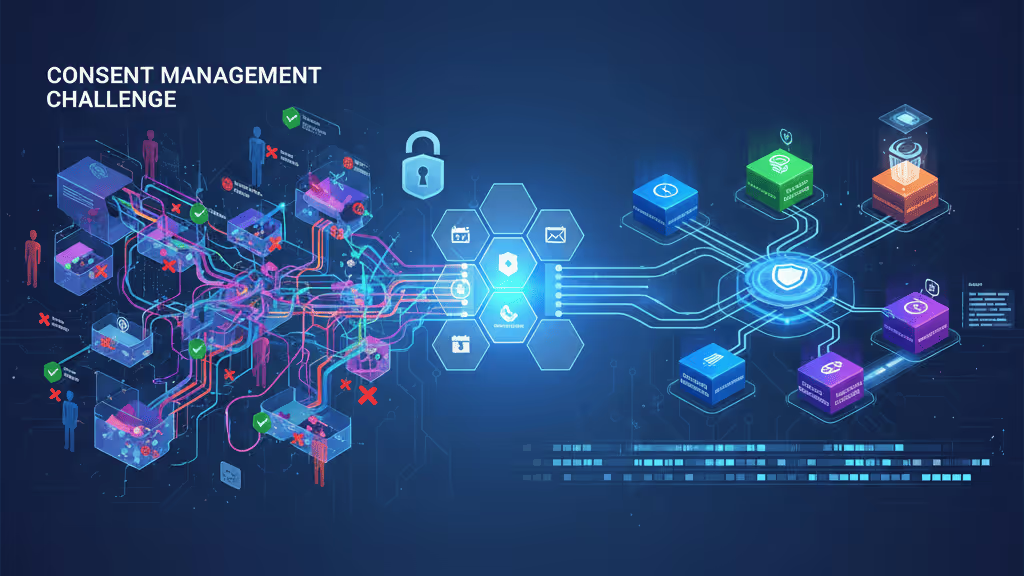
Managing customer consent is one of the trickiest parts of data protection compliance. Players need to opt in to marketing communications. They need separate consent for data processing. Some jurisdictions require consent for every specific use of their data.
Then players change their minds. They want to opt out of emails but keep SMS notifications. They want their gaming history retained but their payment information deleted. Each of these requests needs to be honored, documented, and applied consistently across all your systems.
An automated CRM compliance system turns consent management from a nightmare into a streamlined process. Every consent choice is captured, time-stamped, and automatically enforced across all your data handling processes.
More importantly, the system can prove consent was obtained properly. Regulators want documentation showing when it was requested, what information was provided to the customer, and exactly what they agreed to. Self-monitoring systems maintain that audit trail automatically.
When a player requests data deletion (GDPR gives them that right) the system can handle it comprehensively. It doesn't just delete the obvious records. It finds every instance of that player's data across your entire platform and removes it according to regulatory requirements, all while maintaining the necessary audit logs proving the deletion occurred.
Data Retention Gets Complicated Fast
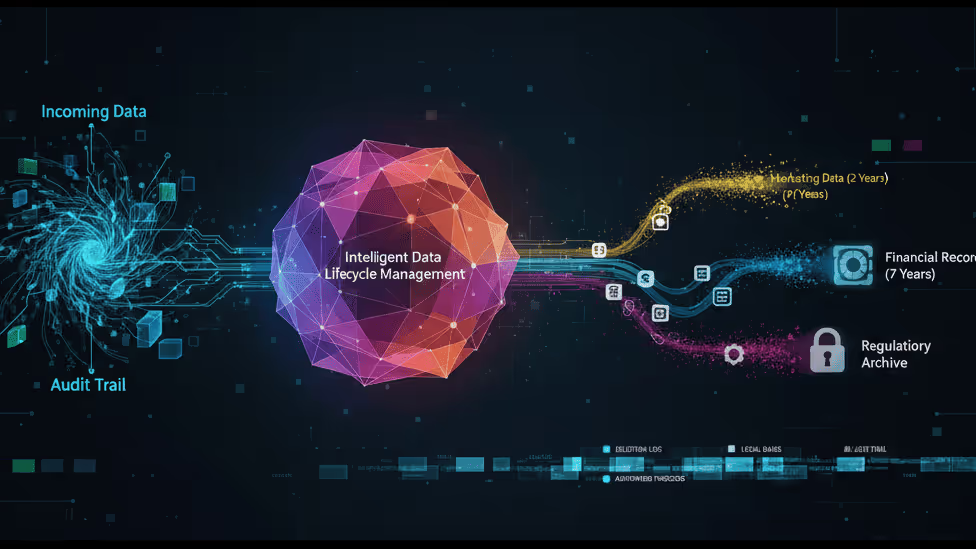
Different jurisdictions require different data retention periods. Some information must be deleted after a certain time. Other information must be kept for regulatory purposes, even if the player closes their account.
iGaming operators face additional complexity. Anti-money laundering regulations often require transaction records to be kept for years. But privacy regulations say personal data shouldn't be stored longer than necessary. How do you square that circle?
Automated systems handle this through intelligent data lifecycle management. They know which data elements are subject to which regulations, and they automatically apply the appropriate retention policies. Marketing data might be deleted after two years, while financial transaction records are retained for seven.
This happens at a granular level. Not "delete everything after X years," but "delete this specific piece of information based on its type, the player's jurisdiction, and the applicable regulations." The system tracks retention schedules for every data element and automatically processes deletions when the time comes.
Just as importantly, it documents everything. When did data get deleted? Why? Under what legal authority? All of this is logged, creating the audit trail regulators expect to see.
Why This Matters for iGaming Operators

The iGaming industry faces particularly intense regulatory scrutiny. You're dealing with financial transactions, age-restricted content, and activities that many jurisdictions regulate heavily. Compliance failures don't just mean fines, they can mean losing your license to operate.
At the same time, you're competing in a fast-moving market where customer experience matters enormously. Slow, clunky compliance processes create friction. Players abandon sign-ups that take too long. They get frustrated by confusing consent forms or invasive data requests.
Self-monitoring CRM systems let you be both compliant and competitive. The compliance happens in the background, automatically and continuously. Players see a smooth experience, but behind the scenes, every interaction is being handled in accordance with applicable regulations.
This becomes a genuine competitive advantage. Your competitors are either spending massive resources on compliance teams, or they're cutting corners and hoping they don't get caught. You're doing neither. Your system handles compliance automatically, letting your team focus on growing the business.
The Cost of Getting It Wrong

Compliance violations in the iGaming industry can be devastating. GDPR alone allows for fines up to 4% of global annual revenue. That's not revenue from the affected market, but your entire worldwide revenue.
But the financial penalties are just the beginning. Regulatory violations can lead to license suspensions or revocations. They trigger mandatory audits that disrupt your operations for months. They create negative publicity that damages your brand and drives players to competitors.
{{cta-banner}}
And regulations are getting stricter, not looser. Regulators worldwide are increasing enforcement and raising penalties. The days of getting a warning for a first offense are largely over. First violations now routinely result in significant fines.
The math is straightforward. The cost of automated compliance monitoring is a fraction of even one moderate regulatory fine. And that's before you factor in the operational efficiency gains, the reduced need for large compliance teams, and the ability to enter new markets quickly with confidence you're handling everything correctly.
How Leading Platforms Handle Automation

Modern compliance-aware CRM systems operate on a few key principles. First, compliance rules are separate from business logic. This means when regulations change, you update the compliance rules without touching the core system.
Second, the system maintains a complete audit trail of everything. Not just major events like account creation, but every data access, every consent change, every automated decision about data handling. This audit trail is itself compliance-friendly. It is structured, searchable, and able to be exported in formats regulators expect.
Third, the system is proactive, not reactive. It doesn't wait for you to ask "are we compliant?", but tells you when issues arise. And it prevents non-compliant actions before they happen. Try to send marketing to someone who hasn't consented? The system blocks it.
These platforms integrate with your existing tools, including payment processors, marketing systems, player analytics. The compliance layer sits across all of them, providing consistent handling regardless of which system is touching the data.
Building Compliance Into Your Operations

The shift to automated compliance is more than just about tech. It represents a different philosophy about how to handle regulatory requirements.
The old approach treated compliance as a separate function. You'd build your platform, create your processes, and then figure out how to make them compliant. This meant compliance was always playing catch-up, trying to retrofit requirements onto existing systems.
The new approach builds compliance in from the start. Instead of just storing customer data, your CRM also understands the regulatory context of that data. It knows what can and can't be done with each piece of information, and it enforces those rules automatically.
This is what "compliance by design" actually means. Not checking boxes on a compliance form, but having systems that can't operate in non-compliant ways. The technology simply won't let you accidentally violate data protection rules, because those rules are embedded in how the system functions.
For iGaming operators entering new markets, this approach is particularly valuable. You can be confident you're handling data correctly from your first player, not hoping you got all the requirements right and waiting nervously for your first audit.
Key Features to Look For

Not all CRM systems are created equal when it comes to automated compliance. Here are the capabilities that actually matter:
• Jurisdiction-aware data handling – The system needs to know where each player is located and automatically apply the right rules. This includes handling players who travel or use VPNs, not just their registration address.
• Automated consent management – Capturing consent is just the beginning. The system should enforce consent choices across all data processing, maintain detailed consent history, and handle consent withdrawal comprehensively.
• Intelligent data retention – Different types of data need different retention policies. Look for systems that can apply granular retention rules and automatically delete data when required.
• Real-time compliance monitoring – Periodic compliance checks aren't enough. The system should continuously monitor for issues and alert you immediately when something needs attention.
• Comprehensive audit trails – Everything should be logged in a way that regulators can understand. This includes not just what happened, but why decisions were made and under what regulatory authority.
• Flexible rule engines – Regulations change constantly. The system needs to make it easy to update compliance rules without requiring extensive development work or system downtime.
These features are essential for operating in today's regulatory environment. A CRM that can't handle them automatically means you're still doing compliance manually, with all the risks that entails.
What This Means for Your Team
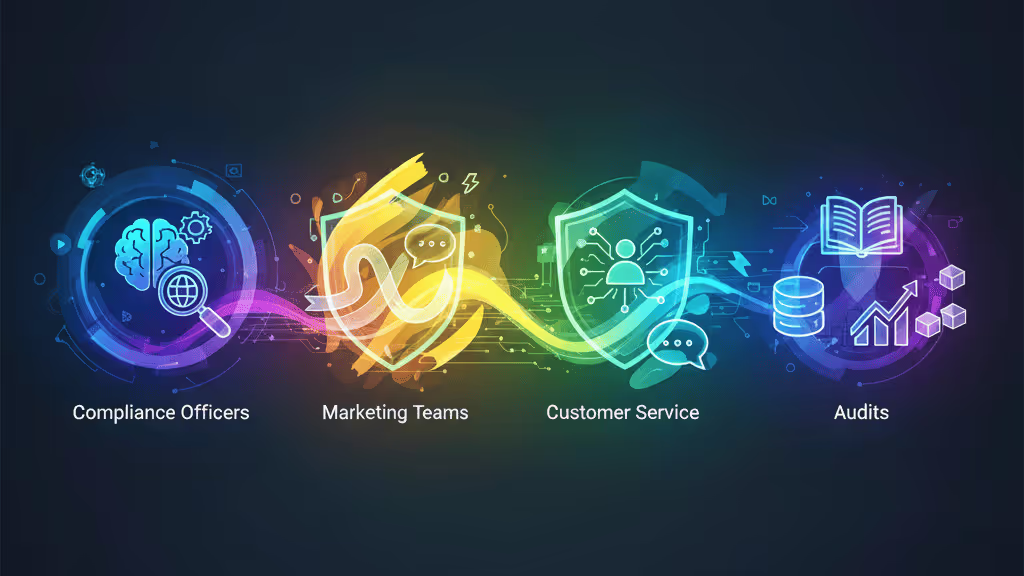
Automated compliance changes how your team works. Compliance officers spend less time on routine monitoring and more time on strategic issues, interpreting new regulations, advising on business initiatives, managing relationships with regulators.
Marketing teams can focus on creative campaigns instead of worrying whether every email complies with current rules. The system handles the compliance part automatically, letting them concentrate on messaging and engagement.
Customer service can answer player questions about data handling with confidence. The system maintains clear records of what consent was obtained, what data is stored, and how it's being used. No more uncertainty about whether you can use information in specific ways.
And when audits do happen, your team isn't scrambling to compile evidence. The system has been maintaining comprehensive records all along. You can generate detailed reports showing exactly how you've been handling data, complete with proof of compliance for every requirement.
The Future Is Continuous Compliance

We're moving away from the idea of compliance as something you achieve and then maintain through periodic checks. The regulatory environment is too dynamic, and the consequences of violations are too severe.
Continuous compliance is the new standard. Your systems need to be compliant every moment, not just on audit day. They need to adapt automatically as regulations evolve. And they need to prove compliance through comprehensive documentation, not just promises that you're following the rules.
For iGaming operators, this shift is happening faster than in many other industries. Regulators are sophisticated, enforcement is strict, and the cross-border nature of the business means you're always dealing with multiple jurisdictions.
Automated CRM compliance is becoming table stakes. Operators who don't have it are taking unnecessary risks and spending resources on manual processes that could be automated.
Making the Switch

Moving to an automated compliance system doesn't mean throwing out your current CRM. Many modern solutions integrate with existing platforms, adding the compliance layer without requiring a complete system replacement.
The key is choosing a system designed specifically for automated regulatory adherence, not a general-purpose CRM with some compliance features bolted on. You need technology built from the ground up to handle the complexity of modern data protection regulations.
Implementation typically starts with mapping your current compliance requirements. What regulations apply to your business? What are your data handling obligations? Where are your compliance risks? This creates the foundation for configuring the automated system.
Then comes migration. mMoving your existing customer data into the new system while ensuring all the compliance metadata (consent records, retention schedules, jurisdiction information) comes with it. This is where having experienced implementation partners makes a difference.
Once operational, the system takes over continuous monitoring. Your team shifts from doing compliance to overseeing it, reviewing alerts, and handling exceptions that require human judgment.
How Smartico.ai Can Help You
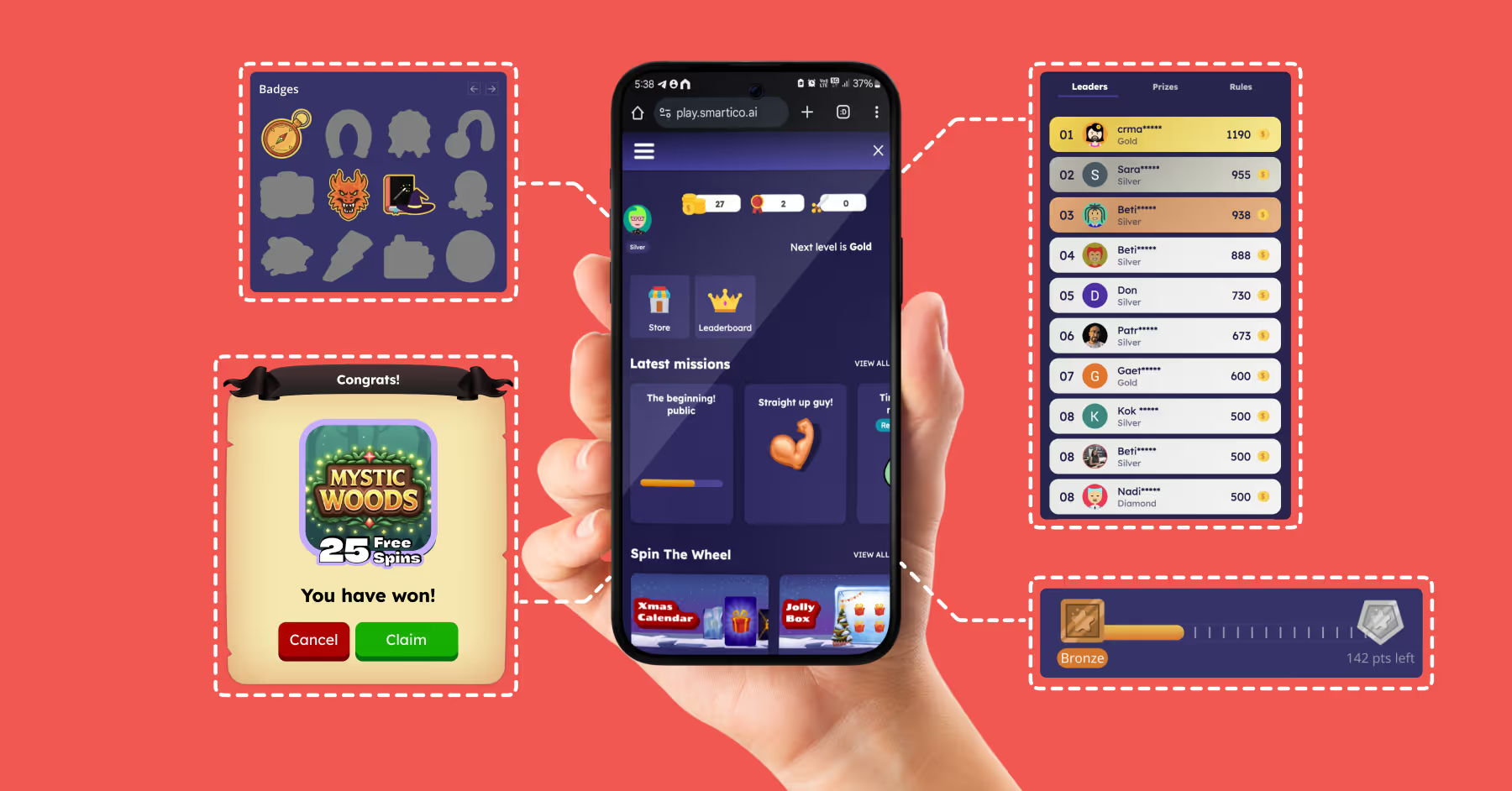
Smartico.ai is the first and leading unified Gamification and CRM Automation platform designed specifically for the iGaming industry. It combines powerful gamification mechanics with intelligent CRM automation, including comprehensive compliance orchestration capabilities.
What sets Smartico.ai apart is its ability to handle complex regulatory requirements automatically while delivering engaging player experiences. The platform's compliance features include jurisdiction-aware data handling, automated consent management, intelligent retention policies, and real-time monitoring that ensures regulatory adherence across all player interactions.
Smartico.ai integrates smoothly with existing iGaming infrastructure, providing operators with a complete solution for player engagement and regulatory compliance. The software supports operations across multiple jurisdictions, automatically applying the correct rules based on player location and applicable regulations.
For operators looking to scale their business while maintaining strict compliance standards, Smartico.ai offers the automation and intelligence needed to compete in today's regulatory environment. Smartico turns compliance from a burden into a competitive advantage, letting teams focus on growth while the system handles regulatory adherence automatically.
To find out how Smartico can help your business specifically raise revenue like nothing you’ve tried before, book your free, in-depth demo below.
{{cta-banner}}
Frequently Asked Questions

1. What's the difference between automated and manual compliance monitoring?
Manual compliance involves periodic reviews where someone checks if your processes meet regulatory requirements. Automated monitoring happens continuously. The system checks compliance with every transaction and alerts you immediately when issues arise. It's the difference between checking your speed once an hour versus having cruise control that maintains the speed limit constantly.
2. Can automated systems really handle all compliance requirements?
They handle the routine, rules-based aspects of compliance extremely well, including data retention, consent enforcement, and jurisdiction-specific handling. What they can't replace is human judgment on complex regulatory interpretations or strategic compliance decisions. Think of them as handling the "what" and "when" while your team focuses on the "why" and "how."
3. How long does implementation typically take?
This varies based on your current setup, but most implementations take between two and six months. The technical integration is usually the faster part – the time goes into mapping your existing compliance requirements, migrating data with proper metadata, and training your team on the new workflows.
4. What happens when regulations change?
That's where automated systems really shine. The compliance rules are separate from your business logic, so updates happen at the rule engine level. You're not rewriting code or rebuilding processes, but updating the rules the system enforces. Most platforms include regulatory intelligence feeds that help keep you informed of upcoming changes.
5. Is this technology only for large operators?
Not at all. While large operators obviously benefit from automation, smaller operators actually need it more. You probably don't have massive compliance teams, so automation is how you compete with bigger players without matching their compliance overhead. The technology has become much more accessible and affordable for operators of all sizes.
6. How do these systems prove compliance to regulators?
Through comprehensive audit trails that document every action, decision, and data handling process. When regulators ask questions, you can generate detailed reports showing exactly what happened, when, why, and under what regulatory authority. The system maintains this documentation automatically, not as an afterthought during audit preparation.
Conclusion
The iGaming industry is moving toward a future where compliance isn't a separate business function. It is built into how systems operate. Automated CRM compliance is all about giving them tools that work at the speed and scale modern regulations demand. The operators who adapt will find compliance becomes less of a burden and more of a competitive advantage. Those who don't will keep fighting an uphill battle against regulations that only get more complex.