


Bonus Cost Optimization in iGaming: A 2026 Guide for Operators
.avif)
Bonuses are one of the most effective tools an iGaming operator has, and one of the easiest places to bleed money. Welcome offers, deposit matches, free spins, cashback, reloads: they bring players in and keep them active. But bonus spend is also one of the largest controllable costs on the P&L, and a surprising share of it goes to players who would have deposited anyway, to offers that were never targeted, and to people gaming the terms.
This guide is about bonus cost optimization: getting more retention and revenue out of every bonus dollar, and cutting the waste that quietly erodes margin. It covers where bonus budget actually leaks, how to tighten it without making your offers worse, and how an automated Bonus Engine does the heavy lifting.
Why Bonus Costs Spiral
The trouble with bonuses is that they are easy to scale and hard to control. Turning up a promotion takes a few clicks. The cost shows up later, spread across thousands of players, which makes it easy to miss until the bonus-to-revenue ratio is already out of line.
Most of the waste comes from treating bonuses as a blunt instrument. A blanket promotion sent to the entire database pays the same incentive to a high-value regular who needed no nudge, a casual player who will churn regardless, and a bonus hunter who is there only for the offer. The headline engagement looks fine. The cost per genuinely retained player is far worse than it appears.
Where Bonus Budget Leaks
There are five common drains, and most operators have all five to some degree.
Untargeted, one-size-fits-all offers. The single biggest leak. When every segment gets the same bonus, you overpay the players who did not need it and underwhelm the ones who did.
Bonuses disconnected from player value. If the incentive is not tied to a player's actual or predicted worth, you end up spending the most on the wrong people. A bonus that makes sense for a high-LTV player is wasted on someone who will deposit once and leave.
Loose terms and exploitable wagering rules. Poorly designed bonus terms, weak wagering requirements, and loopholes in eligibility are an open invitation. This is also where bonus abuse takes hold, more on that below.
Abuse and multi-accounting. A small population of advantage players, multi-accounters, and coordinated groups extract value the operator never intended to give, often by targeting high-RTP, low-volatility games purely to clear wagering with minimal risk.
Manual, slow processes. When bonus allocation and monitoring are handled by hand, problems get caught days late, after the money is gone, and the team has no time left for strategy.
How to Optimize Bonus Costs Without Hurting Engagement
The goal is not to spend less for its own sake. It is to spend the same budget more precisely, so more of it lands on players who respond. Six levers do most of the work.
Target by segment and value. Match the offer to the player. Reserve the richest incentives for players who move on them, give lighter nudges where a small push is enough, and stop spending on segments that do not respond. This is where player segmentation directly drives cost efficiency.
Tie bonus size to predicted value. Use predictive models to estimate a player's lifetime value and churn risk, then scale the incentive to match. A player the model flags as high-value and at-risk is worth a real offer. A likely one-and-done deposit is not.
Personalize and automate the delivery. Manual campaigns cannot react fast enough to be efficient. Automated, behavior-triggered bonuses through a connected CRM fire the right offer at the right moment without a person pressing send. For the retention and personalization side of this in depth, see our guide on personalized bonus systems.
Design smarter bonus terms. Most leakage starts with the terms, not the bonus amount. Sensible wagering requirements, sound game-eligibility rules, value caps, and closed loopholes do more to protect margin than simply offering less. Good terms also remove the easy openings that abusers look for.
Use gamification to deliver value beyond cash. Points, missions, free-to-play mechanics, and loyalty rewards give players a sense of progress and reward without every incentive being a direct cash cost. Gamification lets you stretch engagement further per dollar.
Measure the right ratios. Track bonus-to-deposit and bonus-to-LTV by segment, not just total bonus spend. Watch for anomalies: accounts that only activate when a bonus is live, that focus on a tiny set of high-RTP games, or that show calculated rather than casual betting patterns. Those are your early signals that a promotion is being worked.
A Realistic Word on Bonus Abuse
Abuse is a genuine cost, but it helps to be clear about where bonus management ends and fraud tooling begins. The first line of defense is on the bonus side: tight terms, risk-aware allocation, and not handing rich offers to unverified or suspicious accounts before they have proven anything. That is squarely a bonus-design and targeting problem, and it is where a good bonus engine earns its keep.
Catching organized, multi-account abuse rings is a broader discipline that sits across KYC, payments, and dedicated fraud detection. A strong bonus setup reduces the easy openings and works alongside those controls rather than replacing them. Be wary of any tool that claims to do everything; the durable approach is good bonus design plus proper risk and identity checks working together.
How Smartico's Bonus Engine Helps
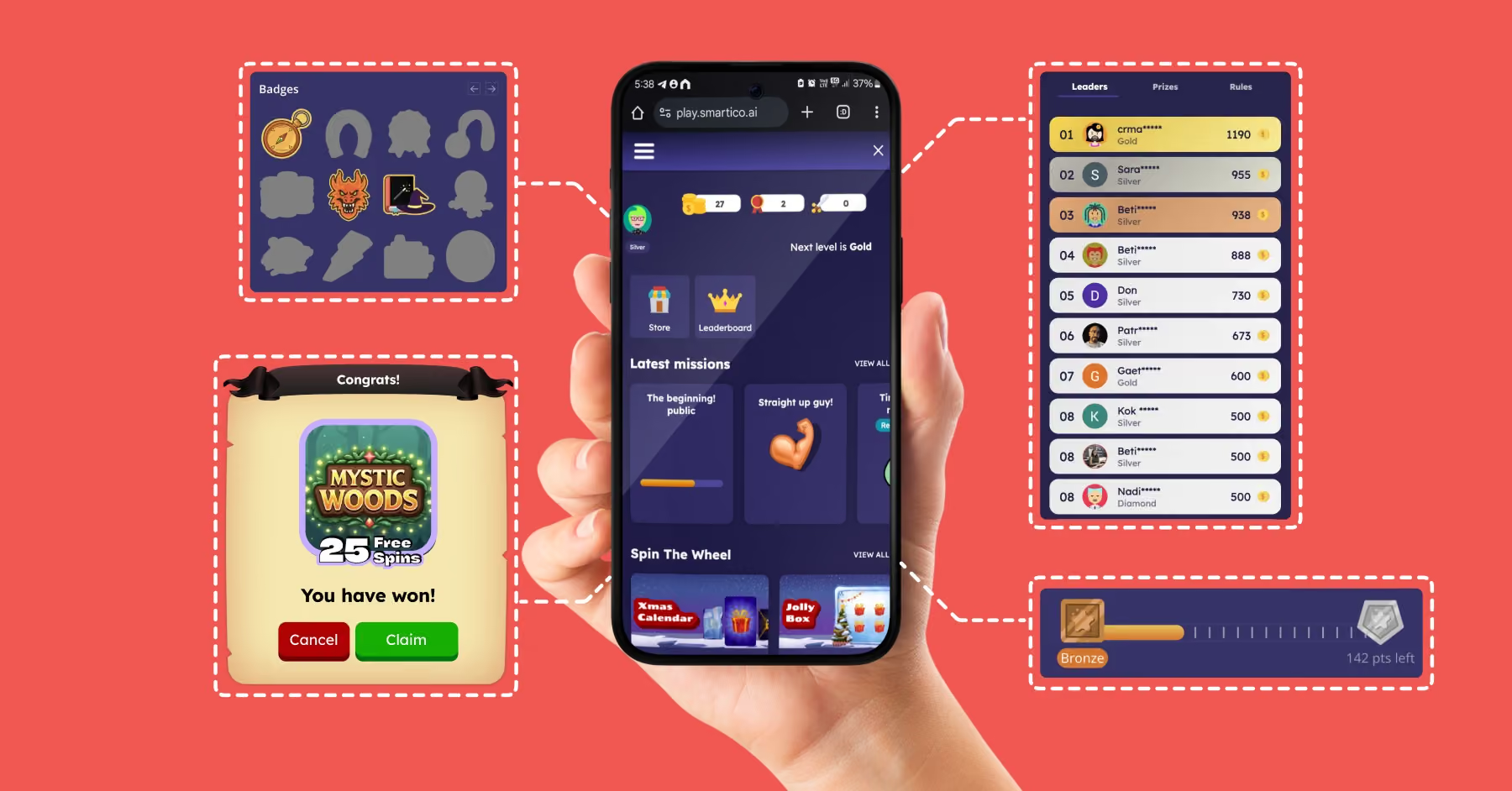
Smartico's Bonus Engine is built to optimize bonus costs while keeping the player experience strong, with tailored reward systems rather than blanket promotions. Because it sits inside Smartico's unified CRM and gamification platform, the bonus layer is not isolated. It connects to the same player data, segmentation, automation, and predictive models that drive the rest of your engagement, so offers can be targeted by segment, scaled to predicted value, triggered automatically by behavior, and balanced against non-cash gamification rewards. Operators can run it across unlimited brands from a single instance.
The practical effect is that the same bonus budget gets spread with far more precision: more of it reaches players who respond, less of it leaks to players who never needed it.
If you want to see how this works on your own player base, book your free, detailed demo below.
{{cta-banner}}
Frequently Asked Questions
What is bonus cost optimization?
It is the practice of getting more retention and revenue from the same bonus budget by targeting offers precisely, tying them to player value, automating delivery, and tightening terms, rather than sending blanket promotions and absorbing the waste.
Why are bonuses such a large cost for operators?
Because they scale easily and the cost is diffuse. A promotion sent to the whole database pays incentives to players who would have deposited anyway and to those who will churn regardless, so the cost per genuinely retained player is much higher than the headline spend suggests.
How do you reduce bonus abuse?
Start with bonus design: sensible wagering requirements, sound eligibility rules, value caps, and closed loopholes, plus not extending rich offers to unverified accounts. Detecting organized multi-accounting also requires KYC and dedicated fraud controls working alongside the bonus system.
Are personalized bonuses really cheaper than blanket ones?
Usually, yes, on a cost-per-retained-player basis. Personalized bonuses concentrate spend on players who respond and avoid overpaying those who do not, so the same or smaller budget produces better retention.
What metrics should I track?
Bonus-to-deposit and bonus-to-LTV ratios broken down by segment, alongside total bonus spend. Segment-level ratios reveal which promotions are efficient and which are leaking, which a single top-line number hides.
Final Thoughts
Bonuses will always be central to iGaming, and they will always be a major cost. The operators who win on margin are not the ones who spend the least, they are the ones who spend with precision: matching offers to player value, automating delivery, designing terms that protect the budget, and measuring the ratios that actually matter. Done well, the same bonus spend works harder, and the waste that quietly erodes margin starts to close.
Ready to use Smartico?
Join hundreds of businesses worldwide engaging players with Smartico.