


Cross-Channel Identity Unification: Customer Recognition Across All Touchpoints
Your players don't live in just one place anymore. They're on mobile during lunch breaks, desktop at home, checking emails on the train, and scrolling through social media before bed. And they expect you to know who they are everywhere.
The problem is that most platforms treat these interactions like they're coming from different people. Your mobile app thinks Sarah is a new player. Your email system remembers her from last week. Your website has no idea she just deposited on mobile five minutes ago.
This disconnect costs you money and frustrates your players.
What Cross-Channel Identity Actually Means

Cross-channel identity unification is the process of connecting every interaction a player has with your platform into one complete profile. When someone opens your app, visits your website, clicks an email link, or responds to a push notification, the system recognizes them as the same person.
Most operators collect tons of data. The issue is that data sits in separate boxes. Your CRM holds one set of information. Your gaming platform has another. Your payment processor keeps its own records. Analytics tools track behavior separately.
Players using multiple devices has become standard. Research shows that mobile gamers also play on other platforms frequently, creating a web of touchpoints that need to connect. When these connections break, your personalization falls apart.
Why Traditional Systems Create Data Silos

Older CRM systems were built for simpler times. They tracked email addresses and maybe phone numbers. Today's players interact across web browsers, mobile apps, tablets, email clients, social media platforms, and messaging apps.
Each platform assigns its own identifier. Mobile apps use device IDs. Websites rely on cookies. Email systems track by email address. Social platforms have their own user IDs.
{{cta-banner}}
Without a unified system, you end up with fragments. Player X deposits on mobile. Player Y browses games on desktop. Player Z responds to an email offer. Your system doesn't realize they're all the same person.
This fragmentation creates real problems. You might send a welcome bonus to someone who's been playing for months. Or ignore a high-value player because their mobile activity doesn't connect to their desktop profile.
How Identity Resolution Actually Works

Identity resolution stitches together scattered data points into complete player profiles. Modern platforms use two main approaches.
Deterministic matching looks for exact identifiers like email addresses, phone numbers, or usernames. When someone logs in on mobile with the same email they used on desktop, the system connects both profiles. This method provides high confidence that you're tracking the same person.
Probabilistic matching uses AI to estimate connections based on behavioral patterns and device characteristics. It examines IP addresses, device types, operating systems, browsers, and timing patterns. If someone in Sofia plays similar games at similar times on both mobile and desktop, the system can infer they're likely the same player.
The best platforms combine both methods. They start with deterministic matching for solid connections, then use probabilistic matching to fill gaps and expand reach.
Building Unified Customer Profiles

A unified profile consolidates everything you know about each player into one real-time record. This includes their registration details, gaming preferences, deposit history, bonus usage, game choices, session duration, device preferences, communication channel activity, and behavioral patterns.
Customer Data Platforms serve as the foundation for this unification. They pull information from every source (your gaming platform, CRM system, payment processors, email tools, analytics platforms, and customer support software) into one centralized database.
The profiles update in real time. When a player spins a slot on mobile, that action immediately reflects in their unified profile. If they then open an email on desktop, your system knows exactly what they just did on mobile.
This real-time capability changes how you engage players. You can trigger relevant offers based on current behavior, not yesterday's data.
Real-Time Personalization Across Touchpoints
.avif)
Unified profiles push true personalization at scale. When you recognize players across all channels, you can respond to their actions immediately with relevant content.
A player browses live dealer games on mobile but doesn't start playing. Ten minutes later, they open your app and see personalized recommendations for the exact game types they viewed. That's cross-channel recognition in action.
Abandoned actions become opportunities. Someone starts a deposit on desktop but closes the browser. Minutes later, they receive a targeted push notification on mobile offering assistance or an incentive to complete the transaction.
Game recommendations improve dramatically. Instead of generic suggestions, players see options based on their complete history across all devices. Someone who plays slots on mobile during weekday commutes but switches to table games on desktop during weekends gets relevant suggestions for each context.
Multi-Device Gaming Patterns
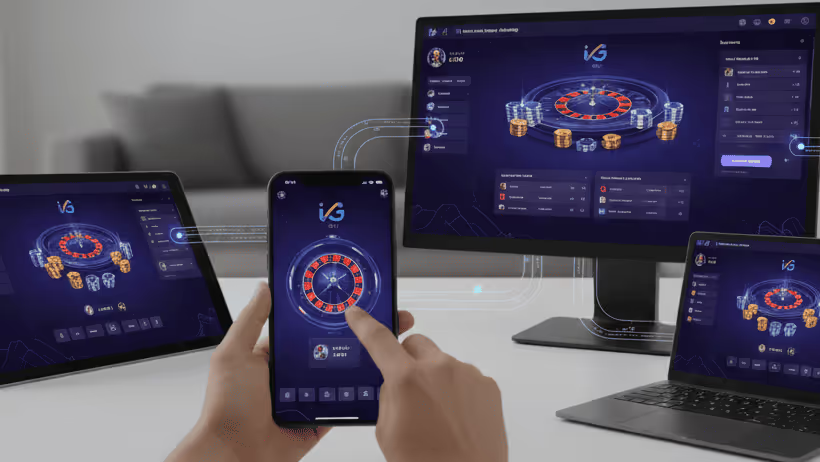
Players actively use multiple devices throughout their gaming journey. Mobile dominates as the primary platform, but substantial numbers also engage through PC and console interfaces.
This multi-platform behavior creates expectations for consistent experiences. Players don't want to restart their journey every time they switch devices. They expect your platform to remember their preferences, recent activity, and current status regardless of how they access your services.
Cross-device consistency builds trust. When players see that your platform recognizes them everywhere, they feel more confident engaging with your brand. Inconsistent experiences (where desktop shows different information than mobile) create confusion and reduce engagement.
Omnichannel CRM Integration
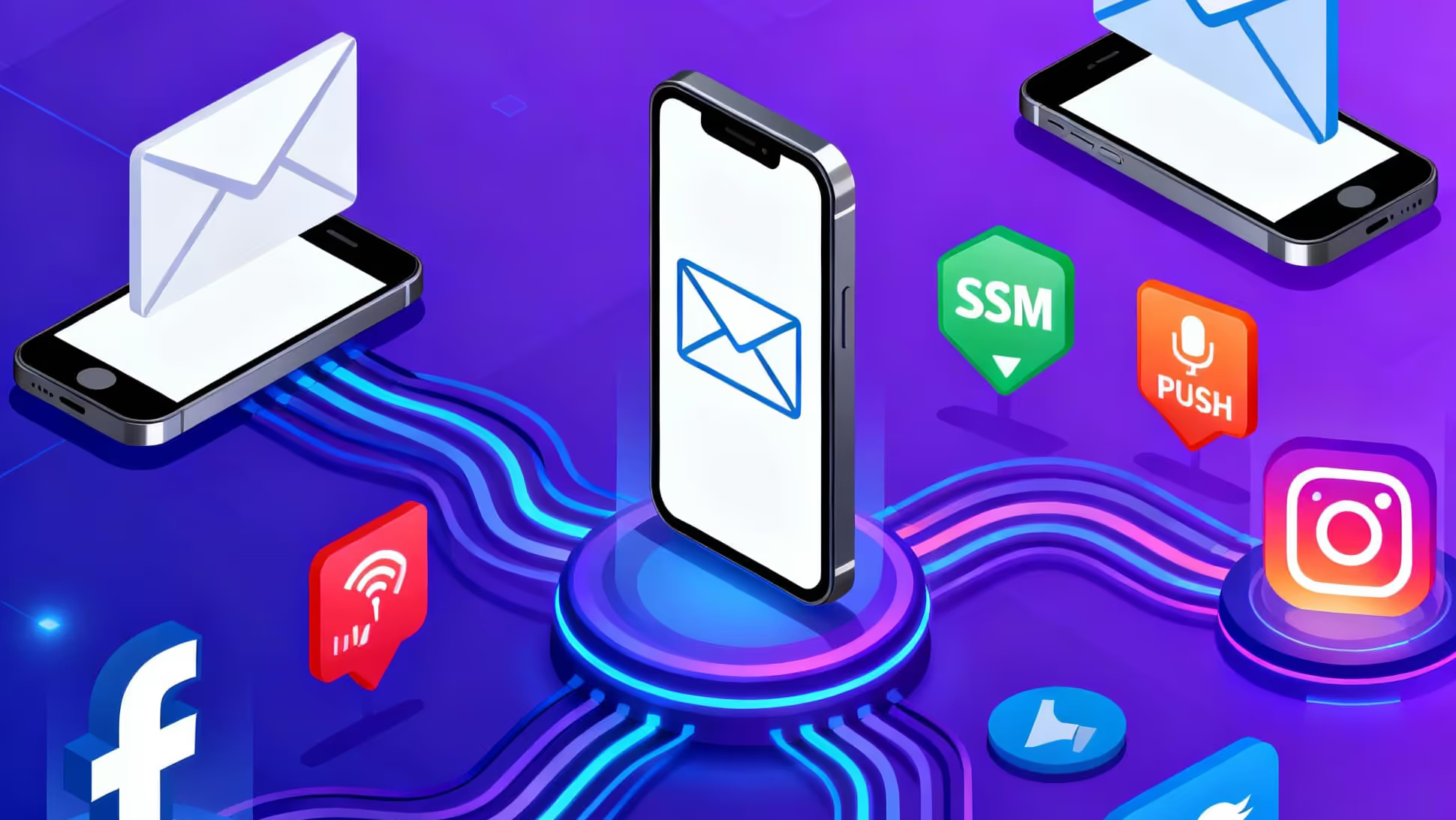
Modern iGaming platforms need CRM systems that work across every communication channel. Email, SMS, push notifications, in-app messages, social media, and web push notifications all need to pull from the same unified profile.
Traditional CRM tools treat each channel separately. Your email team sends promotions without knowing what your SMS team just sent. Push notifications arrive without considering recent email opens. This creates message fatigue and reduces effectiveness.
Integrated omnichannel CRM ensures coordinated communication. The system tracks every message sent across every channel and updates player profiles accordingly. If someone already received a bonus offer via email, they won't get the same offer through SMS an hour later.
Channel preferences matter too. Some players prefer email. Others respond better to push notifications. Unified profiles track these preferences and route messages accordingly, improving engagement rates while reducing annoyance.
Real-World Implementation

Leading iGaming operators have implemented unified identity systems with measurable results. One global operator integrated their betting, casino, and lottery platforms into a single customer data environment using real-time CDP technology.
They connected data streams from mobile apps, websites, CRM systems, and data warehouses to build dynamic player profiles. AI models for churn prediction, game affinity, and lifetime value fed into these profiles, enabling instant segmentation and personalized experiences.
Their abandoned deposit recovery campaign demonstrates the power of unified identity. When players abandon deposits, the system triggers targeted web popups and immediate re-engagement workflows. This single use case generated significant incremental revenue within days of activation.
Cross-selling becomes more effective with unified profiles. Sports betting players receive casino recommendations based on their complete behavioral patterns and AI-generated propensities. The system knows exactly when to make these suggestions for maximum impact.
Key Components for Success

Several elements need to work together for effective cross-channel identity unification:
- Data Integration Infrastructure: Connects all systems and data sources into one platform
- Identity Resolution Engine: Matches and merges player identities across touchpoints
- Real-Time Processing: Updates profiles instantly as players interact
- AI and Predictive Analytics: Analyzes patterns and predicts player behavior
- Unified Customer Profiles: Stores complete player information in accessible format
- Omnichannel Communication: Delivers coordinated messages across all channels
- Privacy and Compliance: Manages data securely within regulatory requirements
Challenges Operators Face

Implementing unified identity systems isn't simple. Legacy systems often resist integration. Older platforms weren't designed to share data easily, creating technical barriers that require significant development work.
Data quality issues complicate unification. Duplicate records, outdated information, and inconsistent formatting need cleanup before identity resolution can work effectively. Many operators discover their data is messier than expected.
Privacy regulations add complexity. Different jurisdictions have different rules about data collection, storage, and usage. Your unified profile system needs to respect these boundaries while still delivering personalized experiences.
Resource requirements can be substantial. Building and maintaining unified identity infrastructure demands technical expertise, ongoing development, and significant investment. Many operators underestimate the commitment required.
How Smartico.ai Solves Cross-Channel Identity
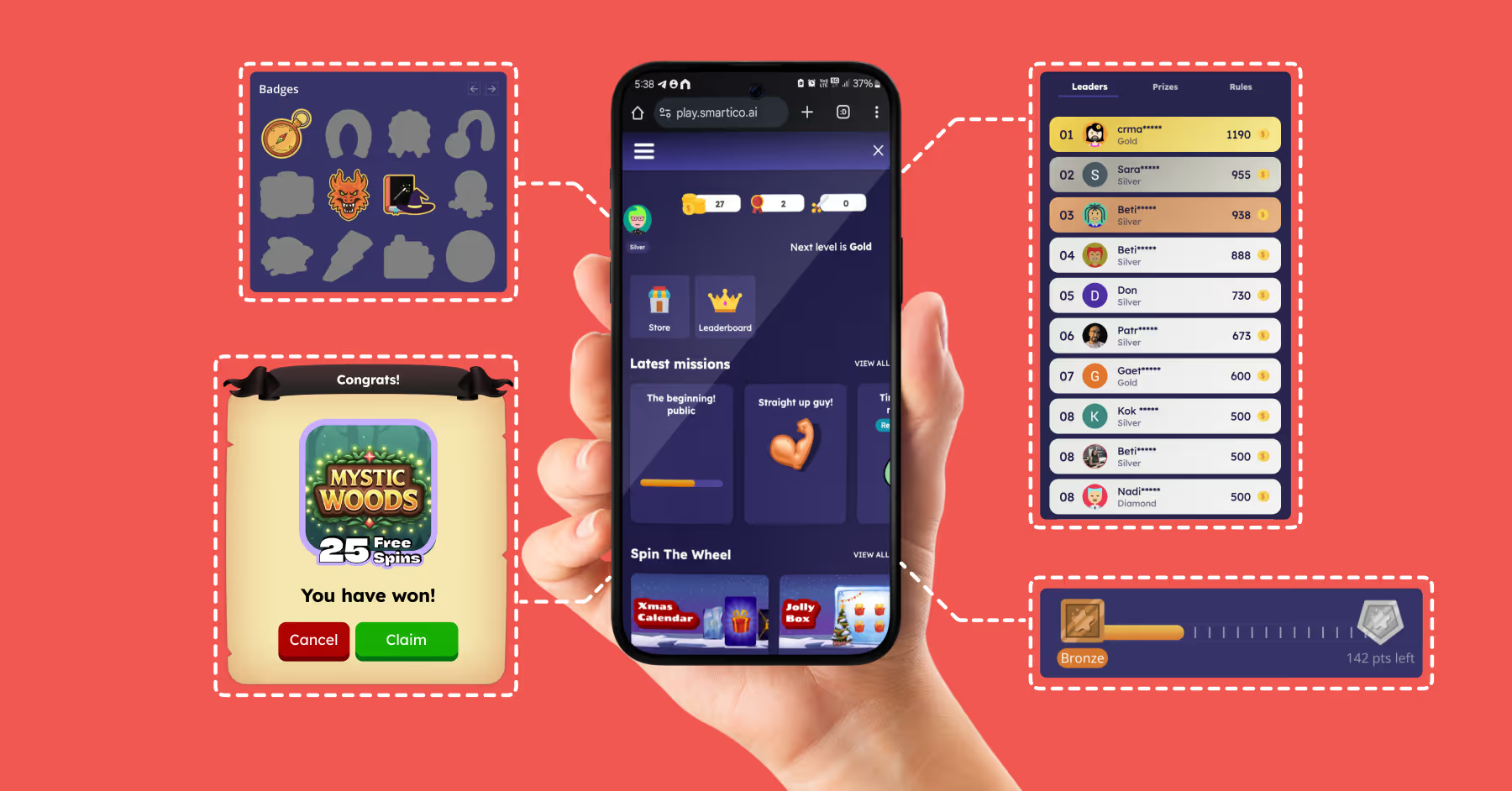
Smartico.ai pioneered unified Gamification and CRM Automation specifically for iGaming and online casino gaming operators. The platform consolidates customer data from every touchpoint into real-time, unified profiles that drive personalized engagement across all channels.
The system integrates with existing gaming platforms, payment processors, and communication tools without friction. It uses advanced identity resolution to connect player interactions across web, mobile, email, social media, and in-app environments. Real-time data processing ensures every profile stays current as players engage.
Built-in gamification features (tournaments, missions, badges, leaderboards, and challenges) work across all channels using the same unified profiles. Players earn points on mobile that appear instantly on desktop. Achievements unlock regardless of device. Progress continues uninterrupted everywhere.
The automation engine responds to player behavior in real time. When someone abandons a deposit, completes a milestone, or shows churn signals, the system triggers appropriate responses across the optimal channels. This happens automatically based on unified profile data and AI-powered predictions.
To understand how Smartico can help you raise retention, loyalty, and revenue like nothing you’ve tried before, book your free, in-depth demo below.
{{cta-banner}}
Frequently Asked Questions

1. What's the difference between multi-channel and omnichannel CRM?
Multi-channel means you have presence on multiple platforms, but they don't necessarily connect. Omnichannel means all channels work together from unified customer data, creating connected experiences as players move between touchpoints.
2. How long does it take to implement unified identity systems?
Implementation timelines vary based on existing infrastructure and data quality. Basic integrations might take weeks, while comprehensive enterprise deployments can require several months. The key is starting with core systems and expanding gradually.
3. Can unified profiles work with anonymous players?
Yes, through probabilistic matching and device fingerprinting. Systems can track anonymous behavior and then merge it with identified profiles once players log in or register. This provides continuity even before authentication.
4. What happens when players use VPNs or clear cookies?
Advanced systems use multiple identifiers beyond IP addresses and cookies. Device characteristics, behavioral patterns, and deterministic matching through login credentials help maintain identity even when players use privacy tools.
5. How do unified profiles improve player retention?
Players receive more relevant, timely communication based on complete behavioral history. This reduces message fatigue, increases engagement with appropriate offers, and creates smoother experiences that build loyalty.
Conclusion
Cross-channel identity unification turns scattered data into complete player understanding. When your platform recognizes players across every touchpoint, personalization becomes genuine rather than generic. The technology exists and works. Operators who implement unified customer profiles gain substantial advantages in player satisfaction, retention, and lifetime value. The question isn't whether to unify identity but how quickly you can get started.
Did you find this article helpful? If so, consider sharing it with other industry professionals such as yourself.