

The Role of Gamification in Employee Performance Management

Gamification in employee performance management brings game-like elements into everyday work to make goals clearer and progress more rewarding. Instead of standard checklists and reviews, teams chase points, unlock achievements, and see their efforts on leaderboards that feel exciting rather than stressful. This shift helps many organizations turn routine tasks into challenges that employees actually want to tackle.
Businesses that adopt these methods often notice stronger focus on key objectives and smoother collaboration across departments. Smartico's gamification platform, for example, lets teams build custom missions and rewards that fit their unique workflows. Companies also rely on CRM automation to keep every interaction personalized and timely. AI models further refine the experience by spotting patterns in behavior that keep performance high.
Ready to see how gamification can elevate your team's performance? Visit Smartico.ai today.
{{cta-banner}}
Understanding Gamification in Employee Performance Management
Gamification simply means adding elements from games, such as points, badges, levels, and friendly competition, to non-game settings like work. In performance management, it changes how goals are set, tracked, and celebrated. Traditional systems rely on annual reviews and static metrics. Gamified ones give instant feedback and visible progress, so employees stay connected to their targets every day.
This approach works because people naturally enjoy mastery, achievement, and recognition. When performance systems tap into those feelings, workers push harder without feeling forced. Many teams report that daily tasks become more meaningful when they tie into larger stories of growth and success.
The concept fits any industry, from sales floors to creative studios. It scales easily for small groups or large enterprises. What matters most is matching the mechanics to real business needs so the fun supports actual results instead of distracting from them.
How Gamification Drives Stronger Employee Performance
Gamification in employee performance lifts performance by making effort feel worthwhile right away. Employees see clear connections between actions and outcomes. A completed project might earn points that move someone up a leaderboard or unlock a special reward. This immediate link keeps motivation steady instead of waiting for distant bonuses or promotions.
Collaboration improves too. Team challenges encourage sharing ideas and helping colleagues because everyone benefits when the group succeeds. Many organizations find that friendly rivalry sparks creativity and faster problem-solving.
Individual growth accelerates as well. Workers experiment with new skills to earn badges or advance levels. The system highlights strengths and gently guides improvement in weaker areas through targeted missions. Over time, these small wins build confidence and competence that show up in everyday results.
Essential Game Mechanics That Make Performance Management Effective
Several core mechanics power successful gamified systems. Points act as a universal currency that employees earn for hitting milestones or showing positive behaviors. Badges celebrate specific achievements and create a sense of collection that many people enjoy.
Leaderboards add healthy competition by ranking progress, but smart designs focus on team or department standings to avoid negative pressure. Levels give a clear path for advancement, so employees know exactly what comes next.
Missions and quests break big goals into manageable steps with clear deadlines and rewards. Progress bars and dashboards show real-time status so no one wonders where they stand.
These elements work best when they stay simple and fair. Customization lets managers adjust difficulty or rewards based on role or experience level. The right mix keeps participation high without overwhelming anyone. Many teams use a gamification platform to handle these mechanics effortlessly.
Steps to Implement Gamification in Your Performance Management System
Start by defining clear objectives. Decide which behaviors or outcomes matter most, whether it is faster project delivery, better customer feedback, or stronger skill development. Align every game element directly to those priorities so the system drives real business value.
Next, choose the right platform that integrates smoothly with existing tools. Look for options that support real-time updates and easy customization. Test a small pilot with one team to gather feedback before rolling out company-wide.
Train managers and employees on how the system works and why it exists. Transparent communication builds trust and excitement. Gather input regularly and tweak rules or rewards to keep things fresh.
Monitor participation and adjust based on what engages people most. Some teams thrive on competitive leaderboards while others prefer personal progress tracking. Flexibility ensures the program stays relevant as needs change.
Best Practices for Long-Term Success with Gamified Performance Systems
Keep the experience fair and inclusive so every employee has a realistic chance to succeed. Balance individual and team goals to foster both personal pride and group spirit. Update challenges frequently to prevent boredom and maintain interest over months or years.
Provide meaningful rewards that employees actually value, whether recognition, extra time off, or practical perks. Tie everything back to learning and growth rather than pure competition. Celebrate improvements as loudly as top scores to encourage continuous development.
Integrate the system with daily workflows instead of treating it as an extra task. Seamless access through mobile apps or familiar dashboards raises adoption rates. Regular communication about success stories from within the company reinforces the positive impact. Pairing it with CRM automation helps personalize every step.
Common Challenges and How to Overcome Them
Some teams worry that gamification might feel childish or create unhealthy pressure. Address this by focusing on growth and teamwork rather than pure winning. Clear guidelines prevent any sense of unfairness or exclusion.
Another issue is fading interest once the novelty wears off. Combat this with seasonal events, new mechanics, and evolving rewards that keep the system dynamic.
Data privacy and transparency matter too. Employees need to know exactly what information the platform collects and how it gets used. Strong security and open policies build confidence.
Finally, ensure the program supports rather than replaces good management practices. Human conversations and personalized coaching remain essential. Gamification enhances them but never fully replaces them. AI models can help spot patterns early so adjustments stay proactive.
Traditional Performance Management
Gamified Performance Management
Annual reviews with delayed feedback
Real-time updates and instant recognition
Static goals that feel distant
Clear missions with visible progress steps
Limited visibility into team efforts
Shared leaderboards and collaborative challenges
One-size-fits-all metrics
Personalized paths based on role and strengths
Focus on past performance only
Emphasis on ongoing growth and future potential
Smartico's Approach to Gamification Solutions
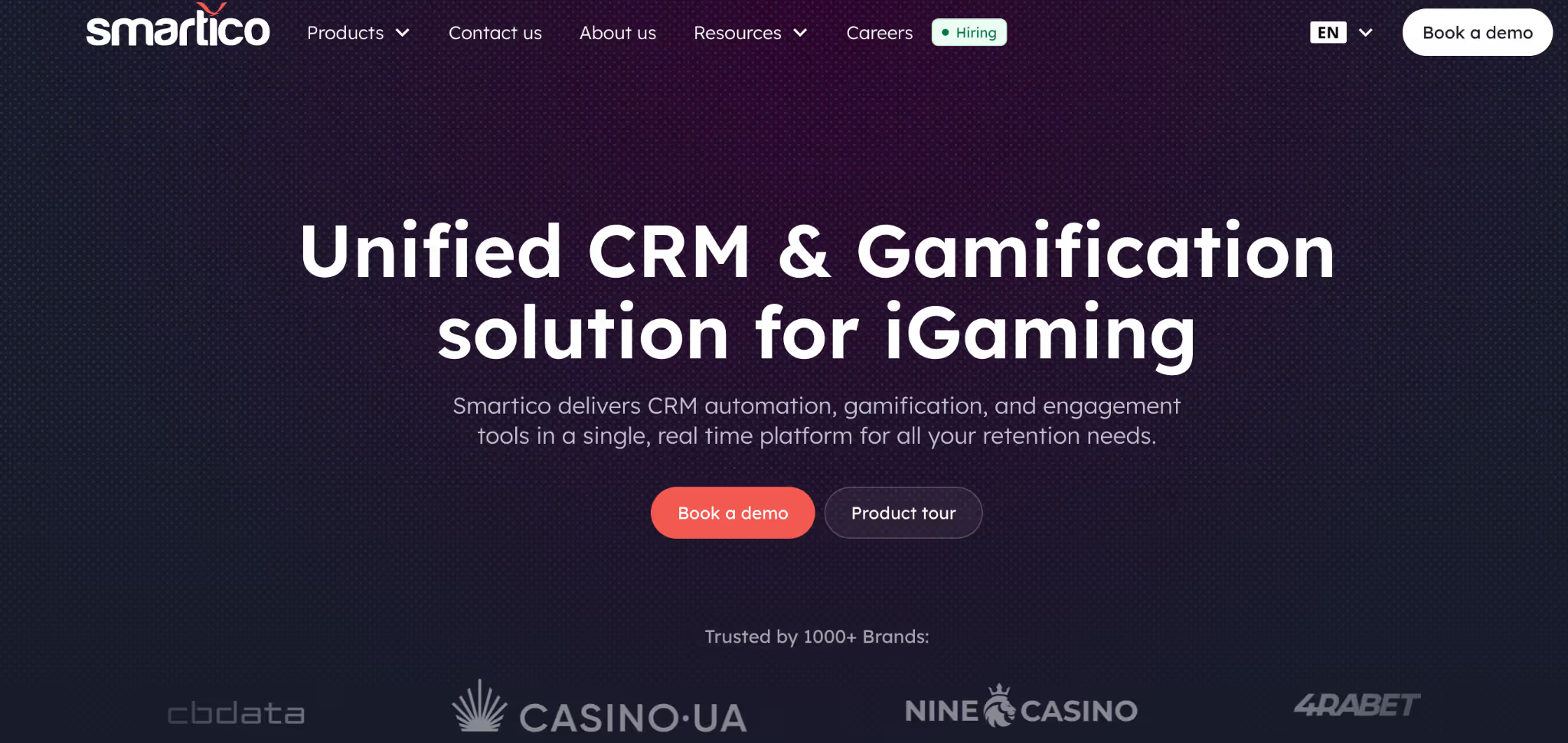
Smartico delivers a powerful platform that combines gamification with smart automation and predictive insights. Their tools help businesses create tailored experiences that drive sustained performance improvements across teams.
Key Features:
Our platform offers a range of powerful features:
CRM Automation: We streamline every step of the player journey, from onboarding to loyalty, with hyper-personalized messaging and automated workflows.
Gamification: Our customizable gamification tools bring fun, rewards, and loyalty seamlessly integrated within your CRM.
Free-to-Play Games: We offer a suite of customizable mini-games like the Loyalty Wheel, Scratch cards, and Daily Loot Boxes to boost player engagement.
Bonus Engine: Our system helps lower bonus costs with rewards tailored to player behavior, manageable in real-time or scheduled for optimal impact.
Jackpots: We provide customizable jackpots, both player-funded and operator-funded, to enhance any game from any provider.
AI Models: Our AI turns player data into actionable predictions, helping optimize engagement, prevent churn, and deliver rewards at the perfect moment.
Raffle: Transforms simple promos into fun, gamified experiences that boost engagement, spark excitement, and keep users coming back.
Integration and Support:
One of our key strengths is our effortless integration process. Our engineers manage the entire integration, reducing the load on your R&D resources. We support all major SMS, email, and instant messaging providers, and we integrate with all iGaming platforms.
Expertise and Partnership:
We're not just a software provider; we're a partner invested in your growth. Our team works alongside you to build CRM expertise within your team, guiding strategy and offering practical insights throughout our partnership.
Pricing and Availability:
Our pricing is based on monthly active users and includes both CRM automation and gamification, along with a dedicated Success Manager. While we don't offer a trial version, we're happy to provide a detailed demo to show you exactly how Smartico works.
At Smartico, we're committed to helping iGaming businesses improve retention and engagement. We'd love to show you how our platform can benefit your operations. Feel free to book a demo or reach out with any questions you might have.
{{cta-banner}}
Looking Ahead: The Future of Gamified Performance Management
The field continues to evolve with smarter personalization and deeper integration into daily tools. AI will likely play a bigger role in creating experiences that adapt automatically to each employee's preferences and work style.
Virtual and augmented reality in gamification could bring immersive training scenarios that feel more like games than work. Hybrid and remote teams will benefit from features that bridge distance and keep everyone connected through shared challenges.
The core idea stays the same: make performance management something employees look forward to rather than dread. Organizations that stay flexible and employee-focused will gain the biggest advantages as these technologies mature.
FAQ
What makes gamification different from traditional performance incentives?
Gamification turns incentives into ongoing experiences rather than one-time bonuses or raises. Employees earn visible progress daily through points, levels, and achievements instead of waiting for year-end evaluations. This constant feedback loop creates stronger connections between effort and reward. Many find it more motivating because the system feels fair, transparent, and directly tied to their daily actions. The game elements also add variety and excitement that standard bonus structures often lack.
How does gamification support remote and hybrid teams specifically?
Remote setups can feel isolating, but gamified systems bring teams together through shared leaderboards, group missions, and virtual celebrations. Employees see each other's progress in real time regardless of location. Challenges that reward collaboration help maintain connection and accountability. Personalized dashboards let individuals track their own growth while contributing to team success. These features reduce the distance that hybrid work sometimes creates and keep everyone aligned on common goals.
Can gamification work across different departments and company sizes?
Yes, the approach adapts well because mechanics like points and badges scale from small startups to large enterprises. Sales teams might focus on competitive tournaments while support departments emphasize collaborative quests. Managers customize difficulty levels and rewards to match each group's unique responsibilities. Even creative or analytical roles benefit when challenges highlight innovation or problem-solving. The key is choosing elements that align with departmental objectives and company culture so the system feels relevant everywhere.
What role does feedback play in successful gamified performance programs?
Feedback sits at the heart of gamification because instant updates show exactly how actions affect progress. Employees receive clear signals about what works and where they can improve without waiting for formal meetings. This real-time guidance builds confidence and speeds learning. Managers gain better visibility into team patterns so they can offer targeted support. When feedback stays constructive and tied to growth, the whole system becomes a powerful tool for continuous improvement rather than judgment.
{{cta-banner}}