


Session-Based Churn Prediction: Why Deposits Don't Tell the Whole Story

Most iGaming operators still measure player loyalty by watching wallet activity. A player deposits regularly? They're engaged. Money stops flowing in? Time to panic.
But by the time deposits dry up, the damage is already done. That player checked out weeks ago. They just hadn't closed their wallet yet.
The real story of why players leave isn't written in transaction logs, but hidden in session data – how often they play, how long they stay, what they do when they're there. And operators who figure this out early get to keep their players instead of scrambling to win them back.
The Deposit Trap

Deposits tell you when a player had money and decided to use it. That's useful, but it's also the last step in a much longer chain of decisions. Before a player stops depositing, they stop enjoying themselves. They log in less. Their sessions get shorter. They skip their favorite games.
Transaction data gives you the "what." Behavioral data gives you the "why".
Think of it this way: if you only track deposits, you're like someone checking their bank account to figure out if they're happy. Sure, spending patterns matter. But you won't catch the warning signs until the money's already gone.
According to research, monitoring session frequency and game engagement predicts churn better than transaction data alone. Players who reduce their login frequency, shorten their sessions, or stop interacting with core features are waving red flags. But most operators miss these signals because they're too focused on deposit schedules.
What Session Data Actually Reveals

Session-based metrics capture the stuff that matters: how players behave when they're actively in your ecosystem.
Session frequency tracks how often players return. A regular who used to log in daily but now shows up once a week? That's a problem brewing.
Session length measures engagement depth. When average playtime drops from 30 minutes to 8 minutes, something changed. Maybe the games feel stale. Maybe the bonus structure stopped making sense. Either way, that player is losing interest.
Game interaction patterns reveal what keeps people around. Which games do they play? How many different titles do they try? Do they stick with one type or explore your catalog? When variety drops or a player abandons their go-to game, it's time to ask why.
Activity streaks show commitment. Players who log in for several consecutive days demonstrate higher engagement and lower churn risk. When those streaks break, you have a narrow window to pull them back.
These metrics give you a real-time pulse on player satisfaction. Deposits can't do that because they lag behind behavior. A player can keep depositing out of habit while their engagement crumbles. By the time they stop funding their account, they've already mentally moved on.
Why Behavioral Indicators Beat Transactions

Behavioral churn indicators work because they track emotional investment, not just financial commitment. A player who spends three hours a day in your casino but only deposits small amounts is more valuable long-term than someone who drops a big deposit and leaves after 15 minutes.
Traditional churn models focus on transactional events: last deposit date, deposit frequency, average deposit size. These models assume money equals engagement. But that breaks down in iGaming because players don't behave like subscription customers. Their spending is irregular. Some high-value players deposit infrequently but play often using previous winnings. Others deposit constantly but show weak session metrics because they're chasing losses, not enjoying the experience.
Behavioral models flip the script. They ask: Is this player engaged? Do they enjoy being here? Are they coming back because they want to, or because they're stuck in a pattern?
Session-based models can predict churn with accuracy rates above 90% when trained on the right features. That's significantly better than deposit-only models, which often miss early-stage disengagement entirely.
The Missing Pieces in Transaction-Only Models

Deposit data has blind spots.
First, it can't distinguish between healthy spending and problem behavior. A player making frequent deposits might be having fun, or they might be spiraling. Transaction logs don't tell you which.
Second, deposits don't capture players who fund their play from winnings. These players can stay active for weeks without a single new deposit. If your churn model only watches wallet activity, it marks them as inactive when they're actually some of your most engaged users.
Third, transaction models miss context. Two players with identical deposit patterns can have completely different engagement profiles. One logs in daily and plays for hours. The other deposits once, loses quickly, and disappears for weeks. Transaction data treats them the same. Session data shows the difference immediately.
Finally, behavioral shifts happen before financial ones. Players disengage mentally and emotionally before they stop spending. Session frequency drops. Game variety shrinks. Play sessions shorten. These changes unfold over days or weeks, giving you time to intervene. But if you're only watching deposits, you don't see the problem until it's too late.
How Session-Based Prediction Works

Session-based churn prediction starts with tracking every interaction a player has with your platform. This includes logins, game launches, bet placements, session durations, time between sessions, and feature usage.
Machine learning models analyze these behaviors to identify patterns that correlate with churn. For example:
- Players whose average session length drops by more than 40% over two weeks are at high risk
- A gap of 7+ days between logins signals potential churn, especially for players who previously logged in daily
- Players who stop exploring new games and only play one or two titles show declining engagement
- Session frequency matters more than session length for predicting long-term retention
Modern platforms use real-time data pipelines to update churn scores continuously. Instead of waiting for a weekly report, operators get alerts the moment a player's behavior shifts. This enables proactive retention strategies: personalized offers, targeted bonuses, direct outreach from VIP managers.
The best session-based models combine behavioral metrics with contextual data like game performance, bonus usage, and support interactions. This creates a complete picture of player health that transaction data alone can't provide.
Real-World Impact
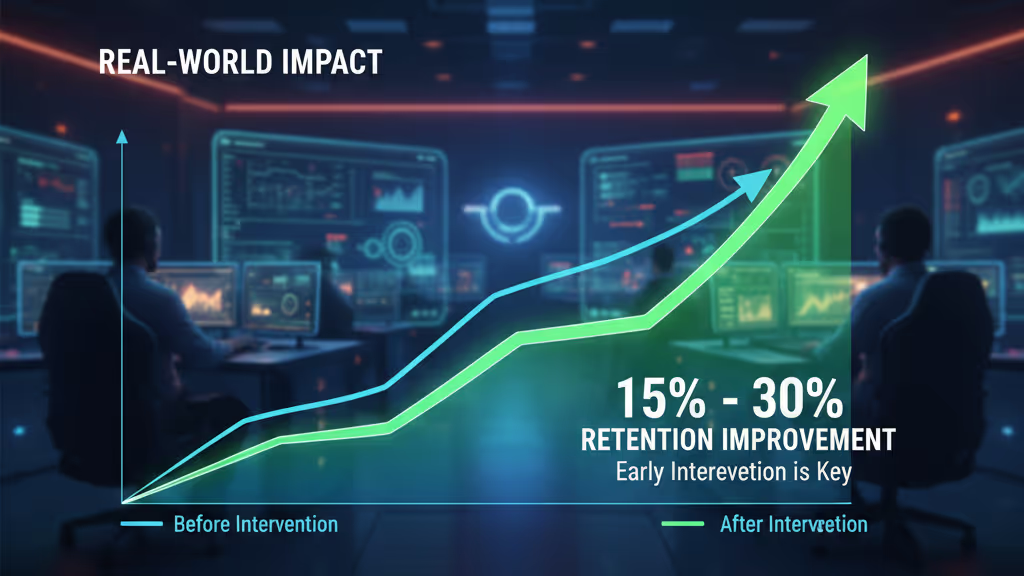
Operators using session-based churn models report retention improvements between 15% and 30%. That's because they can intervene early, when players are still reachable.
Traditional models trigger alerts when deposits stop. By then, the player has already decided to leave. You're fighting an uphill battle to change their mind.
Session-based models flag risk weeks earlier. A player whose session frequency drops from five times a week to twice? They're still active, still engaged enough to receive an intervention. A well-timed bonus or a personalized message can pull them back before they mentally check out.
The speed advantage matters. Churn recovery rates drop dramatically the longer a player stays inactive. Act within the first week of declining engagement, and you might retain 60% of at-risk players. Wait a month, and that number falls below 20%.
How Smartico Can Help You Combat Churn
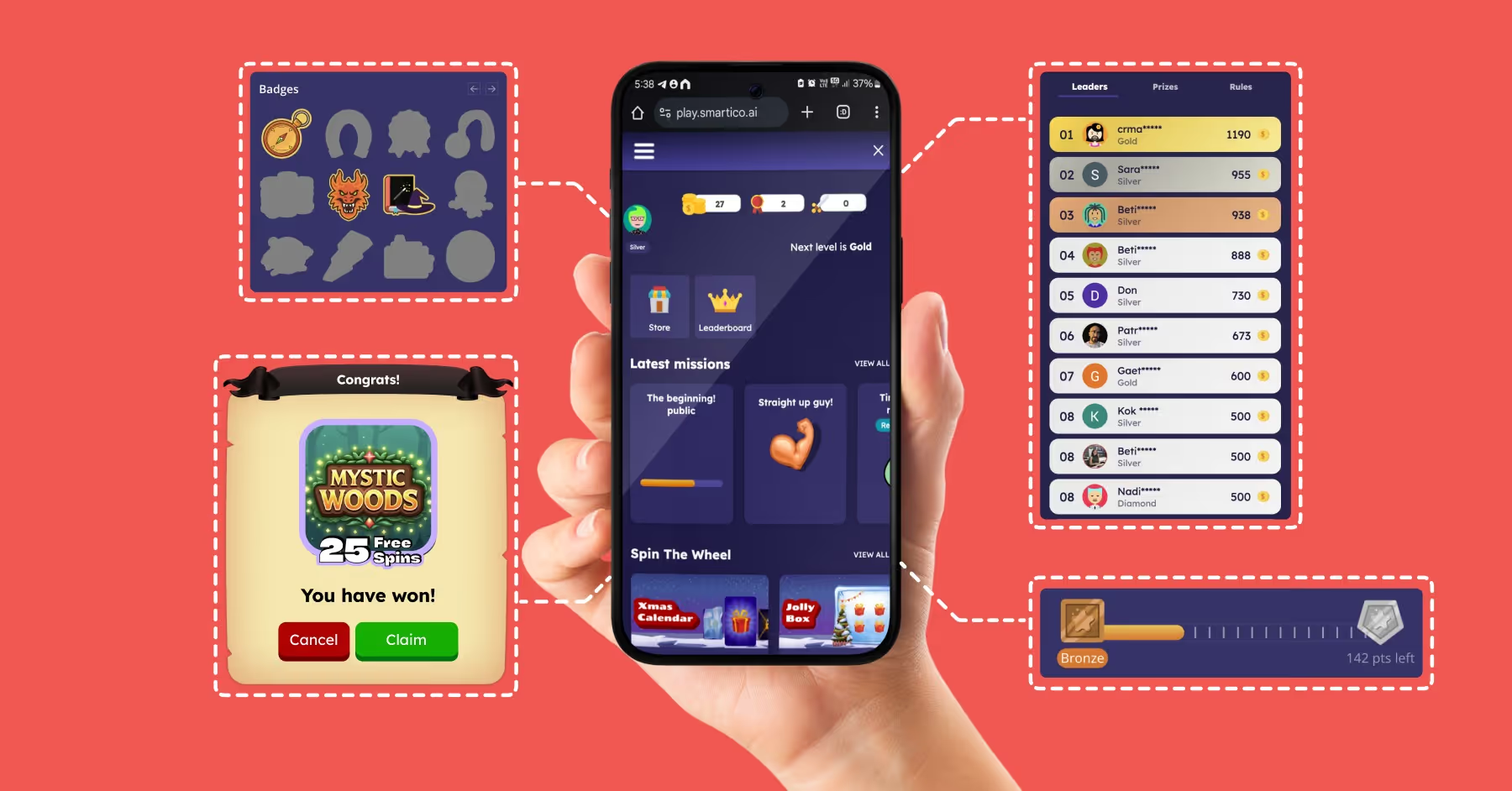
Smartico.ai approaches retention differently than most CRM platforms. Instead of waiting for players to show up in a churn report, it monitors behavior in real time and acts immediately.
The software tracks session frequency, game engagement, and activity patterns alongside traditional metrics like deposits and bonuses. Machine learning models assign churn risk scores daily, updating as player behavior evolves. When a player's session frequency drops or their engagement metrics shift, Smartico triggers automated interventions before the problem escalates.
Smartico's unified approach combines Gamification with CRM Automation, allowing operators to deploy personalized retention campaigns without manual work. A player showing early churn signals might receive a tailored mission, a bonus tied to their favorite game, or a loyalty reward designed to re-engage them.
The system also optimizes Bonus allocation based on player behavior, not just spending patterns. This prevents over-incentivizing players who don't need it while ensuring at-risk players get offers that actually matter to them. Smartico's AI continuously tests and refines these interventions, learning which strategies work best for different player segments.
Operators using Smartico report faster response times to churn signals and higher retention rates because they're acting on behavioral data, not transaction lag.
To understand how Smartico can help you raise business revenue like nothing you’ve tried before, book your free, in-depth demo below.
{{cta-banner}}
FAQ
1. How quickly can session-based models detect churn risk compared to transaction-based models?
Session-based models can flag at-risk players within 24 to 48 hours of behavioral changes, while transaction-based models often take weeks to detect issues since they rely on deposit patterns that lag behind actual engagement shifts.
2. Can session data work for players who fund their play primarily from winnings rather than new deposits?
Yes. Session-based models track engagement regardless of funding source, making them ideal for identifying active players who don't deposit frequently but maintain high session frequency and game interaction.
3. What's the minimum amount of session data needed to build an accurate churn prediction model?
Most effective models require at least six months of historical session data covering a minimum of 3,000 monthly active players, with each player having at least four recorded gaming sessions.
4. Do session-based churn models account for seasonal or cyclical player behavior?
Advanced models incorporate time-based features and seasonal patterns to distinguish between normal cyclical behavior and genuine disengagement, preventing false positives during expected low-activity periods.
5. How do operators balance session monitoring with player privacy concerns?
Session-based tracking focuses on aggregated behavioral patterns rather than personal information, and compliant platforms anonymize data while still enabling effective churn prediction within regulatory frameworks.
Moving Beyond Deposits
Deposits tell you what happened. Sessions tell you what's happening right now.
If you're still building retention strategies around transaction data, you're working with incomplete information. You're reacting to problems that started weeks ago, trying to win back players who already made up their minds.
Session-based churn prediction changes the game. It gives you early warnings. It shows you who's disengaging before they stop spending. And it gives you time to fix the problem instead of just watching it unfold.
That shift from reactive to proactive makes all the difference. Because by the time a player stops depositing, you've already lost them. But when you catch the signals early, when session frequency drops or engagement fades, you still have a chance to pull them back.
The operators who figure this out first will have a massive retention advantage. The rest will keep wondering why their players left, long after those players are gone.
Did you find this article helpful? If so, consider sharing it with other industry professionals such as yourself.