


The Complete Guide to Player Churn Prevention in Online Casinos: Proven Strategies to Boost Player Retention in 2026
.avif)
Updated on July 3, 2026
Player churn prevention is now the single biggest factor in long-term success for online casino operators. With retention rates dropping to under 30% on day 1 and under 8% by day 7, the industry has a serious retention problem. This guide covers the strategies that actually move the needle: AI-powered analytics, gamification, and personalized engagement working together to lift retention and player lifetime value.
The economics are stark. Acquiring a new player costs 5 to 7 times more than keeping an existing one, and increasing retention by just 5% can raise profits by 25% to 95%. Operators who get churn prevention right build a real, durable advantage in a crowded market.
The Churn Crisis in Online Casinos

The retention reality
The numbers explain the urgency. Recent research shows only 6.19% of active players in the last quarter of 2024 were new, which means most casino revenue comes from retained players, not fresh acquisitions.
The retention curve is steep:
- Day 1 retention: under 30%
- Day 7 retention: under 8%
- Day 30 retention: 2 to 20% across operators
That is a direct challenge to the acquisition-first growth model many operators still lean on.
The economics of churn
The cost of churn goes well beyond lost revenue. Customer acquisition costs in iGaming run $250 to $500 per user, and sports betting can reach $800 or more during major events. Set against the 5-to-7x gap between acquiring and retaining, the case for prevention is clear.
It gets sharper at the top end: just 2% of players can account for more than half of total earnings. Losing even a few high-value players does real damage to the business.
Defining churn in a casino context
Most operators call a player churned after 30+ days with no real bets or deposits, though some use shorter windows of 14 to 21 days depending on their typical engagement. The better approach uses AI-powered models that flag at-risk players as early as the first day of inactivity, so you can act before a player is gone.
Understanding the Psychology Behind Player Churn

Psychological triggers driving churn
To understand why players leave, start with the psychology of gambling behavior. Loss aversion is a primary driver: the pain of losing outweighs the pleasure of winning by roughly 2 to 1. When players hit a run of losses without enough positive reinforcement, many walk away.
Variable reward schedules are the foundation of casino engagement. Unpredictable rewards drive the dopamine response that keeps players coming back. When reward frequency falls below what a player expects, that investment fades quickly and churn follows.
Emotional engagement factors
Three emotional drivers shape retention:
- Excitement and anticipation: players want the thrill of uncertain outcomes. When games feel predictable, engagement drops.
- Social proof and status: leaderboards, rankings, and badges give public validation, and players who reach visible status markers tend to stay longer.
- Fear of missing out: limited-time offers, countdowns, and event-based games create urgency, especially when paired with offers personalized to the player.
Behavioral patterns that predict churn
Good analytics catch specific patterns that reliably flag churn risk:
- Session frequency: falling play frequency often comes before a player disappears.
- Bet size shifts: sharp increases or decreases in wagers signal a change in mindset.
- Game exploration: players who stop trying new games often lose interest in the platform.
- Communication response: falling response rates to offers point to disengagement.
AI-Powered Churn Prediction Models

Machine learning for player behavior analysis
AI has changed what churn prediction can do. Modern models use several sub-models to analyze player behavior and make predictions tuned to each operator's player base, and they train continuously on live data so predictions stay relevant as behavior changes.
A few machine learning techniques do the heavy lifting:
- E-CHAID (Enhanced Chi-Squared Automatic Interaction Detection): good at finding complex interactions between variables that plain regression misses.
- Random Forest classifiers: ensemble methods that can reach 85 to 89% testing accuracy on player behavior.
- Deep learning neural networks: better at spotting intricate patterns, especially for longer-term forecasting.
{{cta-banner}}
Real-time behavioral analysis
Real-time processing lets operators respond to churn signals in minutes, not days. These systems watch several data streams at once:
- Session duration and frequency
- Game engagement
- Deposit and withdrawal behavior
- Communication interaction rates
- Cross-platform activity
The ROI of predictive models
Done well, AI-powered churn prediction pays off:
- Lower churn rates, by reaching at-risk players before they leave.
- Higher Net Gaming Revenue through timely, targeted interventions.
- Less wasted bonus spend, because offers go to the players who actually need them.
The investment in predictive analytics usually pays for itself within the first few months through better retention and lower acquisition costs.
How Smartico Predicts and Prevents Player Churn
Everything above describes the general approach. Here is how it works in Smartico.
Smartico's churn model is built specifically for casino and sportsbook operators. It predicts how likely a player is to stop depositing within the next 7, 14, or 30 days, and you pick the window that fits your player base. The definition is flexible: if depositing alone is too narrow, the model can be trained on other definitions, such as no deposits and no gameplay.
Every player gets a churn probability score, updated daily, from 0 (lowest risk) to 1 (highest). Those scores sort players into risk ranks such as Low, Medium, High, and Critical, and each rank carries a real probability to churn calculated from historical predictions. A Critical rank sitting near 94%, for example, means that of 100 players flagged, about 94 went on to churn. Alongside risk, the model assigns each player a value class of Low, Medium, or VIP, so you can weigh risk against worth.
These scores do real work through one event, "Core: churn prediction updated," which fires whenever a player moves between ranks. You can use it to:
- Trigger a real-time retention campaign the moment a player crosses into High or Critical risk.
- Stop a campaign automatically when a player recovers to Low or Medium risk, so you stop spending on someone who no longer needs it.
- Build a churn-risk segment and use it anywhere in the platform: campaigns, automation rules, missions, mini-games, and tournaments. You might offer a specific mini-game or mission only to high-risk players.
Churn rarely shows up in deposits first. Session behavior usually shifts earlier, which is why session-based signals often warn you sooner than deposit data.
Churn prediction also pairs with LTV prediction, which projects each player's net deposit over the next 15, 30, and 60 days with confidence bounds. Together they tell you not just who is at risk, but who is worth the strongest intervention.
The Power of Gamification in Player Retention

Core gamification elements
Gamification adds game-like mechanics that lift engagement and retention. Points, levels, badges, and leaderboards are the foundation.
- Missions and quests: clear objectives beyond the core games, giving players another reason to return. They range from "complete 10 spins on slot games" to multi-stage challenges over several days.
- Tournaments and competition: competing for top rankings drives engagement, and time limits add urgency alongside recognition and rewards.
- VIP tier progression: tiered benefits reward consistent play and tap into the drive to advance.
The psychology behind gamification
- Progression loops create satisfaction through advancement, independent of gambling outcomes.
- Social recognition through badges and leaderboards builds community and reduces churn through social ties.
- Loss-aversion mitigation: points, achievements, and progression give players positive reinforcement that offsets the sting of losses.
Measurable impact on retention
The evidence is strong. Platforms using gamification reach 75% retention versus 50% for non-gamified platforms, and operators report roughly a 30% revenue increase with well-built gamification, along with higher lifetime value. Implementation is what matters. Basic point systems do little, while gamification that responds to player behavior delivers real returns.
Real-Time Engagement and Personalization
Why real-time processing matters
Real-time engagement is a real competitive edge. Players expect immediate responses, and delays in recognition or rewards push them away. Systems that react to behavior within milliseconds create the smooth experience that keeps players active.
Dynamic content personalization
The best platforms use behavioral data to tailor the experience to each player:
- Game recommendations: AI reads playing patterns to suggest games a player will like, which lifts session length and frequency.
- Bonus timing: predictive models find the best moment to offer a bonus, which raises acceptance.
- Content customization: real-time engines adapt game suggestions, offers, and timing to each player.
Multi-channel engagement
Retention needs coordinated outreach across touchpoints:
- Email automation with personalized timing and content
- SMS for time-sensitive offers and reminders
- In-platform notifications triggered by behavior
- Push notifications for mobile users
- Social media retargeting for full coverage
A/B testing frameworks keep messaging, timing, and offers improving across every channel.
Real-time intervention
When a model flags churn risk, you can act at once:
- Personalized bonus offers matched to the player's favorite games and typical bet size.
- VIP account manager contact for high-value players.
- Gamification triggers such as a special mission or tournament invite built to re-engage that player.
Advanced Player Segmentation Strategies
RFM analysis
RFM (Recency, Frequency, Monetary) analysis is the standard for player segmentation, scoring players on three dimensions:
- Recency: how recently they last deposited or bet
- Frequency: how often they engage over a set period
- Monetary: the total value of their deposits and wagering
RFM lets you build targeted campaigns for each group, with offers matched to their engagement and value.
Behavioral vs demographic segmentation
Demographic data gives basic context, but behavioral segmentation predicts churn far better. Behavioral segments focus on:
- Game preferences
- Session timing and duration
- Risk tolerance
- Response to promotions
- Cross-platform usage
VIP and high-roller identification
Early-VIP detection uses machine learning to spot likely high-value players within their first 24 hours, reading signals like:
- Initial deposit amounts and patterns
- Game selection and bet sizing
- Session duration and frequency
- Response to welcome offers
Identifying these players early lets you give them premium treatment from the start.
Micro-segmentation with AI
AI-driven micro-segmentation can create hundreds or thousands of distinct groups, which enables:
- Highly specific bonus offers for narrow player types
- Recommendations based on similar players
- Communication timing tuned to each segment
- Churn prevention tailored to specific risk factors
Building Deep Player Journeys

The six stages of the player journey
Good churn prevention means understanding and optimizing each stage:
- Awareness: first exposure to the brand.
- Sign-up: registration and account creation.
- First deposit: the conversion moment that shapes long-term engagement.
- Active gaming: regular play and exploration.
- Retention: ongoing engagement through varied activities and rewards.
- Loyalty/VIP: premium benefits and personalized service.
Critical touchpoints
Each stage has touchpoints that move retention:
- Onboarding: keep registration simple while meeting security needs. ID scanning can pre-fill fields and cut drop-off.
- Welcome bonus: tiered offers that create several engagement moments beat one large bonus that spikes then fades.
- First session: personalized game recommendations and a smooth onboarding flow guide players to content they enjoy.
Automated journey mapping
Modern CRM systems track progression and surface where to improve. They can:
- Detect stage transitions automatically
- Trigger communications based on progression
- Find friction points where players drop off
- Deploy interventions when progression stalls
Personalization at each stage
Personalization engines adapt to the data collected along the way:
- Discovery: recommendations based on browsing
- Onboarding: welcome sequences based on preferences
- Active gaming: dynamic game and bonus suggestions
- Retention: loyalty elements matched to engagement
Loyalty Programs and Retention Mechanics

From traditional to gamified loyalty
Casino loyalty programs have moved well past simple point collection. Today's programs fold in gamification that makes the experience feel like a game, combining real rewards with:
- Tier progression with visual feedback
- Achievement badges and milestone moments
- Community features that build social ties
- Personalized challenges and missions
Tier-based progression
Good tier systems give clear advancement with rising benefits:
- Milestone design: achievable early tiers with progressively harder steps keeps motivation up without tier inflation.
- Benefit scaling: each tier adds real value through better bonuses, exclusive games, faster withdrawals, and personal service.
- Visual progress: live tracking shows players how close they are to the next tier.
Dynamic reward optimization
Advanced programs use AI-driven rewards that adapt to behavior:
- Behavioral trigger bonuses tied to specific actions
- Personalized cashback based on player value and risk
- Exclusive access to VIP games, tournaments, and events
- Flexible redemption, from bonuses to real-world rewards
{{cta-banner}}
Community building
Social features inside loyalty programs lift retention. Effective ones include:
- Player forums and discussion spaces
- Tournament leaderboards with social recognition
- Referral programs that reward community building
- VIP events and exclusive experiences
Technology Stack for Churn Prevention
Essential CRM features for retention
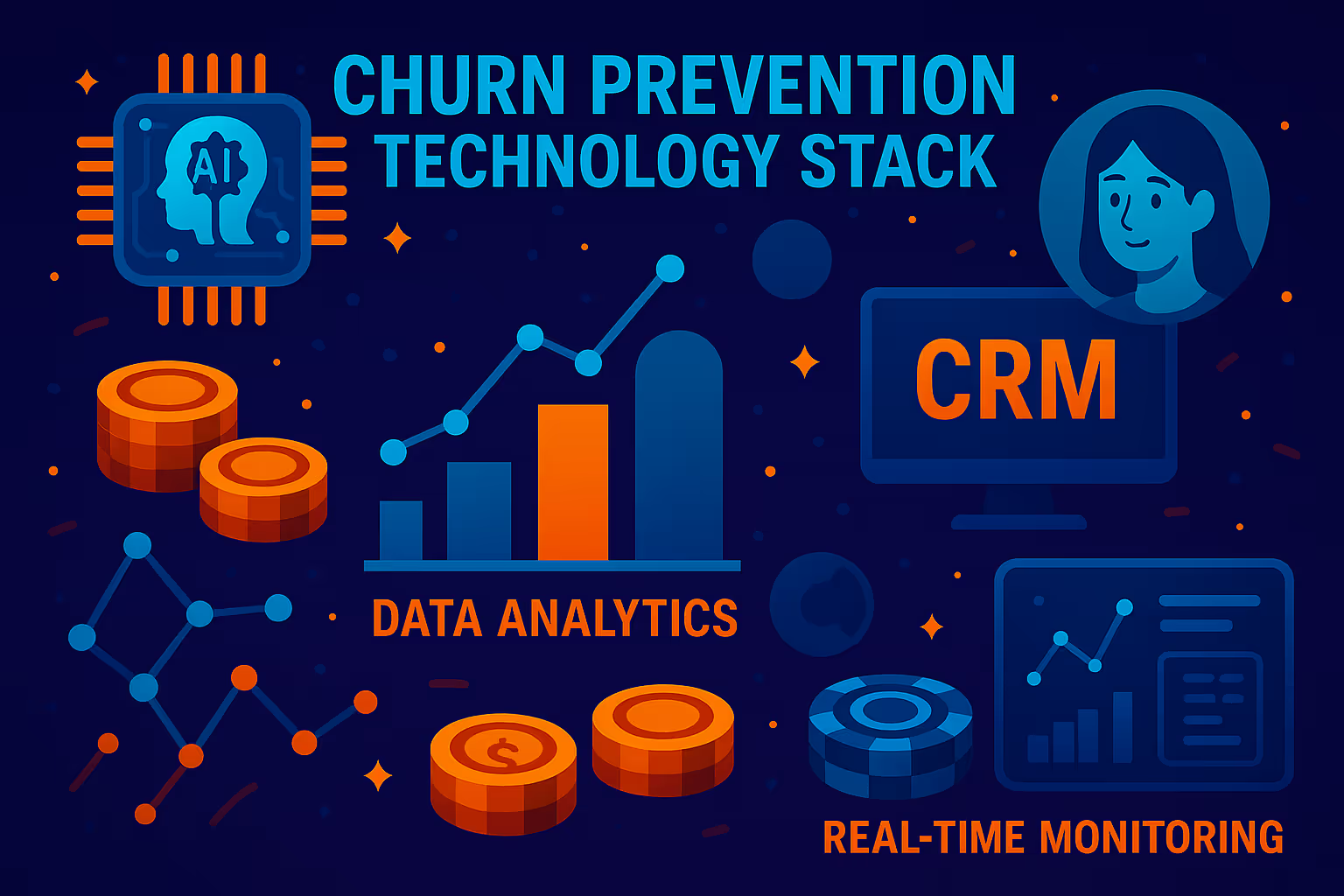
A modern casino CRM needs the full toolkit for churn prevention:
- Real-time data integration: consolidating data from every system and provider so you can respond immediately.
- Advanced segmentation: building sophisticated segments from behavioral, demographic, and predictive data.
- Automated campaign management: workflows that trigger personalized communications from player actions and segment membership.
- Predictive analytics: built-in models for churn prediction, LTV forecasting, and optimal timing.
Integration requirements
Retention tech has to connect cleanly across systems:
- Game provider APIs for real-time gaming data from slots, table games, and live dealer
- Payment processing for deposit, withdrawal, and bonus tracking
- Marketing platforms for email, SMS, and social
- Customer support through help desk and live chat
Real-time data processing
The best platforms process millions of player actions a minute:
- Sub-second responses for offers and recommendations
- Streaming analytics that spot behavioral changes instantly
- Automated decision engines that trigger interventions without manual work
- Performance monitoring that holds up under peak load
Scalability
Retention tech has to grow with you:
- Horizontal scaling as your player base expands
- Multi-brand support from a single platform instance
- Geographic expansion across markets, languages, and regulations
- Third-party integrations through flexible APIs
Success Stories

Across operators, a few patterns hold up:
- Gamification impact: platforms using gamification reach 75% retention versus 50% without it.
- Prediction accuracy: modern churn models can reach 85 to 90% accuracy in flagging at-risk players.
- Intervention effectiveness: well-timed interventions win back a meaningful share of players who would otherwise churn.
- ROI: operators commonly see several times their investment in retention technology within the first year.
Measuring Success and KPIs
Essential retention metrics
Good churn prevention needs measurement across several dimensions:
- Day 1, 7, 30 retention rates: the core return-pattern metrics. Benchmarks point to 70 to 80% over 30 days, with monthly churn below 5%.
- Player lifetime value: the total net profit expected from a player. The best operators predict LTV from early behavioral signals rather than waiting on history.
- Churn rate: the share of players who stop engaging over a period. Leaders keep it below 5% monthly through proactive work.
LTV calculation
Modern LTV modeling goes past simple historical averages:
- Basic formula: LTV = ARPDAU × Lifetime, where ARPDAU is Average Revenue Per Daily Active User and Lifetime is predicted engagement duration.
- Predictive models: machine learning reads early signals (D1/D3 retention, first-purchase timing, tutorial completion) to forecast LTV within the first 24 to 72 hours.
- Segmented calculations: LTV varies by segment, so calculate it separately for acquisition channel (organic, paid, affiliate), region, game preference, and VIP tier.
Analytics and reporting
Strong measurement needs solid analytics:
- Real-time dashboards with key retention metrics and early-warning indicators
- Cohort analysis to track groups over time and judge intervention effectiveness
- Predictive reporting that projects future churn risk and revenue impact
- A/B testing with statistical significance tracking and automatic winner selection
Continuous improvement
The best programs improve on a cycle:
- Weekly reviews for quick tactical adjustments
- Monthly reviews for medium-term strategy changes
- Quarterly evaluations of technology, process, and outcomes
- Feedback loops that fold survey data, support tickets, and behavioral insight back into the program
Future Trends and Innovations
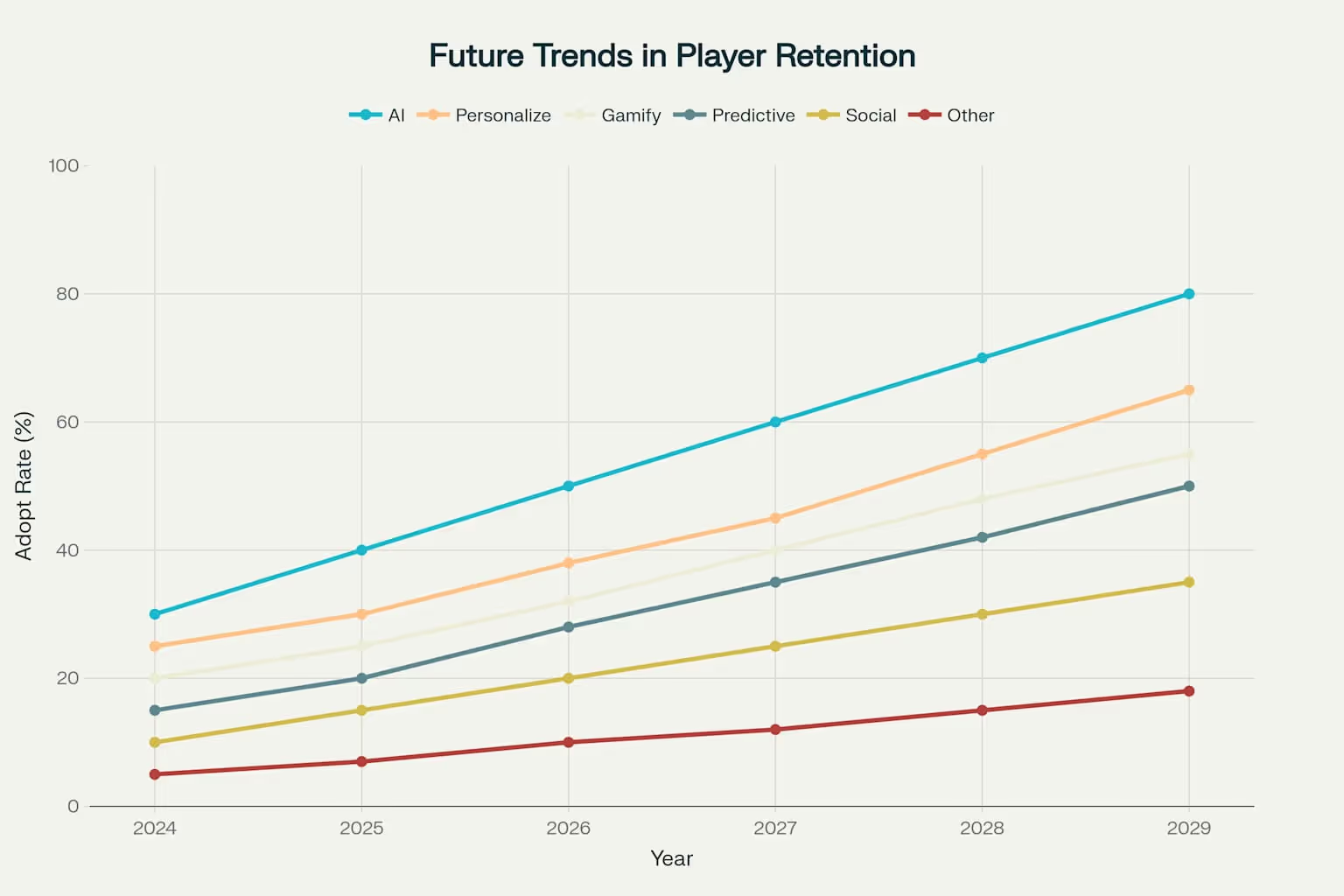
Emerging technologies
A few technologies will shape the next phase of churn prevention:
- Virtual and augmented reality: immersive play that deepens engagement, with personalization through environment and social interaction.
- Blockchain and crypto: transparent rewards and instant transactions that reduce friction, with smart contracts automating loyalty benefits.
- Voice interfaces: AI voice assistants that give recommendations and support through more natural interaction.
Advanced AI
Next-generation AI will push retention further:
- Biometric response analysis: reading player emotional state in real time to tune engagement.
- Cross-platform prediction: understanding behavior across platforms for a fuller profile.
- Predictive personalization: anticipating preferences before players express them, so retention becomes proactive.
Regulation
Rules will reshape how retention gets done:
- Privacy: stricter data laws will demand better consent management and data minimization.
- Responsible gaming: player-protection features will become core to retention, balancing engagement with harm prevention.
- Cross-border compliance: more consistent international standards will make multi-market strategies easier.
Where this is heading
Several shifts will define player retention through the rest of the decade: AI-first systems replacing rule-based ones, sub-second response becoming the baseline, prevention of churn before it happens rather than reaction after, and retention joined up across gaming, support, and payments.
Implementation Roadmap
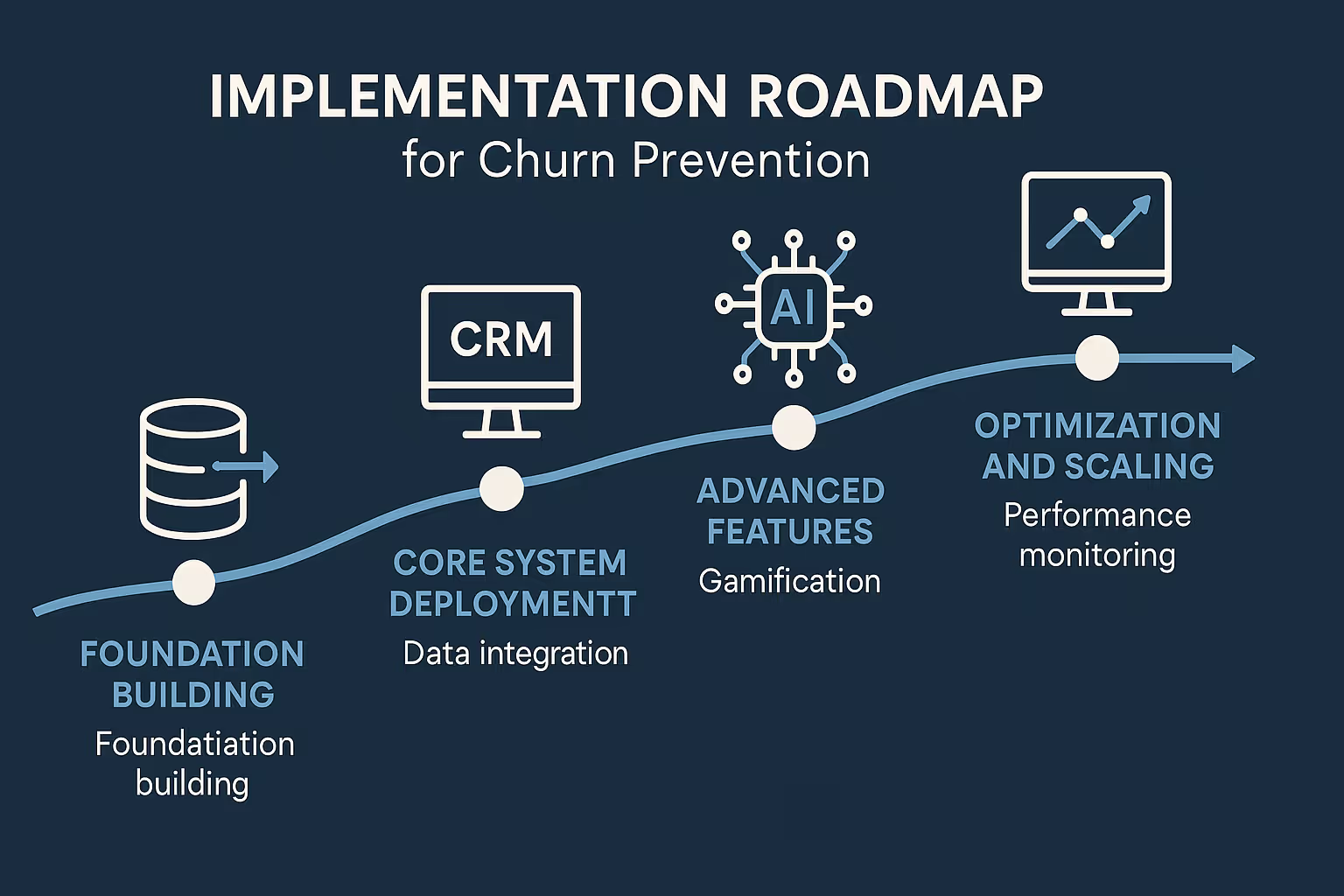
A phased approach
- Phase 1, foundation (weeks 1 to 4): integrate and consolidate data from every touchpoint, set baseline retention metrics, train the team, and select and configure the platform.
- Phase 2, core deployment (weeks 5 to 8): stand up the CRM and analytics platform, build basic RFM segments, create automated retention workflows, and set up A/B testing.
- Phase 3, advanced features (weeks 9 to 12): deploy the churn prediction model, integrate gamification with personalization, turn on real-time intervention, and coordinate campaigns across channels.
- Phase 4, optimization (weeks 13 to 16): monitor and optimize on early results, refine segmentation, tune the model, and launch fully with proper measurement.
Timeline expectations
Timelines vary with complexity. Small to medium operators (under 1,000 DAU) can expect a basic program in 4 to 6 weeks, advanced AI integration in 8 to 12, and full optimization in 16 to 20. Larger operators (1,000+ DAU) run to 8 to 12 weeks for core implementation, 16 to 24 for advanced features, and 24 to 32 for enterprise optimization.
Team and resources
A working program needs dedicated people: a retention manager for strategy and execution, a data analyst for metrics and optimization, a CRM specialist for campaigns and automation, and a technical lead for integration. External help usually covers vendor implementation support, consulting on best practices, and creative for campaign assets.
Common pitfalls
- Data quality: validate data before building models. Poor data undermines everything after it.
- Over-personalization: balance targeting with privacy. Too much can feel intrusive and raise compliance issues.
- Integration complexity: plan for it, since most implementations take longer than first estimated.
- Measurement paralysis: start with essential KPIs and expand, rather than collecting everything.
- Change resistance: invest in training and documentation, since retention needs organizational buy-in, not just software.
Smartico's Unified Platform

Smartico was the first platform to unify iGaming CRM and Gamification in a single solution, and it continues to set the benchmark for integrated retention technology.
Its unified architecture removes the complexity of stitching together separate tools. Instead of managing CRM, gamification, and analytics on different platforms, you get one source of truth for all player data and engagement.
{{cta-banner}}
Feature overview
- AI-powered churn and LTV modeling: machine learning that turns player data into predictions, so you can prevent churn and time rewards well.
- Real-time gamification: levels, points, tournaments, jackpots, spin-the-wheel, and mini-games inside the CRM, with behavioral triggers that respond to player behavior.
- Advanced segmentation: RFM and AI-driven micro-segmentation for campaigns that resonate with specific groups.
- Multi-brand management: run unlimited brands without extra cost, with per-brand customization of campaigns, gamification, and bonuses.
- Analytics and reporting: real-time dashboards and predictive analytics for continuous optimization.
What sets it apart
- Behavioral triggers and automation: optimal-timing models reach players at the best moments.
- All-inclusive pricing: transparent pricing by monthly active users, covering both CRM automation and gamification, with no separate module fees.
- Dedicated success managers: expert-guided setup and ongoing support.
- Proven results: measurable retention improvements across hundreds of operators.
Implementation and support
- Tailored onboarding from day one, with training that sets your team up to succeed.
- Fast integration, typically within three weeks, with minimal load on your technical team.
- Ongoing partnership through dedicated success managers.
- Flexible integration that works with any platform and connects with any provider.
Conclusion
The acquisition-first model is running out of road. With retention declining and acquisition costs climbing, churn prevention is what separates operators who grow from ones who struggle.
The strategies here give you a full framework: AI-powered analytics, gamification, and personalized engagement, applied systematically. The economics are simple, retaining players delivers 5 to 7 times better ROI than acquiring new ones, so the operators who treat retention as a priority are the ones who last.
Smartico's unified CRM and gamification platform brings the tools, expertise, and support to put all of this into practice. Want to see how it works on your player data? Book a demo below.
{{cta-banner}}
Did you find this article helpful? If so, consider sharing it with other industry professionals such as yourself.