


CRM Strategies: Building a Winning Customer Relationship Strategy
.avif)
Want a CRM strategy that actually keeps customers coming back? Learn how to build a winning plan using gamification, automation, and real-time data – not just messy spreadsheets.
You know that feeling when you go on a first date, it goes great, and then the other person starts texting you 14 times a day asking, "Why aren’t you answering?"
That’s what most companies do to their customers.
They buy expensive software, load it with thousands of email addresses, and then bombard people with generic "We Miss You!" messages until the unsubscribe button starts looking like a lifeline. That isn’t a relationship; it’s harassment with a budget.
A real CRM strategy isn’t about how many emails you can send before you get blocked. It’s about building a system that treats your customers like actual humans, even when you have millions of them. Whether you’re running a boutique e-commerce shop or managing complex iGaming software, the goal is the same: to stop shouting at your audience and start talking with them.
Here is how you build a strategy that doesn’t just manage relationships but actually strengthens them.
What Actually Is a CRM Strategy? (Hint: It’s Not Just Software)

Let’s clear up a common misconception: Buying Salesforce, HubSpot, or a specialized tool doesn't mean you have a strategy. That’s like buying a treadmill and saying you’re an athlete.
A customer relationship management strategy is the deliberate plan for how you use data to provide value at every touchpoint. It’s the logic behind the software. It’s the difference between sending a birthday coupon because "the system does it automatically" and sending a personalized offer for that specific pair of sneakers they looked at last week, right when they get paid.
{{cta-banner}}
If your strategy is just "store data and send emails," you are missing the point. The best strategies today combine CRM automation, psychological triggers (like gamification), and hyper-personalization to make customers feel seen, not just targeted.
The Core Components of a Strategy That Works
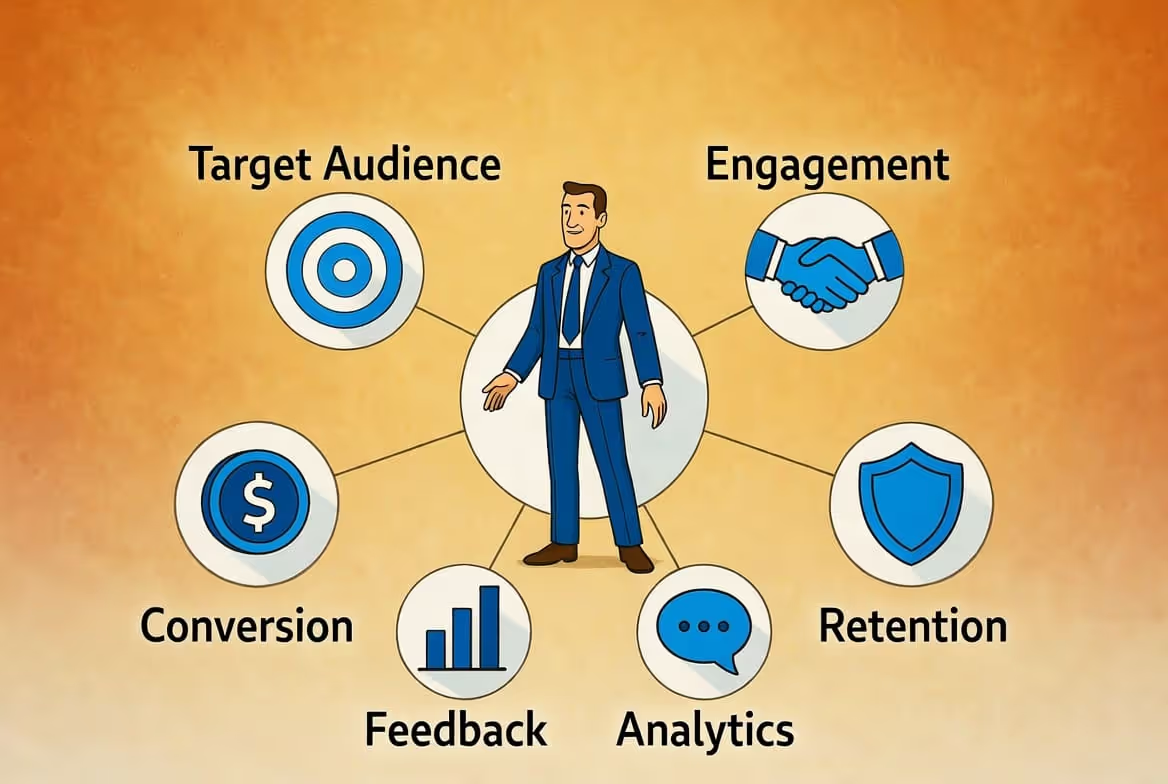
Before you start building workflows, you need to understand the three pillars that hold this whole thing up.
1. The Data (The Brain)
Your strategy is only as good as the info you feed it. If your data is messy – duplicate entries, missing names, outdated purchase history – your "personalization" will fail. There is nothing worse than an email that says, "Hey [FIRST_NAME], we have a deal for you!"
2. The Process (The Skeleton)
This maps out why you are contacting someone. Are they a new user? A VIP who hasn’t logged in for a week? A churn risk? You need specific protocols for each scenario.
3. The Tech (The Muscle)
This is where tools like unified gamification CRM platforms come in. You need technology that can execute your process instantly. If a player hits a big win or a shopper abandons a cart, the reaction needs to happen in seconds, not days.
7 Steps to Build Your CRM Strategy
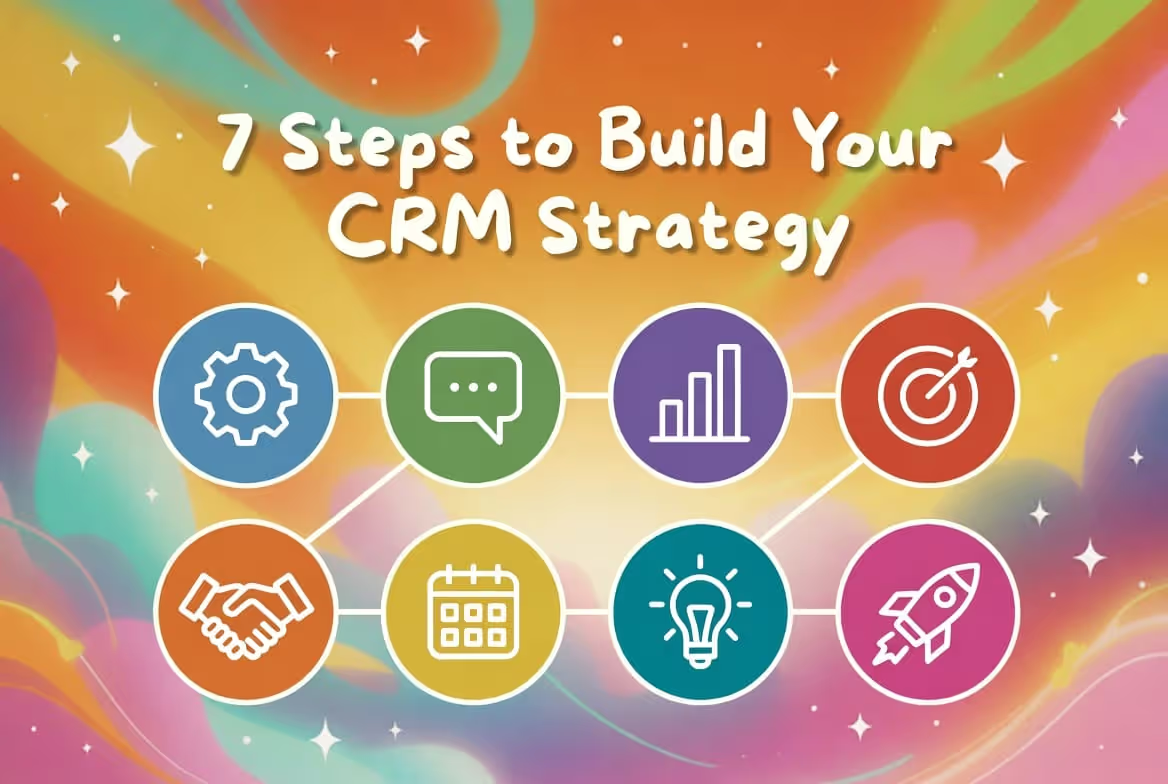
Ready to build something that actually converts? Here is the roadmap.
1. Clean the Data Swamp
Most companies sit on a swamp of bad data. Before you launch any campaign, audit what you have. Merge duplicate accounts, verify email addresses, and categorize your users. You cannot build a mansion on a sinkhole.
2. Map the "Real" Customer Journey
Marketing funnels usually look like clean, straight lines. Real customer journeys look like spaghetti. They visit, they leave, they check a review site, they come back, they forget their password, they leave again. Your strategy needs to account for this messiness. Don’t just map the "Happy Path" (where everything goes right). Map the "Frustrated Path" – what happens when they lose a bet, their order is delayed, or they try to cancel?
3. Introduce the "Gamification" Layer
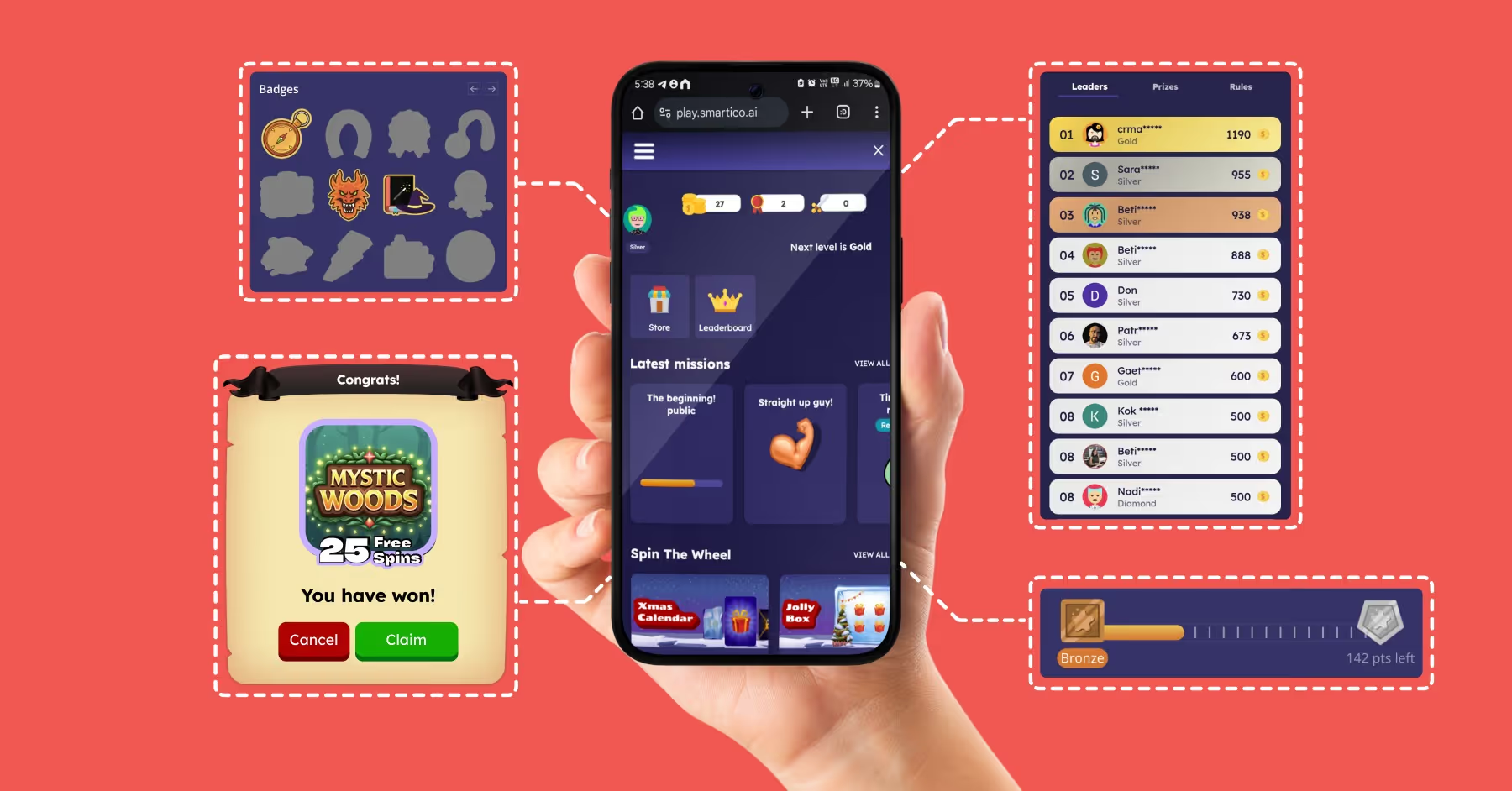
This is where the magic happens. Traditional loyalty programs (spend $1, get 1 point) are boring. Modern strategies use gamification to make the relationship fun. We’re talking about progress bars, badges for completing profile data, or "missions" (e.g., "Play 3 different games this week to unlock a bonus"). By turning engagement into a game, you tap into basic human psychology. We love completing sets and seeing progress bars hit 100%. It turns a passive user into an active participant.
4. Automate Without Being Robotic
CRM automation should feel like a concierge, not a robot.
- Bad Automation: Sending a "We miss you" email to someone who visited the site this morning.
- Good Automation: Triggering a pop-up with a support offer because the system noticed a user failed a deposit attempt three times in a row. The key is context. Automation should react to behavior, not just time.
5. The "Segment of One"
Stop grouping people just by age or location. Group them by behavior.
In industries like iGaming or Fintech, this is critical. You might have "High Rollers who only play on weekends" versus "Casual players who like low-stakes slots on mobile." If you send the High Roller a 50-cent bonus, you insult them. If you send the Casual player a $500 buy-in offer, you scare them. Personalization in loyalty programs means matching the offer to the wallet and the playstyle.
6. Focus on Retention, Not Just Acquisition
It is mathematically cheaper to keep a customer than to find a new one, yet most budgets go to ads. Your CRM strategy should obsess over the "Loyalty Loop." How do you thank someone for their 10th purchase? What happens on their one-year anniversary? If the only time you talk to an existing customer is to ask for more money, you are doing it wrong.
7. Create Feedback Loops
Don't guess what your customers want – ask them. But don't send a 40-question survey that nobody will fill out. Use micro-surveys. "How was that game?" (Thumbs up/down). "Did you like this reward?" (Yes/No). Feed this data back into your CRM to refine future offers.
Real-World Scenario: The iGaming Switch
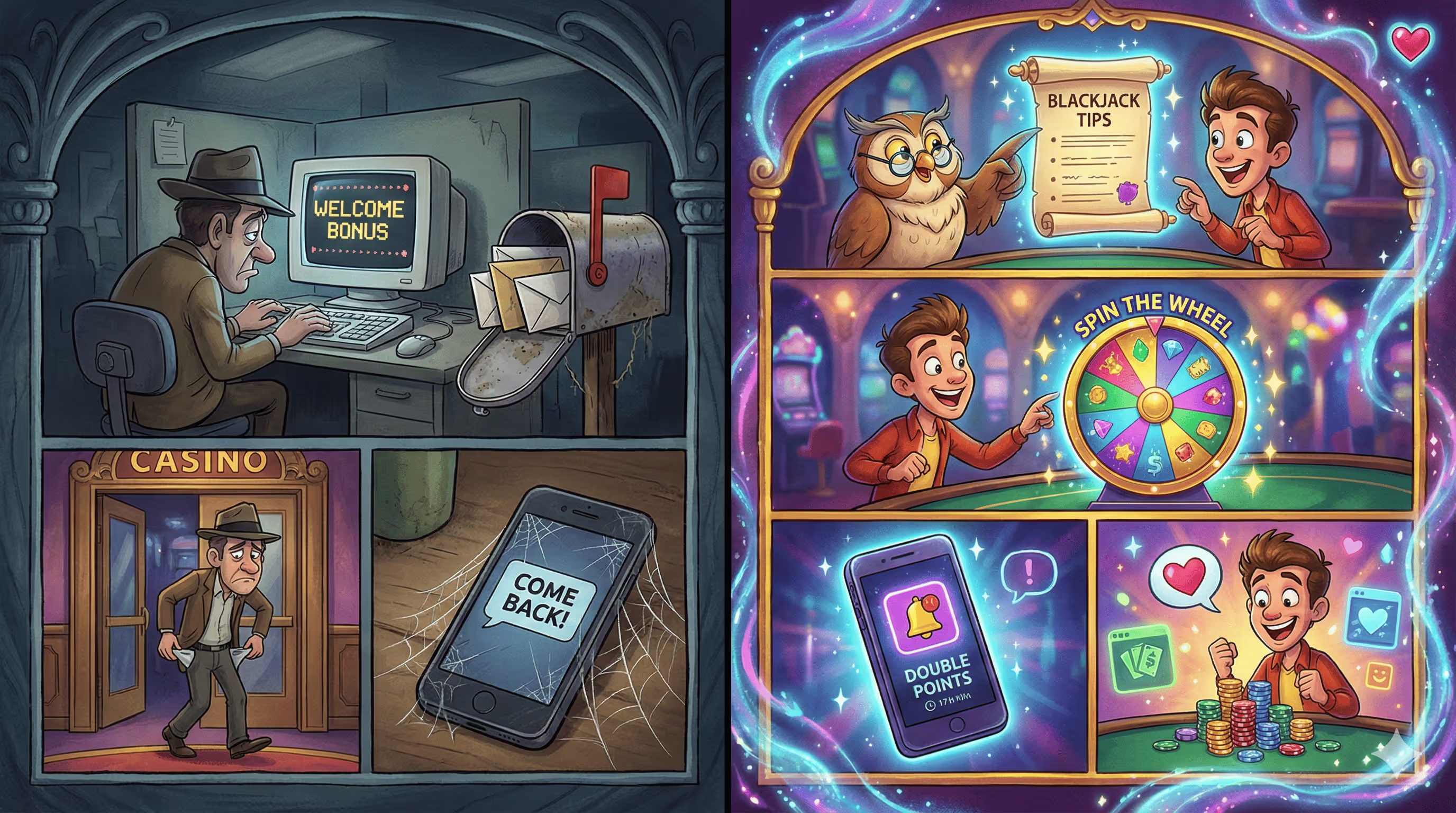
Let’s look at how this applies to a high-volume industry like online gaming.
Old School Strategy:
A player signs up. They get a generic "Welcome Bonus" email. They play for a bit, lose some money, and leave. Three days later, they get a generic "Come back!" email. They ignore it.
Winning Strategy (The Smartico Approach):
A player signs up. The CRM tracks that they prefer Blackjack.
- Day 1: They get a tutorial on Blackjack tips (value, not sales).
- Day 3: They lose a few hands. The system automatically and instantly triggers a mini-game (like a "Spin the Wheel") to give them a small free bonus to lift their spirits.
- Day 7: They haven't logged in. They get a push notification: "Your seat at the Blackjack table is cold! Come back in 2 hours for double points."
- Result: The player feels understood, supported, and entertained.
Why Most CRM Strategies Fail
Even with the best intentions, strategies crumble. Here is usually why:
- Siloed Departments: Marketing sends an email offering a discount, but Customer Support doesn't know about it and can't help when the code doesn't work.
- Feature Fatigue: Buying a tool with 500 features and trying to use all of them at once. Start simple.
- Ignoring Mobile: If your strategy doesn't account for the fact that 80% of your users are on their phones, you’re finished.
- Set It and Forget It: A strategy isn't a slow cooker. You can't just set it up in January and check it in December. You need to tweak it weekly based on what the data tells you.
Meet Smartico.ai: The Unified Solution
If you are trying to piece together a strategy using four different tools – one for email, one for push notifications, one for gamification, and another for data – you are going to have a headache.
This is where Smartico.ai enters the chat.
Founded in 2019, Smartico.ai is the world’s leading unified Gamification and CRM Automation software. It was built specifically to solve the problem of disjointed systems. Instead of juggling separate tools, Smartico combines everything into one powerhouse solution:
- Real-time Gamification: Create missions, tournaments, and levels that keep users addicted (in a fun way) to your product.
- Smart Automation: Trigger messages based on real-time behavior, not just historical data.
- Personalization Engines: The system learns what your users like and serves it to them automatically.
- Player Retention: From "Spin the Wheel" mini-games to complex loyalty hierarchies, it’s designed to keep users active.
Smartico is a true engagement engine. It takes the "strategy" part off your shoulders by providing the tools to execute complex, personalized journeys that actually work.
Want to see how it can help your business specifically raise retention and revenue? Book your free, in-depth demo below.
{{cta-banner}}
How to Use CRM Specifically for Marketing Success
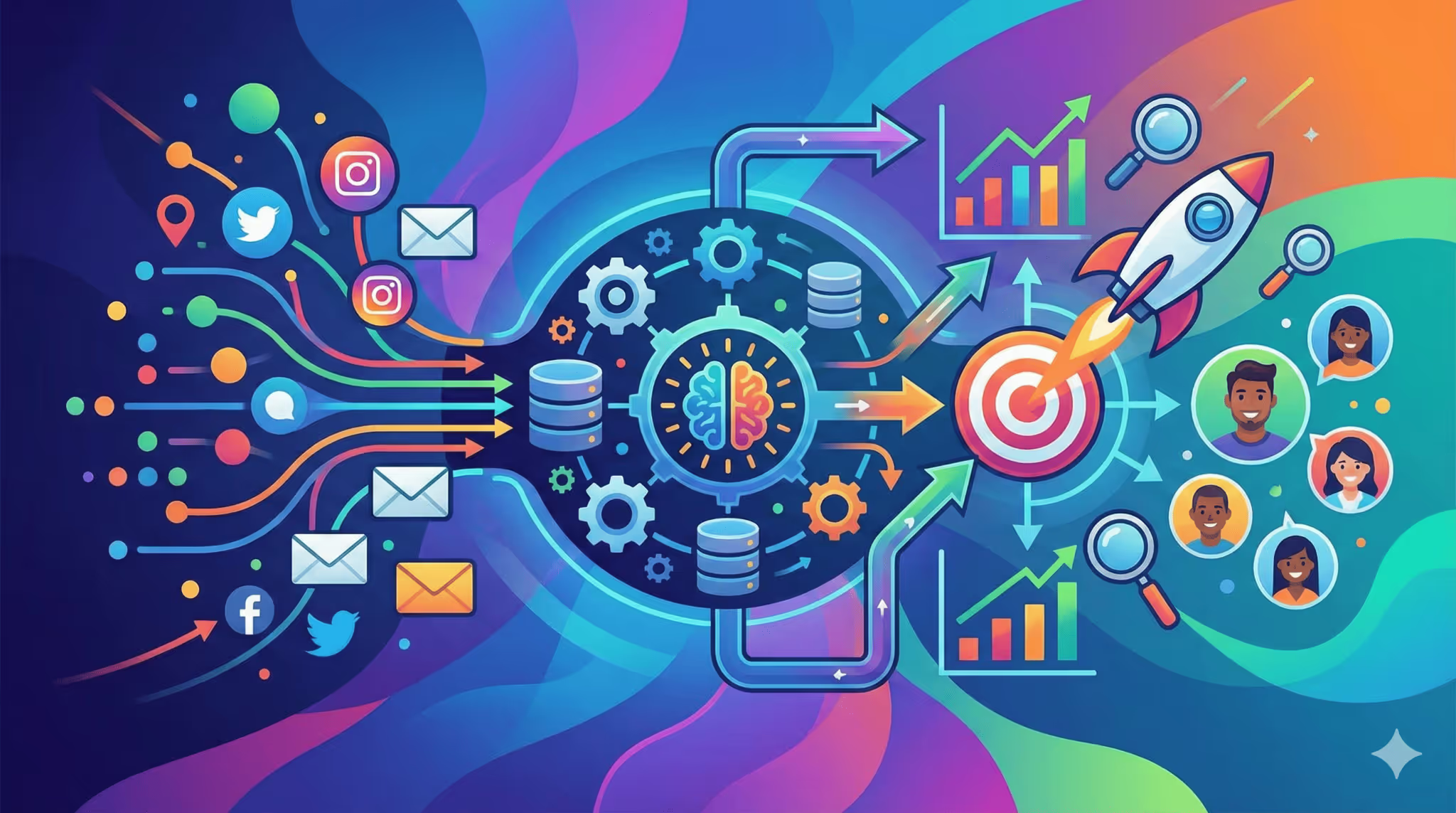
Marketing is all about whispering the right thing at the right time.
To use your CRM for marketing:
- Sync your ads with your CRM. Stop showing ads to people who already bought the product.
- Use "Lookalike" Audiences. Take your best 10% of customers from your CRM and tell Facebook/Google: "Find me more people like these ones."
- Trigger Marketing based on Milestones. Did a user just hit "Gold Status"? That should trigger a celebration email, a push notification, and maybe even a direct mail piece.
Measuring Success

How do you know if any of this is working? Watch these metrics:
- Churn Rate: Is it going down?
- CLV (Customer Lifetime Value): Are customers spending more over time?
- NPS (Net Promoter Score): Are they happy enough to recommend you?
- Redemption Rate: When you send an offer, do people actually use it?
FAQ
1. What is the difference between CRM software and a CRM strategy?
CRM software is the tool (the car), while the strategy is the map and the driving skills. You can have the most expensive Ferrari (software) in the world, but if you don't know where you're going (strategy), you'll just crash faster.
2. Can gamification work for serious businesses?
Absolutely. Gamification isn't just for games. Banks use it to encourage savings (progress bars), and fitness apps use it to build habits. It’s simply about using psychology to motivate behavior.
3. How often should I update my CRM strategy?
Review your key metrics monthly. Do a deep-dive audit quarterly. Customer behaviors change fast; if you're still using strategies from 2020, you're already behind.
4. Is CRM automation difficult to set up?
It can be if you overcomplicate it. Start with three core workflows: Welcome, Retention/Win-back, and VIP/Loyalty. Get those right before you try to automate complex, multi-branch scenarios.
5. What is "Unified Gamification CRM"?
It's a platform like Smartico.ai that combines the data-gathering of a CRM with the engagement tools of gamification. Instead of two separate systems trying to talk to each other, it's one system that does both.
Final Words
Building a winning CRM strategy doesn't require a PhD in data science, but empathy. It requires looking at your data and asking, "How can I make this customer’s day a little bit easier or more fun?"
Whether you use gamification to drive loyalty or automation to ensure no inquiry goes unanswered, the goal is to be helpful, human, and relevant.
Ready to stop guessing and start engaging? Request a Demo of Smartico.ai and see how unified gamification can transform your retention strategy today.
Did you find this article helpful? If so, consider sharing it with other industry professionals such as yourself.
Ready to use Smartico?
Join hundreds of businesses worldwide engaging players with Smartico.