


Customer Acquisition vs Customer Retention: Where to Focus Your Budget
.avif)
The marketing team wants more budget. They always do. But here's the twist: they can't decide where to spend it. Should you pour money into flashy acquisition campaigns that bring fresh faces through the door? Or invest in keeping the customers you already have?
You're not alone if you've wrestled with this question. About 44% of businesses prioritize customer acquisition, while only 18% focus on retention. That might sound reasonable until you discover that acquiring a new customer costs 5 to 25 times more than keeping an existing one.
So where should your budget actually go? The answer isn't as simple as picking one over the other. It's about understanding when each strategy makes sense, what the real costs look like, and how to balance both for growth that actually lasts.
The Real Numbers Behind Acquisition and Retention
.avif)
Let's talk about what these strategies actually cost you.
When you acquire a new customer, you're spending on everything from paid ads and content marketing to sales team salaries and onboarding materials. For B2B companies, the average acquisition cost sits around $536 per customer. SaaS companies? They're looking at roughly $702 per customer.
Retention costs less. A lot less. In fact, SaaS companies report that retention costs average six times lower than acquisition. You're already past the expensive part – the courting phase. Now you're just maintaining the relationship with targeted emails, loyalty programs, and customer support.
But the cost difference is only part of the story. Existing customers convert at a 60-70% rate, while new prospects convert at just 5-20%. They're also 50% more likely to try your new products and spend 31% more per order than first-time buyers. A 5% increase in retention can boost profits anywhere from 25% to 95%.
Here's where it gets interesting: existing customers generate 65% of a company's revenue, while new customers contribute only 35%. Yet most businesses keep dumping resources into acquisition like they're trying to fill a leaky bucket instead of fixing the holes.
When Acquisition Makes Sense

Acquisition is not the villain here. There are times when bringing in new customers needs to be your top priority.
You're launching something new. When you're entering a new market or releasing a new product, you need customers to retain in the first place. Early-stage companies can't survive on retention alone – they need to build that initial customer base.
Your market is wide open. If you're in a competitive market and need to rapidly grow your customer base, acquisition helps you gain market share before competitors do. This is especially true if you spot an underserved segment or have a genuine innovation that needs visibility.
{{cta-banner}}
Growth is the immediate goal. Sometimes you need momentum. Investor expectations, expansion plans, or seasonal opportunities can all justify an acquisition push. Just remember that acquisition-driven growth only works if you can retain those customers afterward.
Your retention metrics are already strong. If you're retaining 80% of customers and they're happy, spending more on retention might hit diminishing returns. That's your signal to focus on expanding your customer base.
The channels that deliver the best acquisition ROI might surprise you. Email marketing generates an average return of $40 for every dollar spent. SEO offers roughly 5:1 ROI. Referral programs consistently outperform traditional advertising because referred customers arrive with built-in trust.
When Retention Should Win Your Budget
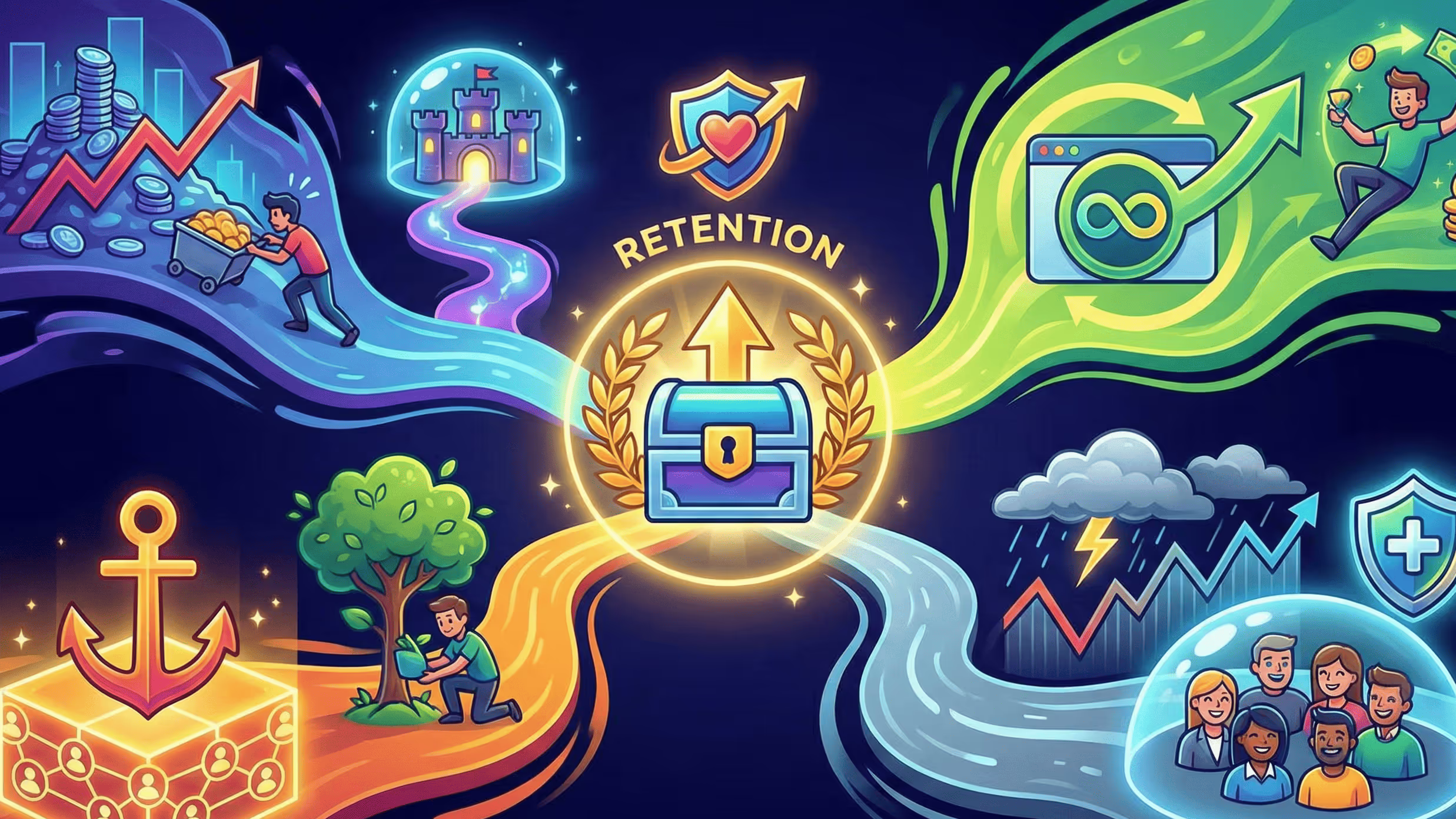
Retention deserves the spotlight in several scenarios.
- Your acquisition costs are climbing. Customer acquisition costs have increased by 222% over the past five years. When paid channels become saturated and expensive, retention offers a more profitable path. You're essentially choosing between paying more for new customers or investing less to keep the ones you have.
- You're running a subscription business. Subscription and service-based models thrive on recurring revenue. Churn is your enemy here. Even a small boost in retention – just 5% – can increase profits by 25-95%. Companies like Amazon Prime prove this works, maintaining a 93% retention rate after the first year.
- Your customer base is stable. When you have a solid group of customers forming the cornerstone of your business, deepening those relationships makes more sense than constantly chasing new ones. These customers already know your value. They just need reasons to stay engaged.
- The economy isn't cooperating. During economic downturns, people spend more carefully. Keeping existing customers happy becomes the logical bet because they're more likely to stick with known quantities than experiment with new brands.
Retention strategies don't require massive budgets to work. Personalized communication based on customer behavior can boost engagement significantly. Loyalty programs that reward long-term customers create emotional connections beyond transactions. Even simple gestures – like reaching out when usage drops – can prevent churn.
Finding the Balance That Actually Works
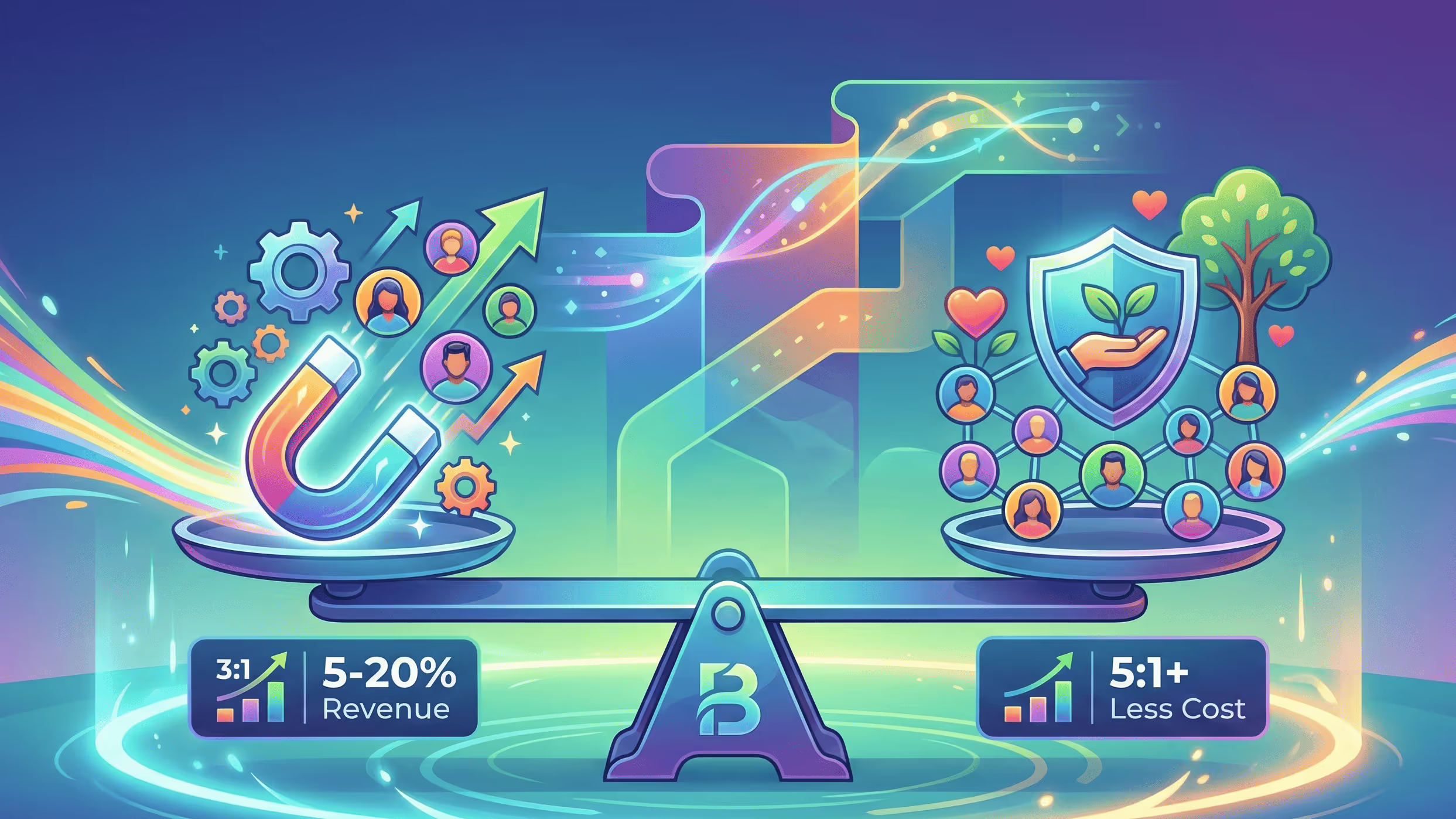
Most businesses don't need to choose between acquisition and retention. They need both, just in different proportions depending on where they are.
The 3:1 rule offers a starting point. Your customer lifetime value should ideally be three times your acquisition cost. For SaaS companies, this means if you spend $700 acquiring a customer, they should generate at least $2,100 over their lifetime. Mature businesses often aim for 5:1 or higher.
Budget allocation typically breaks down like this: small businesses allocate 5-10% of revenue to acquisition. Mid-sized businesses increase that to 10-15%. Enterprises can spend over 20%. But here's the catch – only 18% of companies spend more on retention than acquisition, even though retention costs up to six times less.
The key is matching your strategy to your business stage. Early-stage companies naturally lean toward acquisition because they need customers to retain. As you mature and build a customer base, the balance shifts. Your focus moves from "get anyone" to "keep the right ones.”
Smart businesses track both their customer acquisition cost and retention cost against lifetime value. They segment their audience to identify which customers are worth retaining and which new segments are worth targeting. They don't just collect data – they act on it.
How CRM Automation Changes Everything

This is where modern technology stops the either-or debate from making sense.
CRM automation handles both acquisition and retention from a single platform. You can identify at-risk customers before they churn, trigger personalized retention campaigns automatically, and still run targeted acquisition efforts – all without manually managing each touchpoint.
The iGaming industry has figured this out ahead of most sectors. Operators using CRM automation report retention increases up to 30%, doubled VIP player counts, and 40% revenue boosts. They're using real-time behavioral triggers to respond to player actions instantly – first deposits trigger welcome series, inactivity triggers win-back campaigns, and high-value behavior triggers VIP upgrade offers.
Segmentation becomes powerful when it's automated. Recency, Frequency, and Monetary (RFM) analysis groups players based on recent activity, engagement frequency, and spending. You can craft personalized messages for each group without building every campaign from scratch.
Predictive analytics takes this further. Systems monitor subtle behavioral changes – fewer sessions, smaller purchases, limited variety – and identify at-risk customers before disengagement becomes obvious. Early intervention with tailored incentives can stop churn before it starts.
Smartico: Where Gamification Meets CRM Automation
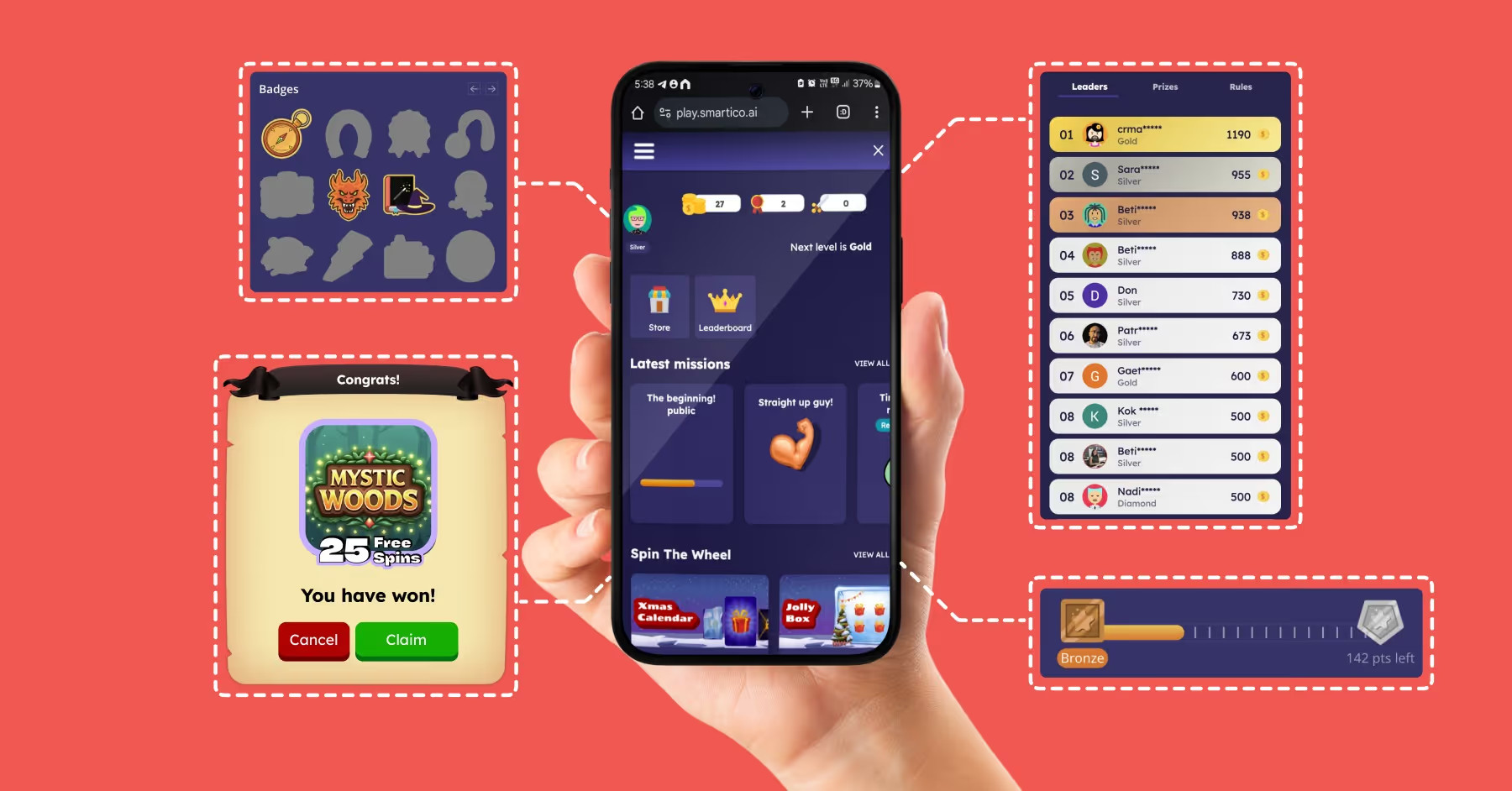
Smartico.ai combines CRM automation with gamification in a way that makes both acquisition and retention more effective.
Founded in 2019, Smartico.ai provides the first unified gamification and CRM automation platform built specifically for the iGaming industry. The software handles every stage of the player journey – from onboarding new customers to retaining loyal ones – through hyper-personalized messaging and automated workflows.
Real-time Gamification mechanics work alongside CRM Automation. Players encounter customizable missions, level-based rewards, and real-time leaderboards that drive engagement. Free-to-play mini-games like Loyalty Wheels, Scratch Cards, and Daily Loot Boxes boost engagement without requiring deposits.
The bonus engine lowers costs while increasing relevance. Rewards tailor to player behavior – cashback for some, free spins for others – all managed in real-time or scheduled for optimal impact. AI models turn player data into actionable predictions, helping operators optimize engagement, prevent churn, and deliver rewards at the perfect moment.
Smartico's solution supports unlimited brands within a single instance at no extra cost. You can run unified campaigns across all brands or create tailored setups for specific audiences, all while maintaining centralized control. Integration typically takes about three weeks, with Smartico handling the heavy lifting.
The results speak clearly. Operators using gamification see engagement rates 100-150% higher compared to traditional approaches. Lifecycle automation improves open rates by 83.4%, click rates by 341.1%, and conversion rates by 2,270%. Companies using advanced lifecycle segmentation show higher customer lifetime value and 20-30% lower churn compared to broadcast-only marketers.
Want to find out how Smartico can help your business specifically raise retention metrics like nothing you’ve tried before? Book your free, in-depth demo below.
{{cta-banner}}
Making Your Budget Decision
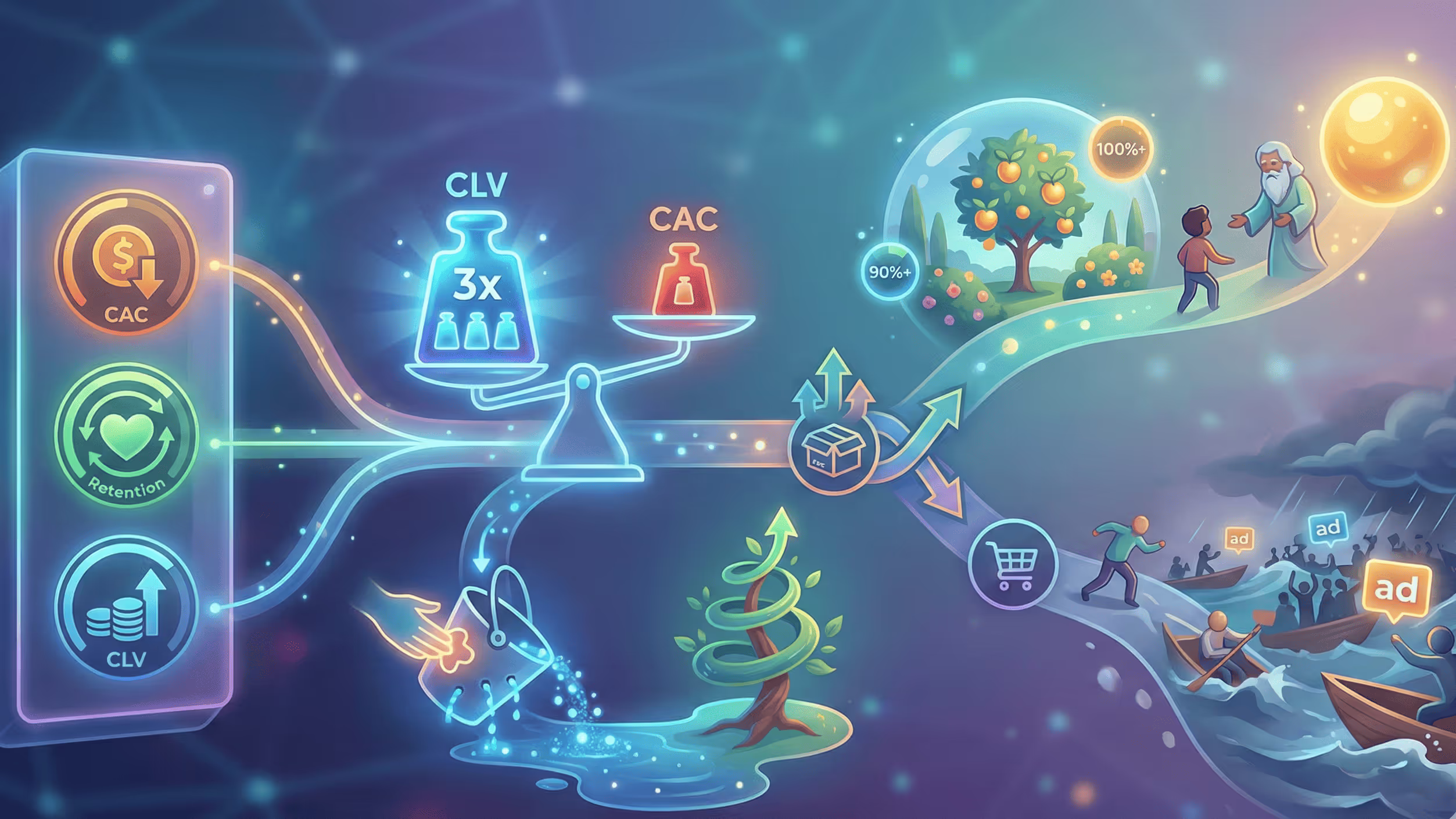
Start by looking at your current metrics. What's your customer acquisition cost? Your retention rate? Your customer lifetime value? If you don't know these numbers, you're making budget decisions blindly.
Calculate your LTV:CAC ratio. Divide your customer lifetime value by your acquisition cost. If you're below 3:1, you're spending too much on acquisition relative to the value customers generate. You need to either reduce acquisition costs, increase retention to boost lifetime value, or both.
Look at your churn rate. High churn means retention needs attention immediately. You're essentially pouring water into a leaky bucket. Fix the bucket before trying to fill it faster.
Consider your business model. Subscription businesses depend on retention more than one-time purchase businesses. SaaS companies should aim for gross revenue retention above 90% and net revenue retention above 100%. The gap between average and elite companies lies in expansion revenue – top firms generate over 50% of new annual recurring revenue from upsells to existing customers.
Check your market conditions. Saturated markets make acquisition expensive. If your competitors are bidding up ad costs and customer acquisition feels like an uphill battle, retention offers better returns.
The Strategy That Wins

Neither acquisition nor retention wins on its own. The businesses that thrive understand this is not a competition, but a cycle.
You acquire customers who are likely to engage and retain. You retain them through personalized experiences, timely support, and genuine value. They refer others, lowering your acquisition costs. Those referred customers convert better because they arrive with trust already established.
Budget allocation is not static. It shifts as your business evolves, market conditions change, and customer needs develop. Early focus on acquisition builds your base. Growing focus on retention protects your revenue. Mature focus balances both with data-driven precision.
CRM automation and gamification make this balance easier to achieve. You're not choosing between expensive acquisition campaigns and basic retention emails anymore. You're building systems that engage customers at every stage, predict their needs, and respond automatically.
The companies succeeding right now aren't asking "acquisition or retention?" They're asking "how do we make both more effective?" They're tracking the right metrics, using technology that scales, and treating customer relationships like the long-term investments they are.
FAQ
1. What's the ideal ratio between acquisition and retention spending?
There's no universal answer, but the LTV:CAC ratio should be at least 3:1 for profitability. Small businesses typically allocate 5-10% of revenue to acquisition, mid-sized companies 10-15%, and enterprises over 20%. However, only 18% of companies prioritize retention spending despite it costing 5-25 times less than acquisition. The ideal split depends on your business stage, industry, and current metrics.
2. How do I know if my retention efforts are working?
Track customer retention rate (CRR), customer lifetime value (CLV), and net revenue retention (NRR). For SaaS businesses, GRR should be at least 90% and NRR above 100%. Monitor churn rate, repeat purchase rate, and customer satisfaction scores. If a 5% increase in retention doesn't boost profits by 25-95%, your retention tactics need adjustment.
3. Can gamification really improve both acquisition and retention?
Yes. Gamification boosts user engagement by 100-150% compared to traditional approaches. It increases retention by creating emotional connections through progress, achievement, and rewards. For acquisition, gamified referral programs and interactive experiences attract customers more effectively than static campaigns. The key is integrating gamification with CRM automation so it personalizes to each customer's behavior and preferences.
4. What's the biggest mistake companies make with retention?
Treating retention as a last-minute effort before renewal instead of a lifecycle-long process. Companies also fail to identify at-risk customers early enough to intervene. Another common mistake is using generic communications instead of personalizing based on behavior, preferences, and engagement history. Finally, many businesses underinvest in retention despite it costing far less and delivering higher ROI than acquisition.
5. Should subscription businesses approach this differently?
You bet. Subscription models depend on recurring revenue, making retention critical to survival. Churn directly impacts growth – even a small 5% improvement in retention can increase profits by 25-95%. Subscription businesses should aim for net revenue retention above 100%, meaning existing customers generate more revenue over time through upsells and expansion. Flexible billing, pause options, and renewal personalization become essential retention tools.
6. How does CRM automation reduce both acquisition and retention costs?
CRM automation eliminates manual tasks, allowing teams to focus on strategy instead of execution. Automated behavioral triggers respond to customer actions instantly – no delay between a customer showing interest and receiving a relevant offer. Predictive analytics identifies high-value acquisition targets and at-risk retention cases before human teams could spot them. Multi-channel orchestration ensures consistent messaging across email, SMS, push notifications, and in-app messages without managing each channel separately. The result is higher efficiency at lower cost for both acquisition and retention efforts.
Ready to see how unified CRM automation and gamification can transform your customer acquisition and retention strategy? Request a demo of Smartico.ai and discover how leading iGaming operators are balancing growth and retention in one powerful platform.
Did you find this article helpful? If so, consider sharing it with other industry professionals such as yourself.
Ready to use Smartico?
Join hundreds of businesses worldwide engaging players with Smartico.