


Exploring Segmentation: iGaming CRM Key Feature 4

Here's a scenario that plays out at online casinos every single day: A solid VIP who drops thousands weekly gets the same generic "Welcome back!" email as someone who deposited $20 three months ago. Both players see the same promotions. Both get the same offers. And both feel equally invisible.
This is plain and simple leaving money on the table.
But segmentation in iGaming CRM changes that. It's the feature that turns your player database from a faceless crowd into groups of real people with distinct preferences, behaviors, and value to your business. And when you understand those differences, you can speak to each group in ways that actually resonate.
So, yes, treating every player the same is costing you serious $$$!
What Segmentation Means in the World of iGaming

Think of segmentation as sorting your players into groups that make sense. But instead of doing it by random demographics like "everyone who lives in California," you're grouping them by behaviors that actually predict what they'll do next.
In an iGaming CRM, segmentation takes all that player data you're collecting and organizes it into actionable categories. Maybe it's grouping players by how recently they played (recency), how often they show up (frequency), or how much they spend (monetary value). Or maybe it's based on game preferences, deposit patterns, or risk tolerance.
The point isn't just to create neat little boxes, but also to understand your players well enough that when you send an email, launch a promotion, or design a new feature, you're not guessing. You're targeting.
According to research from McKinsey, 71% of consumers now expect personalized experiences, and 76% get frustrated when they don't get them. In iGaming, where players have dozens of platforms competing for their attention, that frustration means they'll just go somewhere else.
Why Segmentation Is the Backbone of Successful iGaming CRM
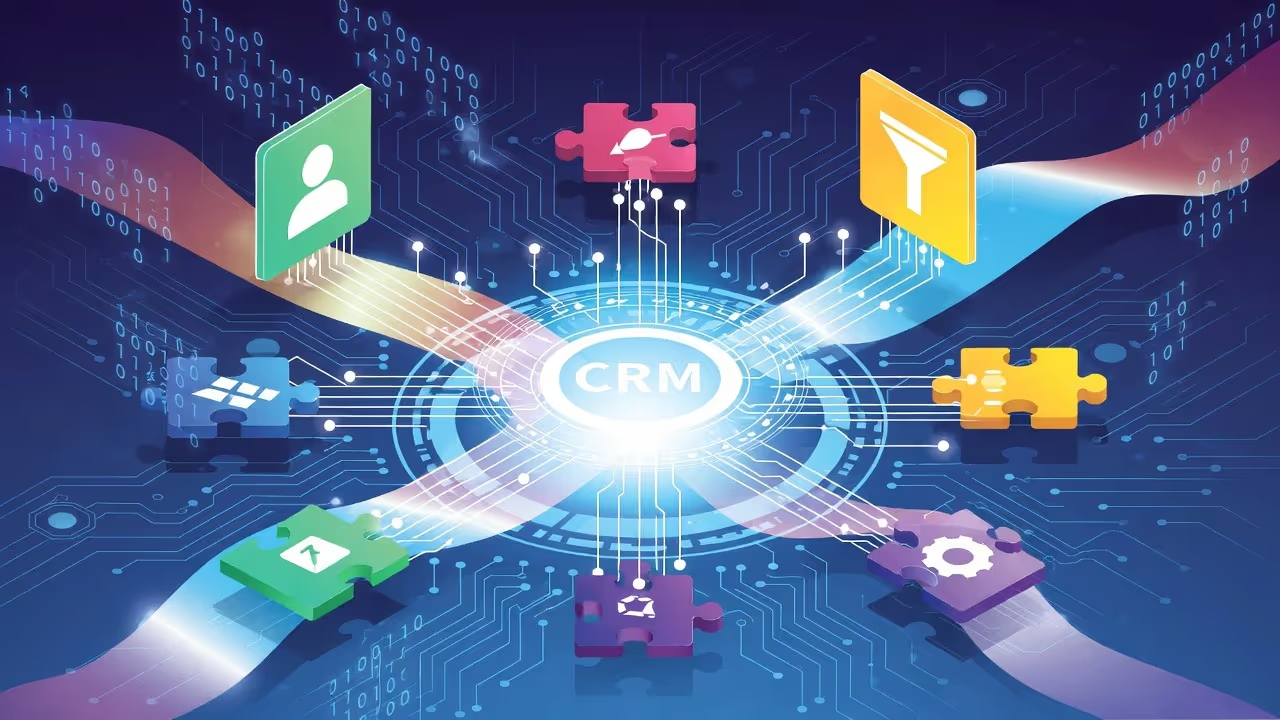
Here's what happens when you nail segmentation:
You stop wasting money on players who don't care. That massive email blast offering slots bonuses to sports bettors? Total waste. Segmentation lets you send sports promos to sports players and slot bonuses to slot enthusiasts.
You identify your most valuable players before they even realize it themselves. Some CRM systems can now predict which new players will become high-value customers based on their first few sessions. Imagine knowing who your VIPs will be on day one.
You re-engage players who are about to leave. Players don't usually announce they're done with your platform. They just quietly drift away. Segmentation helps you spot the warning signs and step in with the right offer at the right time.
You tailor experiences that actually feel personal. When a player who loves blackjack gets an exclusive invite to a blackjack tournament, they notice. When they get a generic "Come play slots!" message, they don't.
McKinsey's analysis of a European retail bank found that granular customer segmentation helped achieve over a 20% increase in revenue. While that's banking, not iGaming, the principle holds: when you understand your customers deeply enough to serve them individually, they respond.
5 Segmentation Strategies Every iGaming Operator Should Know
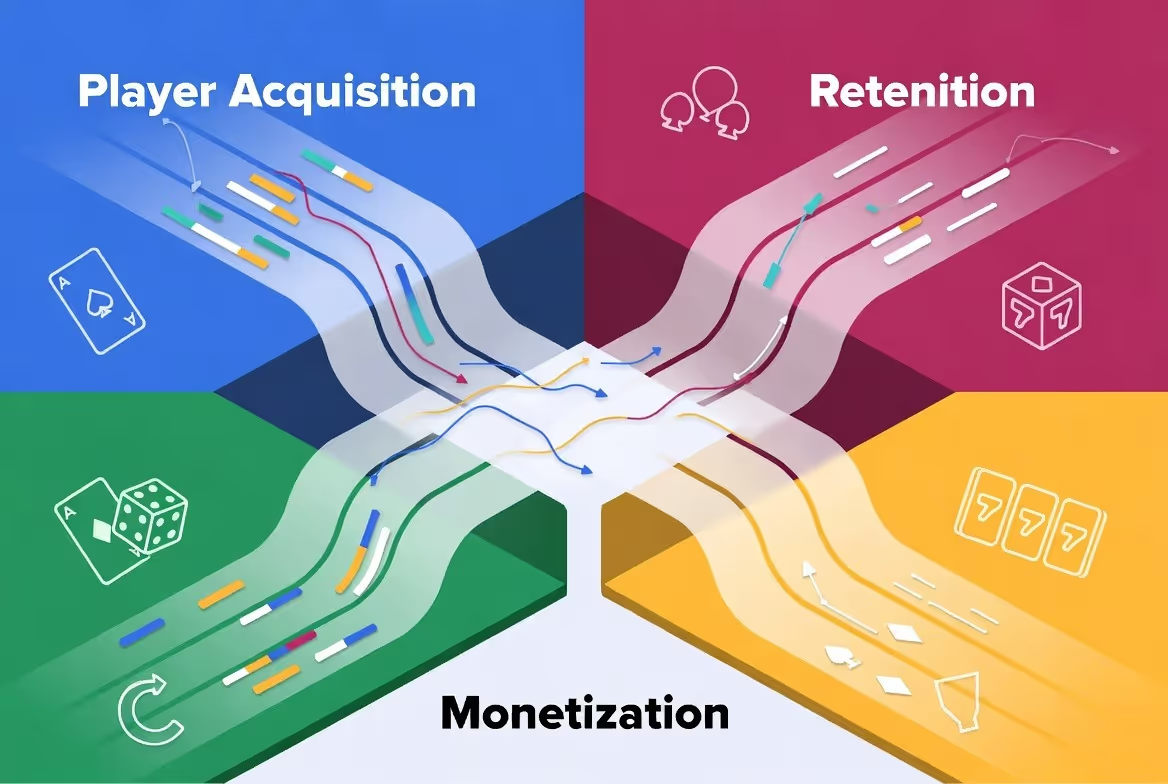
Let's break down the main ways operators segment their player base, starting with the gold standard.
1. RFM Analysis (Recency, Frequency, Monetary)
This is the framework that most successful iGaming CRMs build on. It answers three simple questions:
- When did this player last visit? (Recency)
- How often do they play? (Frequency)
- How much do they spend? (Monetary)
{{cta-banner}}
Someone who played yesterday, plays daily, and spends hundreds weekly is obviously more valuable than someone who deposited $20 once three months ago. But here's where it gets interesting: a player who used to be active but hasn't logged in for two weeks might be your most urgent priority. They're showing early signs of churn, and an intervention now could save them.
RFM creates a three-dimensional view of each player. Combine the scores, and you get segments like "Champions" (high on all three), "Hibernating" (used to be great, now absent), or "New Players" (low frequency but recent). Each segment needs completely different treatment.
2. Behavioral Segmentation
This goes beyond RFM to look at what players actually do. Which games do they prefer? Do they play during lunch breaks or late at night? Do they make small, frequent bets or big, occasional ones? Are they cautious or risk-seeking?
Behavioral data tells you not just who your players are on paper, but how they actually behave. And behavior predicts future behavior way better than demographics ever will.
3. Lifecycle Stage Segmentation
Not all players are at the same stage of their relationship with you. Some just signed up today. Some have been loyal for years. Some are teetering on the edge of leaving. Some left already but might come back.
Lifecycle segments typically include:
- New players (first 30 days)
- Active players (regular engagement)
- At-risk players (showing decline in activity)
- Churned players (inactive for 60+ days)
- Re-engaged players (came back after churning)
Each stage requires different messaging. New players need onboarding and education. Active players need fresh content and rewards. At-risk players need win-back offers. You get the idea.
4. Value-Based Segmentation
This is about predicted lifetime value (LTV). Some players will be worth $50 over their lifetime. Others will be worth $50,000. Your CRM should help you identify who's who as early as possible so you can allocate resources accordingly.
High-value players get white-glove treatment: dedicated account managers, exclusive events, personalized bonuses. Mid-tier players get solid experiences with room to grow. Low-value players still get good service, but you're not spending premium resources trying to please everyone equally.
5. Game Preference Segmentation
Are they slots players? Sports bettors? Live casino enthusiasts? Do they stick to one game or bounce around?
Game preference matters because different game types attract different personalities and require different engagement strategies. A slots player might respond to free spins, while a poker player might want tournament entries. A sports bettor might care about odds boosts, while a blackjack player wants table variety.
The Data Foundation: What You Need to Segment Effectively
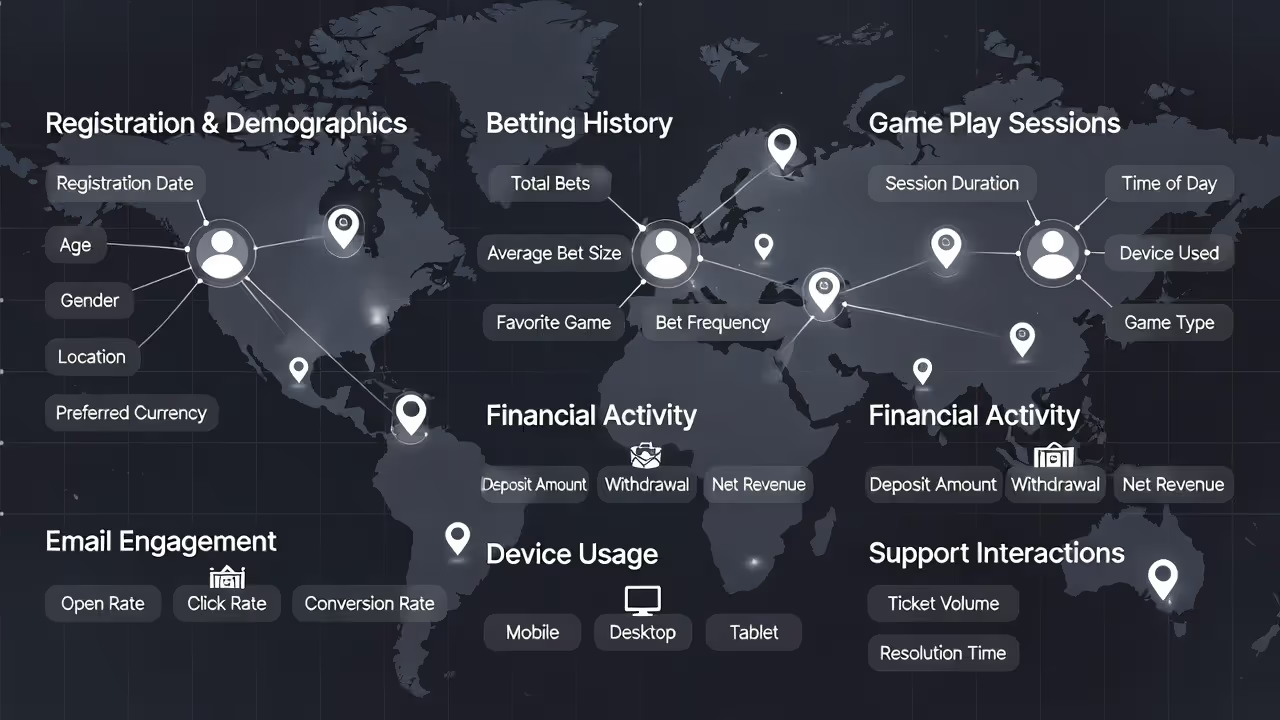
Segmentation is only as good as your data. You can have the most sophisticated CRM on the planet, but if you're feeding it garbage data, you'll get garbage segments.
Start with these data points:
- Registration and demographic info (but don't rely on this alone)
- Every bet, game played, session length
- Deposit and withdrawal history
- Communication engagement (email opens, click rates)
- Support interactions
- Device and platform usage
- Geographic location and language preferences
The best iGaming CRMs pull all of this together automatically and update player segments in real-time. Someone who just hit a big win? Their behavior might change immediately. Someone who just had three losing sessions in a row? They might need different messaging than they did yesterday.
Real-time matters because player behavior in iGaming shifts fast. A weekly batch update of your segments means you're always operating on stale information.
Common Segmentation Mistakes (And How to Avoid Them)
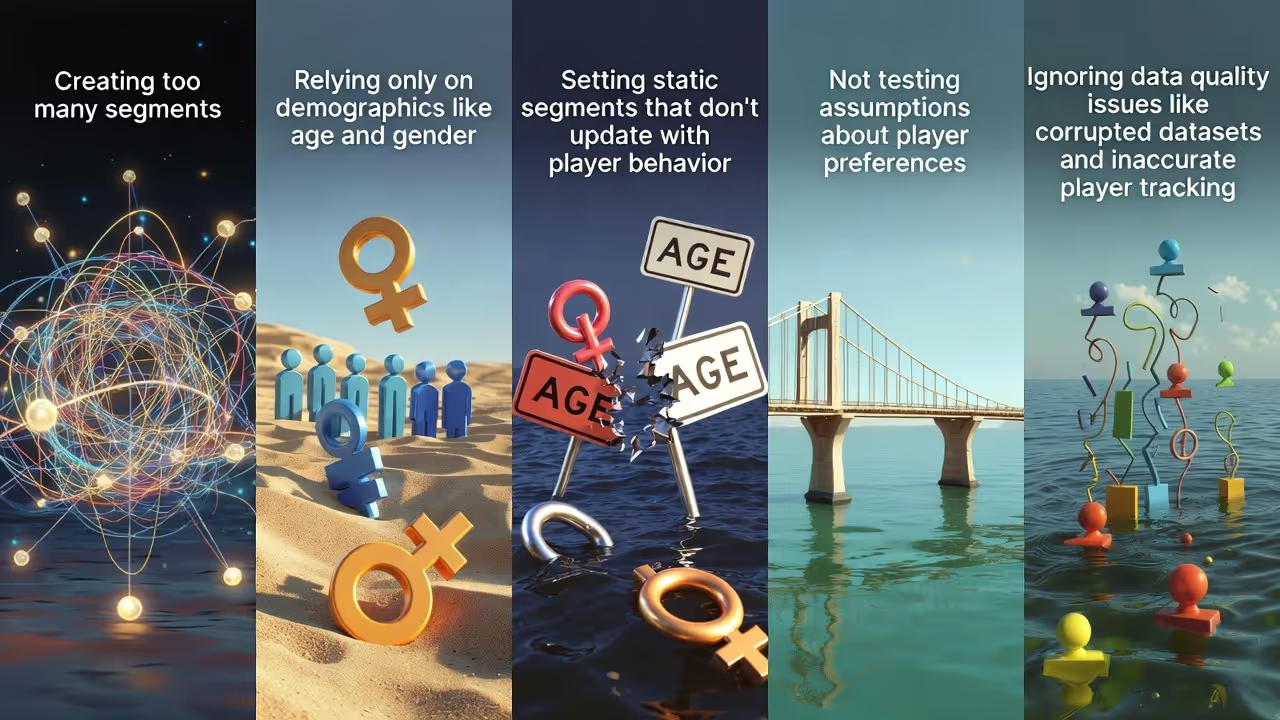
Creating too many segments. If you have 50 different segments, you don't have segmentation. You have chaos. Start with 5-8 core segments and add complexity only when you have the resources to act on it.
Relying only on demographics. Age, gender, and location give you basically no predictive power in iGaming. Behavior is king. Two 35-year-old males from the same city might have completely different playing patterns, values, and preferences.
Setting segments and forgetting them. Players move between segments constantly. Your high-value champions can become at-risk if you neglect them. Your new players graduate to active players. Segments should be dynamic, updating automatically as player behavior changes.
Not testing your assumptions. You think high-rollers want X? Test it. You assume players who like slots don't care about sports? Test it. The best CRM strategies are built on data, not hunches.
Ignoring data quality. According to an Experian study, poor data quality affects 83% of companies, causing major inefficiencies in marketing operations. In iGaming specifically, this means missed opportunities and irrelevant offers. Clean your data regularly. Make sure player IDs are tracked accurately across devices. Verify that bonus redemptions are logged correctly. One corrupted dataset can throw off your entire segmentation strategy.
How Smartico Handles Segmentation in iGaming
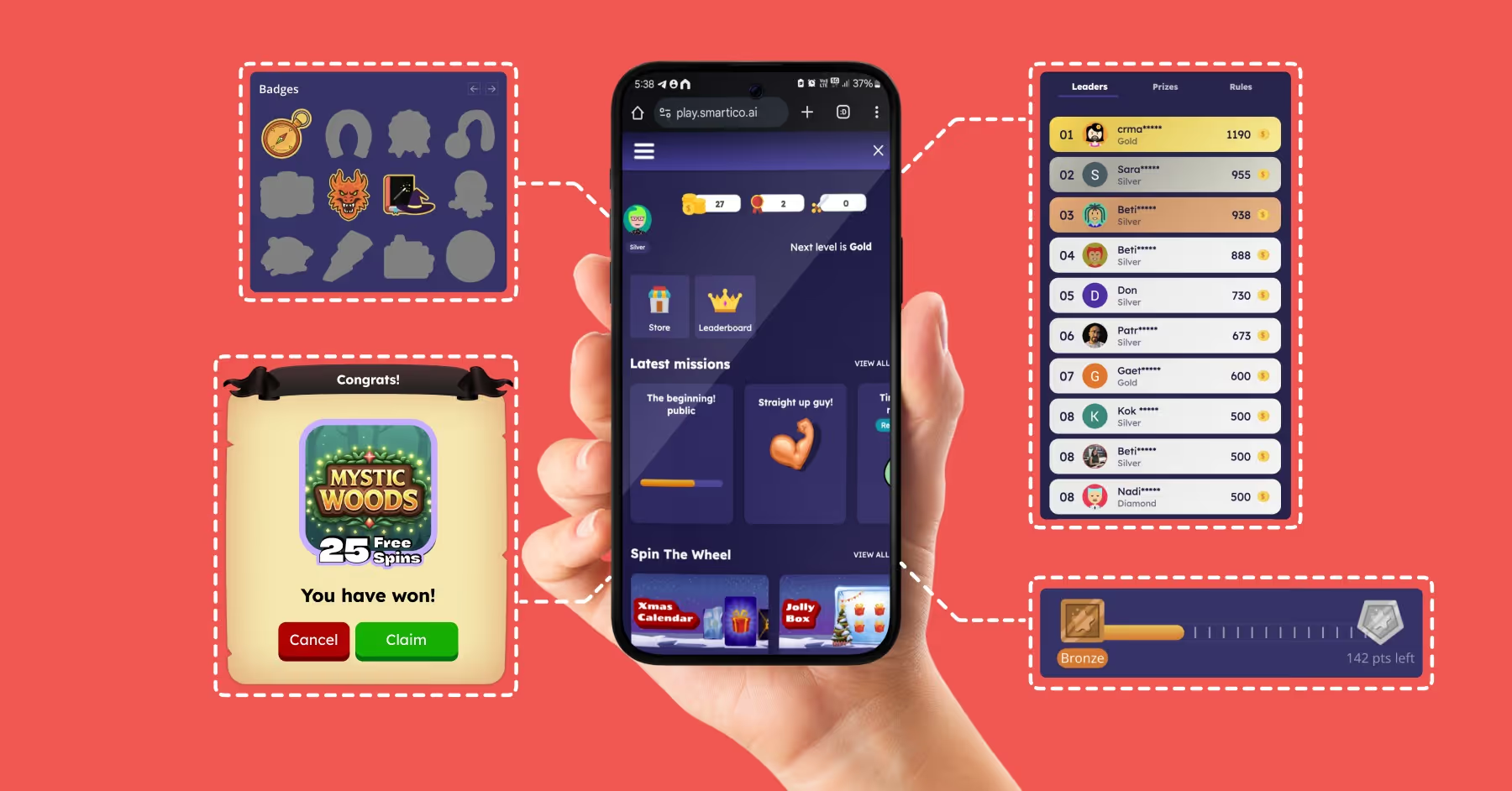
Smartico.ai approaches segmentation differently than generic CRM solutions because it was built specifically for iGaming and sports betting from the ground up.
It combines AI-powered predictive modeling with traditional RFM segmentation to create a complete picture of each player. This includes LTV prediction (identifying which players will be most valuable over time), churn prediction (spotting at-risk players before they leave), and automated micro-segmentation that creates hundreds of targeted groups without manual effort.
What makes this practical for operators is the integration with real-time gamification. When your CRM identifies that a player is at risk of churning, it can automatically trigger personalized missions, tournaments, or rewards designed specifically for their game preferences and playing style. There's no lag between identification and action.
Smartico's segmentation also adapts to each operator's bonus engine and existing platform architecture, which means you're not rebuilding your tech stack to get intelligent segmentation. The system learns from player behavior patterns specific to your brand and regulatory environment, making it particularly valuable for operators in highly regulated markets where compliance and responsible play matter.
Want to find out how Smartico can help your business specifically raise retention and loyalty like nothing you’ve tried before? Book your free, in-depth demo below.
{{cta-banner}}
Measuring Segmentation Success

How do you know if your segmentation strategy is working? Track these metrics by segment:
Conversion rates: Are segmented campaigns converting better than broadcast ones?
Retention rates: Are players in your "at-risk" segment actually being saved?
LTV: Are your high-value segments delivering the revenue you predicted?
Engagement metrics: Opens, clicks, game sessions, deposit frequency
ROI by segment: Which segments give you the best return for your marketing spend?
If you're seeing flat performance across all segments, something's wrong. Either your segments aren't distinct enough, or you're not tailoring your approach to each group.
FAQ: Segmentation in iGaming CRM
What's the difference between segmentation and personalization?
Segmentation is the grouping strategy. Personalization is what you do with those groups. Segmentation tells you who your VIP players are. Personalization is sending them an exclusive offer for their favorite game. You need segmentation to enable effective personalization.
Can segmentation work for smaller operators with limited player data?
Absolutely. Start simple with RFM analysis and basic lifecycle stages. Even with just a few hundred active players, you can segment by recent activity, spending level, and game preference. As your player base grows, your segmentation can become more sophisticated.
How often should segments be updated?
In iGaming, real-time or near real-time is ideal. Player behavior changes quickly, and your segments should reflect that. At minimum, daily updates. Weekly is too slow for most use cases.
What's the biggest segmentation mistake iGaming operators make?
Treating segmentation as a one-time project instead of an ongoing process. Player behavior evolves, markets shift, and new games launch. Your segmentation strategy should adapt continuously.
How does segmentation help with responsible play requirements?
Proper segmentation can identify players showing problem behavior patterns early. You can create segments for high-risk behaviors and trigger appropriate interventions, limits, or support resources automatically. This protects both players and your licensing status.
Can one player belong to multiple segments simultaneously?
Yes, and they should. A player might be both "VIP" (value-based segment) and "Sports Bettor" (game preference segment) and "At Risk" (lifecycle segment). Modern CRM systems handle overlapping segments easily and let you target based on any combination.
Final Words
Segmentation is all about recognizing that your players are individuals with different needs, preferences, and value to your business. When you organize them into meaningful groups and treat each group appropriately, everyone wins.
Your marketing becomes more efficient because you're not wasting resources on the wrong people. Your players get better experiences because offers and content actually match their interests. And your retention improves because you're engaging people as individuals, not as anonymous user IDs.
Did you find this article helpful? If so, consider sharing it with other industry professionals such as yourself.