


From Rules to Reinforcement: Building AI-Powered Gamification Loops in CRM
.avif)
The old way of doing CRM isn't cutting it anymore. Your sales team logs data the same way they did five years ago. Customer engagement feels like throwing darts in the dark. And those fancy dashboards? They show you what happened last week, not what's happening right now.
But there's a shift coming that changes everything. Smart companies are building gamification systems that both reward and learn from behavior. Instead of rigid point systems and basic badges, they're creating intelligent loops that adapt in real time. These systems understand what motivates each customer, predict what they'll do next, and adjust rewards automatically.
It’s all about building systems that get smarter every time someone interacts with them.
Why Traditional CRM Gamification Falls Short
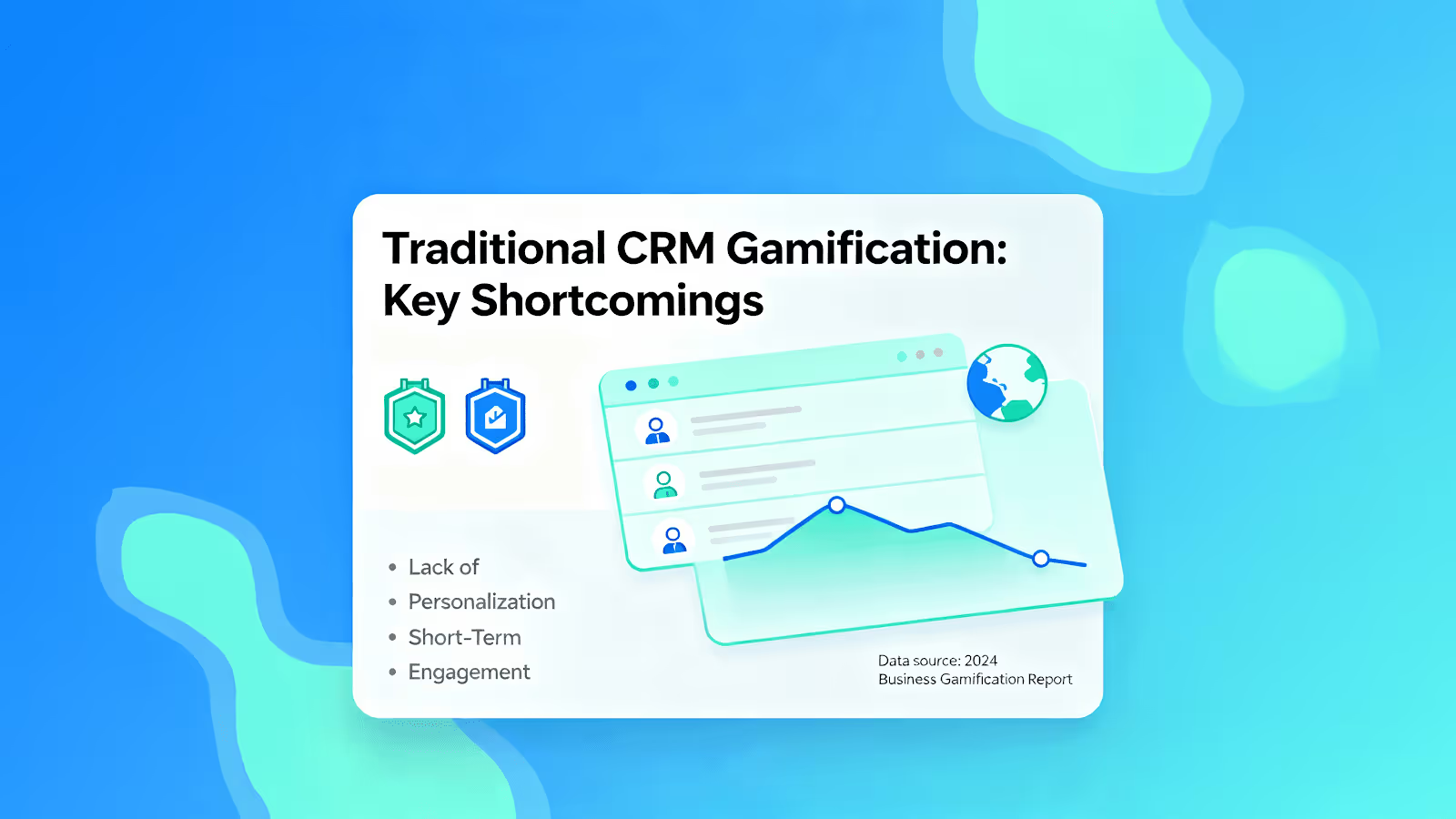
Most gamification in CRM follows the same tired playbook. You set up points for calls made. Badges for deals closed. Leaderboards that reset every month. The system works the same way for everyone, whether they're a seasoned sales director or someone who started last week.
The problem runs deeper than boring mechanics. Traditional systems rely on rules written by humans months ago. They can't adapt when market conditions shift. They don't learn when certain rewards stop working. And they definitely can't predict which customers are about to churn.
Rules-based systems are predictable, but predictable isn't always better. When your gamification runs on the same logic every time, people figure it out fast. The excitement wears off. Engagement drops. You're back where you started, except now you have a fancy system that nobody uses.
Meanwhile, your customer data keeps growing. Behavioral patterns shift. New segments emerge. But your gamification system stays frozen in time, rewarding the same actions the same way, completely blind to what's actually driving results.
The Science Behind Reinforcement Learning in CRM
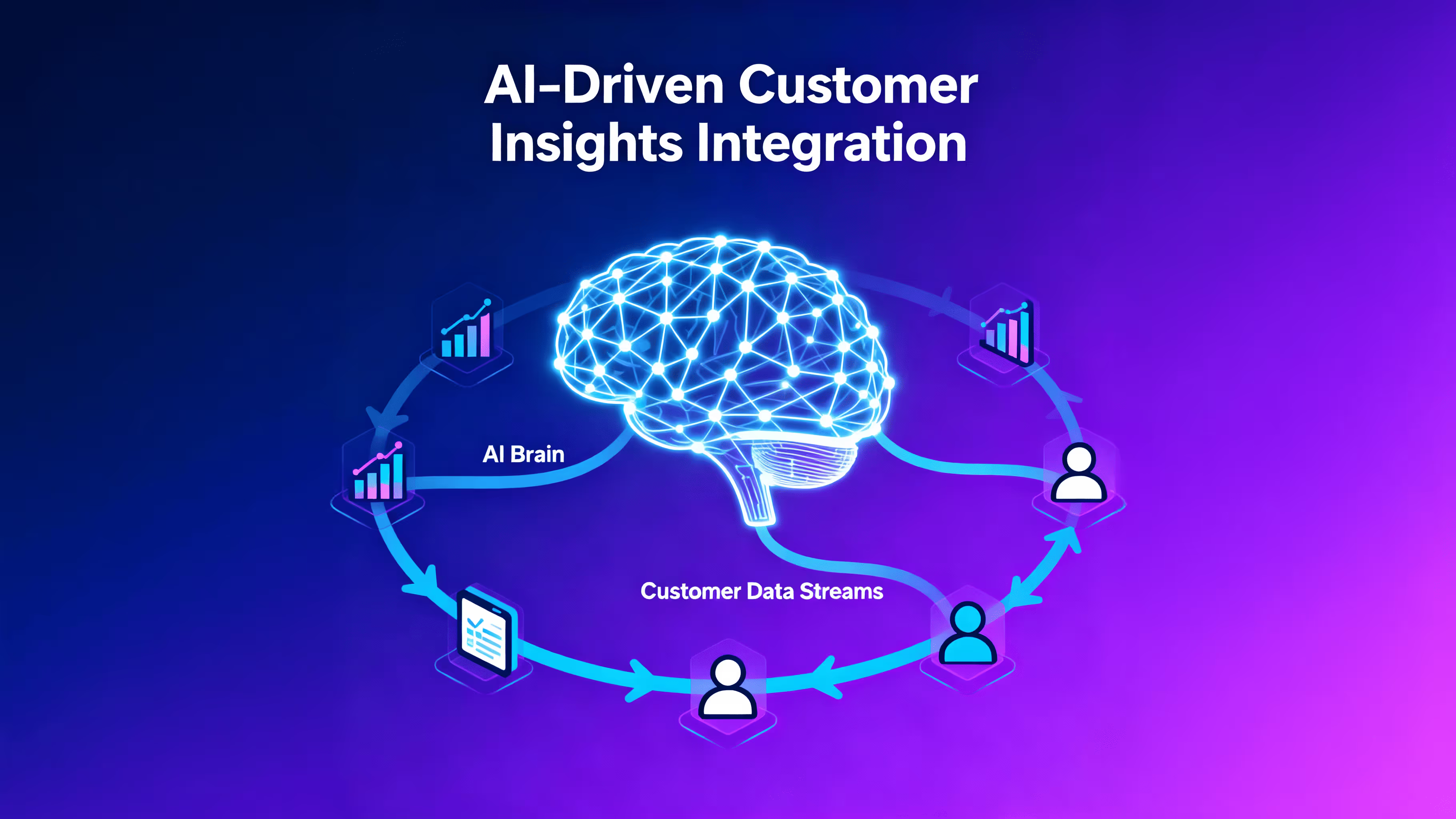
Reinforcement learning works differently. Instead of following preset rules, the system learns through trial and error. It tries different rewards, measures the results, and gets better over time. Think of it like a chess program that improves by playing millions of games, except it's optimizing customer engagement instead of board positions.
Here's how it works in practice. The system starts with basic assumptions about what motivates customers. Maybe it offers points for email opens or discounts for repeat purchases. But then it watches what actually happens. Which rewards drive real behavior changes? Which customers respond to competition versus personalized offers? Which timing works best for different segments?
Every interaction becomes data. Every response teaches the algorithm something new. Over time, the system develops an understanding of what works for each individual customer. It might learn that Sarah responds better to exclusive access than discount codes, that David prefers weekly challenges over monthly competitions, or that new customers need different motivation than longtime advocates.
{{cta-banner}}
The magic happens in the feedback loop. Traditional systems send the same reward to everyone and hope for the best. Reinforcement learning systems send different rewards to different people, measure the outcomes, and adjust based on what actually drives results. They get more accurate with every interaction.
Reinforcement learning systems can discover patterns humans never would have spotted. They might find that customers who engage with gamification on Tuesdays are more likely to upgrade their service. Or that certain combinations of rewards work better than individual incentives. Or that timing matters more than reward size for certain customer types.
Building Event-Stream Architecture for Real-Time Adaptation

Traditional CRM systems think in batches. They process data overnight. Generate reports weekly. Update customer segments monthly. By the time they act on information, the moment has already passed.
Event-stream architecture changes the game completely. Instead of waiting for batch updates, the system processes every customer action as it happens. Someone opens an email at 2:47 PM on a Wednesday. The system knows instantly. They click through to a product page. The data flows in real time. They abandon their cart after three minutes. The gamification engine can respond immediately.
Real-time processing enables real-time personalization. When someone shows high-intent behavior - like viewing a premium product multiple times - the system can trigger relevant rewards within seconds. Maybe a limited-time upgrade offer. Maybe points that expire in 24 hours. Maybe access to an exclusive demo. The key is responding while the customer's interest is still hot.
This requires a different technical foundation. Instead of databases that update periodically, you need streaming data pipelines that handle continuous information flows. Instead of rules that run on schedules, you need logic that responds to events. Instead of static customer profiles, you need dynamic records that evolve in real time.
The payoff is massive. Companies using event-stream architectures report up to 30% higher engagement rates because they can respond to customer behavior immediately rather than days later. They catch opportunities that batch-processing systems miss entirely. They prevent churn by intervening the moment warning signals appear.
But the real advantage is learning speed. When your system can observe the immediate results of every action, it learns faster. Instead of waiting weeks to see if a campaign worked, it knows within hours. Instead of guessing about customer preferences, it measures actual responses. Instead of following outdated rules, it adapts based on current reality.
The Unified Platform Advantage

Most companies cobble together gamification from multiple tools. Their CRM handles customer data. Their marketing automation sends rewards. Their analytics platform measures results. Everything works in isolation. Nothing talks to anything else.
Unified platforms eliminate these silos. When gamification, CRM, and automation run on the same foundation, they can share data instantly. Customer behavior in one area immediately informs decisions everywhere else. Rewards can be precisely calibrated based on complete customer context rather than fragmented information.
Consider what this means for personalization. In a siloed system, your gamification might reward someone for email engagement while your CRM shows they haven't made a purchase in six months. The left hand doesn't know what the right hand is doing. In a unified platform, every system knows the complete customer story. Rewards can be tailored to actual customer value and behavior patterns.
The technical advantages compound over time. Instead of maintaining separate databases that get out of sync, you have one source of truth. Instead of building custom integrations between different tools, everything connects natively. Instead of debugging problems across multiple systems, you can trace issues from end to end.
But the real benefit is strategic. Unified platforms enable experiences that would be impossible with fragmented tools. You can create gamification journeys that span multiple touchpoints. Trigger rewards based on combined behavioral signals. Measure ROI across all customer interactions rather than individual channels.
Companies using unified gamification platforms see measurably better results. They report 22% higher customer retention and 15% better lifetime value compared to businesses using separate tools. The difference comes from having complete customer context at every decision point.
KPI Uplift Benchmarks: What the Data Shows
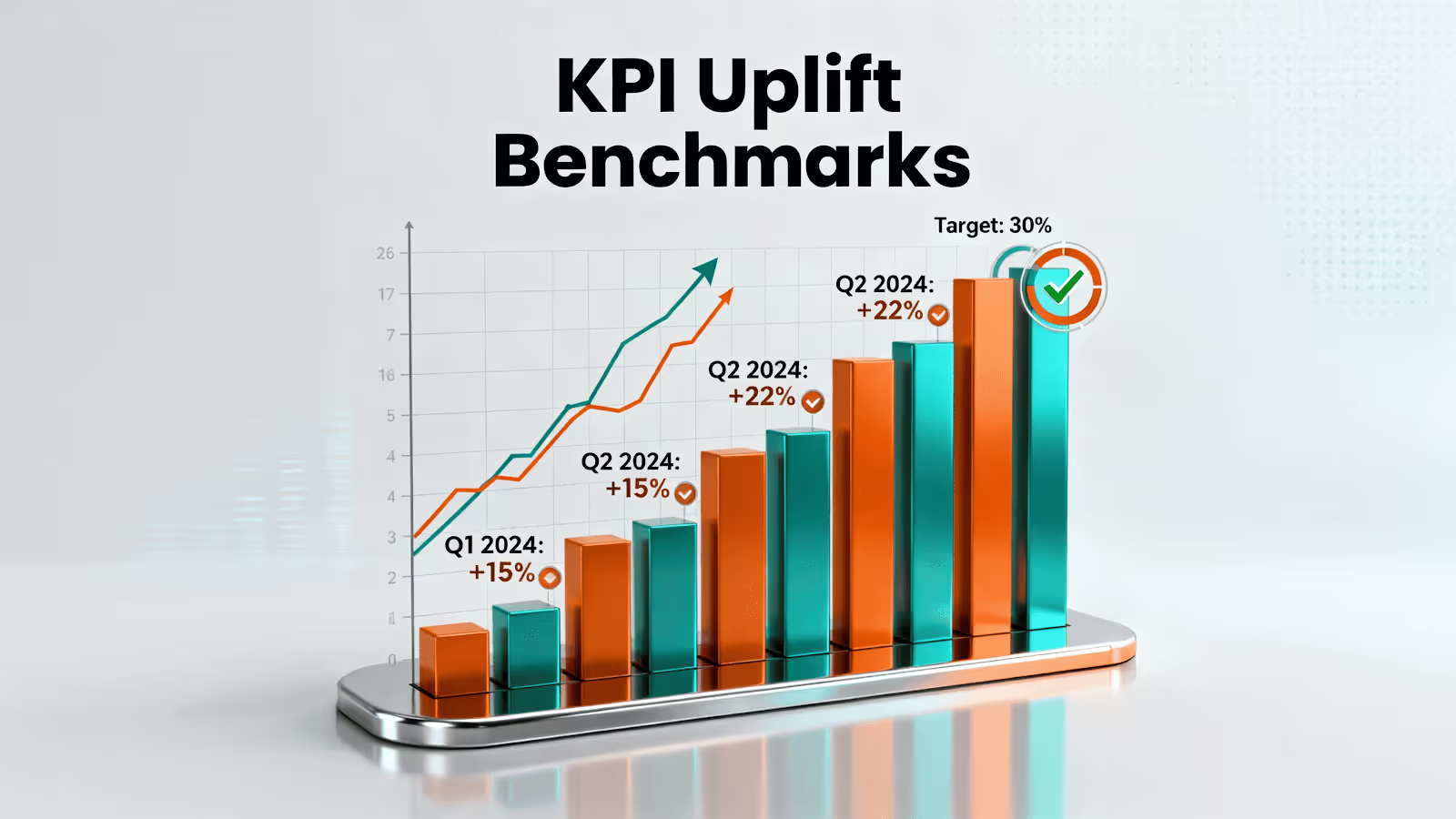
The numbers tell a clear story. Companies implementing AI-powered gamification see consistent improvements across key metrics. Not small tweaks - meaningful changes that show up in quarterly results.
Engagement metrics improve first and fastest. Organizations report 47% higher user participation rates within 90 days of implementing intelligent gamification systems. Time spent on-platform increases by an average of 34%. Interaction frequency jumps 25-40% as systems learn what motivates each individual user.
Sales performance follows close behind. Teams using reinforcement learning-powered gamification achieve 20-30% higher quota attainment within the first quarter. Deal closure rates improve 15-25% as systems learn to reward the right behaviors at the right times. Average deal size increases 10-18% when gamification adapts to customer value rather than activity volume.
Customer retention shows the biggest long-term impact. Businesses report 22-30% better retention rates after implementing adaptive gamification. Customer lifetime value increases 25-35% as systems learn to identify and nurture high-value relationships. Churn prediction accuracy reaches 85-90% when machine learning analyzes engagement patterns in real time.
The most impressive results come from unified platforms that can measure impact across all touchpoints. Companies using integrated gamification and CRM automation report 30% faster sales cycles and 40% better lead conversion rates. They can track how gamification affects not just immediate behavior but long-term customer relationships.
But here's what the benchmarks don't capture: the speed of improvement. Traditional gamification might take 6-12 months to show meaningful results. AI-powered systems start optimizing immediately. They achieve 80% of their potential impact within the first 90 days because they learn and adapt continuously rather than following static rules.
Behavioral Triggers That Actually Work

Most gamification triggers are obvious. Make 10 calls, earn 10 points. Close a deal, get a badge. Hit your quarterly target, climb the leaderboard. These work for about six weeks before people tune them out.
Effective behavioral triggers are subtle and smart. They respond to patterns rather than individual actions. Maybe the system notices someone always checks email first thing Monday morning, so it sends weekend achievements then. Or it discovers that certain customers respond better to social recognition than monetary rewards, so it adjusts accordingly.
Advanced systems trigger rewards based on intent signals rather than completed actions. Someone spends unusual time researching a premium feature. The system might offer early access or a personal demo. Someone's engagement patterns match those of customers who typically upgrade. They might receive targeted incentives before they even realize they need them.
The key is contextual awareness. Traditional triggers fire based on individual metrics. Intelligent triggers consider the complete customer situation. Purchase history. Engagement trends. Seasonal patterns. Competitive activities. Similar customer behaviors. All of this context informs when and how to intervene.
Timing matters more than reward size. Systems that can trigger responses within minutes of relevant behavior see 3x higher success rates than those that respond hours or days later. The immediacy creates a clear connection between action and reward. People understand what behaviors the system values. They're more likely to repeat them.
But the smartest systems also know when not to trigger. Constant notifications annoy people. Over-rewarding devalues the incentive. Machine learning helps identify optimal frequency and intensity for each individual customer. Some people want daily feedback. Others prefer weekly summaries. Some respond to friendly competition. Others prefer private achievements.
Implementation Roadmap: From Concept to Reality
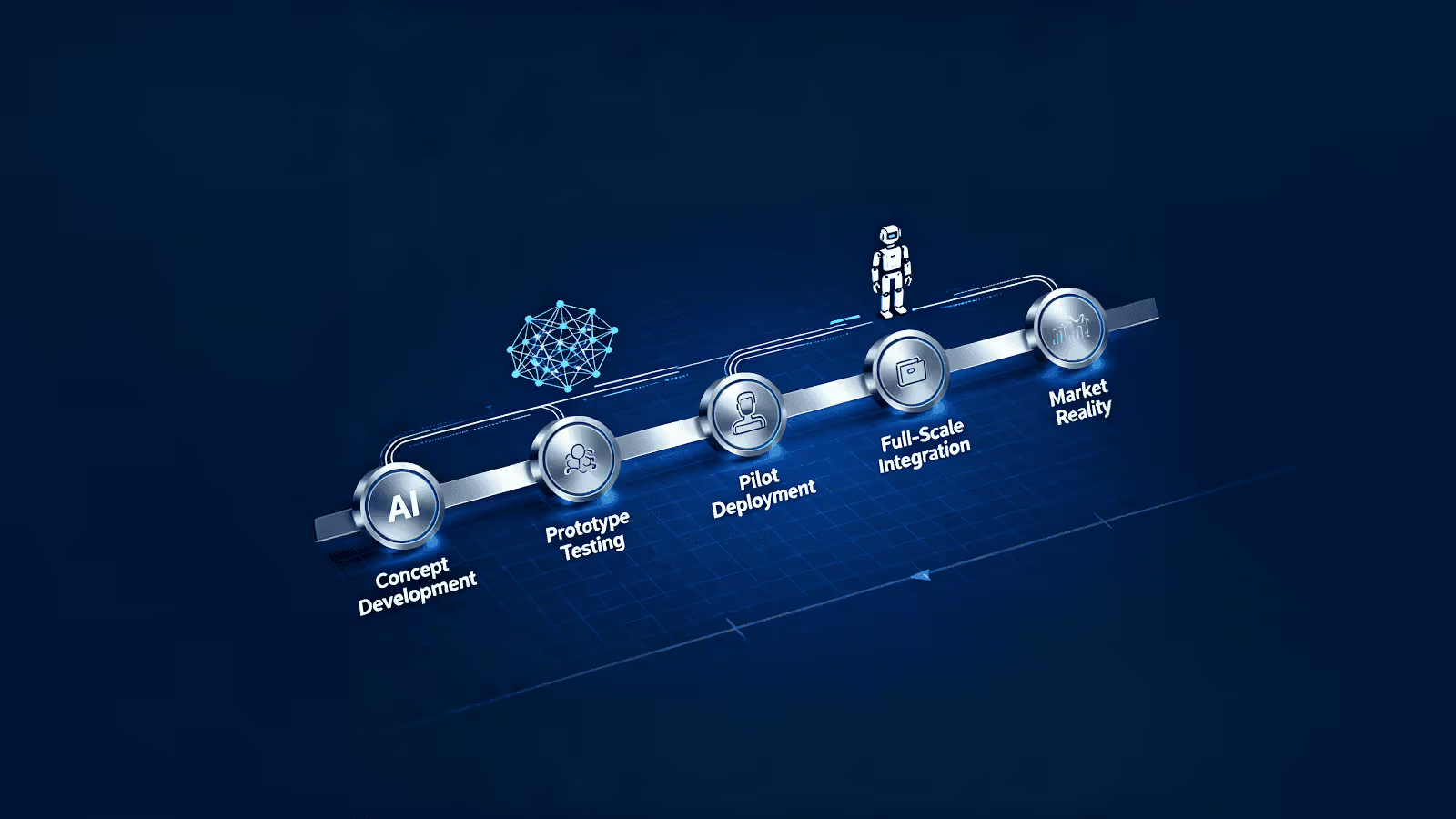
Rolling out AI-powered gamification isn't like installing traditional software. You can't just flip a switch and expect results. The system needs time to learn. Data to train on. Feedback to improve.
Start with data infrastructure. Before building any gamification features, ensure your customer data flows in real time. Set up event streaming. Connect your touchpoints. Make sure every customer interaction gets captured immediately rather than in batch updates. This foundation determines everything else.Phase one focuses on basic behavioral tracking. Monitor email opens, website visits, purchase patterns, support interactions. Don't try to gamify everything immediately. Just collect clean data and establish reliable event streams. This usually takes 4-6 weeks but pays dividends later.
Phase two introduces simple adaptive rewards. Start with a small group of customers and basic machine learning models. Let the system experiment with different incentives and measure results. Don't expect perfection immediately. The algorithms need time to find patterns and optimize responses.
Expand gradually based on what works. Once you have proof of concept, add more customer segments and behavioral triggers. Increase the sophistication of your machine learning models. Connect more data sources. But do this incrementally. Each expansion should build on proven success rather than adding complexity for its own sake.
The most successful implementations take 12-18 months to reach full maturity. Not because the technology is slow, but because behavioral change takes time. Customers need to trust the system. Sales teams need to adjust their approaches. Management needs to see consistent results before fully committing resources.
Measuring Success Beyond Vanity Metrics
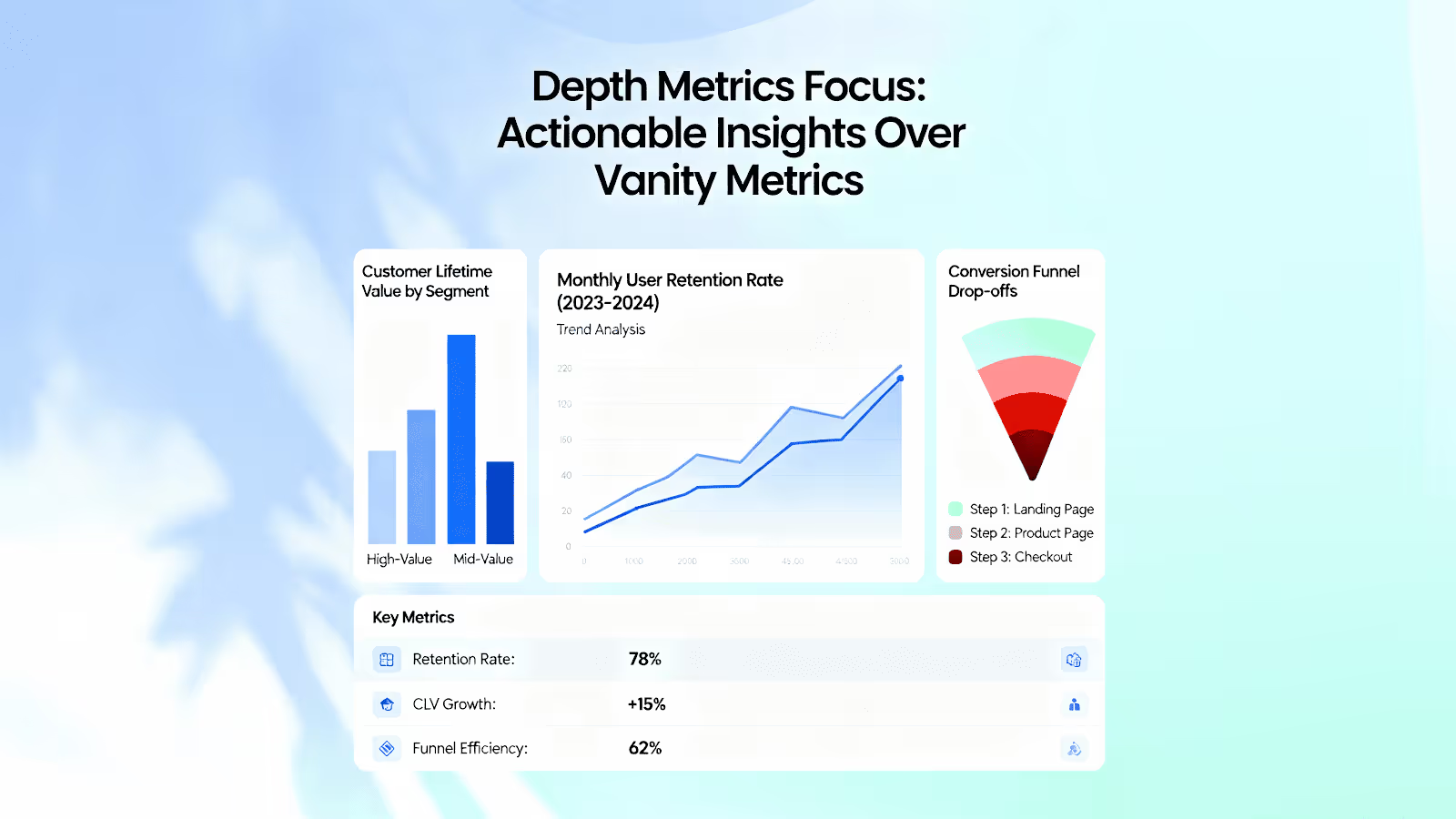
Points earned and badges distributed tell you almost nothing about business impact. Those are vanity metrics that make dashboards look busy without revealing whether gamification actually works.
Focus on leading indicators that predict business outcomes. Customer engagement depth matters more than frequency. Are people just clicking through quickly or actually engaging with content? Are they completing valuable actions or gaming the system? Are rewards driving desired behaviors or random activity?
Track progression through customer journeys rather than individual milestones. Someone might earn fewer points but advance faster toward purchase decisions. Another customer might accumulate rewards but never increase their spending. The system should optimize for business value, not activity volume.
Behavioral consistency provides crucial insights. Traditional gamification often creates artificial spikes in activity followed by sharp drops. Effective systems maintain steady engagement levels over time. They build habits rather than create temporary excitement that fades quickly.
Long-term relationship health indicators matter most. Customer lifetime value. Retention rates. Expansion revenue. Referral generation. These metrics reveal whether gamification creates lasting behavioral changes or just short-term activity bumps. They also justify the investment required to build intelligent systems.
The most sophisticated measurement approaches use control groups and incremental testing. They measure not just absolute performance but the specific impact of gamification versus baseline customer behavior. This reveals true ROI rather than correlation that might have other causes.
Common Pitfalls and How to Avoid Them
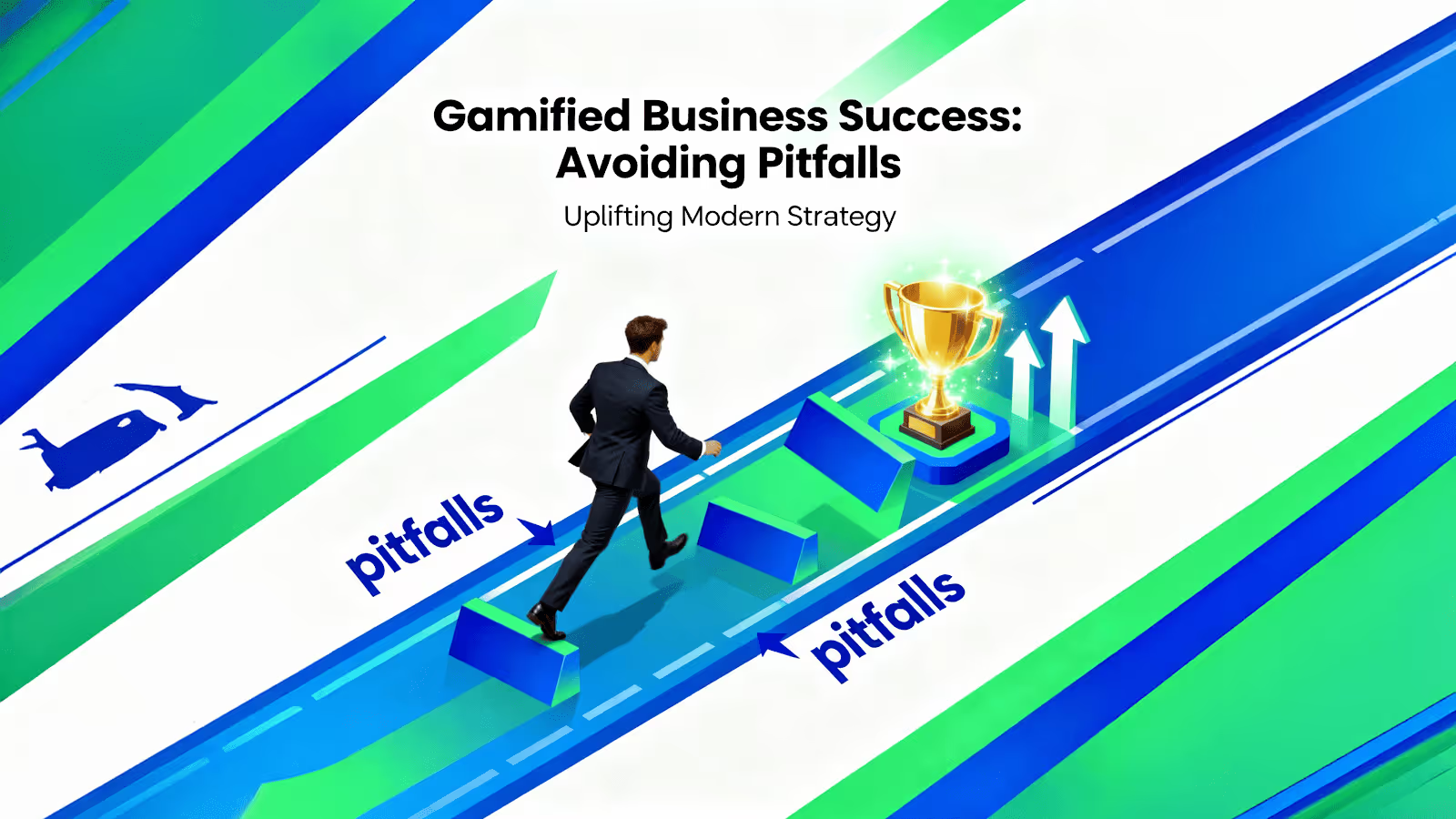
The biggest mistake is trying to gamify everything immediately. Companies get excited about the technology and want to add game mechanics to every customer interaction. This creates noise instead of value. People get overwhelmed and tune out entirely.
Start focused and expand deliberately. Pick one specific behavior that drives clear business value. Maybe email engagement for marketing teams. Maybe pipeline progression for sales. Maybe feature adoption for product managers. Master that single use case before adding complexity.
Over-engineering the rewards system kills engagement faster than under-engineering it. Companies create elaborate point calculations, complex achievement hierarchies, and intricate progression systems that confuse rather than motivate. Simple systems that people understand perform better than sophisticated ones that require explanation.
Another common failure is treating AI as magic. Machine learning requires good data, clear objectives, and time to learn. It's not going to solve fundamental business problems or compensate for poor customer experiences. It optimizes what already works rather than fixing what's broken.
Don't ignore the human element. Technology handles the mechanics, but people still need to understand why gamification exists and how it benefits them. Change management matters as much as system architecture. Training, communication, and ongoing support determine whether people adopt new approaches or resist them.
The subtlest mistake is optimizing for engagement without considering business impact. Systems can become very good at generating activity that doesn't translate to revenue. Always connect gamification metrics to business outcomes. Measure not just what people do but what those actions accomplish.
The Future of Intelligent Gamification

Current systems are just the beginning. The next generation of gamification platforms will predict customer behavior weeks in advance. They'll automatically adjust entire reward systems based on market conditions. They'll create personalized game experiences that feel custom-built for each individual.
Agentic AI will automate most configuration decisions. Instead of setting up rules and triggers manually, you'll describe business objectives in natural language. The system will design appropriate mechanics, test different approaches, and optimize continuously without human intervention.
Cross-platform integration will become seamless. Your gamification system will connect not just to your CRM and marketing tools but to inventory management, customer service, financial systems, and external data sources. Every business process will inform and benefit from intelligent engagement mechanics.
Real-time personalization will operate at individual moment level rather than individual customer level. The system won't just know that Sarah prefers exclusive access rewards. It will know that Sarah responds better to competitive elements on Tuesday afternoons when she's having a good week, but prefers collaborative challenges on Friday mornings when she's stressed.
But the most profound change will be philosophical. Instead of adding gamification to existing processes, companies will build engagement mechanics into their core business models. Customer relationships will become continuous, adaptive games where both sides benefit from deeper participation.
Smartico.ai: Leading the Unified Gamification Revolution
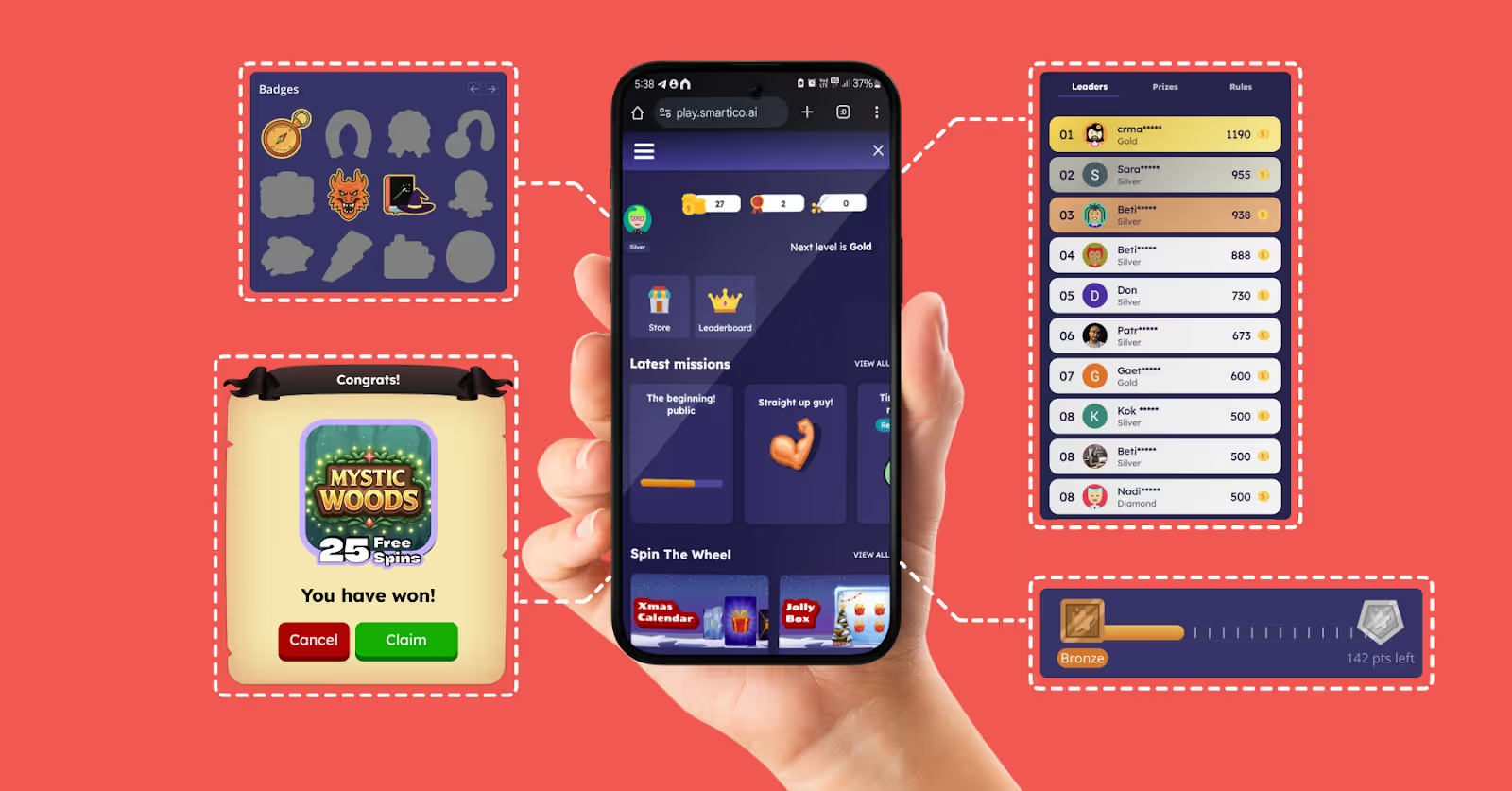
Smartico.ai stands as the first truly unified Gamification and CRM Automation platform in the industry. Unlike traditional systems that bolt gaming mechanics onto existing CRM tools, Smartico.ai was built from the ground up to integrate intelligent engagement with complete customer relationship management.
What makes Smartico.ai different is its comprehensive approach to behavioral intelligence. The platform doesn't just track points and badges - it analyzes customer journey patterns, predicts optimal intervention moments, and automatically adjusts reward systems based on real-time performance data. This creates engagement loops that get smarter over time rather than following static rules.
The platform excels in industries requiring sophisticated customer lifecycle management, particularly iGaming and online entertainment where customer engagement directly impacts revenue. Smartico.ai's machine learning algorithms can predict churn risk, identify high-value customers, and personalize rewards at individual level while maintaining regulatory compliance across multiple jurisdictions.
For businesses ready to move beyond traditional CRM limitations, Smartico.ai offers the complete technological foundation for next-generation customer engagement. The platform combines event-stream processing, real-time personalization, and adaptive gamification in a single solution that scales from startup to enterprise level.
To find out how Smartico can help boost your iGaming business revenue like nothing you’ve tried before, book you free, in-depth demo below.
{{cta-banner}}
Making the Transition to Intelligence-Driven Engagement

The shift from rules-based to reinforcement learning gamification represents more than a technology upgrade. It's a fundamental change in how businesses understand and respond to customer behavior. Instead of guessing what motivates people, you build systems that learn and adapt continuously.
Success requires combining the right technology foundation with clear business objectives and realistic implementation timelines. Companies that rush the process or skip foundational steps typically struggle. Those that invest in proper data infrastructure and gradual rollout strategies see consistent improvements across all engagement metrics.
The competitive advantage goes to organizations that make this transition thoughtfully rather than quickly. Building intelligent gamification systems takes time, but the results compound over months and years. Early adopters are creating customer relationships that competitors using traditional approaches simply cannot match.
The shift from rules-based to reinforcement learning gamification represents more than a technology upgrade. It's a fundamental change in how businesses understand and respond to customer behavior. Instead of guessing what motivates people, you build systems that learn and adapt continuously.
Success requires combining the right technology foundation with clear business objectives and realistic implementation timelines. Companies that rush the process or skip foundational steps typically struggle. Those that invest in proper data infrastructure and gradual rollout strategies see consistent improvements across all engagement metrics.
The competitive advantage goes to organizations that make this transition thoughtfully rather than quickly. Building intelligent gamification systems takes time, but the results compound over months and years. Early adopters are creating customer relationships that competitors using traditional approaches simply cannot match.
FAQ

What's the difference between traditional CRM gamification and AI-powered systems?
Traditional systems follow preset rules that reward specific actions the same way every time. AI-powered systems learn from customer responses and automatically adjust rewards, timing, and mechanics to optimize individual engagement and business outcomes.
How long does it take to see results from reinforcement learning gamification?
Basic improvements typically appear within 4-6 weeks as the system begins learning customer patterns. Significant performance gains usually develop over 3-6 months as algorithms accumulate enough data to make sophisticated predictions and optimizations.
Do you need technical expertise to implement intelligent gamification?
While the underlying technology is complex, modern platforms handle most technical details automatically. Business teams need to understand objectives and metrics, but they don't need machine learning expertise to configure and operate these systems effectively.
How do you measure ROI for AI-powered gamification?
Focus on business metrics rather than engagement metrics. Track customer lifetime value, retention rates, conversion improvements, and revenue per customer. Compare performance against control groups rather than absolute numbers to isolate gamification impact.
What customer data is required for effective reinforcement learning?
The system needs behavioral data like website visits, email interactions, purchase history, and engagement patterns. Demographic information helps but matters less than activity data. Quality and timeliness matter more than quantity - real-time behavioral signals provide the most value.
Can intelligent gamification work for B2B companies?
Absolutely. B2B customers respond to achievement, progress tracking, and social recognition just like consumers. The key is adapting rewards to professional contexts - exclusive content access, industry recognition, early feature previews, and peer benchmarking often work better than points and badges.
Final Words
The era of one-size-fits-all gamification is ending. Forward-thinking companies are building intelligent engagement systems that learn, adapt, and improve continuously. These platforms don't just make customer interactions more enjoyable - they create sustainable competitive advantages through deeper behavioral understanding and more effective relationship management.
The technology exists today. The business case is proven. The question isn't whether to make this transition, but how quickly you can implement systems that turn customer engagement into a strategic asset rather than a tactical afterthought.
Did you find this article helpful? If so, consider sharing it with other industry professionals such as yourself.