


Responsible iGaming: Protecting Players Without Killing Engagement
.png)
Responsible iGaming, often called responsible gambling, usually gets treated as a compliance box: add the deposit-limit form, link the self-exclusion page, publish, move on. That view misses the real problem. The harder and more useful question is this: how do you protect players who are heading for trouble without treating every active customer like a suspect, and without draining the fun out of the product for everyone else?
That balance is where most programs fail. Too light, and you miss real harm, which is both an ethical failure and a regulatory one. Too heavy, and you bury engaged players under warnings they do not need, which teaches them to ignore every message you send. Operators who get this right treat player protection as part of the product and the CRM rather than a legal afterthought bolted onto the footer.
What responsible iGaming covers
The term covers more than one feature. In practice it splits into a few pillars.
- Player-facing controls. The tools players use to manage their own play: deposit, loss, and wager limits, session-time limits, reality checks, cool-off periods, and self-exclusion. Licensed markets expect these, and easy access to them is now table stakes.
- Risk detection. Spotting the behavioral signals that a player may be developing a problem, before it becomes obvious or hard to reverse.
- Intervention. Acting on those signals, from a gentle nudge to a hard limit, in a way that reaches the player at the right moment.
- Compliance and reporting. Meeting the specific rules of each market and keeping an auditable record of what you detected and what you did about it.
- Safer-by-design experience. Building the product so the default path is a healthy one, instead of relying on warnings to undo a design that pushes people toward overspending.
Regulatory requirements differ by jurisdiction, so confirm the exact rules for your licensed markets before treating any of this as compliance advice.
{{cta-banner}}
Underneath, this is a data and timing problem
Here is the part a CRM and gamification vendor sees that a compliance blog does not. You already hold the signals that matter. Every deposit, session, bet, and login sits in your player data, and the markers of emerging harm sit there with them: deposit frequency climbing, losses chased with rapid re-deposits, session lengths spiking, play drifting into late-night hours, a steady pattern turning erratic.
Collecting this was never the challenge. The challenge is spotting the pattern early, while it's still important, and acting on it in real time instead of in a monthly report. A player in a harmful spiral does not need an intervention three weeks later. They need it tonight, through the same channels you already use to reach them.
Where AI and behavioral models help
This fits the models operators already run for marketing. The same behavioral scoring that predicts churn or ranks value can flag emerging risk.
Risk scoring and anomaly detection watch each player's pattern and surface the ones drifting toward harm, early enough to act. The nuance that matters is separating genuine harm signals from normal high-value play. A VIP who deposits large amounts on a regular, stable pattern looks nothing like a player whose spend suddenly spiked after a losing streak, and a good model tells them apart. That distinction lets you protect the players who need it without nagging the ones who do not.
Once a player is flagged, the same journey engine you use for campaigns delivers the response: a reality-check message, a prompt to set a limit, a cool-off suggestion, or, at the serious end, an automatic restriction with a handoff to a human team. Detection and action live in one system, on live data, so the gap between spotting a problem and responding to it closes.
The retention paradox
Now the part that turns this from a cost into a strategy. Player protection and retention look like opposites. Over any horizon longer than a quarter, they are the same goal.
A player who burns through their money faster than they meant to, or who self-excludes in frustration, is churn. Often permanent, sometimes ending in a complaint or a regulatory problem. A player who stays in control keeps playing, keeps depositing within their means, and stays a customer for years. Healthy players carry higher lifetime value than players you let run hot and lose.
So responsible iGaming, done well, is long-term LTV protection wearing a compliance label. The intervention that slows a player down tonight is the intervention that keeps them as a customer next year. Seen that way, it stops competing with your commercial goals and starts serving them.
A practical playbook
Turning this into something operational looks like this:
- Unify the player data. Detection works only when deposits, sessions, bets, and history sit in one profile instead of scattered across systems.
- Define your risk markers. Decide which behaviors you watch, deposit velocity, loss-chasing, session spikes, time-of-day shifts, and what thresholds move a player from watch to act.
- Set real-time triggers. Wire those markers to automated responses so action happens in the moment, not in a report.
- Tier the intervention. Match the response to the severity: a soft nudge or reality check first, a prompt to set limits next, a hard restriction with human contact at the top.
- Make self-control easy. Limits, cool-offs, and self-exclusion should take seconds to set, not sit buried three menus deep.
- Measure whether it worked. Track what happens after each intervention. Did play moderate? Did the player set a limit? Did they stay? Optimize it like any other campaign.
- Keep it auditable. Log what you detected and what you did, for regulators and for your own review.
Common mistakes
A few patterns undercut good intentions:
- Blanket popups. Warnings shown to everyone get ignored by everyone, including the players who need them. Targeting is the point.
- Reacting after the harm. A program that responds only once a player has already lost too much, or already complained, is late by design.
- Dark patterns. Interface tricks that lift short-term deposits, hidden limits, nagging to raise a cap, one-click deposits sitting next to buried controls, raise both harm and churn. Short-term gain, long-term liability, and increasingly a regulatory one.
- Ignoring risk in VIP segments. The expensive blind spot. Revenue and harm both concentrate in high-value players, so the segment you least want to slow down is often the one that most needs watching. Protecting VIPs protects the revenue base.
How Smartico helps
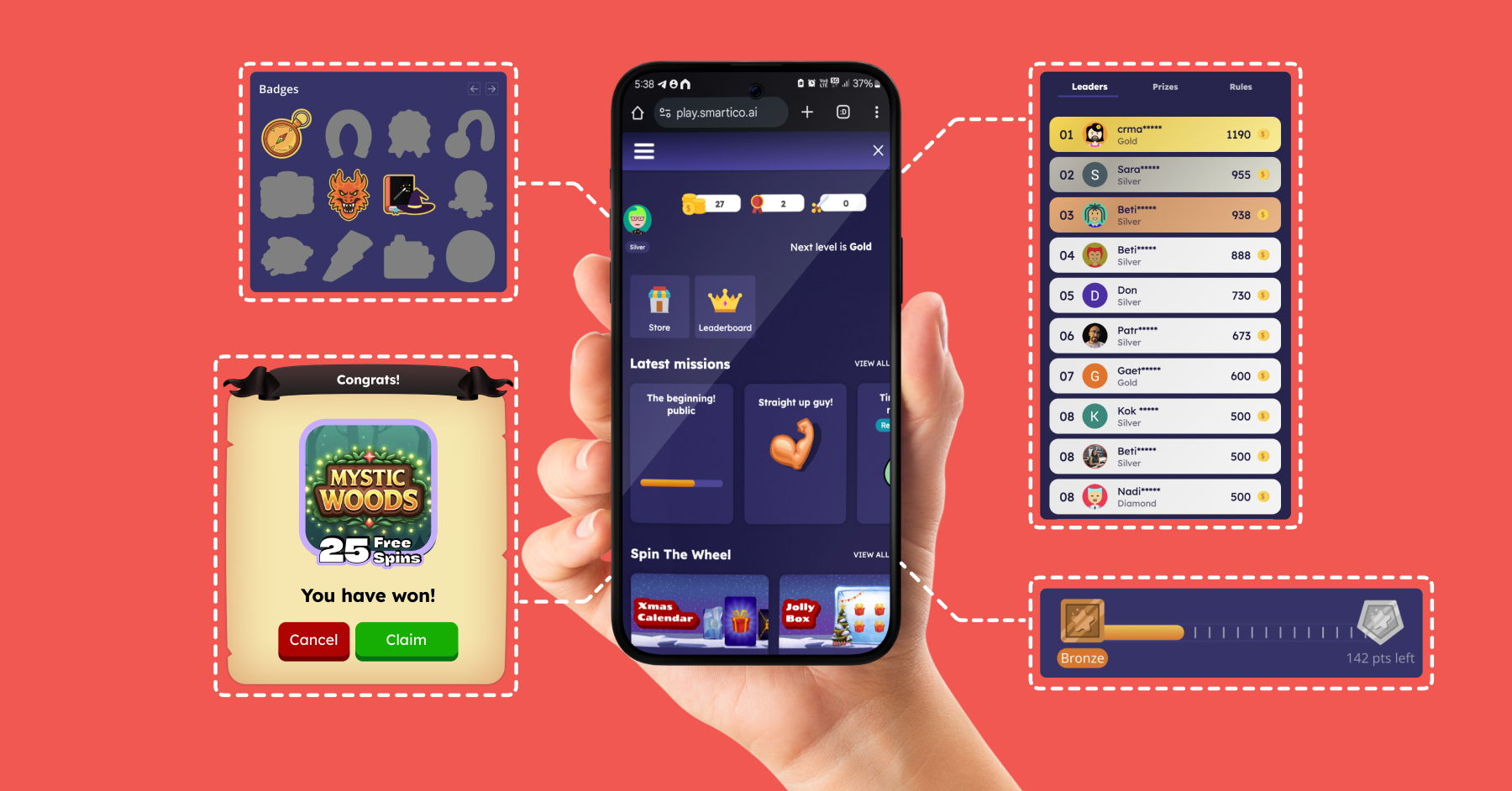
Responsible iGaming runs on the same infrastructure Smartico already gives operators for retention. The unified player profile pulls deposits, sessions, and behavior into one view, which is the precondition for detecting risk at all. The AI models that score value and predict churn apply directly to risk detection, flagging players whose patterns are drifting and telling genuine harm signals apart from stable high-value play. The real-time automation and journeys that power your campaigns deliver the response, a reality check, a limit prompt, a cool-off, or an escalation to your team, at the moment it is needed.
And because segmentation sits at the center of the platform, interventions reach the specific players who need them instead of the whole base.
Player protection built into the system you already use to drive engagement, rather than a separate tool running alongside it.
{{cta-banner}}
FAQ
1. What is responsible gambling?
Responsible gambling, also called responsible iGaming, is the set of practices and tools that help players keep their play within safe, affordable limits, and that help operators detect and respond to signs of harm. It covers player-facing controls, risk detection, intervention, and regulatory compliance.
2. How do operators detect at-risk players?
By watching behavioral signals in player data: rising deposit frequency, losses chased with rapid re-deposits, longer or later sessions, and sudden shifts from a stable pattern. Risk-scoring models flag these early so teams can act before harm escalates.
3. Does responsible iGaming hurt revenue?
Not over the long term. Players who lose control tend to churn, complain, or self-exclude, while players who stay in control keep their lifetime value. Protecting players protects the revenue they represent.
4. What tools are expected?
Deposit, loss, and time limits, reality checks, cool-off periods, and self-exclusion, plus behind-the-scenes risk detection and intervention. Specific requirements vary by market.
Did you find this article helpful? If so, consider sharing it with other industry professionals such as yourself.
Ready to use Smartico?
Join hundreds of businesses worldwide engaging players with Smartico.