


The 250ms Rule: Why Real-Time Reward Latency Kills Engagement

There's a number that keeps showing up in technical specs and product meetings. It's 250 milliseconds. And if you're running a CRM or gamification platform in the iGaming space, this number should matter to you more than most.
Here's the thing. The human brain is remarkably picky about timing. When someone earns a reward, badge, or bonus, the window for that feel-good moment is tiny. Miss it, and you've lost something you can't get back.
What Happens in Your Brain When Rewards Are Delayed

Your brain runs on dopamine. It's the neurotransmitter that makes you feel good when something positive happens. When you complete a task or win something, dopamine neurons fire in response. But here's the catch: the timing of that dopamine release matters a lot.
Research from the mesolimbic dopamine system shows that immediate rewards create a positive feedback loop. The brain lights up. It remembers. It wants to do that thing again.
Delayed rewards? Not so much. Studies on dopamine neurons found that responses to reward-predicting stimuli decrease with longer delays. The brain literally assigns less value to things that take longer to arrive. This isn't a small effect either. The relationship follows a hyperbolic decay function, meaning value drops off quickly at first, then more slowly.
B.F. Skinner figured this out decades ago with his operant conditioning research. He found that immediacy is one of the key factors in reinforcement effectiveness. An immediate consequence is more effective than a delayed one. Give a dog a treat within five seconds of sitting, and it learns faster than if the treat comes thirty seconds later.
The same principle applies to your players.
The 100ms-250ms Sweet Spot
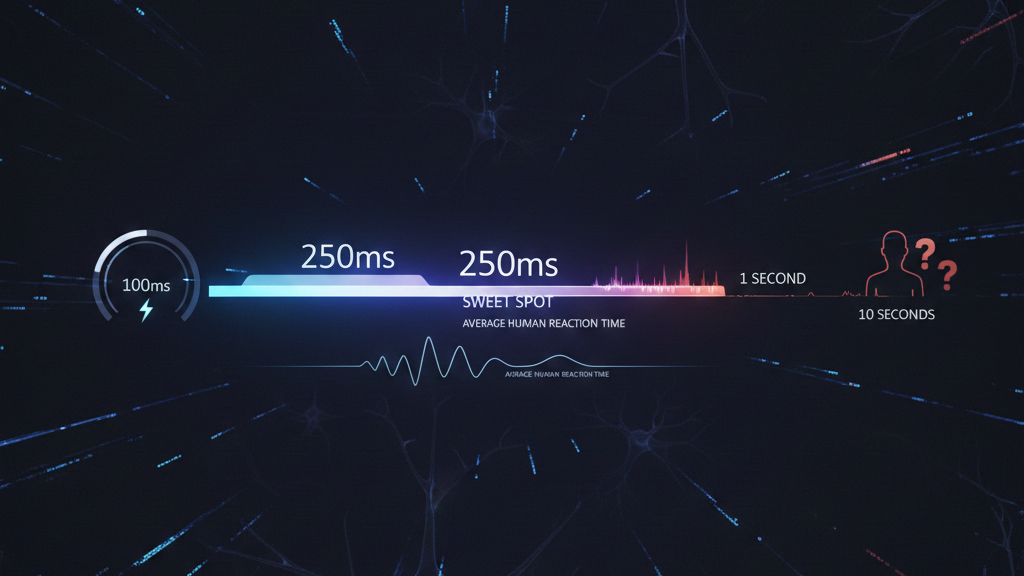
Jakob Nielsen's famous response time research identified three critical thresholds that still hold up today:
- 0.1 seconds (100ms): Feels instantaneous. Users perceive the response as something they caused, not the system
- 1 second: Users stay in the flow. They notice a slight delay but feel in control
- 10 seconds: Attention is lost. People start thinking about other things
The average human reaction time sits around 250 milliseconds. This creates a natural boundary. Anything faster than that threshold feels like magic. Anything slower starts to feel like waiting.
{{cta-banner}}
For gamification and CRM systems, this means reward delivery needs to happen within that sub-250ms window to feel connected to the action that triggered it. Cross that line, and the psychological link between action and reward starts to weaken.
Why This Matters for iGaming Platforms
In the iGaming industry, player retention is everything. Acquiring new players costs money. Keeping them costs less and generates more value over time.
The numbers tell the story:
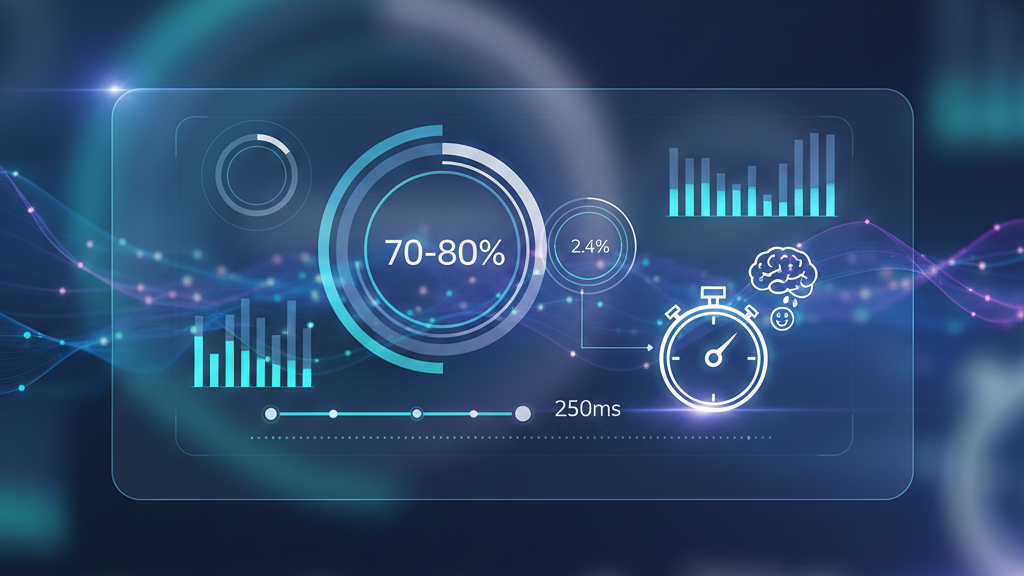
- Day-1 retention rates averaging between 40-45% are considered normal in iGaming
- The average 30-day user retention rate stands at just 2.4%
- A strong 30-day retention rate is around 70-80%
What separates platforms with strong retention from those struggling with churn? Part of it comes down to how players feel when they interact with the system. And feelings are shaped by timing.
When a player completes a mission, spins a wheel, or hits a milestone, the reward response needs to happen fast enough that the brain connects the two events. That's where the 250ms rule comes into play.
The Technical Reality of Instant Feedback
Modern API response time benchmarks align closely with these psychological findings:
For gamification platforms, hitting that sub-250ms target requires serious technical infrastructure. You need real-time event streaming, fast data processing, and responsive delivery systems working together without bottlenecks.
The stakes are high. Research shows that a 100-millisecond delay in webpage load time can hurt conversion rates by 7%. Amazon famously discovered that every 100ms of latency cost them 1% in sales. These findings translate directly to engagement metrics in gamification systems.
5 Technical Benchmarks for Real-Time Reward Systems
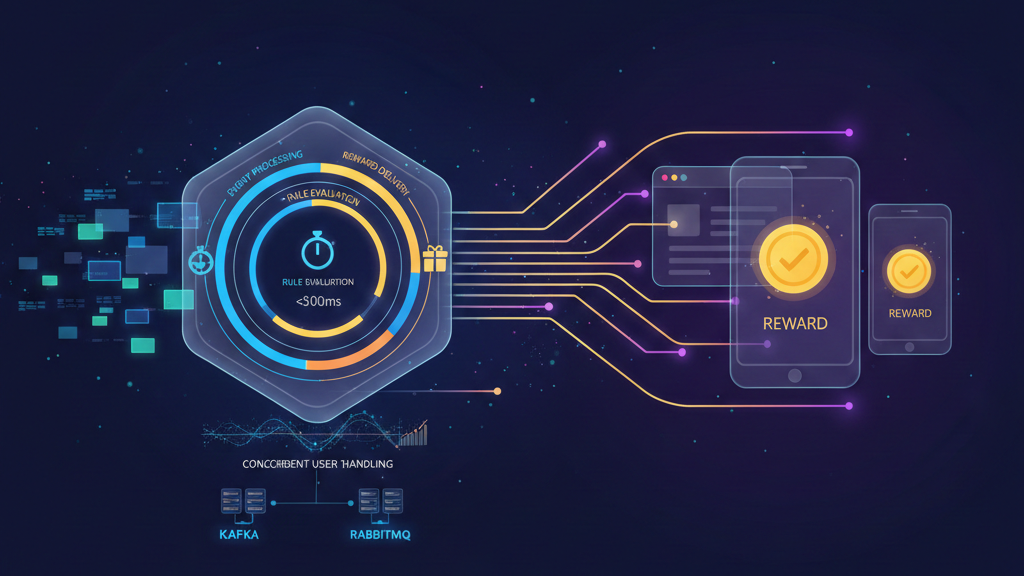
What should you look for when evaluating a gamification or CRM platform? Here are the performance benchmarks that matter:
- Event processing latency: How quickly the system recognizes a player action happened. Target: under 50ms.
- Rule evaluation speed: How fast the system determines what reward applies. Target: under 100ms.
- Reward delivery time: The end-to-end time from action to reward appearing on screen. Target: sub-250ms total.
- Concurrent user handling: Can the system maintain these speeds at scale? Look for platforms tested at high traffic volumes.
- Multi-channel synchronization: Does the instant reward show up consistently across web, mobile, and app interfaces?
Systems using event streaming technologies like Kafka or RabbitMQ can achieve the real-time behavioral tracking needed to hit these targets.
The Psychology of Anticipation vs. Delivery
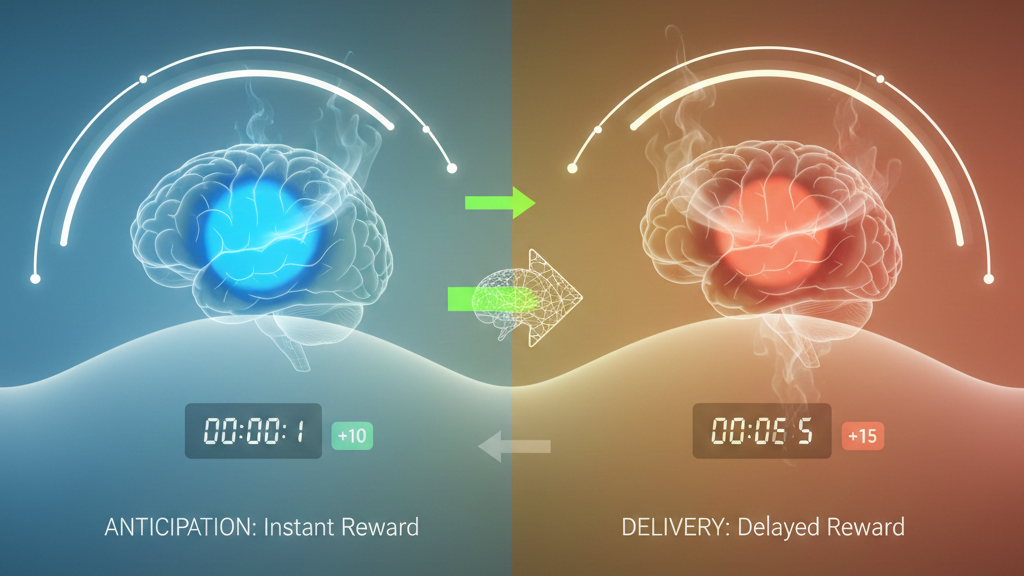
Something interesting happens when you study reward timing more closely. The brain actually responds differently to anticipated rewards versus delivered rewards.
Dopamine neurons show increased activity when a reward arrives sooner than expected. This creates a stronger reinforcement signal. The behavior gets more deeply encoded.
On the flip side, when rewards are delayed, the brain has time to discount their value. This temporal discounting follows predictable patterns. The longer the wait, the less the reward feels worth.
For practical purposes, this means instant gamification feedback creates a stronger learning loop than delayed rewards of equivalent value. A 10-point instant bonus can feel better than a 15-point bonus that takes 5 seconds to appear.
Variable Rewards Need Fast Delivery Too

The most engaging reward systems use variable reinforcement schedules. This is the principle behind loyalty wheels, scratch cards, and random bonus drops. The unpredictability creates anticipation and heightened dopamine responses.
But variable rewards still need fast delivery once they trigger. Research on gamified survey completion found that participants who received immediate rewards showed higher response rates and shorter latencies in their behavior.
The anticipation phase can be extended. The delivery phase cannot.
Real-World Impact on Player Lifetime Value

Player Lifetime Value (LTV) has become the north star metric for iGaming operators. It connects acquisition costs to long-term revenue and helps platforms understand which strategies actually work.
Retention strategies directly tied to increasing LTV include:
- Increasing player session frequency and duration
- Driving repeat deposits through personalized incentives
- Promoting upsells with exclusive tournaments or VIP content
- Minimizing churn via proactive engagement
All of these strategies depend on players feeling good about their interactions with the platform. And that feeling is shaped by timing.
The CRM Automation Connection

Modern iGaming CRM platforms handle more than just messaging. They manage the entire player journey from onboarding through loyalty programs and churn prevention.
The most effective platforms combine CRM automation with gamification features like:
- Real-time behavioral tracking
- Dynamic segmentation and customer profiling
- Automated reward triggers based on player actions
- Multi-channel communication (email, SMS, push, in-app)
For these systems to work as intended, the underlying infrastructure needs to support real-time processing. A batch-processed reward that arrives hours after the triggering action misses the psychological window entirely.
What High Performers Are Doing Differently

Leading platforms in the space have figured out that speed is a competitive advantage. They invest in:
Real-time data engines that provide instant access to player behavior, allowing responses to user actions as they happen.
AI-powered personalization that selects optimal content, timing, and channel for each player interaction in real-time.
Lifecycle automation that handles onboarding, retention, upselling, churn prevention, and reactivation without manual delays.
The technical capability to process events in under 2 seconds has become a baseline expectation for serious operators.
Testing Your Own System's Performance
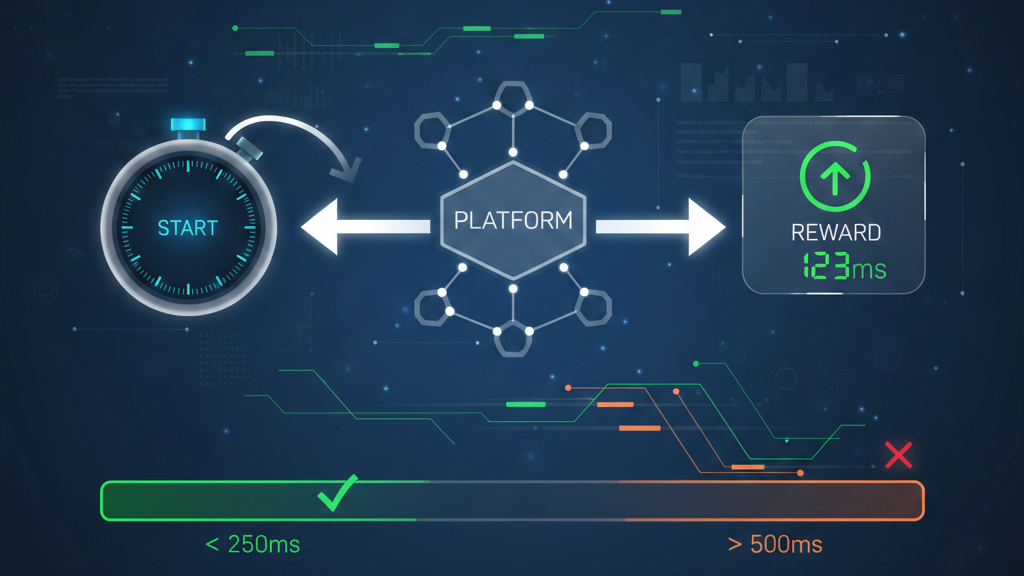
Want to know if your current platform meets the 250ms benchmark? Here's a simple test:
Trigger an action that should result in a reward. Time the gap between the action completing and the reward appearing on screen. Do this multiple times during different traffic periods.
If you're consistently under 250ms, you're in good shape. If you're above 500ms, your engagement metrics are probably suffering more than you realize.
About Smartico.ai
Smartico.ai stands as the first and leading unified Gamification/CRM Automation software in the industry. Founded in 2018 and headquartered in Bulgaria, the platform combines real-time loyalty and gamification features with CRM automation in a single integrated system.
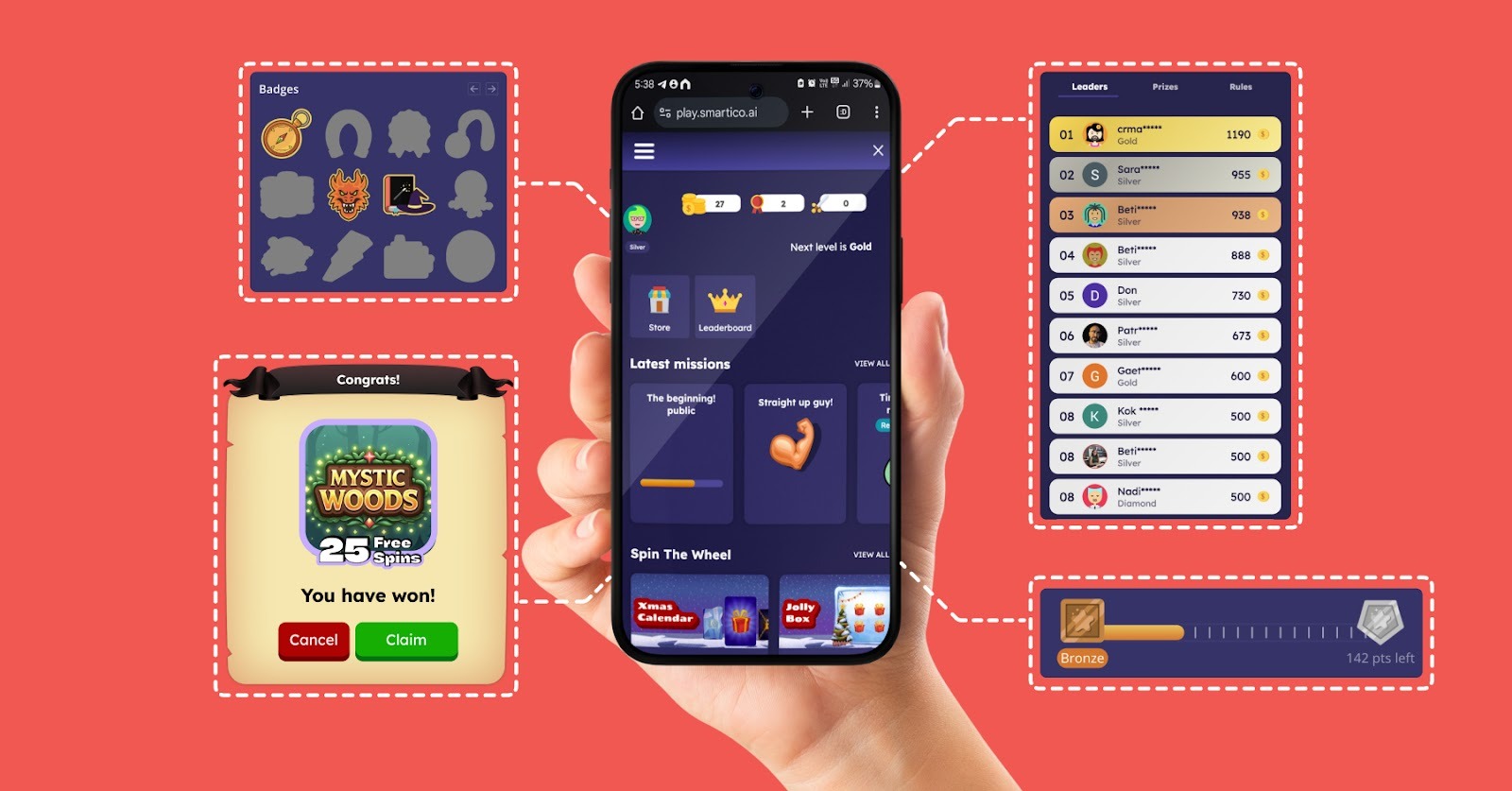
It’s core capabilities include real-time behavioral tracking using event streaming technologies, dynamic customer profiling, and automated reward delivery designed to hit performance benchmarks that matter for player psychology. Features span mini-games like loyalty wheels and scratch cards, mission systems, level-based rewards, and real-time leaderboards.
Smartico serves iGaming, sports betting, forex, and lottery operators globally, with representation across Europe, the US, and beyond. In 2025, the company announced a joint venture with SCCG Management to launch Smartico USA, bringing its CRM and gamification capabilities to the American iGaming market.
Ready to see how sub-250ms reward delivery can improve your player retention?
Request a demo below to experience the difference real-time performance makes.
{{cta-banner}}
Conclusion
The 250ms rule is not arbitrary. It is grounded in how human brains process rewards and form behavioral associations. Platforms that deliver instant gamification feedback create stronger engagement loops, better retention, and higher player lifetime value. The technical capability to hit these benchmarks separates leading CRM and gamification platforms from the rest. Speed isn't just a nice-to-have feature. It's fundamental to how your players experience your product.
FAQ
Q: Why specifically 250 milliseconds and not 500ms or 1 second?
The 250ms threshold aligns with average human reaction time and the speed at which our brains process cause-and-effect relationships. Below this threshold, rewards feel like they were caused by the user's action. Above it, the psychological connection weakens. Research on dopamine response patterns confirms that shorter latencies produce stronger reinforcement effects.
Q: How do delayed rewards affect player trust over time?
When rewards consistently arrive late, players develop uncertainty about whether the system is working properly. This erodes trust and reduces the motivational power of the reward system. Players may start to question whether their actions are being tracked correctly, leading to decreased engagement even when rewards do eventually arrive.
Q: Can slower reward systems compensate by offering larger rewards?
Timing and magnitude work together, but they're not fully interchangeable. Studies show that earlier rewards can have stronger effects on motivation than larger delayed rewards. A smaller instant reward often outperforms a larger delayed one in terms of behavioral reinforcement, though the ideal approach combines both appropriate timing and meaningful value.
Q: What technical architecture supports sub-250ms reward delivery?
Achieving consistent sub-250ms performance typically requires event streaming technologies (like Kafka or RabbitMQ), in-memory data processing, optimized database queries, and edge computing or CDN distribution. The system needs to minimize latency at every step from event detection through rule evaluation to reward display.
Q: How does network latency factor into these benchmarks?
Network latency adds to the total time players experience. A system processing rewards in 100ms internally might still deliver them in 400ms+ if network conditions are poor. This is why leading platforms use geographically distributed infrastructure and optimize for mobile network conditions where latency tends to be higher.
Did you find this article helpful? If so, consider sharing it with other industry professionals such as yourself.