
Contents
8 min read

Customer Behavior Modeling (CBM): Get To Know Your Buyers

Loyalty
Revenue
Retention
Marketing
Software
Written by
Smartico
Published on
January 10, 2025

Customer behavior models (CBM) are crucial for understanding why, when, and how people spend their hard-earned money on a product or service. Your customer acquisition efforts can benefit greatly by applying these models by letting you predict who will make a purchase and target the best customers at the right time with pinpoint precision.

In this article, we will explore the most valuable CBMs and explain how you can master their use to craft highly-effective customer-oriented experiences.

We live in an increasingly competitive world, and businesses have become much more analytical and thoughtful in their decision-making process. And that is where CBMs come in.

A customer behavior model is a technical method for explaining how and why people make buying decisions. The primary function of CBMs is to outline a predictable path of customer decisions through conversion while helping you seamlessly navigate through every stage of their journey.

CBMs may sound complicated, but they are far from it. They are simply a way to create a story centered around the customer's behavior that guides you toward polishing and improving the customer experience.

A customer behavior model refers to a person's buying habits based on their demographics, education, personal beliefs, needs, desires, long or short-term goals, and more.

Businesses must understand that every person's attitude and thought process toward purchasing any product or service is unique. Should the business fail to address the unique nature of its target customer group, chances are that the success of the product or service they offer will start dropping significantly.

In the world of today, customer data is the new gold.

Customer data is liquid gold that can be shaped for different purposes. In the world of business, it can be extracted from email, social media, live chat, and mobile devices. And since CBMs are created mathematically, they have sharp accuracy, which makes them extremely valuable to any type of industry.

CBM is crucially important for marketers, startup creators in search of the perfect target audience, or even companies that want to simply put an experimental product out into the world.  

The Benefits of Customer Behavioral Modeling

Let us take a look at some of the biggest benefits of CBM:

Segmenting Customers:

CBM can do what all marketers do before starting a new campaign: it segments people into smaller groups with different traits of a similar nature. This makes the creation of targeted campaigns much easier while increasing the potential for high conversion rates.

Customer Life-Cycle Tracking

Customer life-cycle is a term used to describe the various stages of reach the customer goes through (acquisition, conversion, retention) and the customer's level of loyalty to a certain business. At every stage of the process, customers reveal various decision-making traits, choices, and spending habits. CBM modeling helps monitor their journey for each segment of users.

Consumption Pattern Prediction:

Marketers know that the retention of existing customers brings in more profits than the acquisition of new ones. Hence retention and churn are crucial for business success. Loyalty programs and marketing actions are the marketer's top tools for ensuring maximal retention and churn prevention.

Marketing Activity Scaling:

Nowadays, automation is a vital ingredient for business success. It helps marketers design and executes intelligent campaigns that normally require lengthy manual labor.

For marketing automation to work properly, however, there needs to be a precise segmentation of users. CBM takes it to the next level by ensuring that such data is readily available, which opens up opportunities to drive campaigns at scale.

To understand customer behavior, you need to know who your customers are and what they're after. Sadly, you can't have one on one meetings with every buyer to acquire this information. Instead, you will need to study and segment your average customers via direct feedback and thorough market research. After that, you'd have to create an accurate buyer model based on the information you have gathered – this is called a buyer persona.

The buyer goes through the sales funnel at a steady pace and checks every qualified lead box. When you understand the wants and needs of your buyer persona, you will also be able to get an accurate diagnosis of the pain points for a massive part of your customer base. These precious insights will help you create effective, targeted content and high-end marketing materials. One of the key ways to understand your buyer persona and your customers at large is to examine why they might engage in predictable buyer behaviors.

Types Of Customer Behavior

To understand customer behavior, first, you need to understand the connection between psychology and business, as people are influenced by different psychological factors, including quality of sleep and the last thing they read on the internet that made an impression on them.

Some types of customer behavior should be paid special attention to. According to Henry Assael, customer behavior can be divided into four key types:

  • Complex buying behavior
  • Dissonance-reducing buying behavior
  • Habitual buying behavior
  • Variety seeking behavior

Customer behavior is dependent on two main variables: the level of their involvement with the purchase and the number of differences between businesses or products/services. Familiarizing yourself with these variables will give you a better grasp of how leads interact with your product or service as they travel through each stage of the customer journey.

As a broader concept, customer behavior modeling helps boost the value of the customer-business relationship. It gives us precious and easy-to-understand knowledge about people's preferences, which can lead to exciting outcomes.

How CBMs Drive Results

Here's a deeper look at how CBMs can help your business grow exponentially:

Elevate Customer Lifetime Value

This is a crucial aspect of the success of any business. The customer lifetime value is the total financial investment of the customer during their lifetime relationship with a business.

Extending the customer lifetime value as much as possible should be your ultimate goal, considering how difficult it is to keep existing customers and keeping acquisition costs to a minimum level. With customer behavior modeling, companies can simply look at customer segments that are ready for repeat purchases, cross-selling, and up-selling and make their decisions from there.

Minimize Customer Churn

No matter the industry, customers share the same set of common traits that strongly reveal the likelihood of churning.

A bank, for example, can spot customers who have a high likelihood of churning by keeping track of the following factors:

  • Clients are not accepting the financial plans offered by their financial advisers
  • A drop in the number of investments handled by the customer's business
  • A non-existing or negative customer feedback response

CBM helps dive deeper into the details of these traits while also providing marketers with a broad overview of precious data collected from email, social media, CRM, and other sources, making it highly reliable. With such valuable data at your disposal, you can act promptly to prevent customer churn, which will positively affect revenue.

Personalization

A good half of customers worldwide say they are willing to become repeat buyers after receiving a personalized shopping experience with a business. However, people who do not receive a personalized experience are highly unlikely to become repeat buyers. People are much more likely to churn if they are simply treated as part of the crowd, and that is why it's important to make them feel special (in some cases, even like VIPs).

Nowadays, every company worth it's salt has developed a strong personalization approach. But this cannot be accomplished without data.

With CBM, you can develop highly-targeted campaigns with each segment of customers in mind so that you can get higher conversions and ROI for every penny spent.

AI-Driven Approaches to Customer Behavior Modeling

Customer behavior modeling gets a big boost from artificial intelligence these days. AI systems sort through huge amounts of information fast. They spot patterns that humans might miss in how people interact with products or services.

Companies apply predictive AI models to forecast what actions customers will take next based on past habits. One effective solution comes from platforms that offer AI Models to turn raw data into clear predictions about preferences.

Short sentences help here. Longer ones add details like how these tools identify favorite items or times when engagement peaks. Machine learning adapts over time as new data comes in. This creates more accurate pictures of individual journeys.

  • Data cleaning happens first to remove errors.
  • Feature selection picks the most useful variables.
  • Model training uses historical records.
  • Validation checks accuracy on new sets.

Such methods improve how businesses understand shifts in customer actions. They support decisions that match real needs without guesswork.

Connecting Behavior Insights to Automated Engagement Systems

Once patterns emerge from customer behavior modeling, the next step involves putting them into action through automated systems. Behavior-based triggers respond instantly to specific activities.

Platforms featuring CRM Automation handle these responses smoothly across different communication channels. It builds dynamic journeys that adjust according to individual responses and preferences.

Integration with other tools makes the process seamless. For example, gamification solutions reward certain behaviors identified through the modeling. This keeps things fresh and relevant for each user.

Key elements often include:

  • Real-time data processing for immediate actions
  • Multi-channel messaging options
  • Personalized reward allocation
  • Performance tracking over time

These connections help maintain momentum in customer relationships. They turn insights directly into experiences that feel tailored.

Top 10 Software With Powerful Customer Behavior Modeling

1. Smartico 

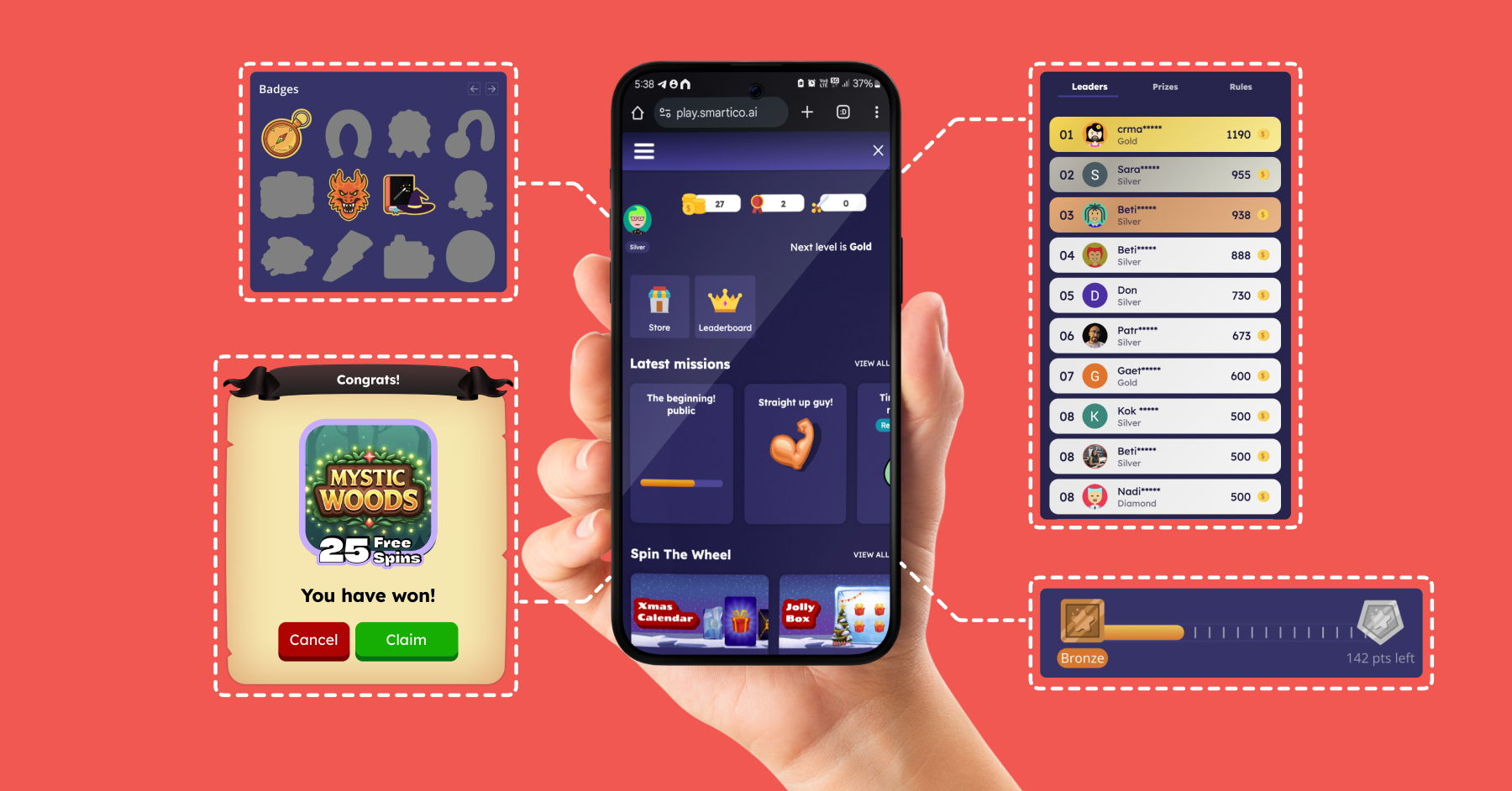
Smartico’s gamification platform gives iGaming operators everything they need to create vibrant, community-driven tournaments that players talk about long after the final scores appear. Built as a unified CRM and gamification solution, Smartico lets teams design time-limited events based on wagering, wins, or custom scoring systems across slots, table games, or sports betting. 

Key Features:

Our platform offers a range of powerful features:

CRM Automation: We streamline every step of the player journey, from onboarding to loyalty, with hyper-personalized messaging and automated workflows.

Gamification: Our customizable gamification tools bring fun, rewards, and loyalty seamlessly integrated within your CRM.

Free-to-Play Games: We offer a suite of customizable mini-games like the Loyalty Wheel, Scratch cards, and Daily Loot Boxes to boost player engagement.

Bonus Engine: Our system helps lower bonus costs with rewards tailored to player behavior, manageable in real-time or scheduled for optimal impact.

Jackpots: We provide customizable jackpots, both player-funded and operator-funded, to enhance any game from any provider.

AI Models: Our AI turns player data into actionable predictions, helping optimize engagement, prevent churn, and deliver rewards at the perfect moment.

Raffle: Transforms simple promos into fun, gamified experiences that boost engagement, spark excitement, and keep users coming back.

Tournaments: Transforms standard competitions into exciting real-time battles where players compete for major prizes while climbing dynamic leaderboards.

Avatars: Lets players create, earn, and customize unique AI-powered identities that increase emotional connection and player loyalty.

Banners: Delivers dynamic and hyper-personalized promotions to every player based on their status, location, and behavior in real time.

Integration and Support:

One of our key strengths is our effortless integration process. Our engineers manage the entire integration, reducing the load on your R&D resources. We support all major SMS, email, and instant messaging providers, and we integrate with all iGaming platforms.

Expertise and Partnership:

We're not just a software provider; we're a partner invested in your growth. Our team works alongside you to build CRM expertise within your team, guiding strategy and offering practical insights throughout our partnership.

Pricing and Availability:

Our pricing is based on monthly active users and includes both CRM automation and gamification, along with a dedicated Success Manager. While we don't offer a trial version, we're happy to provide a detailed demo to show you exactly how Smartico works.

At Smartico, we're committed to helping iGaming businesses improve retention and engagement. We'd love to show you how our platform can benefit your operations. Feel free to book a demo or reach out with any questions you might have.

 {{cta-banner}}

2. Google Analytics 360

Google Analytics 360 is an enterprise analytics platform that tracks user behavior across websites and apps. It offers advanced segmentation, funnel analysis, and predictive analytics to model customer journeys and forecast future actions. The platform integrates with Google’s marketing tools for a holistic view of user behavior and supports data-driven decision-making for large organizations.

Strengths:

  • Advanced Segmentation: Groups users by behavior and demographics for targeted analysis.
  • Predictive Analytics: Forecasts user actions and identifies high-value segments. Integration: Connects with Google’s marketing and advertising ecosystem.

3. Houseware

Houseware is an AI-powered product analytics platform that integrates directly with data warehouses. It enables teams to analyze user behavior, track product performance, and model customer journeys using warehouse-native analytics. Houseware’s AI copilot provides contextual insights and automates complex analyses, helping businesses predict churn, optimize feature adoption, and collaborate across departments.

Strengths:

  • Warehouse-Native Analytics: Connects directly to data warehouses for comprehensive behavioral modeling.
  • AI Copilot: Automates insights and recommendations for behavioral analysis.
  • Cross-Team Collaboration: Facilitates sharing of behavioral insights across departments.

4. CleverTap

CleverTap is a customer engagement and analytics platform that leverages predictive analytics to model user behavior. It ingests data from multiple sources, segments users based on behavior and demographics, and predicts actions such as churn or conversion. CleverTap’s AI-powered segmentation and predictive modeling tools enable businesses to automate personalized campaigns and optimize customer journeys in real time.

Strengths:

  • Predictive Analytics: Forecasts user actions and identifies high-value segments.
  • Real-Time Segmentation: Groups users by behavior for targeted engagement.
  • Automated Campaigns: Personalizes messaging based on behavioral predictions.

5. Pendo

Pendo provides product analytics and user behavior tracking for web and mobile applications. Its analytics module includes custom reporting, user journey analysis, funnel and retention tracking, and friction detection. Pendo’s platform enables businesses to segment users, analyze feature adoption, and identify at-risk users. While Pendo’s core analytics focus on retrospective metrics, its Insights add-on (a separate AI-driven offering) provides predictive modeling capabilities.

Strengths:

  • User Journey Analysis: Tracks how users navigate products and identifies drop-off points.
  • Friction Detection: Identifies points of frustration in the user experience.
  • Predictive Modeling (via Insights): Forecasts user behavior and churn risk (available in the Insights add-on).

6. FullStory

FullStory is a behavioral data platform that captures and analyzes user interactions across digital properties. It offers session replay, heatmaps, and journey mapping to identify friction points and optimize user experiences. FullStory’s AI-driven analytics help businesses model customer behavior, predict churn, and automate personalized content delivery. The platform enables real-time analysis and empowers teams to make data-driven decisions to improve retention and engagement.

Strengths:

  • Session Replay and Heatmaps: Visualizes user interactions for behavioral analysis.
  • AI-Driven Analytics: Predicts user actions and automates personalization.
  • Real-Time Insights: Supports immediate optimization of digital experiences.

7. Contentsquare

Contentsquare is a digital experience analytics platform that uses AI to analyze customer behavior across websites and mobile apps. It provides session replays, heatmaps, and journey mapping to identify friction points and optimize user experiences. Contentsquare’s AI-powered Sense suite automates complex analyses, surfaces actionable insights, and recommends next-best actions. The platform helps businesses model customer journeys, predict drop-off points, and personalize experiences at scale.

Strengths:

  • AI-Powered Insights: Automates behavioral analysis and surfaces recommendations.
  • Journey Mapping: Visualizes user paths and identifies optimization opportunities.
  • Real-Time Analytics: Delivers actionable insights for immediate decision-making.

8. Mixpanel

Mixpanel is a product analytics platform that tracks and analyzes user interactions across digital products. It supports predictive analytics by modeling user behavior based on event data and demographic information. Mixpanel allows businesses to create custom reports, segment users, and forecast future actions, such as feature adoption or churn. Its predictive modeling tools help teams identify high-value user segments, optimize user journeys, and improve retention.

Strengths:

  • Event-Based Analytics: Tracks detailed user actions for granular behavioral modeling.
  • Predictive Analytics: Forecasts user behavior and identifies trends.
  • Custom Segmentation: Groups users by behavior, demographics, or attributes for targeted analysis.

9. Convin

Convin specializes in AI-powered customer behavior modeling for call centers and customer support teams. It analyzes social media conversations, call transcripts, and other interaction data to predict customer needs, sentiment, and likelihood of churn. Convin’s platform uses predictive analytics to identify at-risk customers, personalize interactions, and improve service efficiency. By modeling past interactions and combining sentiment analysis with engagement metrics, Convin enables businesses to tailor responses and optimize customer journeys in real time.

Strengths:

  • AI-Driven Predictive Modeling: Forecasts customer needs and churn risk.
  • Sentiment and Engagement Analysis: Integrates social media and call data for comprehensive behavioral insights.
  • Real-Time Optimization: Provides actionable recommendations for call center agents.

10. Amplitude

Amplitude is a leading product analytics platform known for its advanced behavioral analytics and predictive modeling features. It enables businesses to analyze user actions in real time, segment users into dynamic cohorts, and visualize customer journeys with its Behavioral Graph—a proprietary database for digital behavior. Amplitude uses machine learning to identify patterns, predict future user actions, and surface actionable insights for retention, engagement, and conversion optimization. Its predictive analytics tools help businesses anticipate churn, identify high-value user segments, and optimize product experiences proactively. Amplitude’s platform also supports A/B testing and integrates with marketing tools for a holistic view of user behavior.

Strengths:

  • Behavioral Graph: Visualizes complex user flows and behavioral relationships.
  • Predictive Analytics: Forecasts user actions based on historical data.
  • Dynamic Cohort Analysis: Real-time grouping of users by behavior, demographics, or attributes.
  • AI/ML-Powered Insights: Automatically detects anomalies and trends in user behavior.

The 10 Most Popular CBM Models

Here are the 10 most widely-used CBMs:

1. Pavlovian Model

The Pavlovian Model refers to a learning method that mixes a conditioned response with a stimulus. A good example -- the word 'sale' can act as a strong motivator for people to go shopping.

2. Economic Model

In the Economic Model, the main theme is the natural desire of people to spend little but gain a lot. It considers that, for example, when there is a price drop, people tend to buy more of the product in question.

3. Input, Process, Output Model

Here, the customer input is the business's marketing effort (e.g., price, product, and so on), and the customer's social environment (culture, family, etc.) influences the buying decisions the customer will ultimately make.

4. Psychological Model

According to Abraham Harold Maslow's psychological customer behavior model, a customer is driven by their strongest need at a given time. The model also says that needs are prioritized, and people tend to first satisfy their basic needs before satisfying their secondary needs.

5. Howarth Sheth Model

In this model, customer behavior depends on Stimuli inputs. Furthermore, the Howarth Sehth Model defines outputs, which are reactions to a certain stimulus and end with the buying decision. There are, however, variables that affect the learning process between inputs and outputs.

6. Sociological Model

The Sociological Model considers society's impact on the customer's decision-making process. For example, if a customer belongs to a special category that only wears a specific type of clothing, like-minded customers will conform to these choices and buy similar clothes.

In The Family Decision-Making Model, marketers analyze the customer's family in buying decisions. This refers to the collective decisions made by the family, even if one person is buying the product.

8. Engel-Blackwell-Kollat Model

Here, the model combines four customer behavior components, which are:

  • Information processing – exposure, attention, etc.
  • Central control unit – personality and attitude of the consumer
  • Decision process – problem recognition, information retention, etc.
  • Environmental influences – income, social class, etc.

9. Industrial Buying Model

This customer behavior model takes influences from task-oriented objectives or organizational factors. These can include the lowest price and best product based on overall quality, as well as non-task objectives like personal treatment, promotions, job security, and more.

10. Nicosia Model

Here we have a model with a tight focus on the relationship between a business and its potential customer. In the Nicosia Model, a company's ads influence the customer's predisposition towards a product or service. In turn, this can lead to them wanting to find out more about the goods on offer.

As already mentioned, with a customer behavior model, you can gain a deeper understanding of how and why people make their buying decisions. It's a highly-effective tool that helps businesses analyze exactly how a buyer persona interacts with your business. The reason for creating a CBM model is to uncover the motivations of your personas, as well as their priorities, while they travel through each step of the buyer's journey.

4 Key Steps for Creating a Powerful CBM

1. Segment Your Customers

Customer base segmentation is the first building block towards creating an effective CBM and buyer personas. There are approaches you can take to segment your customers while using characteristics, including demographics and engagement habits.

Analyzing gender, age, demographics, social media behavior, and internet activity will help you to create various powerful behavior models for each buyer type.

No matter your methods of choice, the end goal of customer segmentation is to create useful buyer personas to get a better grasp of how to market them and boost their customer lifetime value.

2. Identify Trends

Now that you have segmented your customers, it's time to look at the trends that have emerged from each buyer persona. What are the external factors that may have influenced a buying decision? What is the context for a customer's needs?

3. Compare Data

With the collected customer data on trends and buyer segments in hand, you should start collecting quantitative data for comparison. An in-depth analysis will include primary, secondary, and tertiary data, which include social insights, subscription rates, email data from your business, customer reviews from competitors, and statistics from the industry as a whole.

Compare all this data with the data collected from your segmented customer base and the identified trends and cross-reference each data set. What are the customer journey stages of progress for each buyer persona? Which persona spends money on which product? When was the purchase made, and from what outlet? Which purchasing method has been used?

While comparing your data sets with the customer's journey map, do another trend analysis. Note what obstacles and unique behaviors are occurring and see how your high-value customers stand out from the rest in terms of purchasing behaviors.

4. Apply And Analyze

Use these precious insights to power up your next marketing campaign with fully optimized content and delivery methods. Understand the effectiveness of your efforts by examining your conversion rates and the customer lifetime value. New trends come up regularly, so it is of vital importance to constantly analyze and adapt to any customer behavior changes.

When it comes to customer behavior segmentation, Smartico.ai is a trusted and globally recognized leader in the iGaming/Casino/Sports Betting industry and beyond.

FAQ

What Is the Main Goal of Customer Behavior Modeling?

Customer behavior modeling seeks to create detailed profiles of how individuals make choices in different situations. It examines the full range of influences from emotional triggers to practical needs that shape decisions. Advanced systems use these profiles to anticipate future actions more reliably across various touchpoints.

AI Models solutions contribute by processing layered information to reveal hidden connections in behavior patterns. This process supports the development of experiences that align closely with what different groups value most. Understanding these core drivers leads to more effective alignment between offerings and actual customer expectations over the long term.

How Does Customer Behavior Modeling Support Retention Efforts?

Behavior modeling reveals ongoing changes in how customers engage with services or products. It allows for timely adjustments that address evolving preferences before they lead to reduced activity. Dynamic updates based on these insights help sustain interest through relevant interactions.

CRM Automation plays a role here by enabling consistent follow-through on identified patterns. This creates continuity in relationships by responding appropriately to each stage of the customer lifecycle. The result is stronger bonds formed through experiences that evolve naturally with the customer.

What Types of Data Contribute to Strong Customer Behavior Models?

Strong models draw from a mix of direct interactions and background context that surrounds each engagement. Session-specific details combined with broader lifestyle indicators add depth to the overall picture. Behavioral signals from multiple channels help fill in gaps that single sources might leave behind.

Integration of varied inputs through tools like gamification solutions brings additional layers of observable responses. These elements work together to form a more complete view that accounts for both obvious and subtle influences. The combination results in models that adapt better to real-world complexity.

Why Does Personalization Matter in Behavior Strategies?

Personalization makes each interaction feel distinct and relevant to the individual rather than generic. It accounts for unique preferences that emerge from behavior modeling to create meaningful connections. This approach builds trust by showing that the business truly recognizes different customer needs.

When applied through sophisticated systems, personalization enhances satisfaction at every stage. It transforms standard processes into tailored pathways that reflect specific interests and histories. Customers respond more positively to efforts that demonstrate this level of attention to their particular situations.

How Can Online Platforms Benefit from Advanced Behavior Modeling?

Online platforms gain clearer views of navigation paths and interest levels through advanced modeling techniques. This knowledge helps refine layouts and timing to match natural user flows more closely. It supports smoother experiences that reduce friction points identified in the data.

Features powered by AI Models contribute by highlighting opportunities for better engagement in digital spaces. The insights allow platforms to evolve in ways that keep pace with shifting online behaviors. Overall this leads to environments that feel more intuitive and responsive to user expectations.

{{cta-banner}}

Ready to use Smartico?

Join hundreds of businesses worldwide engaging players with Smartico.