

Gamification CRM: How Game Mechanics Create Lasting Customer Relationships

The CRM market is exploding, and businesses need every edge they can get. Traditional customer relationship management systems work, but they face a serious problem: low user adoption rates and poor employee engagement. Here's where gamification changes everything.
Modern CRM adoption is accelerating through CRM automation and gamified engagement features embedded in the best iGaming CRM platforms. This shift is also driving demand for the best loyalty CRM software, with regional implementations such as the best online casino CRM in Paraguay reflecting growing market specialization.
Gamification CRM combines the power of customer relationship management with game mechanics like points, badges, leaderboards, and challenges. And the results speak for themselves. Companies using gamified CRM systems see massive improvements across the board.
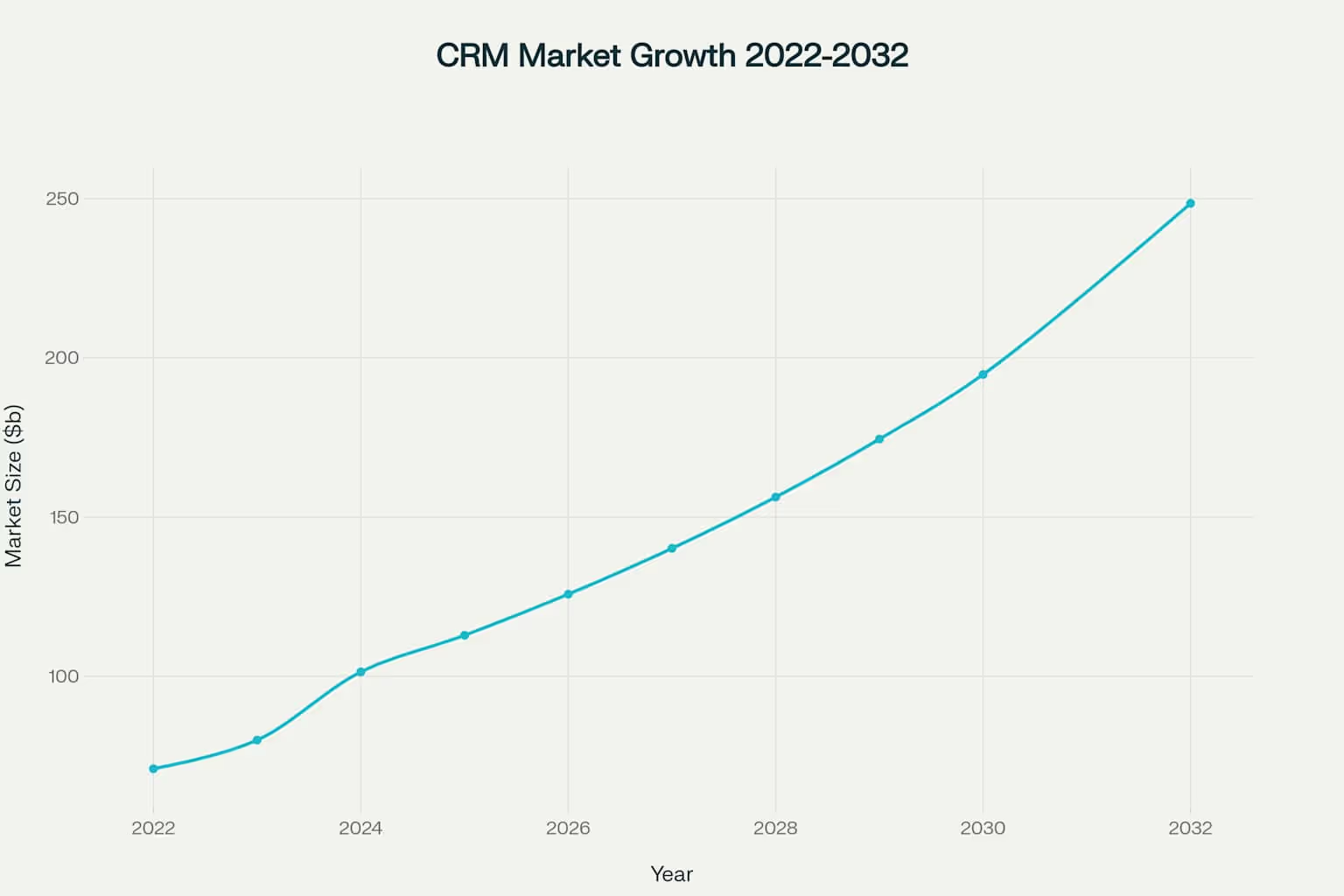
Global CRM Market Growth from 2022 to 2032, showing exponential expansion driven by digital transformation and AI integration
What Makes Gamification CRM Different
Standard CRM systems store customer data and track interactions. That's it. Gamification CRM does much more. It motivates your team to actually use the system by making work feel like play.
Think about it this way. Your sales team logs into a boring CRM dashboard versus a system that shows their progress, ranks them against teammates, and rewards achievements. Which one gets used more?
The psychology is simple. People love competition, recognition, and progress tracking. Gamification CRM taps into these basic human drives to boost performance.
This shift toward engagement-driven systems is most visible in the modern best player CRM solutions and advanced USA iGaming CRM software, where behavioral design and motivation loops are core features. Combined with evolving CRM automation, these platforms redefine how operators manage retention, as outlined in the broader CRM iGaming guide.
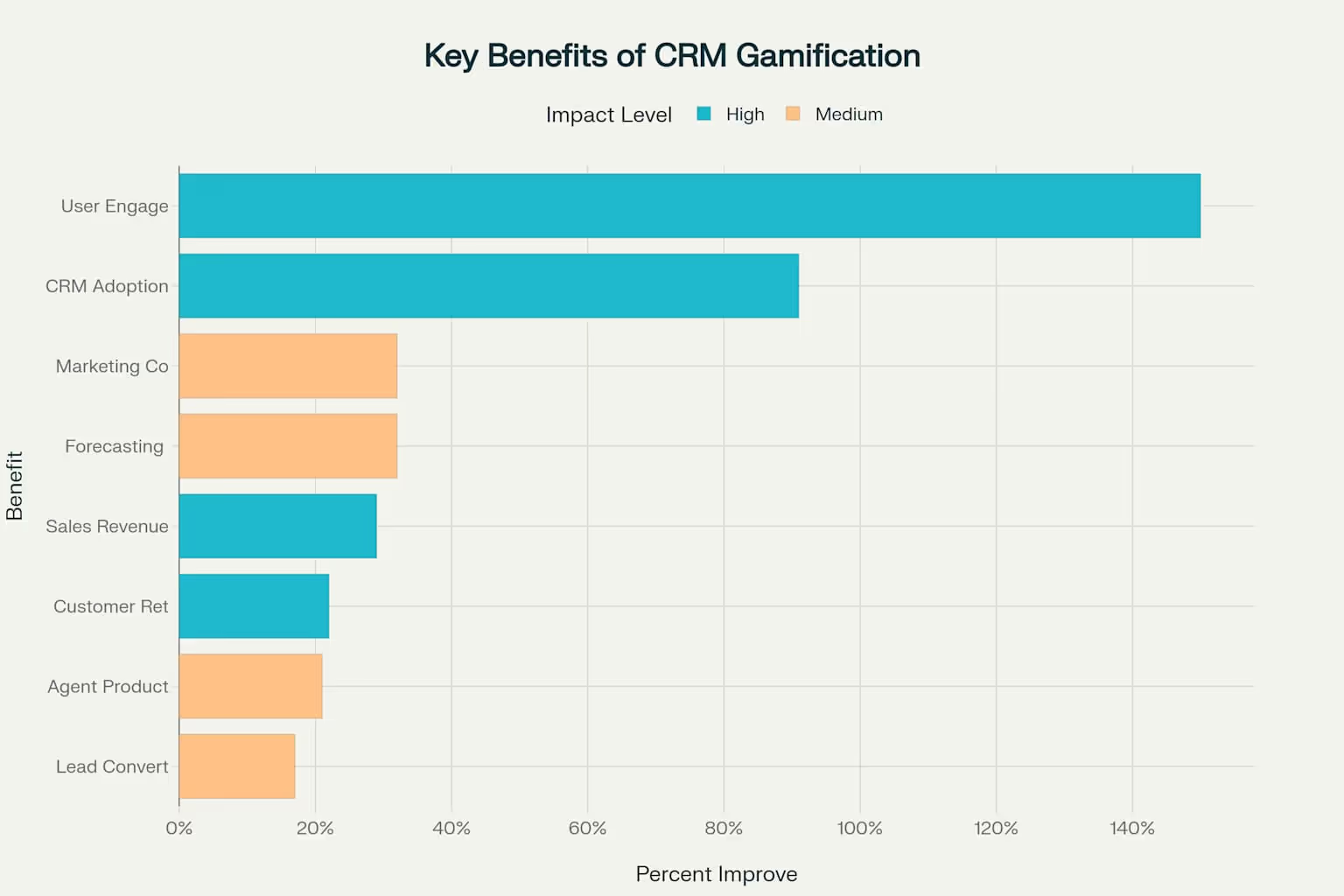
Key benefits and performance improvements achieved through implementing gamification in CRM systems
The Numbers Don't Lie
Research shows gamification delivers serious results. User engagement increases exponentially when game elements are added to CRM systems.
That's not a small bump, but a complete transformation.
CRM adoption rates jump up like crazy with gamification compared to much lower rates with traditional systems while sales revenue improves by 29% on average.
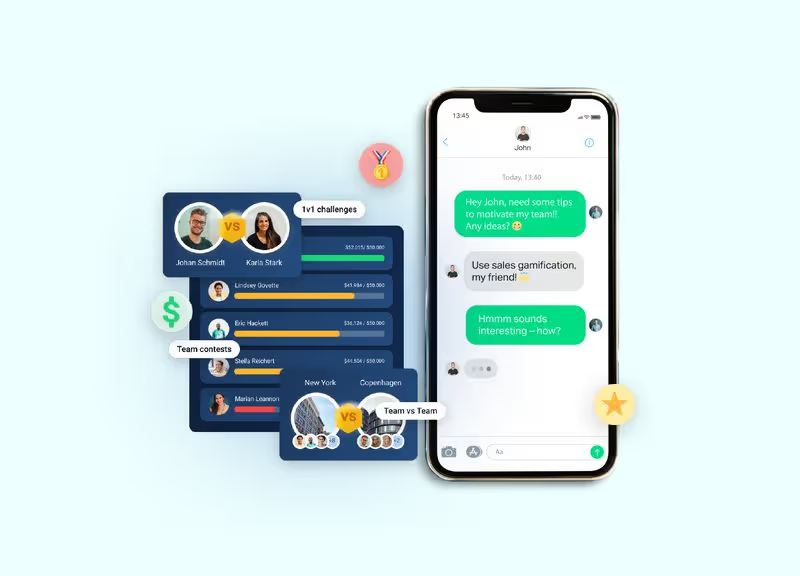
Sales gamification example showing team contests, individual challenges, and chat about using gamification to motivate sales teams.
Why Traditional CRM Systems Fail
Here's the truth about CRM implementations. A large number of them fail to meet their objectives. The main reason? People don't use them.
CRM software requires constant data entry and sales reps hate updating records. Managers struggle to get accurate forecasts. Customer service teams work around the system instead of with it.
The problem isn't technology, but human nature. People need motivation to change their behavior. Fear of getting fired only works so long. Positive reinforcement works much better.
Gamification in CRM is increasingly used to solve low adoption by reinforcing positive behavior and improving day-to-day usage across teams. This shift is reflected in modern iGaming software providers, underscoring the importance of CRM in online casino management and mirroring data-driven practices seen in the top 30 CRM for fintech.
{{cta-banner}}
How Gamification Solves CRM Problems
Gamification makes CRM usage fun and rewarding. Instead of forcing employees to enter data, you motivate them with points, badges, and competitions.
Sales reps earn points for updating customer records, compete on leaderboards for most calls made or deals closed, and top performers get badges and recognition.
The system tracks everything automatically. Managers get real-time insights into team performance while forecasting becomes more accurate because data quality improves.
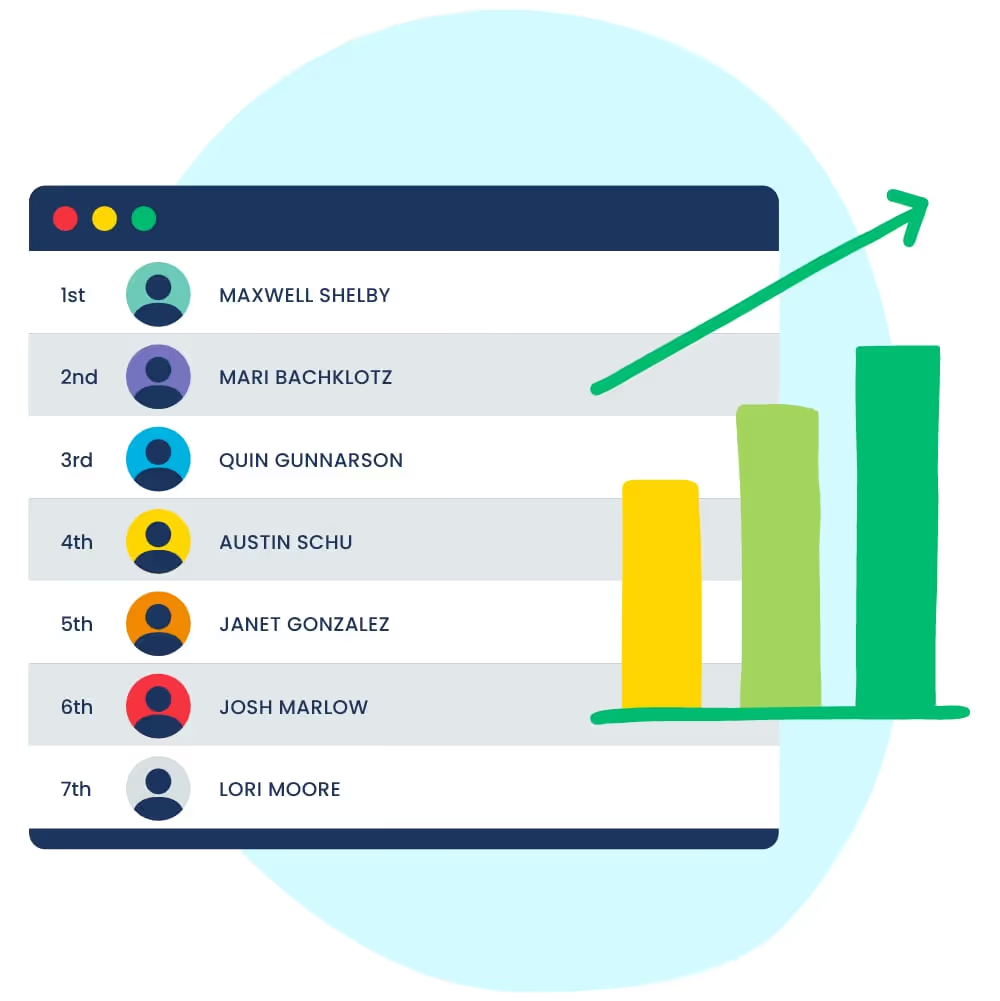
A gamification leaderboard showing user rankings and progress bars.
Core Game Mechanics That Work
Several game elements prove most effective in CRM systems:
Points and Scoring: Every action earns points. Making calls, updating records, closing deals - all generate scores that accumulate over time.
Leaderboards: Public rankings create healthy competition between team members. Nothing motivates like seeing your name at the top of the list.
Badges and Achievements: Special recognition for hitting milestones. "Cold Call Champion" or "Data Quality Expert" badges give bragging rights.
Progress Bars: Visual indicators showing how close someone is to their next goal. The psychology of completion drives people to finish tasks.
Team Challenges: Group competitions that encourage collaboration while maintaining individual motivation.
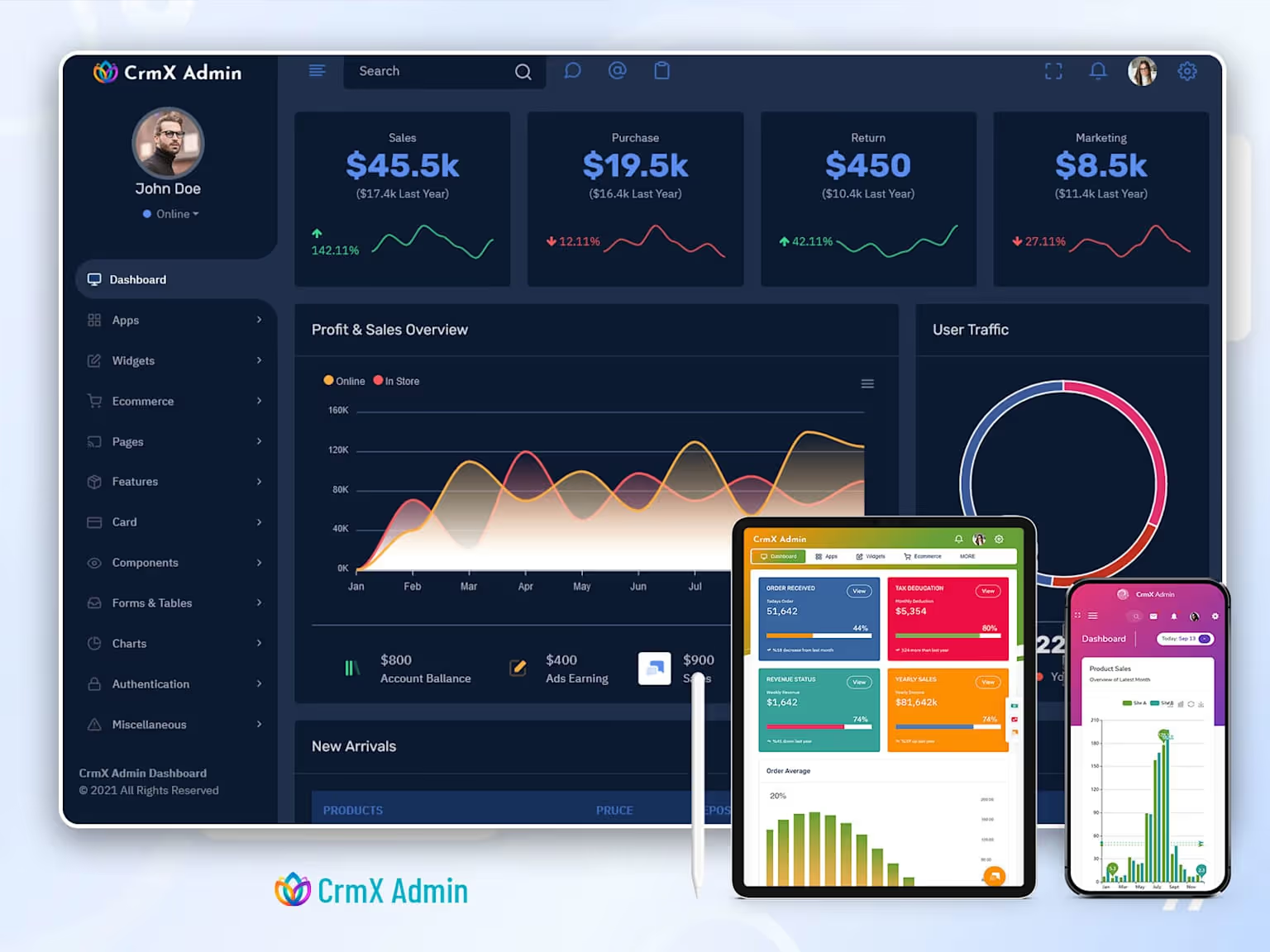
CrmX Admin dashboard showing sales, purchase, marketing metrics, and progress bars on desktop, tablet, and mobile devices.
Implementation Best Practices
Rolling out gamification CRM requires careful planning. Start small with pilot programs before company-wide deployment.
- Define clear objectives first. What behaviors do you want to encourage? More data entry? Better customer follow-up? Increased sales activity? Match game mechanics to desired outcomes.
- Train your team properly. Explain how the system works and why it benefits them personally. People resist change unless they see clear advantages.
- Set up meaningful rewards. Virtual badges work, but combining them with real prizes increases motivation. Gift cards, extra vacation days, or preferred parking spots make games more engaging.
- Monitor results constantly. Track adoption rates, data quality improvements, and business outcomes. Adjust the gamification elements based on what works.
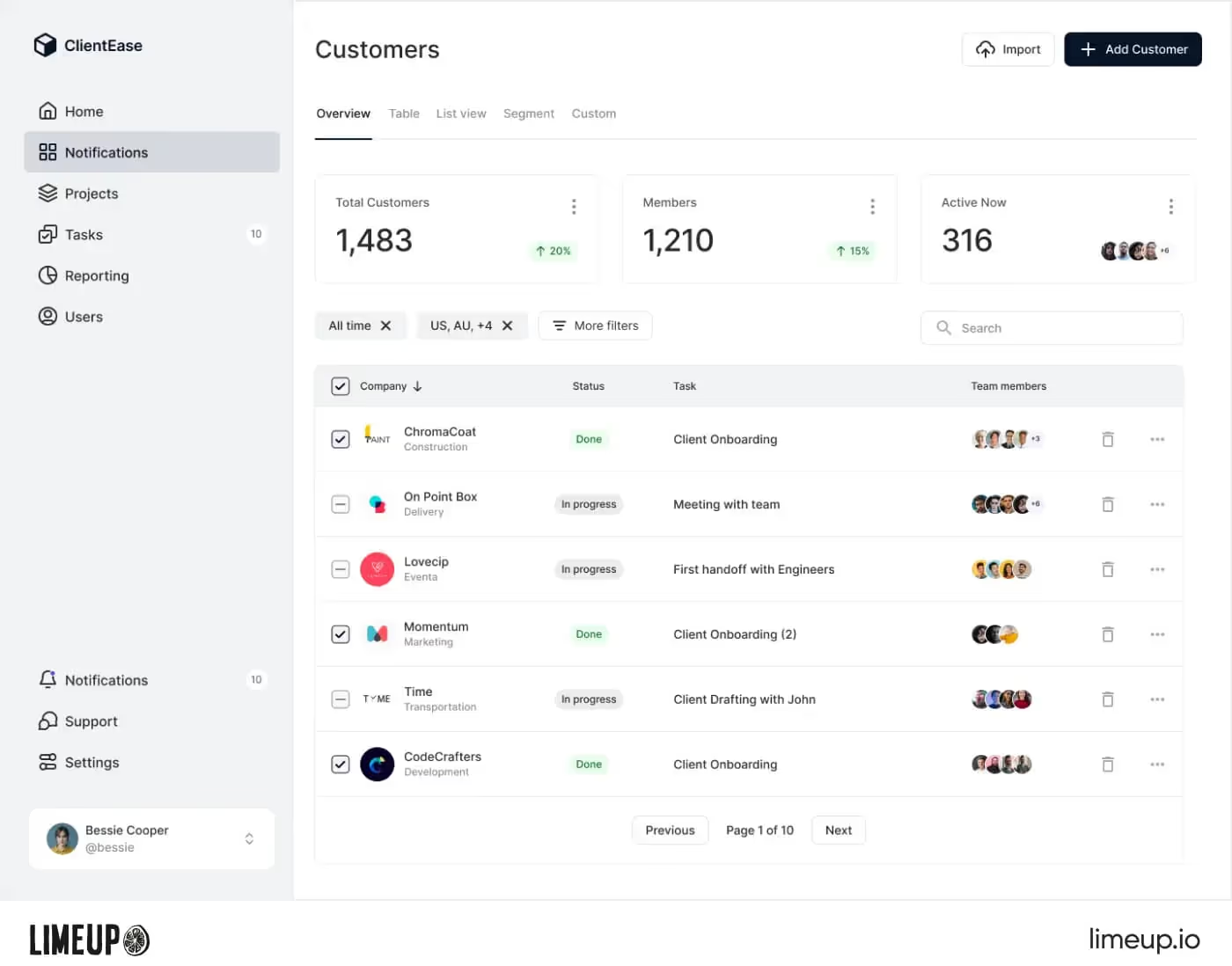
ClientEase CRM dashboard showing customer metrics, task statuses, and team collaboration features in a clean, modern interface.
Measuring Success
Gamification CRM success requires tracking specific metrics. Look beyond engagement numbers to measure real business impact.
- For Sales Teams: Track call volume, data entry completion, deal closure rates, and revenue per rep. Compare gamified team performance against control groups.
- For Customer Service: Monitor ticket resolution times, customer satisfaction scores, and first-call resolution rates.
- For Marketing: Measure lead quality, campaign engagement, and conversion rates.
- Overall System Health: Watch CRM adoption rates, data accuracy improvements, and user satisfaction scores.
The key is connecting gamification metrics to business outcomes. Higher engagement means nothing if it doesn't improve results.
{{cta-banner}}
Real-World Success Stories
Companies across industries report impressive gamification CRM results. A Saudi Arabian financial institution saw 27% revenue growth after implementing gamified CRM. Their system awarded points for sales activities and created team competitions.
The project improved both competition and collaboration among sales teams. Real-time performance data helped reps compete while still working together toward common goals.
Another organization reduced CRM training time and increased user adoption significantly. By making system usage feel like a game, new employees learned faster and stayed engaged longer.
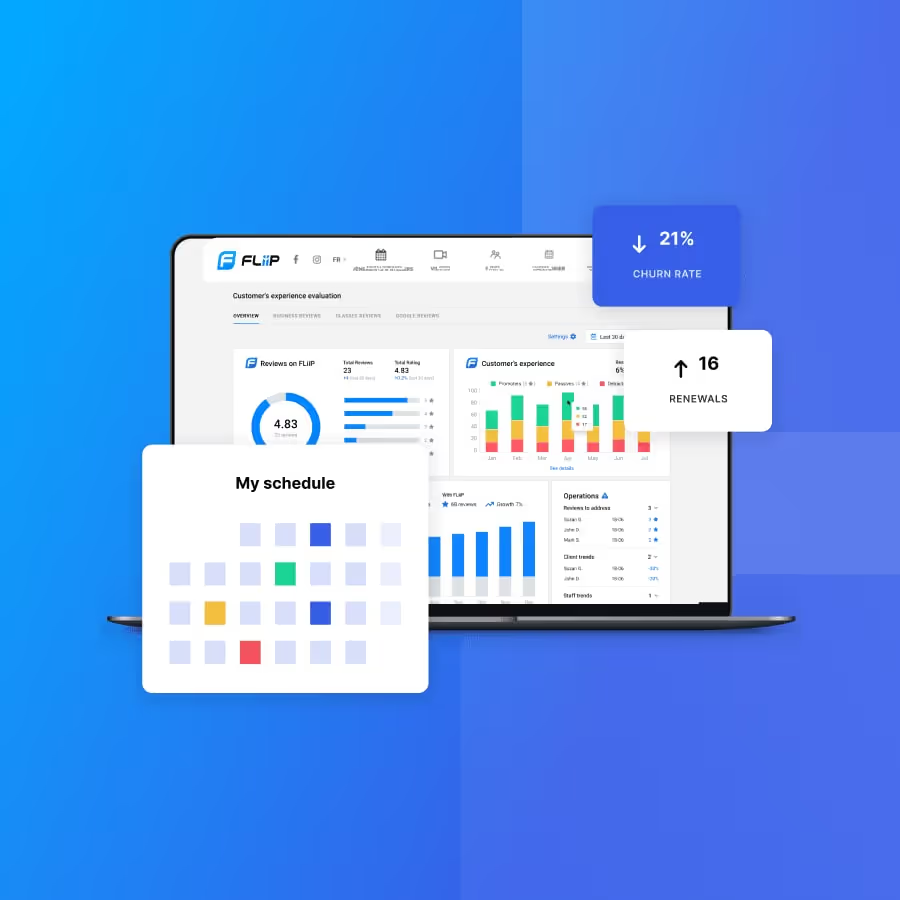
Modern CRM software interface showing customer reviews, churn rate, renewals, and scheduling features.
Technology Integration
Here’s how it works in a nutshell:
- Modern gamification CRM platforms integrate easily with existing business systems.
- APIs connect to marketing automation, sales tools, and customer service platforms.
- AI and machine learning catapult gamification effectiveness.
- Smart systems adapt challenges based on individual performance levels.
- Predictive analytics identify which team members need extra motivation.
- Cloud-based solutions make deployment easier.
- Teams can access gamified CRM features from any device, anywhere.
Industry Applications
Gamification CRM works across different sectors. Financial services use it to motivate loan officers and investment advisors while retail companies gamify customer loyalty programs and sales team performance.
iGaming operators particularly benefit from gamification CRM. These companies understand game mechanics better than most and apply them effectively to customer relationship management.
Healthcare organizations use gamified CRM to improve patient engagement and staff productivity and technology companies apply game elements to customer success and technical support teams.
Future Trends
The gamification CRM market continues expanding rapidly and market research projects growth from $80 billion in 2023 to $248.5 billion by 2032.
AI integration drives much of this growth. Intelligent systems personalize gamification experiences for individual users. Machine learning algorithms optimize reward timing and challenge difficulty automatically.
Virtual and augmented reality technologies will create more immersive gamification experiences in the near future. Imagine sales meetings in virtual environments where team performance appears as 3D visualizations.
Common Implementation Mistakes
Many companies make similar errors when implementing gamification CRM. They focus too much on technology and not enough on psychology.
Over-complicating the point system confuses users. Keep scoring simple and transparent. Everyone should understand how to earn rewards immediately.
Ignoring individual preferences reduces effectiveness. Some people respond to competition while others prefer collaboration. Successful systems offer multiple ways to engage.
Failing to update challenges regularly kills long-term interest. The novelty effect wears off after several weeks. Refresh competitions, add new badges, and change leaderboard criteria to maintain engagement.
Getting Started
Beginning your gamification CRM journey requires strategic planning, so it’s best to assess your current CRM usage and identify specific problems. Low data quality? Poor adoption rates? Inconsistent customer follow-up?
Choose game mechanics that address your biggest challenges. If reps avoid data entry, reward accurate record keeping. If customer service response times lag, gamify ticket resolution speed.
Start with a small pilot group. Test your approach with willing participants before rolling out company-wide. Learn what works and fix what doesn't on a smaller scale.
Smartico.ai: The Complete Gamification CRM Solution
Smartico stands out as a leading solution for iGaming operators, offering an all-in-one CRM and gamification platform. Its AI-powered tools provide actionable insights that help casinos optimize engagement and retention.
Key Features:
Our platform offers a range of powerful features:
CRM Automation: We streamline every step of the player journey, from onboarding to loyalty, with hyper-personalized messaging and automated workflows.
Gamification: Our customizable gamification tools bring fun, rewards, and loyalty seamlessly integrated within your CRM.
Free-to-Play Games: We offer a suite of customizable mini-games like the Loyalty Wheel, Scratch cards, and Daily Loot Boxes to boost player engagement.
Bonus Engine: Our system helps lower bonus costs with rewards tailored to player behavior, manageable in real-time or scheduled for optimal impact.
Jackpots: We provide customizable jackpots, both player-funded and operator-funded, to enhance any game from any provider.
AI Models: Our AI turns player data into actionable predictions, helping optimize engagement, prevent churn, and deliver rewards at the perfect moment.
Raffle: Transforms simple promos into fun, gamified experiences that boost engagement, spark excitement, and keep users coming back.
Tournaments: Transforms standard competitions into exciting real-time battles where players compete for major prizes while climbing dynamic leaderboards.
Avatars: Lets players create, earn, and customize unique AI-powered identities that increase emotional connection and player loyalty.
Banners: Delivers dynamic and hyper-personalized promotions to every player based on their status, location, and behavior in real time.
Integration and Support:
One of our key strengths is our effortless integration process. Our engineers manage the entire integration, reducing the load on your R&D resources. We support all major SMS, email, and instant messaging providers, and we integrate with all iGaming platforms.
Expertise and Partnership:
We're not just a software provider; we're a partner invested in your growth. Our team works alongside you to build CRM expertise within your team, guiding strategy and offering practical insights throughout our partnership.
Pricing and Availability:
Our pricing is based on monthly active users and includes both CRM automation and gamification, along with a dedicated Success Manager. While we don't offer a trial version, we're happy to provide a detailed demo to show you exactly how Smartico works.
At Smartico, we're committed to helping iGaming businesses improve retention and engagement. We'd love to show you how our platform can benefit your operations. Feel free to book a demo or reach out with any questions you might have.
{{cta-banner}}
Building Emotional Connections Through Game Mechanics
Game mechanics create emotional layers that standard customer interactions often miss. Players begin to connect positive feelings with the brand itself instead of only with individual outcomes. This shift happens because well-placed elements trigger natural human responses such as pride, anticipation, and belonging.
The result is a relationship that moves from transactional to personal. Small emotional touches accumulate over time. Players start to view the platform as a space where they feel understood and appreciated rather than simply served.
Instant feedback plays a central role. When actions receive immediate acknowledgment, customers sense that their participation matters. This feeling of being seen strengthens attachment in ways delayed or generic responses rarely achieve.
In fast-moving environments like iGaming, the combination of gamification and CRM automation helps platforms notice and respond to these emotional signals consistently. Players experience a smoother, more human connection because the system aligns game elements with individual behavior patterns.
Key ways emotional connections form through game mechanics include:
- A sense of accomplishment that builds personal investment
- Joy from well-timed rewards delivered through the bonus engine
- Pride in visible progress that players can track over weeks and months
- Anticipation created by systems that understand what matters to each person
These emotional threads turn routine sessions into experiences customers want to repeat.
Anticipating Needs with Intelligent Game Design and Automation
Game mechanics deliver the strongest relationship benefits when they adapt to what each customer values. This requires more than fixed rules. It needs systems that observe behavior and adjust challenges or rewards in real time.
AI models surface patterns that would be difficult to catch manually. They help the platform offer the right type of engagement at the right moment for each player. The experience feels personal even when it runs across thousands of users.
CRM automation connects these insights directly to action. Instead of waiting for manual review, the system can trigger relevant game elements automatically. Players encounter a journey that already reflects their preferences and stage.
This combination reduces friction and increases the sense that the brand is attentive. Customers feel the relationship is responsive rather than one-sided. Over time, that responsiveness builds quiet confidence that the platform understands them without constant effort on their part.
Platforms achieve this anticipation through several practical approaches:
- Behavior-based triggers that adjust difficulty or rewards
- Timely recognition that matches individual motivation patterns
- Dynamic challenges that evolve with player progress
- Seamless integration between game elements and underlying player data
When game mechanics work together with intelligent systems, the relationship deepens naturally because every interaction feels relevant and thoughtful.
Latest News 2026
Throughout 2026, platforms have placed stronger emphasis on using game mechanics to create more personal connections with players. The focus has moved beyond basic rewards toward experiences that feel responsive and emotionally relevant.
Many operators now combine gamification with advanced CRM automation to adjust challenges and recognition based on individual player behavior. This approach helps maintain meaningful relationships even as player preferences shift over time.
AI models continue to play a growing role in predicting what type of engagement will strengthen the bond with each customer. When paired with tools like the bonus engine and raffle features, these systems deliver timely moments of excitement that feel tailored rather than generic.
Another noticeable shift involves greater use of social and collaborative elements. Free-to-play minigames and shared challenges give players reasons to interact with each other, turning individual loyalty into community belonging. At the same time, jackpots add occasional high points that keep long-term relationships dynamic.
These developments show that game mechanics in 2026 are increasingly designed to support ongoing emotional investment rather than short-term activity.
Gamification CRM FAQ
1. How does gamification CRM affect employee training and onboarding?
Gamification CRM can make training and onboarding more interactive and memorable. By using simulations, quizzes, and challenges, new team members learn faster and retain information better. This approach helps reduce training time and increases engagement from day one.
2. Can gamification CRM be used to develop soft skills?
Yes. Gamified CRM systems can include modules that focus on communication, teamwork, and problem-solving. These modules often use scenario-based challenges and feedback loops, helping employees build essential soft skills in a low-pressure environment.
3. How does gamification CRM support remote or hybrid teams?
Gamification CRM platforms are typically cloud-based, so remote and hybrid teams can access them from anywhere. Features like real-time leaderboards, team challenges, and instant feedback help maintain connection and motivation, even when team members are not in the same location.
4. What role does personalization play in gamification CRM?
Personalization is key. Modern gamification CRM systems use data analytics and AI to tailor challenges, rewards, and feedback to each user’s preferences and performance. This increases engagement and ensures the system remains relevant for different roles and personalities.
5. Are there risks of overusing gamification in CRM?
Yes. Overusing or poorly designing gamification can lead to fatigue or reduced motivation if rewards feel meaningless or if competition becomes unhealthy. It’s important to balance game elements with intrinsic motivation and keep the system fresh by updating challenges and rewards regularly.
6. How does gamification CRM impact customer-facing processes?
Gamification CRM can be extended to customer interactions, such as loyalty programs or self-service portals. Customers may earn points, badges, or rewards for certain actions, making their experience more engaging and encouraging repeat business.
7. What metrics should organizations track to measure the success of gamification CRM?
Beyond basic usage stats, organizations should monitor metrics like time to proficiency for new hires, employee turnover rates, customer satisfaction scores, and the quality of data entered into the CRM. These indicators show whether gamification is driving real business value.
8. Can gamification CRM be integrated with other business systems?
Most modern gamification CRM platforms offer APIs and integration tools, allowing them to connect with marketing automation, HR, analytics, and other business applications. This ensures a seamless flow of data and a unified user experience.
9. How does gamification CRM help with continuous improvement?
By tracking user progress, feedback, and outcomes, organizations can identify skill gaps, process bottlenecks, and areas for improvement. Regular updates and new challenges keep users engaged and support a culture of ongoing learning and growth.
10. What are some creative ways to keep gamification CRM engaging over time?
- Rotate challenges and introduce seasonal or themed competitions.
- Offer both individual and team-based rewards.
- Use peer recognition features, such as “kudos” or shout-outs.
- Encourage user-generated content, like tips or best practices shared within the platform.
- Collect feedback regularly and adapt the system to user needs.
11. How do game mechanics help turn ordinary customer interactions into meaningful experiences?
Game mechanics add layers of purpose and feedback to actions that might otherwise feel routine. Players receive clear signals that their choices matter, which raises the emotional stakes of each session. Over time, these signals create a narrative of progress that customers carry with them. The ordinary becomes part of a larger story they want to continue.
12. What role does instant feedback play in building customer trust and loyalty?
Instant feedback removes uncertainty about whether actions were noticed or valued. Customers learn quickly what works and feel confident that their efforts contribute to visible results. This clarity reduces frustration and builds a quiet form of trust. Loyalty grows because the system feels fair and responsive rather than opaque.
13. How can gamification support the creation of vibrant player communities?
Gamification gives players shared goals and visible ways to interact. Team challenges and collaborative events turn individual play into group experiences. These shared moments create reasons for players to connect with each other and return together. The brand becomes the common ground where those relationships form and continue.
14. In what ways does automation enhance the personalization of gamified journeys?
CRM automation connects game mechanics to real player behavior without delay. It adjusts difficulty, reward timing, or challenge types based on patterns the system observes. Players encounter experiences that fit their current stage rather than generic ones. This relevance makes the relationship feel tailored even as the platform serves many people at once.
15. How do evolving game elements help maintain long-term customer relationships?
Fresh elements prevent the experience from becoming predictable while still respecting past progress. New challenges or reward types, including raffle and jackpots, give regular players something to look forward to without erasing what they have already built. This steady renewal keeps curiosity alive and gives customers ongoing reasons to stay connected to the platform.
Key Takeaways
- Gamification CRM uses game elements like points, badges, leaderboards, and challenges to make customer relationship management more engaging and effective for teams and individuals.
- Adding gamification to CRM systems leads to higher user adoption, better data quality, and improved team motivation, which translates into increased sales, customer retention, and overall productivity.
- The most effective game mechanics in CRM include clear scoring systems, public leaderboards, milestone badges, progress bars, and team challenges that encourage both competition and collaboration.
- Successful implementation requires clear objectives, proper training, meaningful rewards, and ongoing monitoring to ensure that gamification aligns with business goals and adapts to user needs over time.
- Gamification CRM works across industries and can be tailored to fit different business needs, customer segments, and team dynamics, making it a flexible tool for driving engagement and growth.
- Common mistakes include overcomplicating the system, ignoring individual preferences, and failing to refresh challenges, all of which can reduce long-term engagement.
- The future of gamification CRM will see more integration with AI, machine learning, and immersive technologies, leading to even more personalized and effective engagement strategies.
Did you find this article helpful? If so, consider sharing it with other professionals such as yourself :)