


Web Push Notifications in iGaming: The Complete Guide to Browser Notifications
.avif)
You've seen it happen. You're browsing a website, a small box pops up asking if you want notifications, and you click "Allow" without thinking twice. Then, a few days later, a little alert slides onto your screen and pulls you straight back to that site.
That's a web push notification doing what it's supposed to do. And in the world of iGaming, this tool has quietly become one of the most effective ways to keep players engaged, informed, and coming back.
This guide breaks down everything you need to know about web push notifications, from the basic mechanics to the advanced strategies that online casino operators are using right now.
What Are Web Push Notifications?
Web push notifications are short, clickable messages that a website can send directly to a user's browser, even when the user isn't actively on that site. They show up on desktop and mobile screens, delivered through the browser itself rather than through an app or email.
Unlike email, which sits in an inbox waiting to be opened (or ignored), a web push notification appears right on screen. It's immediate, visible, and requires no app download.
How Do They Actually Work?
The process is straightforward. A user visits a website and sees a permission prompt asking if they'd like to receive notifications. If they click "Allow," the browser generates a unique subscription token and registers it with the site's push notification service. From that point on, the operator can send messages to that user's device through the browser's push protocol, even when the site is closed.
The main browser push services are:
- Chrome: Uses Google's FCM (Firebase Cloud Messaging)
- Firefox: Uses Mozilla's push service
- Safari: Uses Apple Push Notification Service (APNs)
Each browser handles the delivery, which means the messages arrive reliably and don't require the user to be logged in anywhere.
Why Web Push Notifications Matter for iGaming

Online casino gaming is a crowded space. Players have dozens of options, and attention is short. Getting someone to sign up is one challenge. Getting them to come back is another one entirely.
Web push notifications sit right in the middle of that retention problem. They give operators a direct line to players outside the platform, without the cost of SMS or the open-rate uncertainty of email.
Research consistently shows that push notifications carry significantly higher open rates compared to email marketing. In sectors with time-sensitive offers, like iGaming, that speed and visibility make a real difference.
{{cta-banner}}
The Permission Advantage
One thing that makes push notifications particularly valuable is that users opt in voluntarily. They clicked "Allow." That's a signal of genuine interest, which means the audience you're reaching through push is already warmer than a cold email list.
That said, the opt-in moment is also the first test. If the prompt appears too early, too aggressively, or without enough context, users will decline. Smart operators time their opt-in requests after a player has had a positive first experience, not the moment they land on the homepage.
Push Notification Strategies in iGaming
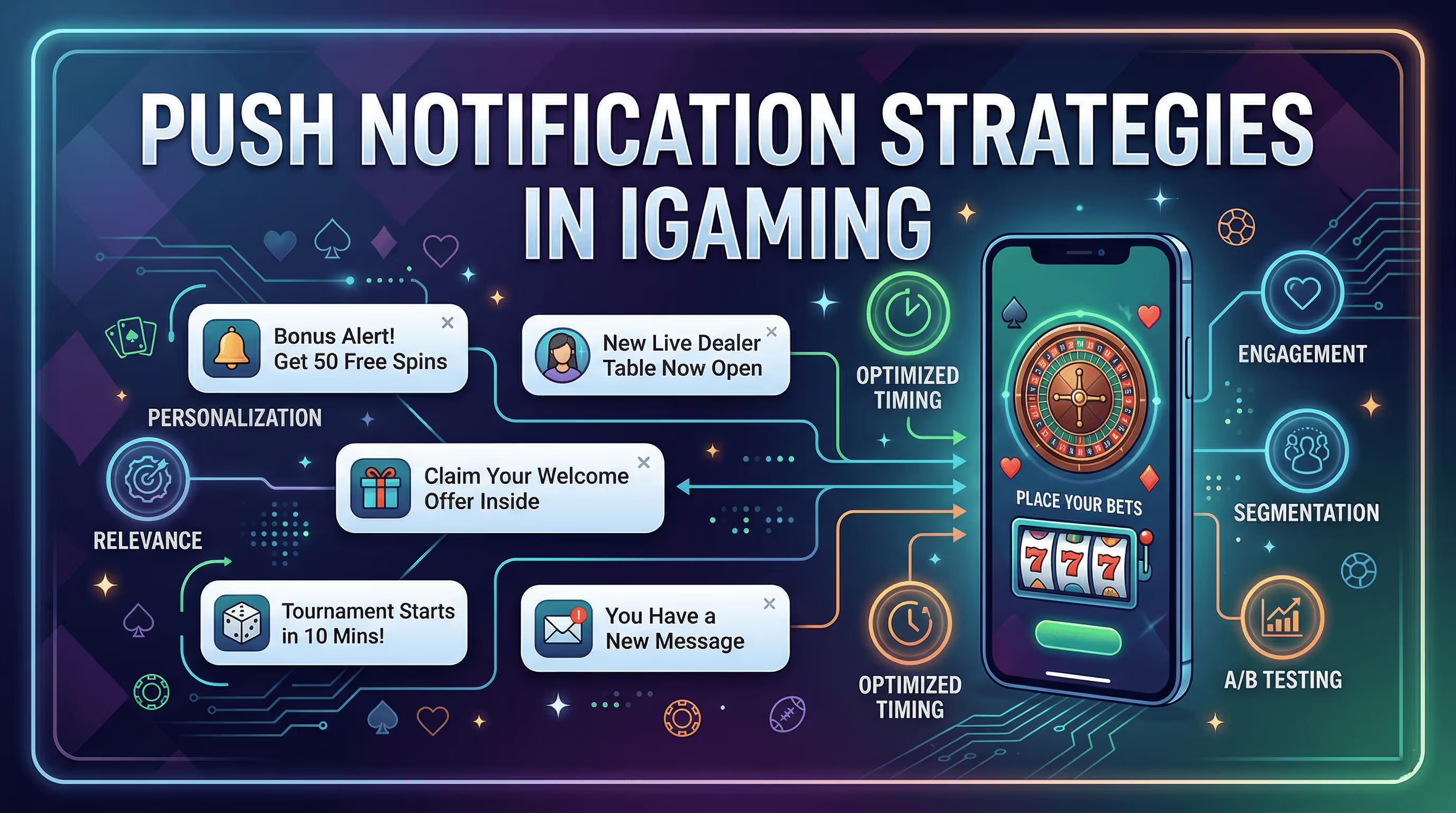
This is where things get interesting. A generic "you have a new bonus" message is fine. A well-timed, personalized push notification that arrives exactly when a player is most likely to engage is something else entirely.
Here are the core strategies online casino operators use to get the most out of push notifications.
1. Segmentation Before Everything Else
Not every player is the same. Someone who plays slots daily responds to different messages than someone who logs in weekly for live dealer games. Push notifications that ignore this distinction end up being ignored too, or worse, they trigger opt-outs.
Effective segmentation usually breaks down by:
- Game preference: Slots players vs. table game players vs. sports bettors
- Activity level: High-frequency players, casual players, lapsed players
- Bonus behavior: Players who respond to free spins vs. those who prefer cashback
- Session timing: When does each player typically log in?
- Lifecycle stage: New players, VIPs, players who haven't logged in for 30+ days
Once segments are defined, messages can be written specifically for each group rather than broadcast to everyone at once.
2. Behavioral Triggers
The most effective push notifications are triggered by player behavior, not by a marketing calendar. These are sometimes called "event-based" or "trigger-based" notifications, and they work because the timing is relevant by definition.
Common behavioral triggers in iGaming include:
- A player hasn't logged in for a defined number of days (re-engagement trigger)
- A player's bonus is about to expire
- A new game drops in a category the player frequently plays
- A jackpot hits a threshold the player has shown interest in
- A player just completed a challenge or reached a loyalty milestone
These messages feel personal because they are, at least in context. The player did something (or stopped doing something), and the message responds to that.
3. Personalization at Scale
Personalization goes beyond using someone's first name. In iGaming CRM terms, it means delivering the right content to the right person based on what you actually know about them.
That could mean showing a returning player the exact game they played last time, or offering a free spins bonus on a specific slot series they've played repeatedly. The more specific the message, the more likely the player is to click.
Modern CRM and gamification platforms make this kind of personalization possible at scale, running automated rules that match players with the most relevant offer or content automatically.
4. Gamification Integration
Push notifications work even better when they're tied to a gamification system. If a player is working toward a challenge or moving through a loyalty tier, a notification that updates them on their progress keeps the journey top of mind.
"You're 200 points away from Gold status" is a different kind of message than "Here's a bonus." One creates momentum. The other is transactional. Both have value, but the former tends to drive more immediate action because it taps into a player's existing motivation.
8 Best Practices for iGaming Push Notifications
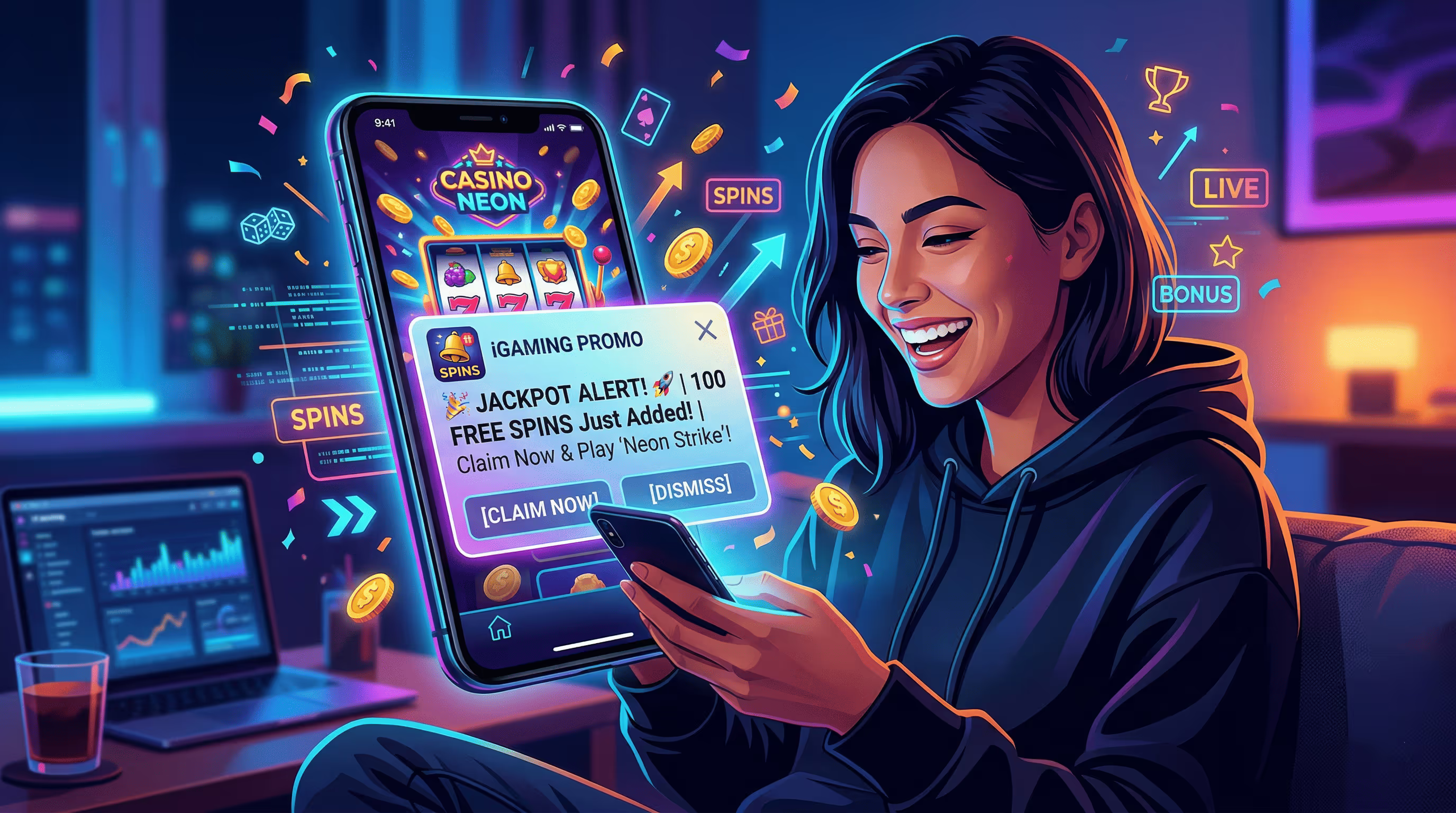
Getting push notifications right takes more than a good message. Here's what separates operators who see strong results from those who burn out their subscriber lists.
- Ask for permission at the right moment. Wait until a player has had a meaningful interaction with your platform before showing the opt-in prompt.
- Keep messages short. A push notification isn't an email. Title: under 50 characters. Body: one clear sentence.
- Include a specific call to action. "Claim your free spins" beats "Check it out."
- Don't over-notify. Two to four messages per week is a reasonable frequency for most players. More than that and opt-outs climb fast.
- Test your timing. The best time to send varies by player segment. Run A/B tests on send times for your most active groups.
- Personalize the image. Push notifications can include a small image. Using game artwork or relevant visuals increases click-through rates.
- Track unsubscribes and adjust. If a segment is showing high opt-out rates, the problem is usually frequency or relevance, not the channel itself.
- Connect notifications to a landing destination. Every push should land the player exactly where they need to be. Sending a free spins notification to a homepage instead of the specific game is a missed conversion.
What Makes a Great Web Push Notification Strategy

A strong push strategy has a few non-negotiable elements.
Clear Objectives Per Campaign
Are you trying to re-engage inactive players? Promote a new game? Remind someone their bonus expires today? Each objective requires a different message, different timing, and different success metrics.
Running all notifications from the same playbook, regardless of goal, is the fastest way to get generic results.
A/B Testing as Standard Practice
Even experienced teams get surprised by test results. A minor change in subject line, emoji usage, or send time can produce measurable differences in click rates. Build testing into your workflow rather than treating it as an occasional experiment.
Respect for Opt-Out Signals
When a player unsubscribes from push, that's information. If large numbers of players in a specific segment are opting out after a particular campaign type, that campaign type needs to change. Opt-outs aren't just a metric to minimize. They're feedback.
How Smartico.ai Powers Push Notification Strategies in iGaming
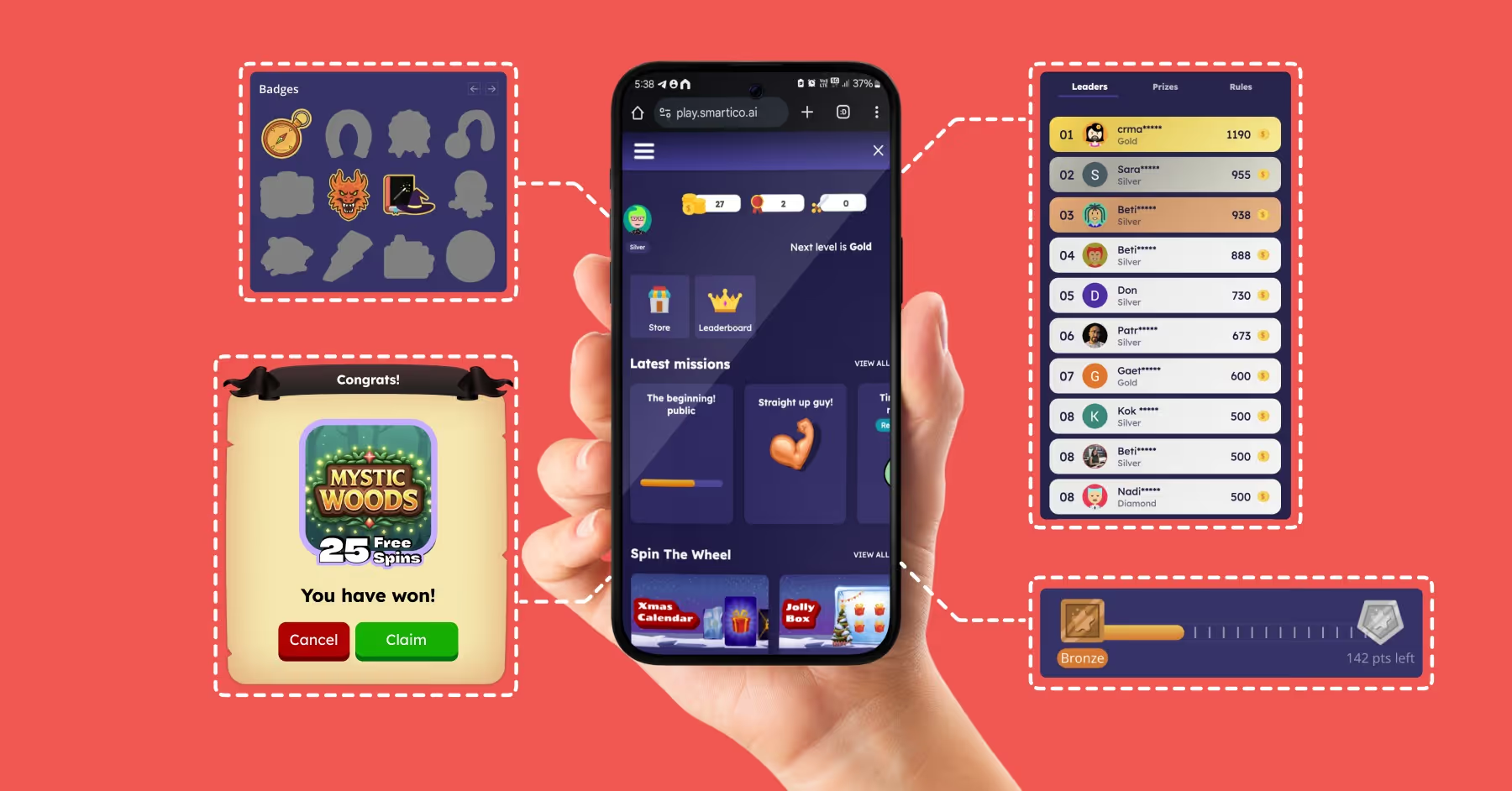
Smartico.ai is the first unified gamification and CRM automation software built specifically for iGaming operators. Founded in 2019, it brings together real-time gamification mechanics, CRM automation, and a personalization engine in one place, which matters a lot when push notifications are part of a broader player engagement strategy.
Within Smartico's ecosystem, push notifications don't operate in isolation. They're connected to the gamification layer, so a notification about a player's challenge progress is triggered by actual progress data, not a generic send. The CRM automation tools let operators build detailed behavioral segments and define triggers based on individual player activity.
Smartico’s loyalty program management also ties directly into notification timing. When a player hits a milestone or earns a reward, the system can fire a push notification automatically, making the recognition feel immediate.
What this means in practice is that operators using Smartico can run sophisticated, personalized notification campaigns without manually managing every send. The rules engine handles the logic. The team handles the strategy.
For operators who want to move beyond batch-and-blast push notifications and into actually relevant, well-timed player communication, this kind of integrated setup makes a real difference.
Want to see how Smartico can help your business raise retention and revenue like nothing you’ve tried before? Book your free, in-depth demo below.
{{cta-banner}}
Common Mistakes to Avoid
Even with a good strategy, a few recurring mistakes tend to undercut push notification performance.
Treating all players the same. Segmentation isn't optional. Without it, your messages are noise.
Ignoring mobile. A significant portion of players receive push notifications on mobile. Make sure your messages and landing pages are optimized for smaller screens.
Focusing only on acquisition offers. Push notifications that only ever say "here's a bonus" train players to ignore everything that isn't a bonus. Mix in content that's informative or progress-based.
Forgetting to sunset inactive subscribers. Players who haven't engaged with notifications in 90+ days probably never will. Keeping them in your list inflates numbers and skews performance data. Remove them or run a targeted re-permission campaign.
FAQ: Web Push Notifications in iGaming
Do web push notifications work on all browsers?
Most modern browsers support web push notifications, including Chrome, Firefox, Edge, and Safari (on macOS and iOS 16.4+). Internet Explorer is not supported, but its user base is negligible at this point. Browser compatibility covers the vast majority of players on both desktop and mobile.
How do web push notifications differ from in-app notifications?
Web push notifications are delivered through the browser and don't require an app installation. In-app notifications appear only when a user is inside a native mobile app. For iGaming operators who primarily run web-based platforms, browser push is often more accessible since it reaches players without requiring an app download.
Can players opt back in after unsubscribing?
Yes, but it requires action on their part. A player who has opted out of push notifications would need to go into their browser settings and manually re-enable notifications for your site. This is why the initial opt-in experience matters so much. Getting it right the first time is far easier than recovering a lost subscriber.
What's a reasonable click-through rate for iGaming push notifications?
This varies significantly by segment, message type, and timing. Behavioral trigger notifications that are highly personalized tend to perform considerably better than broad promotional blasts. Rather than chasing a benchmark number, most operators focus on improving their own baseline over time through testing and segmentation.
Are there regulatory considerations for push notifications in iGaming?
Yes. Depending on the jurisdiction, responsible gaming requirements may affect how and when certain promotional messages can be sent. Operators should ensure their push notification practices align with local advertising standards and any platform-specific responsible gaming commitments.
How many push notifications per week is too many?
There's no universal rule, but for most iGaming audiences, sending more than five to seven notifications per week starts to generate meaningful opt-out rates. The right frequency depends on your player base. High-value, highly active players may tolerate and even welcome more frequent communication. Casual players typically don't.
Conclusion
Web push notifications are one of the most direct communication channels available to iGaming operators today. When done well, they bring players back, reinforce progress, and make promotions feel timely and relevant rather than generic.
The operators who get the most out of push aren't necessarily the ones sending the most messages. They're the ones sending the right messages to the right players at the right moment. That requires good segmentation, behavioral triggers, and a platform that connects push to the broader player engagement picture.
If you're ready to build a push notification strategy that actually works within a full CRM and gamification framework, it's worth seeing what a purpose-built platform can do.
And here's a little intro to Smartico.ai:
Request a demo of Smartico.ai below and see how web push notifications fit into a complete player engagement system.
Ready to use Smartico?
Join hundreds of businesses worldwide engaging players with Smartico.