

Exploring Campaigns: iGaming CRM Key Feature 1
When was the last time you felt like a brand really got you? Not just knew your name, but understood what you wanted before you even asked for it?
That's the buzz right now in iGaming CRM. Campaigns have become sophisticated, personalized experiences that meet players exactly where they are. And if you're not taking advantage of them, you're leaving serious money on the table.
Let's talk about why campaigns are the beating heart of any modern iGaming CRM system and how operators are using them to create experiences that keep players coming back.
What Makes CRM Campaigns Different in iGaming

Think about traditional marketing campaigns. You send an email, maybe a text message, and hope for the best. In iGaming, that approach died years ago.
CRM campaigns in this space are intelligent, multi-layered systems that respond to player behavior in real time. When a player deposits for the first time, the system knows. When they start showing signs of slipping away, it reacts. When they hit a milestone, it celebrates with them.
According to McKinsey research, companies excelling at personalization generate 40% more revenue from those activities compared to average performers. In iGaming, where player lifetime value can vary dramatically, that difference is even more pronounced.
Here's what sets iGaming CRM campaigns apart:
They work across multiple channels simultaneously – email, SMS, push notifications, in-app messages, and even on-site pop-ups all coordinated to deliver one cohesive message. They trigger based on real player actions rather than arbitrary schedules. They adapt based on how players respond, getting smarter with every interaction.
It’s all about showing up at the right moment with exactly what they need.
The Building Blocks of Effective CRM Campaigns
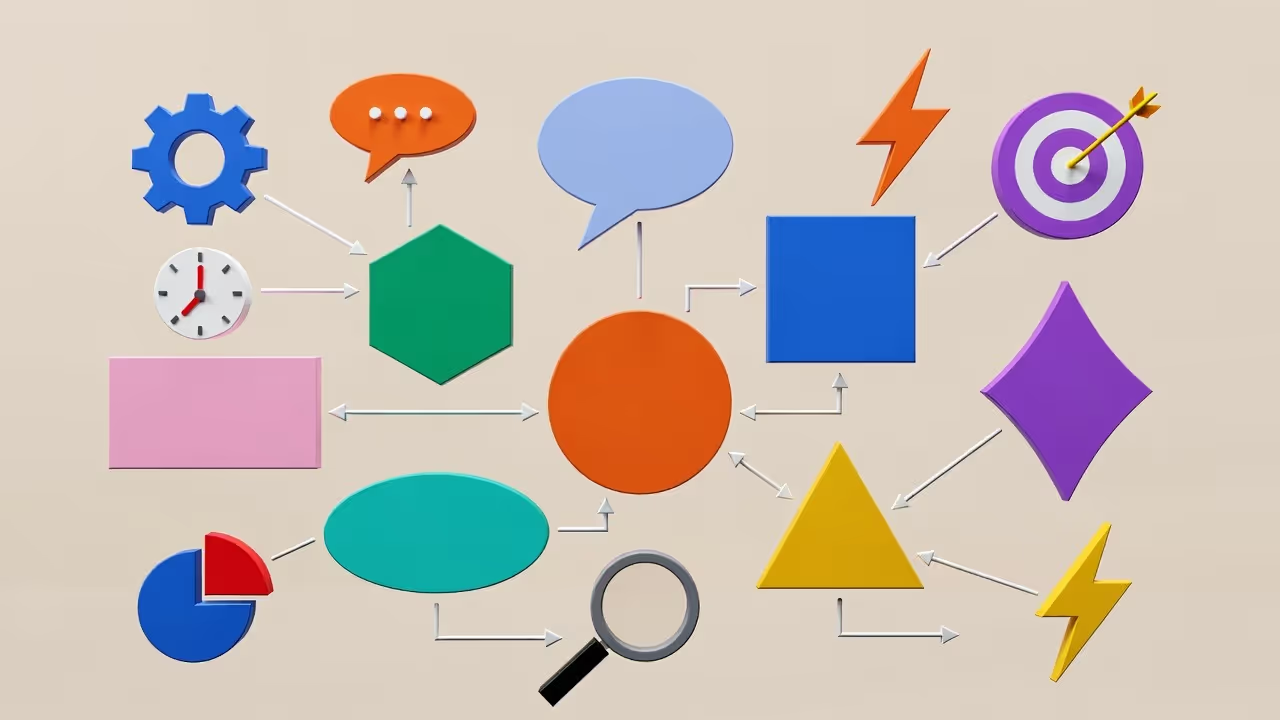
Creating campaigns that actually work requires understanding the fundamental components that make them work. You can't just flip a switch and expect desired results.
Segmentation is Where It Starts
Before you can personalize anything, you need to know who you're talking to. Modern iGaming platforms slice their player base into incredibly specific segments. We're not just talking about "high rollers" versus "casual players" anymore.
You might have segments for players who prefer slots over table games, those who play primarily on mobile, weekend warriors versus daily grinders, players who respond to free spins versus cash bonuses, or those showing early signs of decreased activity.
The more granular your segmentation, the more relevant your campaigns become. And relevance is everything.
{{cta-banner}}
Triggers That Truly Matter
The best campaigns don't run on a calendar. They run on player behavior. When specific actions happen, campaigns spring into action automatically.
Common triggers include first deposit, reaching a loyalty tier, completing a game round, abandoning a session, hitting a win streak, or going dormant for a set period.
The beauty of trigger-based campaigns is timing. You're not guessing when to reach out. You're responding to what players are actually doing right now.
Multi-Channel Orchestration
Players don't live in one channel, so why would you? The most effective campaigns coordinate touchpoints across every available channel.
A player might receive an email about a promotion, see a banner when they log in, get a push notification if they haven't engaged, and receive an SMS if the offer is about to expire. Each channel reinforces the others, creating a unified experience that feels natural rather than overwhelming.
Personalization That Goes Beyond Names
Using someone's first name in an email? That's 2015. Today's personalization is about understanding context, preferences, and intent.
Modern CRM campaigns personalize the offer itself, the game recommendations, the timing of communication, the channel used, the tone and imagery, and even the currency and language based on location.
This level of customization requires sophisticated data infrastructure, but the payoff is substantial. Personalized campaigns consistently outperform generic ones by massive margins.
8 Campaign Types Every iGaming Operator Should Master
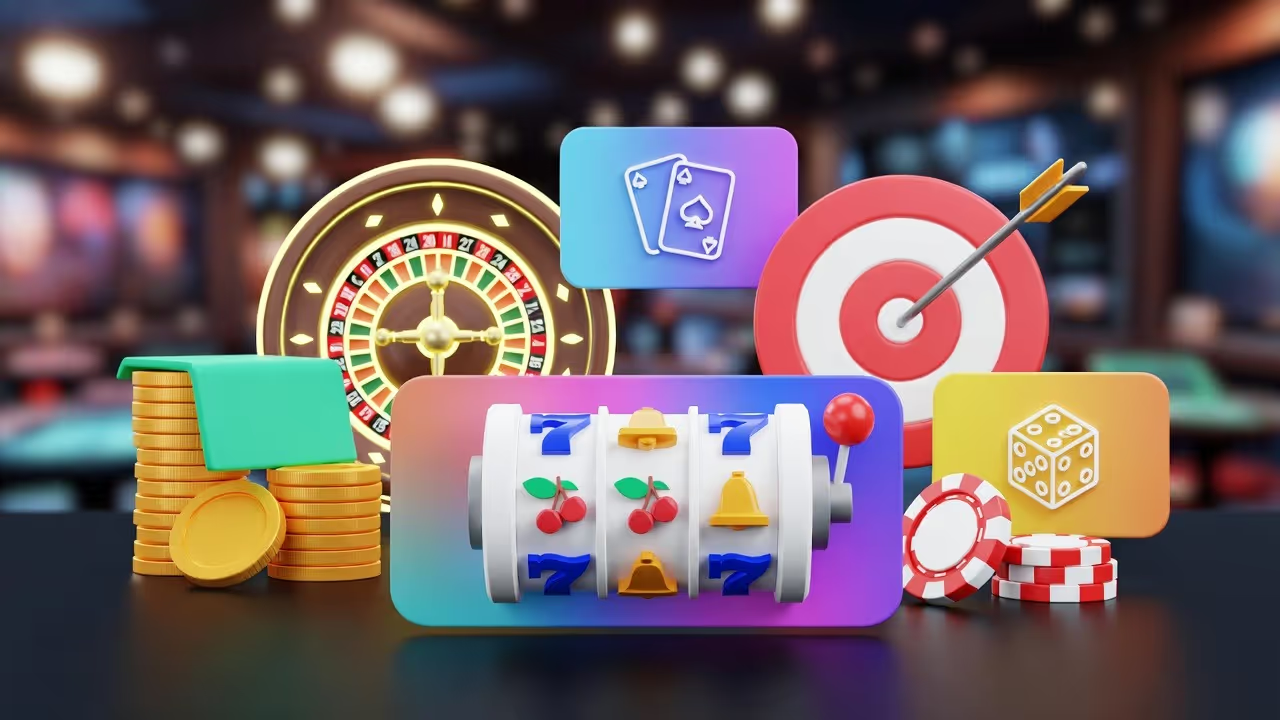
Not all campaigns serve the same purpose. The smartest operators deploy a mix of campaign types, each designed to achieve specific objectives. Here are the ones that move the needle:
1. Welcome Series
First impressions matter. A well-crafted welcome campaign sets the tone for the entire player relationship. This typically includes a warm introduction to the platform, guidance on how to claim their welcome bonus, game recommendations based on their initial preferences, and education about loyalty programs and features.
The goal isn't just to activate players – it's to make them feel oriented and valued from day one.
2. Reactivation Campaigns
Players go quiet. It happens. But they're not lost forever. Reactivation campaigns target players who've been dormant for a specific period, offering compelling reasons to return.
These work best when they acknowledge the absence without guilt-tripping and provide genuine value rather than desperation bonuses. A player who hasn't logged in for 30 days needs a different approach than one who's been gone for six months.
3. Loyalty Progression
These campaigns celebrate milestones and encourage continued engagement. When a player is close to reaching a new loyalty tier, a campaign might highlight the benefits waiting for them and show exactly what they need to do to get there.
Recognition drives behavior. People like knowing their activity is noticed and rewarded.
4. Game Launch Promotions
New games are opportunities to create excitement and drive trial. Launch campaigns work when they target players who've shown interest in similar games, create a sense of exclusivity or early access, and offer incentives specifically tied to the new title.
The key is matching the right game to the right player. Someone who exclusively plays blackjack probably doesn't care about your new video slot.
5. Event-Based Campaigns
Sports tournaments, holidays, special occasions – these create natural engagement opportunities. Event campaigns capitalize on external moments when players are already thinking about entertainment.
Timing is critical here. A campaign for a major sporting event needs to launch before the event starts, not during.
6. Win-Back Incentives
These target players at high risk of churning based on behavior patterns. The CRM system might detect declining session frequency, lower average bets, shorter play sessions, or reduced deposit amounts.
Win-back campaigns need to feel like you're extending a hand, not desperately clinging. The best ones show genuine understanding of why the player might be drifting.
7. Cross-Sell and Upsell
If a player only uses your sportsbook but never touches the casino, there's an opportunity. Cross-sell campaigns introduce players to complementary products they haven't tried.
These work best when the recommendation feels natural. A sports bettor might genuinely enjoy live dealer games during off-season periods.
8. VIP Recognition
High-value players deserve special treatment. VIP campaigns create exclusive experiences, early access to new features, personalized offers from account managers, and invitations to special events.
The psychology here is simple: make your best players feel irreplaceable, because they are.
How Automation Makes Campaigns Truly Work

Here's a truth bomb: manual campaign management at scale is impossible. You can't personally track thousands of players and respond to each one individually. That's where automation enters the picture.
Modern CRM automation handles the heavy lifting so your team can focus on strategy rather than execution. The system monitors player behavior continuously, identifies trigger events instantly, and deploys the appropriate campaign without human intervention.
But automation isn't about removing the human element. It's about scaling the human touch.
A well-automated system can make every player feel like they have a personal account manager, even if you're operating with a lean team. The campaigns feel timely, relevant, and personal because they're based on real behavior, not arbitrary scheduling.
The trick is setting up the rules and workflows correctly upfront. Once you do, the system runs itself, constantly learning and optimizing based on results.
The Role of AI and Machine Learning in 2026 and Beyond

If automation is the engine, AI is the fuel that makes it run smarter. The marketing landscape in 2026 has shifted dramatically toward AI-powered decision-making.
AI in CRM campaigns does things humans simply can't do at scale:
- Predictive Analytics systems can forecast which players are likely to churn before they actually do, allowing you to intervene proactively. They can predict optimal offer values, best times to communicate, and most effective channels for each individual player.
- Dynamic Content Generation means the AI can create variations of campaign content tailored to different segments or even individual players. The message, imagery, and offer adjust automatically based on what's most likely to resonate.
- Real-Time Optimization allows campaigns to adjust mid-flight. If a particular message isn't performing well with a segment, the AI can swap in alternative content automatically, testing and learning continuously.
- Sentiment Analysis can evaluate how players are responding not just through clicks and conversions, but through the language they use in support chats or reviews, helping refine messaging and tone.
The brands winning in 2026 are AI integrating into every layer of their campaign strategy to create systems that genuinely learn and improve over time.
Measuring Campaign Success: Metrics You Should Pay Attention To
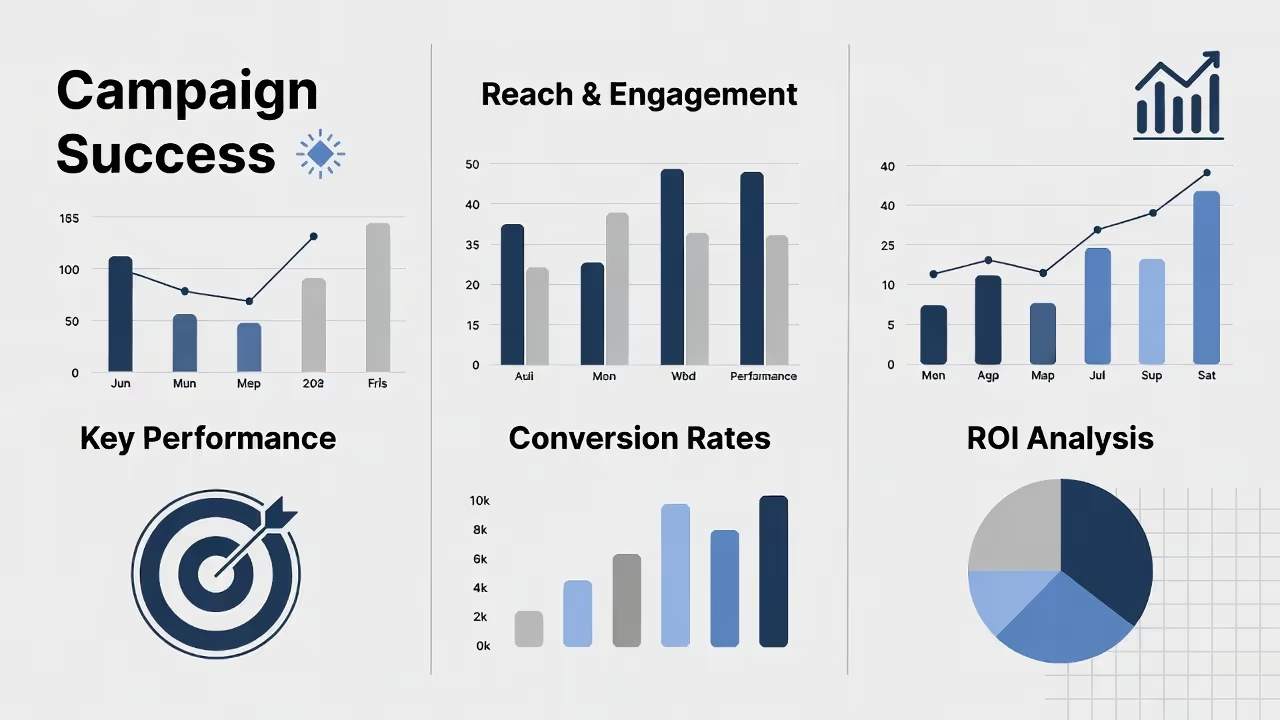
You can't improve what you don't measure. But measuring everything is just as useless as measuring nothing. Smart operators focus on metrics that directly tie to business outcomes.
Here's what matters:
- Engagement Rate tells you how many players actually interact with your campaigns. Low engagement means your messaging, timing, or targeting needs work.
- Conversion Rate shows how many engaged players take the desired action, whether that's making a deposit, claiming a bonus, or trying a new game.
- Player Lifetime Value is the ultimate metric. Are your campaigns increasing how much value players generate over time? If not, something's broken.
- Retention Rate tracks how well your campaigns keep players active. A spike in short-term engagement that leads to long-term churn is a losing strategy.
- Return on Campaign Investment measures the direct revenue generated versus the cost of running campaigns, including bonuses, development, and platform costs.
The best operators create feedback loops where campaign performance data automatically informs future campaign strategy. Every campaign becomes a learning opportunity.
Common Campaign Pitfalls to Avoid
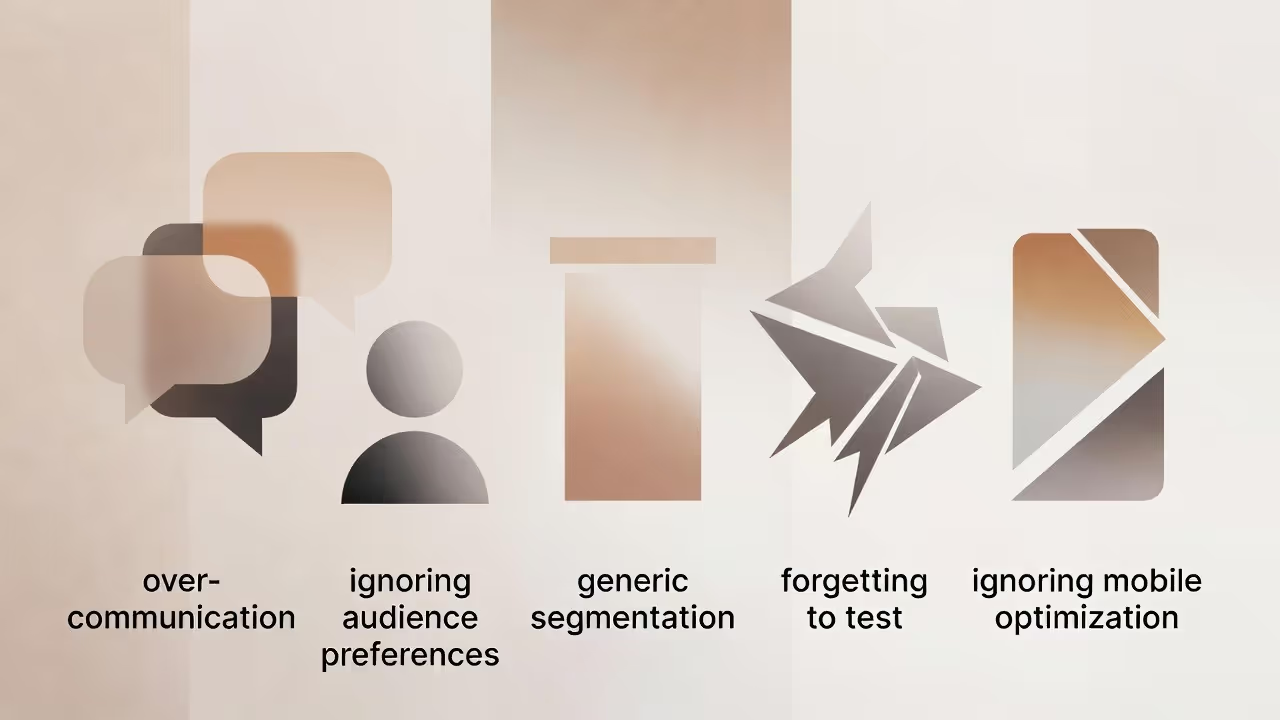
Even sophisticated operators make mistakes. Here are the ones that hurt most:
Over-Communication exhausts players. Just because you can send unlimited messages doesn't mean you should. Respect attention as a limited resource.
Ignoring Preferences is a fast track to unsubscribes. If a player has indicated they only want SMS, don't blast them with emails too.
Generic Segmentation wastes the power of your data. "All players" is not a segment. Neither is "high value." Go deeper.
Forgetting to Test means you're guessing. Run A/B tests on everything – subject lines, send times, offers, creative, channels.
Not Having a Clear Goal for each campaign leads to confused messaging. Are you trying to activate, retain, or monetize? Each requires a different approach.
Ignoring Mobile is basically ignoring half your players. Campaigns need to work flawlessly on mobile devices, because that's where the majority of engagement happens.
Building a Campaign Strategy for Long-Term Success
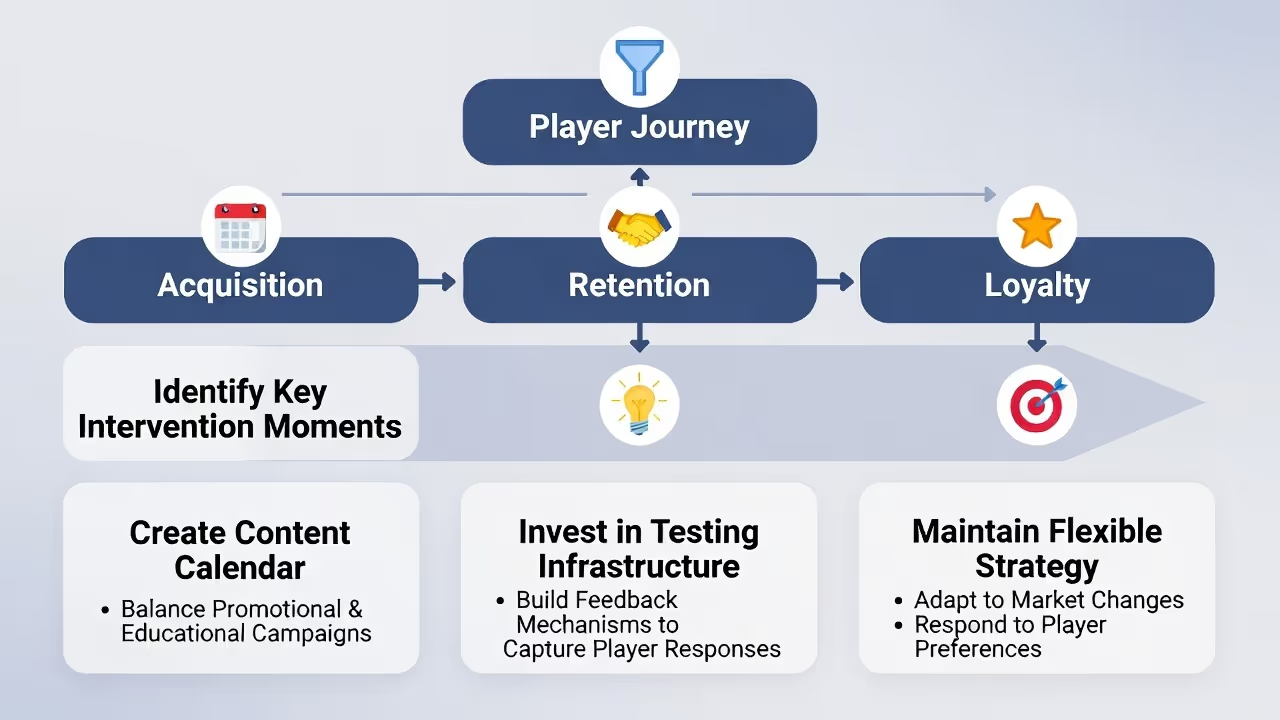
Great campaigns don't happen by accident. They're the result of thoughtful strategy executed consistently over time.
Start by mapping the player journey from acquisition through retention to loyalty. Identify the key moments where intervention makes the biggest difference. Then build campaigns specifically designed for those moments.
Create a content calendar that balances promotional campaigns with educational and engagement-focused ones. Not everything should be pushing a sale.
Invest in testing infrastructure. Run regular experiments to understand what resonates with your players. What works for one operator might flop for another.
Build feedback mechanisms to capture player responses, both explicit (surveys, preferences) and implicit (behavior, engagement patterns).
And most importantly, stay flexible. The market changes, player preferences evolve, and new channels emerge. Your campaign strategy should be a living document, not a locked-in plan.
Smartico's Approach to Unified CRM Campaigns
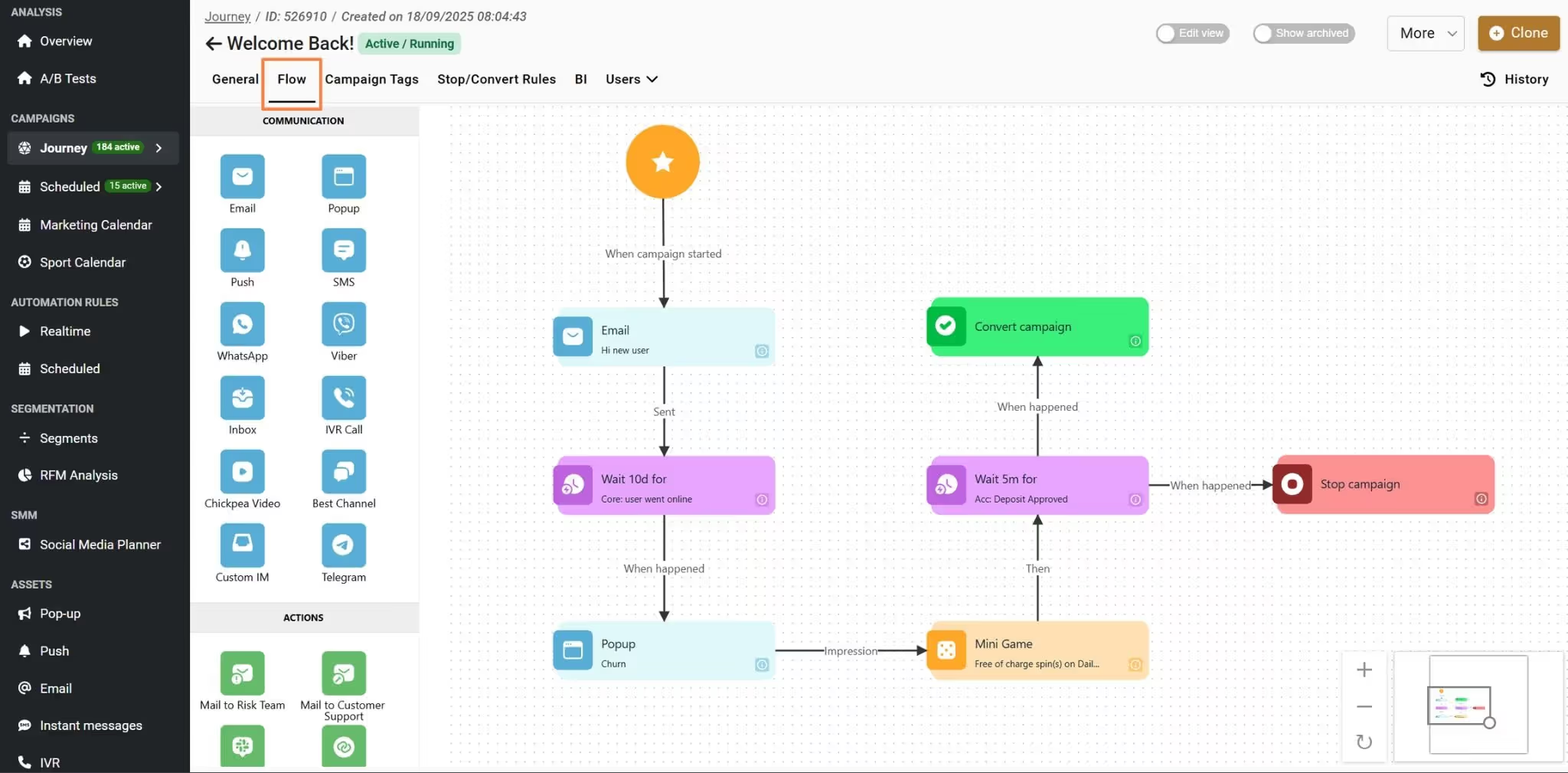
This is where platforms like Smartico.ai make a real difference. As the first unified Gamification/CRM Automation software, founded in 2019, Smartico brings together real-time campaign management with sophisticated automation tools specifically built for iGaming.
The software supports two distinct campaign types that cover every operator need. Real-time campaigns (called Journeys) trigger instantly when players take specific actions – deposits, logins, bets, account changes. These respond to player behavior as it happens, creating that perfect-timing effect that makes campaigns feel personal rather than pushy.
Scheduled campaigns run on your timeline – daily, weekly, specific dates, or one-time events. Perfect for planned promotions, holiday offers, or coordinated launches where you need precise control over timing and audience reach.
Both campaign types are built using Smartico's Flow Builder, a visual tool that lets you map entire player journeys without writing code. You drag and drop activities (emails, SMS, bonuses, gamification elements) to create sophisticated multi-step flows. Want to send an email, wait three days, check if they deposited, then send a follow-up offer or alternative message based on their action? The Flow Builder makes that simple.
Smartico combines gamification mechanics with traditional CRM functions, creating campaign experiences that feel less like marketing and more like natural parts of the player journey.
What sets Smartico apart, however, is the integration – everything from loyalty programs to bonus management to communication channels works together in one unified system. You're not patching together multiple tools and hoping they sync properly. It's all designed to work as one cohesive engine.
For operators looking to seriously up their campaign game, having a platform that handles both the strategy and execution at this level is increasingly essential. The complexity of modern campaigns has outgrown cobbled-together solutions.
Want to see how Smartico’s CRM campaigns can help raise loyalty and retention for your business specifically like nothing you’ve tried before? Book your free, in-depth demo below.
{{cta-banner}}
The Future of CRM Campaigns in iGaming

Looking ahead, campaigns will become even more sophisticated and player-centric. We're moving toward truly individualized experiences where no two players see exactly the same journey.
Expect to see more voice-activated campaigns as smart speakers become common in homes. More AR and VR integration creating immersive campaign experiences. Deeper integration with wearables and IoT devices. And privacy-first personalization that respects player data while still delivering relevant experiences.
The operators who win will be those who view campaigns not as promotional tools, but as fundamental relationship-building mechanisms. Every touchpoint is an opportunity to understand players better and serve them more effectively.
Frequently Asked Questions
What's the difference between CRM campaigns and regular marketing campaigns?
CRM campaigns are integrated directly into your player database and respond to real-time behavior. Regular marketing campaigns typically run on schedules regardless of individual player actions. CRM campaigns use detailed player data to personalize every aspect of the experience, while traditional campaigns often treat everyone the same.
How do you prevent campaign fatigue among players?
Set frequency caps limiting how many messages players receive in a given period. Honor player preferences for communication channels and timing. Use engagement signals to back off when players aren't responding. Focus on quality over quantity, making each message count.
Can small operators compete with automated CRM campaigns?
Modern CRM platforms have made sophisticated automation accessible to operators of all sizes. Start with basic triggered campaigns like welcome series and win-backs, then expand as you learn what works. The key is choosing the right platform that matches your scale.
How quickly should operators expect to see results from CRM campaigns?
Some campaigns like welcome series show immediate impact. Others like loyalty progression take months to demonstrate full value. Expect to see early engagement metrics within weeks, but give it at least a quarter to properly assess the impact on player lifetime value.
What's the biggest mistake operators make with CRM campaigns?
Treating campaigns as one-and-done efforts rather than ongoing optimization opportunities. The best operators constantly test, measure, and refine their campaigns based on actual performance data. Another common mistake is copying what competitors do instead of understanding what their own players actually want.
How do you balance automation with the human touch?
Automation should handle the repetitive, scalable tasks – triggering messages, personalizing content, optimizing send times. Humans should focus on strategy, creative development, and handling complex player situations. The goal is using automation to make interactions feel more personal, not less.
Make Your Campaigns Count
CRM campaigns are no longer optional in iGaming. They're the difference between treating players like transaction sources and building genuine relationships that drive long-term value.
The good news? The tools exist to do this well, even if you're not a massive operator. What matters is understanding the fundamentals, respecting your players, and committing to continuous improvement.
Ready to transform how you engage with players? Request a demo of Smartico.ai below and see how unified CRM automation can elevate your campaign strategy to match the best in the industry.
Your players are out there waiting for experiences that genuinely connect with them. Give them campaigns that deliver.
Did you find this article helpful? If so, consider sharing it with other industry professionals such as yourself.