


AI in Marketing: Applications, Benefits, and Best Practices
.avif)
Marketers today face a problem that would've seemed absurd ten years ago: they have too much data and not enough time to make sense of it. While your competitors drown in spreadsheets and endless A/B tests, artificial intelligence is quietly reshaping how smart brands connect with customers.
AI is all about using machine learning, natural language processing, and predictive analytics to do what humans can't – analyze millions of data points in seconds, predict customer behavior with scary accuracy, and personalize experiences at a scale that was impossible before.
The AI marketing industry hit $47.32 billion in 2025 and is racing toward $107.5 billion by 2028. Companies using AI report conversion rate increases of 200-400%, and 88% of marketers now use AI daily. But here's what matters more than the hype: AI works because it solves real problems for real people.
What Is AI in Marketing?
.avif)
AI in marketing means using intelligent systems to streamline your work and make smarter decisions. It’s like having a tireless analyst who never sleeps, processes information at lightning speed, and gets smarter with every campaign you run.
At its core, AI marketing involves machine learning algorithms that spot patterns in customer data, natural language processing that understands what customers actually mean (not just what they say), and predictive analytics that forecast what happens next. These technologies work together to automate repetitive tasks, uncover insights buried in your data, and deliver personalized experiences that feel almost magical to customers.
The difference between traditional marketing and AI-powered marketing is like the difference between guessing and knowing. Instead of assuming what might work, AI analyzes massive datasets to predict what will work. Instead of one-size-fits-all campaigns, it creates individualized experiences for every single person. Instead of reacting to poor performance, it prevents problems by optimizing in real-time.
How AI Is Transforming Marketing Operations
Predictive Analytics: Seeing Around Corners
Remember when forecasting customer behavior meant staring at last quarter's numbers and hoping trends would continue? Predictive analytics changed everything.
AI now analyzes historical data, browsing patterns, purchase histories, and engagement signals to forecast future customer actions with remarkable precision. An e-commerce brand can predict when a customer will likely repurchase a product and automatically trigger personalized recommendations. Retailers use predictive models to determine optimal pricing strategies, taking into account demand, competition, and market trends.
{{cta-banner}}
The real power shows up in preventing customer churn. AI identifies at-risk customers before they leave, giving marketers time to win them back with targeted campaigns.
Nike harnesses predictive analytics by integrating data from apps and IoT devices like Fitbits, using it to personalize product recommendations and improve inventory management across all channels. Starbucks uses its Deep Brew initiative to predict equipment maintenance needs, optimize menus based on location and weather, and create personalized mobile experiences.
Customer Segmentation: Beyond Demographics
Traditional segmentation divided customers by age, location, and income. AI segmentation looks at how people actually behave.
Machine learning clusters customers based on browsing habits, purchase frequency, engagement patterns, and dozens of other signals humans might overlook. This precision means businesses can tailor offerings to match specific needs rather than making broad assumptions about entire demographics.
An e-commerce platform can segment customers not just by age but by their actual browsing and purchase patterns, creating a truly personalized shopping experience. Marketing teams using AI segmentation report notable increases in conversion rates because they're targeting people based on real behavior, not guesses.
The dynamic aspect matters most. Customer preferences change constantly, and AI keeps pace by updating segments as new information arrives. If someone who usually shops monthly suddenly stops engaging, AI flags them as a potential churn risk and reassigns them to a different segment automatically. This responsiveness helps companies stay relevant in a fast-moving world.
Hyper-Personalization at Scale
Generic marketing messages get ignored. AI enables highly personalized content, offers, and experiences delivered to target audiences at unprecedented scale.
The impact is measurable. Benefit Cosmetics achieved 50% higher click-through rates and 40% revenue growth through AI-tailored email sequences. HP Tronic saw conversion rates jump 136% after implementing personalized website content. B2B software companies report 25% shorter sales cycles with AI-driven account personalization.
What makes this work? AI analyzes customer preferences, past interactions, and behavioral data to create targeted campaigns. Retailers and streaming services use natural language processing to provide product suggestions based on browsing history and purchase patterns. Marketing automation platforms deliver personalized emails and messages based on behavior triggers, reaching customers at exactly the right moment.
The magic happens when AI combines behavioral, demographic, and contextual signals. Top performers achieve 35-50% gains in engagement metrics using this multi-layered approach. McDonald's tracks app behavior, purchase history, and preferences to deliver rewards customers actually want, with offers on favorite meals and app-exclusive deals that make redemption easy.
Conversational AI and Chatbots
AI chatbots evolved beyond basic FAQ responders into sophisticated conversation partners that understand context, interpret emotions, and make real-time decisions.
Thanks to natural language processing, these systems converse almost like humans, learning conversational nuances over time. They sync with CRM systems to pull in data on customer behavior, preferences, and needs, using purchase history to recommend products or send follow-up messages with discounts on relevant items.
Companies using AI chatbots see average increases of 24/7 availability, 18% improvements in customer satisfaction scores, and 22% higher conversion rates.
But effectiveness requires balance. While 86% of consumers say empathy and human connection matter more than quick responses, AI chatbots that understand context succeed where basic automation fails. The best implementations use first-party data to anticipate consumer needs and incorporate them into chatbot training.
Content Creation and Optimization
AI tools handle content creation tasks from generating compelling copy to optimizing website content for search engines, allowing marketers to focus on creativity and strategy.
Natural language processing models like GPT analyze customer preferences and create customized email campaigns, product descriptions, and social media posts based on user preferences and interaction history. The key is supporting AI with human oversight to maintain authenticity and brand voice.
Performance metrics show machine-written material delivers measurable improvements: 30% higher engagement rates on average, 25% increase in pages indexed, and 36% higher conversion rates on landing pages. About 57% of AI content and 58% of human content end up in the top 10 search results, meaning they have nearly the same likelihood of ranking on page one.
Marketers report positive real-world results. According to research, 39% of marketers noticed increased organic traffic after publishing AI content, and 33% said it performed better than human-written content. Tools like Jasper help companies save time and scale content production while improving marketing communication effectiveness.
AI Applications Across Marketing Channels
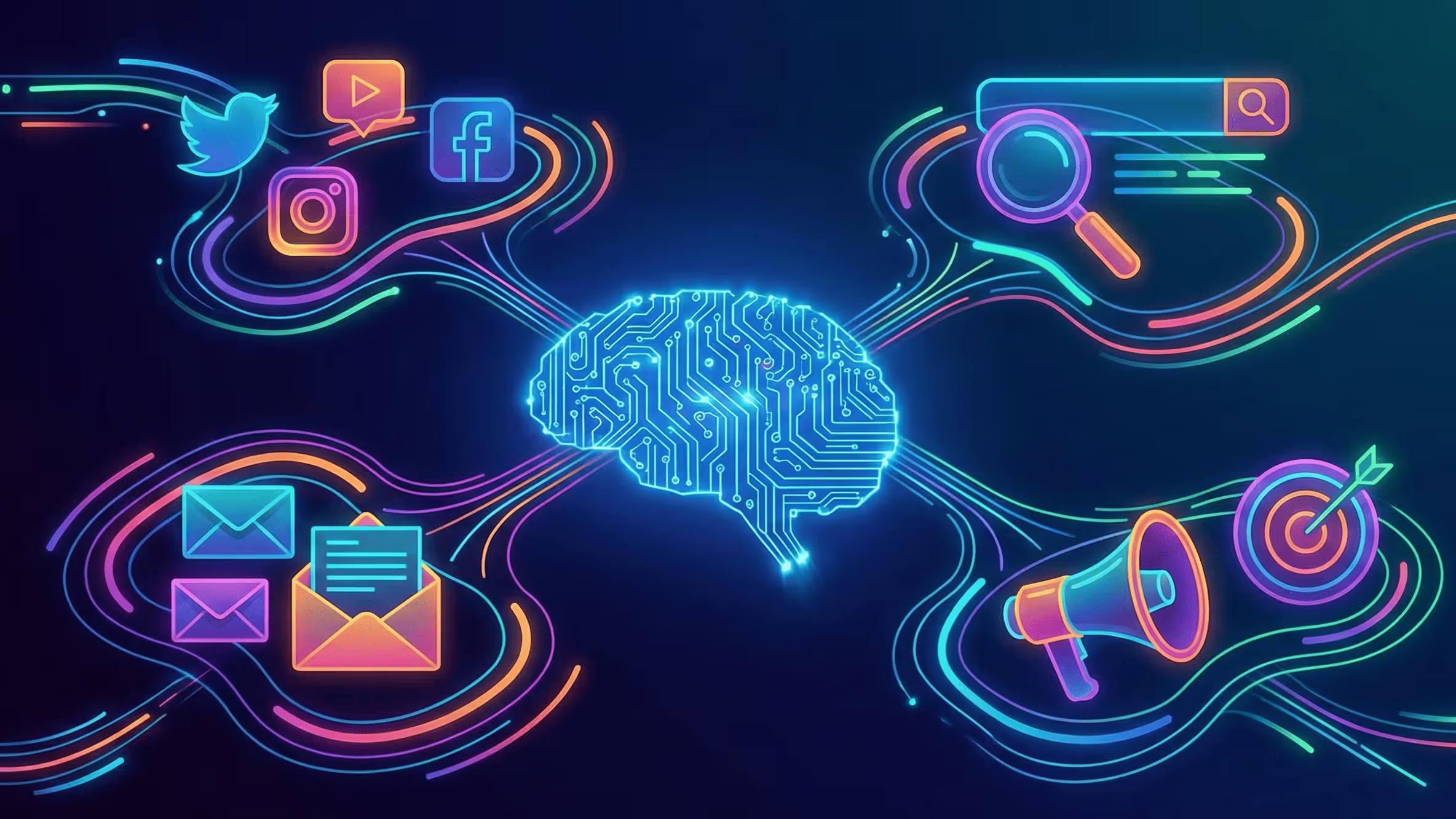
Programmatic Advertising and Smart Ad Targeting
Machine learning flips traditional advertising on its head. Instead of running broad campaigns and hoping for the best, AI enables hyper-targeted ads that reach the right audience at the right time.
Programmatic platforms use algorithms to adjust ad spending and targeting rapidly, analyzing user data and demographics to maximize campaign effectiveness. This efficient approach reaches the right individuals at the right moment, providing scalability, cost-effectiveness, and efficiency for advertisers.
AI-driven real-time bidding determines the best price to bid for ad placements by considering factors like audience relevance, past performance, and campaign goals. The algorithms constantly learn and adapt, adjusting bid strategies based on real-time performance data. Advertisers see significant benefits: optimized costs, better targeting precision, and higher returns on ad spend.
Machine learning also powers predictive modeling to forecast future behaviors based on historical data patterns. Combined with real-time audience segmentation updates, advertisers can proactively reach individuals before they even express interest in a product or service. Google Ads and Facebook Ads already use machine learning to adjust bidding strategies dynamically, helping marketers maximize ad spend efficiency while reducing wasted budget on unqualified leads.
Email Marketing Automation
AI transforms email marketing from spray-and-pray to surgical precision. Predictive analytics determines the best times to send emails based on individual recipient behavior patterns. Advanced segmentation divides audiences by behavior and demographics to deliver personalized messages.
Companies use AI to segment their audience and deliver personalized content, achieving a major increase in open rates. These aren't incremental improvements, but game-changers that transform email from an annoyance into a welcome message.
Social Media Management
AI analyzes social media conversations to understand customer sentiments and identify trends, giving businesses valuable insights into customer preferences. Natural language processing algorithms help identify the most relevant topics and keywords for target audiences, enabling creation of engaging and targeted social media content.
Platforms like Sprout Social use AI to monitor brand mentions, analyze sentiment, and optimize posting schedules based on when audiences are most active. This automation maintains consistent social media presence while building stronger relationships with target audiences.
Sentiment analysis using AI assesses customer sentiment from social media and other sources, aiding in brand management and development of marketing strategies. Mastercard used IBM Watson Advertising Accelerator to detect the most engaging creative elements for each target audience based on location, device type, and time of day, boosting awareness for their Stand Up to Cancer partnership.
The Role of CRM and Marketing Automation
Unified CRM Systems
Customer relationship management platforms powered by AI provide a single source of truth for all customer information, including contact details, purchase history, communication preferences, and support interactions.
Modern CRM technology empowers businesses to deliver dynamic and personalized content based on real-time user behavior, including segmented push notifications, email campaigns, personalized bonus offers based on patterns, and adaptive messaging powered by behavioral triggers. When paired with gamification layers, CRM platforms deliver tailored experiences that keep customers coming back.
The benefits compound quickly. CRM systems improve customer relationships by facilitating personalized communication, better customer service, and stronger loyalty through understanding individual needs. They streamline sales processes by automating tasks like lead assignment, contact management, and opportunity tracking, improving efficiency and productivity. Enhanced collaboration improves communication among sales, marketing, and customer service teams by providing a shared view of customer data.
Marketing Automation Integration
Integrating marketing automation with CRM creates a powerful combination. Workflow automation eliminates repetitive tasks such as lead scoring, follow-ups, and customer journey mapping, allowing teams to focus on high-value activities.
Email marketing integration within CRM automation software enables businesses to manage bulk email campaigns effortlessly while delivering personalized messaging that resonates with individual recipients. Social media automation schedules and publishes posts across various platforms, monitors mentions, engages with followers, and tracks key metrics.
Gamification and CRM in iGaming
Gamification applies game-like features such as rewards, levels, leaderboards, and challenges within CRM systems to create more immersive and interactive experiences. When integrated into CRM platforms, these elements drive long-term player loyalty in competitive industries like iGaming.
The psychological principles work. Gamification triggers reward anticipation, competition, and achievement, creating emotional connections that increase stickiness and reduce churn. Real-time feedback loops like instant reward notifications strengthen engagement and reduce abandonment rates.
Key trends shaping the space include AI-driven personalization using predictive analytics to tailor missions and incentives, cross-platform gamification ensuring consistent experiences across mobile, desktop, and app channels, and social mechanics allowing users to compete or collaborate with friends via CRM-integrated leaderboards.
Top-tier platforms now deploy gamified CRMs for new user onboarding with first deposit missions, win-back campaigns for inactive players, VIP loyalty programs that gamify exclusive access, and referral gamification to encourage network growth. Companies like Optimove offer AI-orchestrated gamification integrated with CRM campaigns, boosting engagement, loyalty, and lifetime value.
Smartico.ai: Unified CRM and Gamification for iGaming
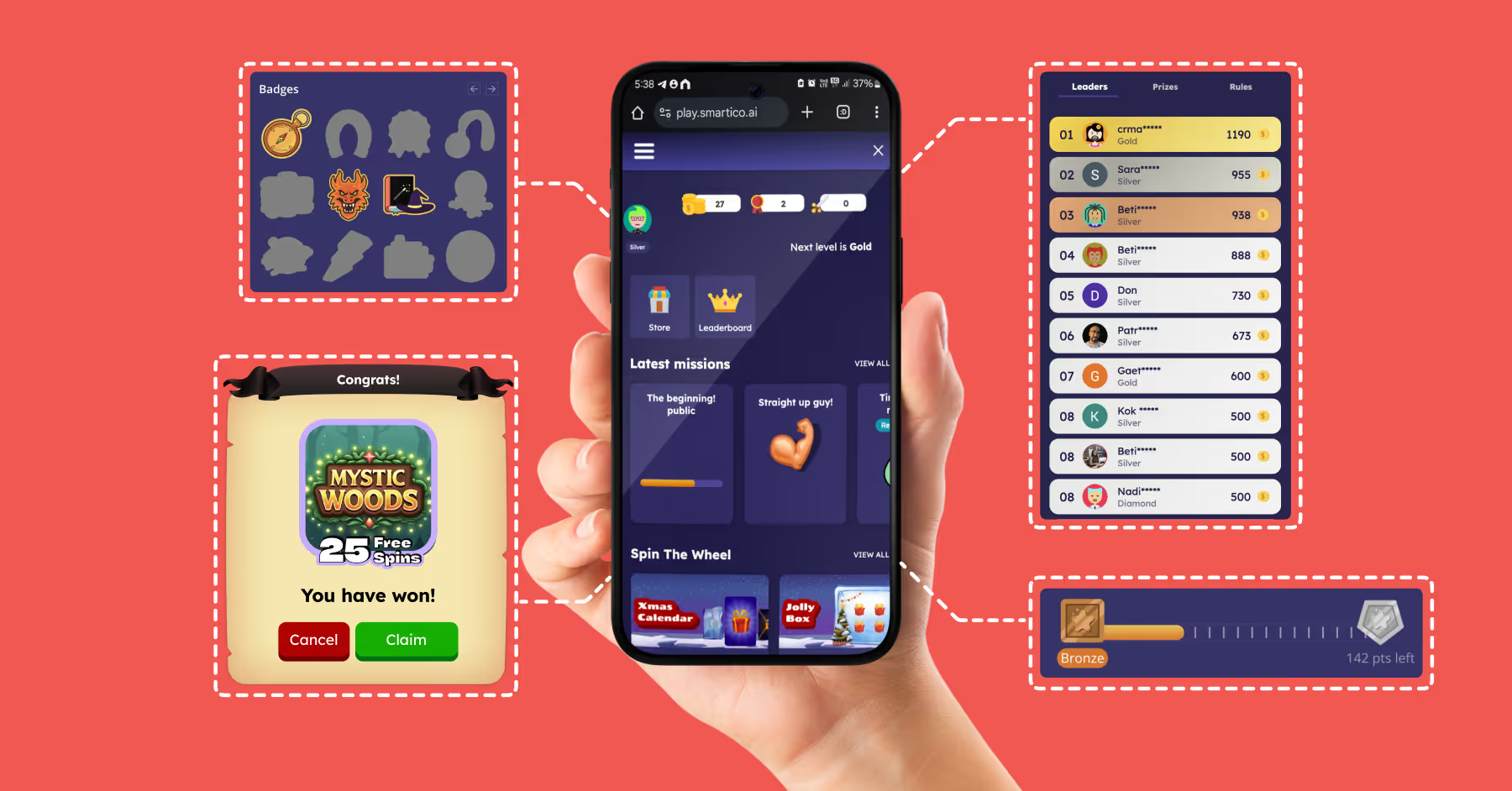
For businesses in the iGaming industry looking to implement AI-powered CRM and gamification, Smartico.ai offers a comprehensive solution that brings together the best of both worlds.
Founded in 2019, Smartico.ai is the first and leading unified Gamification and CRM Automation software designed specifically for the iGaming sector. It combines real-time gamification mechanics with CRM automation, loyalty program management, personalization engines, and player retention solutions in a single integrated system.
What sets Smartico.ai apart is its ability to deliver personalized player experiences at scale. The software uses AI-driven behavioral triggers and predictive analytics to create targeted campaigns that resonate with individual players. Real-time gamification features like missions, tournaments, leaderboards, and achievements keep players engaged while CRM automation ensures they receive the right message at the right time across all channels.
The results speak for themselves. iGaming operators using unified CRM and gamification platforms report engagement increases of up to 60% and player retention improvements of up to 50%. By combining behavioral data with real-time incentive engines, Smartico.ai helps operators transform casual players into veterans while maximizing lifetime value.
For iGaming businesses serious about player retention and personalized engagement, Smartico.ai provides the tools to stay competitive in an increasingly crowded market. Book a free demo below to see how unified CRM and gamification can help your business specifically raise retention and revenue like nothing you’ve tried before.
{{cta-banner}}
Benefits of AI Marketing

Improved ROI and Revenue Growth
Marketing teams implementing AI solutions see an average ROI of 300%, stemming from revenue growth and operational savings. Companies using AI for customer targeting report much higher conversion rates and major increases in average order values.
Sales teams equipped with AI-powered insights close deals much faster and achieve much higher values. Sector-specific gains reveal retail companies experiencing revenue growth from personalized shopping experiences, while financial services report solid increases through predictive analytics. Break-even points arrive quickly, with most companies recouping investment within three quarters.
Cost Reduction and Efficiency
AI dramatically reduces customer acquisition costs. Properly implemented AI can reduce acquisition costs in a big way through better targeting and personalization. Automation of routine tasks like content creation, email campaigns, and social media posting frees up marketing teams to focus on strategic activities.
Budget optimization improves significantly. AI algorithms refine advertising strategies by analyzing user behavior and real-time data, focusing spend on strategies statistically more likely to yield positive results. One construction equipment supplier used AI-based chatbots to provide personalized recommendations, reducing customer acquisition costs while improving engagement rates.
Operational efficiencies compound over time. Marketing automation reduces time spent on repetitive, data-driven tasks, unlocking greater value from marketing technologies. Organizations investing deeply in AI see sales ROI improve by 10-20% on average.
Enhanced Customer Engagement
AI enables businesses to understand and anticipate customer needs, creating experiences that feel personalized rather than generic. This drives measurable improvements in engagement metrics across all channels.
AI analyzes behavioral data to uncover patterns and predict customer needs, leading to more targeted and timely interactions. This enhances customer satisfaction and loyalty by ensuring seamless and relevant experiences throughout the customer journey.
Personalization through loyalty programs strengthens relationships. Research shows 73% of customers want personalized loyalty program rewards, but only 45% of brands currently offer them. Brands with more mature personalization abilities see greater improvement across key customer metrics including engagement, satisfaction, order value, and lifetime value than their less mature peers.
Data-Driven Decision Making
AI transforms complex datasets into clear, actionable insights that marketers can easily interpret and use. This accessibility means marketers don't need deep technical expertise to understand consumer trends, sentiment analysis, or market shifts.
Enhanced accuracy in customer insights and trend predictions represents a major advantage. Traditional analysis methods miss subtle sentiments expressed in customer feedback or emerging trends hidden in vast amounts of data. AI detects these subtleties, providing more accurate and comprehensive views of customer sentiments, preferences, and behaviors.
Predictive models enable marketers to anticipate customer behavior and allocate budgets effectively. Meta Ads and Google Ads increasingly use AI to maximize results by identifying users within target audiences who are likely to complete desired actions. This type of AI application has become less of a trend and more of a necessity to remain competitive.
Best Practices for Implementing AI Marketing

Start Small and Scale Strategically
Don't try to implement every AI tool at once. Begin with small projects, measure results carefully, and expand what proves effective.
A phased implementation approach works best. Month one focuses on data preparation and infrastructure setup, ensuring clean, centralized data and baseline KPIs. Months three through four deploy AI agents for routine optimization tasks, begin predictive analytics with existing customer data, and start dynamic testing on key landing pages. Months five through six implement computer vision for visual content monitoring, deploy multimodal AI for cross-channel optimization, and scale successful automation across all marketing channels.
This measured approach helps teams build confidence while avoiding common pitfalls.
Prioritize Data Quality and Integration
AI flourishes on copious, high-quality data. Misaligned data causes inaccurate forecasts and ineffective marketing campaigns. Invest in data cleansing, validation, and integration tools to address this foundational issue.
Inadequate or unreliable data leads to misdirected marketing efforts that damage client relationships. For AI systems to operate at peak efficiency, they need large volumes of high-quality data. Small and local businesses often face data scarcity that hampers AI efficiency.
Solutions include creating unified customer profiles that combine data from multiple sources, ensuring systems can sync information in real-time, and establishing data governance policies that maintain accuracy and compliance. AWS Marketplace and similar platforms simplify access to AI-powered tools, offering centralized deployment and management that accelerates time to value while ensuring security and scalability.
Maintain Human Oversight and Creativity
AI excels at crunching numbers and spotting patterns, but there's a growing concern among creative directors that teams become too reliant on AI-suggested solutions. The magic of marketing often comes from wild, human ideas that no algorithm would ever suggest.
Finding the sweet spot between AI efficiency and human creativity is not just challenging – it is an art form. Use AI to handle data analysis, routine optimization, and pattern recognition, but rely on humans for strategic thinking, creative concepts, and understanding nuanced cultural contexts.
Quality control remains essential. AI-generated campaigns can go completely off the rails with wrong tone, misunderstood cultural references, and other issues. Agencies learn they need robust quality control systems, which sometimes negate the time-saving benefits AI promised in the first place. The solution: establish clear review processes where humans verify AI outputs before they reach customers.
Emphasize Transparency and Ethics
Ethical AI marketing involves using artificial intelligence while upholding principles like transparency, fairness, accountability, and social responsibility. This ensures marketing strategies respect user privacy, avoid bias, and foster trust between businesses and consumers.
Transparency means clearly communicating how AI systems work and how they're used in marketing. Consumers should understand how their data is collected and used by AI tools. Use labels like "Powered by AI" to signal transparency and build credibility.
Data privacy and compliance represent foundational requirements. Regulations such as GDPR in Europe and CCPA in the United States require businesses to be transparent about data collection, storage, and use. Violations lead to significant fines and reputational damage.
Conduct regular AI audits to check for bias, accuracy, and compliance with ethical guidelines. Give users control over their personal information and keep them informed about how their data is used. This builds trust in your brand. Companies like Unilever demonstrate how ethical AI practices enhance both customer trust and marketing effectiveness by making privacy policies accessible and easy to understand.
Measure and Optimize Continuously
Track key performance indicators to measure AI marketing success: cost per acquisition reduction, engagement lift percentages, response time improvements, team productivity gains, and revenue attribution.
AI systems continuously learn from more interactions and data points, meaning performance improves over time. Long-term ROI projections look extremely promising for early adopters, with teams that invest strategically potentially seeing 3-5× returns by 2030.
Without measurement, you can't optimize. Establish clear metrics before implementation, track them consistently, and use insights to refine your approach.
AI-driven systems connect content performance back to overall marketing objectives, revealing weak spots and areas of untapped opportunity. Marketers quickly refine their approach based on deep, granular insights, maintaining an edge in crowded markets.
Challenges and Considerations
Implementation Complexity
Integrating AI into marketing strategies can be complex and challenging, requiring extensive expertise and resources. For many businesses, particularly smaller ones, this represents a significant obstacle.
The complexity of AI algorithms poses challenges. While AI analyzes customer behavior efficiently, it can be difficult for businesses to comprehend AI intricacies and use them to maximum capabilities. This leads to overwhelm and uncertainty as companies struggle to navigate technical aspects.
Change management presents another obstacle. Integrating AI disrupts existing workflows and requires team members to acquire new skills. Transparent communication about AI benefits and training team members to cultivate acceptance and proficiency are necessary for smooth implementation.
Solutions include partnering with experienced vendors who understand your industry, investing in employee training and education, and starting with simpler AI applications before tackling complex implementations.
Budget Constraints
Many marketers state that budget constraints are a challenge of adopting AI within marketing departments. Implementation requires substantial investment in infrastructure and skilled personnel, which can be a barrier for cash-strapped businesses.
However, it's crucial to highlight the long-term cost-effectiveness of AI. By automating routine tasks, delivering personalized marketing, and providing insightful analytics, AI helps businesses increase efficiency, reduce costs, and drive revenue.
Most businesses see initial improvements within 4-6 weeks, with significant ROI gains by month three to four. The key is starting with strategic implementation plans rather than random tool adoption.
Data Privacy and Security Concerns
Strict data privacy laws restrict access to essential customer data, hindering creation of personalized marketing campaigns. Regulations continue evolving, requiring ongoing attention and adaptation.
Building trust through privacy-friendly data strategies is essential. This approach extends beyond mere compliance with evolving regulations – it's about cultivating trust when consumers are becoming more aware and concerned about their digital presence.
Solutions include implementing robust data governance policies, obtaining explicit user consent for data collection and use, providing transparency about AI decision-making processes, and giving customers control over their personal information. Companies that succeed in delivering personalized experiences while genuinely committing to safeguarding consumer privacy will thrive in 2025 and beyond.
The Black Box Problem
AI models often operate like black boxes, making it difficult to explain exactly how they made particular decisions. This lack of transparency is becoming a liability.
Agencies need to explain and justify AI-driven decisions to clients and stakeholders, but the technology frequently resists simple explanations. This challenge requires balance between leveraging AI's powerful capabilities and maintaining accountability for marketing decisions.
The solution involves documenting AI decision-making processes as thoroughly as possible, maintaining human oversight for critical decisions, and being transparent with stakeholders about both AI capabilities and limitations.
The Future of AI Marketing

Looking beyond 2025, several emerging trends will shape the AI marketing landscape. Voice and conversational AI will integrate across all touchpoints, allowing customers to interact with brands through natural speech. Augmented reality marketing powered by computer vision will create immersive brand experiences.
Hyper-personalization will adapt in real-time to customer signals rather than relying on predetermined segments. Predictive analytics will anticipate needs before customers express them. Content ecosystems will optimize based on performance metrics while ethical frameworks balance personalization with privacy concerns.
The most significant shift will be AI's emergence as an essential strategic ally. We're transitioning from basic data analysis and recommendation systems to an era where AI actively engages in high-level strategy and decision-making. AI systems will forecast market trends with unparalleled precision, simulate complete campaign outcomes prior to launch, and optimize resource distribution in real-time.
Marketers who thrive won't be those who chase every emerging trend but rather those who grasp how to weave innovations into a cohesive strategy centered on the customer. Success in 2025 and beyond won't solely hinge on embracing new technologies – it will rely on employing them thoughtfully and strategically to generate authentic value.
Frequently Asked Questions
1. What types of AI are used in marketing?
The main types of AI used in marketing include machine learning for pattern recognition and predictive analytics, natural language processing for understanding customer language and sentiment, computer vision for analyzing visual content, and recommendation engines for personalized product suggestions. These technologies often work together to create comprehensive marketing solutions.
2. How much does AI marketing cost?
AI marketing costs vary widely depending on implementation scale and complexity. Small businesses can start with affordable SaaS tools ranging from $50-500 per month, while enterprise implementations may require investments of $50,000-500,000 or more for custom solutions. However, most companies see positive ROI within three to nine months, making the investment worthwhile for businesses serious about scaling their marketing efforts.
3. Can small businesses benefit from AI marketing?
Yes, though implementation approaches differ from enterprise solutions. Small businesses should start with accessible AI tools like email marketing platforms with built-in AI features, chatbots for customer service, or social media management tools with AI-powered scheduling and analytics. Focus on solving specific problems rather than implementing comprehensive AI infrastructure, and scale gradually as you see results and build expertise.
4. How does AI marketing affect jobs?
AI transforms marketing roles rather than eliminating them. Repetitive tasks like data analysis, report generation, and routine optimization become automated, allowing marketers to focus on strategy, creativity, and high-value activities. The shift means marketers need to develop new skills around working with AI tools, interpreting AI-generated insights, and maintaining the human touch that AI can't replicate.
5. What's the difference between marketing automation and AI marketing?
Marketing automation executes predefined workflows based on triggers you set up, like sending emails when someone downloads a resource. AI marketing goes further by learning from data, making predictions, and optimizing campaigns autonomously without explicit programming for every scenario. Think of automation as following a recipe, while AI learns to cook based on ingredients, preferences, and outcomes.
6. How do I get started with AI marketing?
Start by identifying specific marketing challenges AI could solve, such as improving email open rates or reducing customer churn. Choose one area to focus on initially, select appropriate tools that integrate with your existing systems, ensure your data is clean and accessible, and train your team on both the technology and the strategic thinking required to use it effectively. Measure results carefully and expand successful implementations gradually rather than trying to transform everything at once.
Did you find this article helpful? If so, consider sharing it with other industry professionals such as yourself.