Player Lifecycle Marketing for iGaming: The Complete Framework
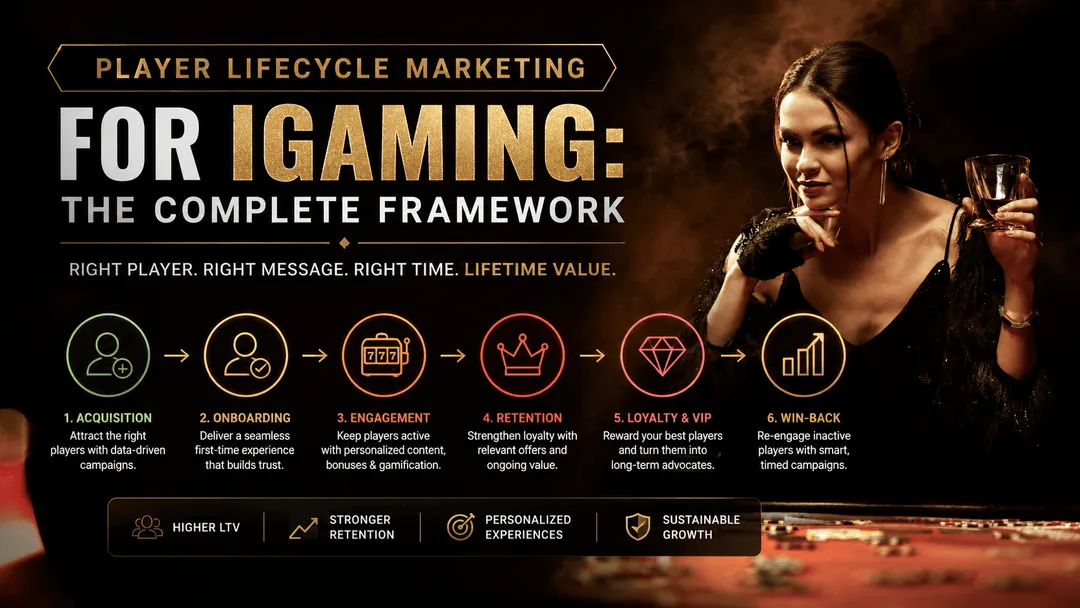
Winning a new player is expensive. Keeping one is where the profit is. Player lifecycle marketing is how iGaming operators turn a single deposit into a long, valuable relationship, by matching the right message and the right reward to where each player actually is in their journey, instead of sending everyone the same promo.
This guide is the map: what player lifecycle marketing is, the stages every player moves through, and how to build a program around them. For the detailed deep dives on each leg of the trip, we link out as we go.
What Is Player Lifecycle Marketing?
Player lifecycle marketing is the practice of tailoring your communication, offers, and gamification to the stage a player has reached with your brand. A first-time depositor, a regular weekend player, and someone who hasn't logged in for three weeks all need something different. Lifecycle marketing treats them differently, automatically, based on their behavior.
It sits on top of your iGaming CRM, which supplies the data and the automation. The CRM is the engine. Lifecycle marketing is the strategy that decides what the engine should do, and when.
Why It's Important in iGaming
Acquisition keeps getting more expensive as competition grows and advertising rules tighten in more markets. Every player you lose early is money spent to bring them in with nothing to show for it. A lifecycle approach protects that investment: it moves players toward their first deposit, keeps active players engaged, and steps in before at-risk players go quiet.
Sending the same bonus to your entire database wastes budget on players who would have deposited anyway and annoys the ones who wanted something else. Matching the offer to the stage is what makes retention spend efficient. For a fuller look at why retention is the lever, see our guide to player retention.
The Stages of the Player Lifecycle
Every operator draws the map a little differently, but the core stages look like this. Each one has its own goal and its own signals to watch.
Acquisition and registration
A visitor signs up but hasn't deposited yet. The goal is to reach that first deposit while intent is high, with a clear welcome flow and a reason to act now.
Activation
The first deposit is the moment that decides most long-term value. A strong onboarding sequence, a well-timed welcome bonus, and an early win keep momentum going.
Growth and active play
The player is depositing and playing regularly. Here you build habit and raise value with personalized offers, missions, tournaments, and rewards that make ongoing play feel like progress.
Retention and loyalty
Engaged players are your most profitable, and the easiest to lose to a competitor's offer. Loyalty ladders, VIP treatment, and consistent value keep them invested. Our player retention guide walks through the day-7 and day-30 moments that matter most.
At-risk and churn
Play slows, deposits drop, sessions get shorter. Those are the warning signs, and the window to act is short. Catching them early is the difference between a nudge and a lost player. Our player churn prevention guide breaks down the signals and the win-back tactics stage by stage.
Reactivation
A lapsed player isn't gone for good. A targeted, relevant reason to return, tied to what they used to enjoy, brings a share of them back at a fraction of new-acquisition cost.
VIP
Your highest-value players deserve their own track: personal account management, tailored rewards, and high-touch communication that protects the revenue they represent.
How to Build a Player Lifecycle Marketing Program
You don't need to run all of this at once. This is the order that works.
- Map your stages and trigger points. Define what each stage means for your brand and the events that move a player between them: registration, first deposit, a 7-day gap, a 30-day gap, a first sign of churn risk. These become the triggers your campaigns fire on.
- Segment before you personalize. Don't try to speak to everyone at once. Group players by value, behavior, and stage, then build flows for your priority segments first: VIPs, new depositors, at-risk churners. Our guide to cohort analysis shows how to turn those patterns into action.
- Tailor the message to the stage. A welcome message and a win-back message have different jobs. Write copy and choose offers that fit where the player is, rather than one template stretched across all of them.
- Pick the right channel for the moment. Time-sensitive nudges suit push or SMS; detailed offers suit email. Our breakdown of communication channels covers which channel fits which moment.
- Reward at the right time. Lifecycle marketing works best when the message carries a reason to act. Tie gamification (missions, leaderboards, free-to-play games) and a smart bonus engine to each stage so incentives land when they will move behavior, without overspending.
- Measure and adjust. Track how players move between stages and where they stall. If a stage leaks players, that is where to focus next.
Where CRM Automation and Gamification Fit
Lifecycle marketing is only as good as the system running it. CRM automation handles the triggers, segmentation, and timing so campaigns fire on real behavior instead of manual sends. Gamification adds the pull, turning routine play into visible progress that keeps players moving through the lifecycle. And AI models help you see stages before they show up in the numbers, flagging churn risk or a rising VIP early enough to act. Together they turn a lifecycle map into an automated, always-on program.
How Smartico Can Help You
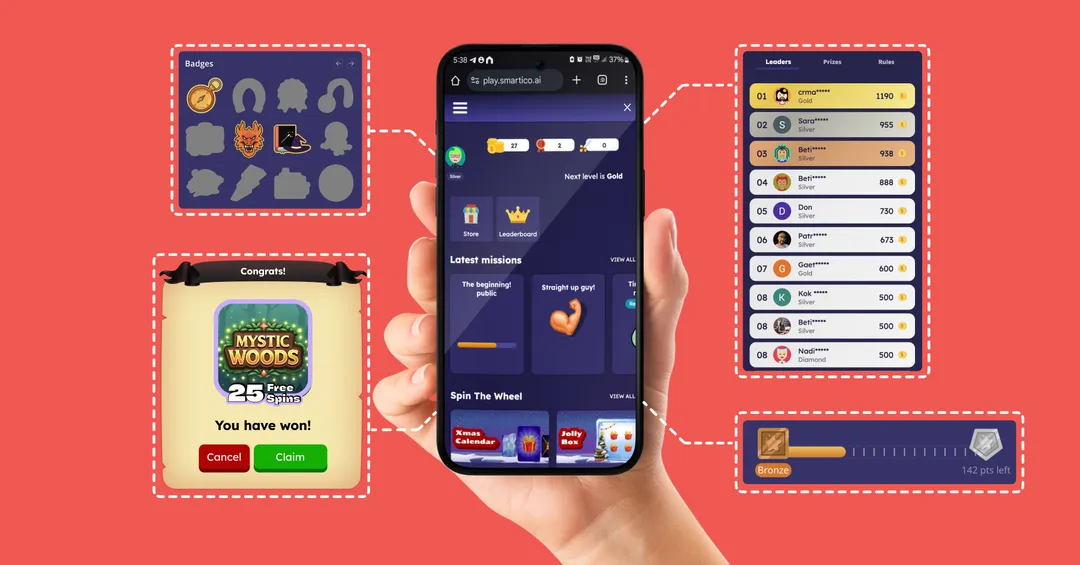
Smartico is a unified CRM and gamification platform built for iGaming, so the whole lifecycle lives in one place. The missions, prizes, leaderboards, bonuses, and segments all run off the same real-time player data, which means an at-risk player can be caught and re-engaged, or a VIP rewarded, the moment the behavior happens. To see how it maps to your player base, book a demo.
FAQ
What's the difference between player lifecycle marketing and CRM?
Your CRM is the platform. Lifecycle marketing is the strategy that uses it, deciding what to send at each stage and when. See our iGaming CRM guide for how the platform side works.
Where should an operator start?
Map your stages and trigger points, then build flows for your priority segments (VIPs, new depositors, at-risk players) before trying to cover everyone.
How is this different from a sales funnel?
A funnel usually ends at conversion. The player lifecycle keeps going well past the first deposit, through retention, churn, and reactivation, which is where most iGaming value is created.
Did you find this article helpful? If so, consider sharing it with other industry professionals such as yourself.