Same Message, Better Hour: AI Send Times Lift Push Clicks by 38%
Send time optimization tested on casino players: a push sent in the player's own AI-predicted best hour got 38% more clicks. Someone else's best hour did almost nothing.
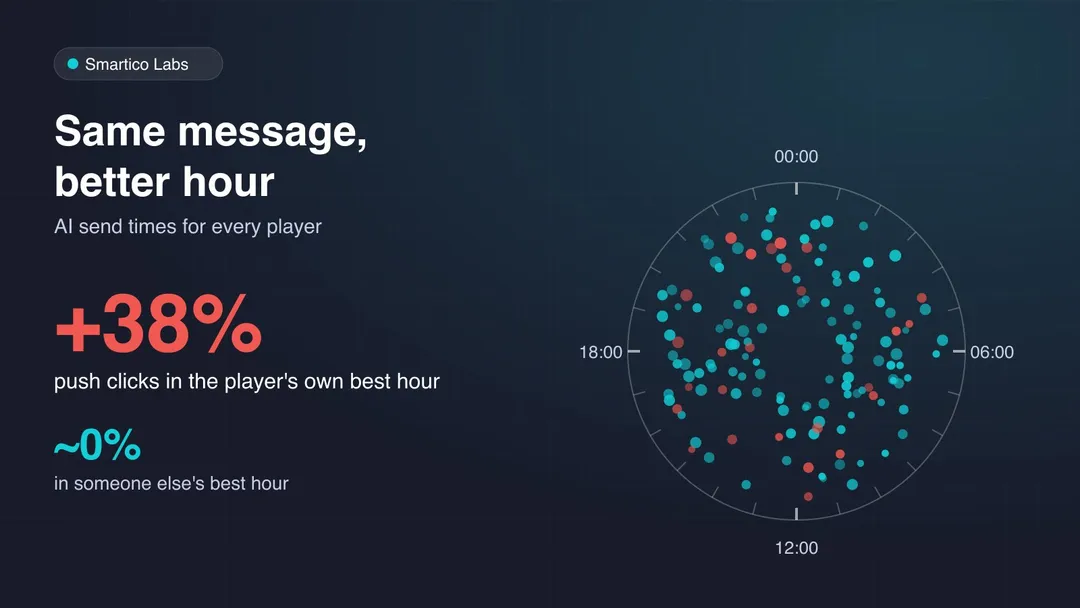
Why we looked
Every CRM team asks the same question: when should this message go out? Most teams pick one hour for everyone, often the brand's busiest one.
Earlier industry research says that hour hardly matters. Studies of billions of marketing messages found that moving a whole campaign to another hour barely changes click rates. We wanted to know what happens when the hour is chosen for each player instead.
Smartico's Best Time model learns when each player is usually active (logins, deposits, bets) and predicts their best hours for every day of the week. We checked whether messages that land in those hours really do better.
How we tested it
A simple comparison can fool you. Players who are active at many hours are both more likely to get a message "in their best hour" and more likely to click anyway. So we compared each player with themselves:
- the same player's messages that happened to land in their best hour,
- against their messages sent at any other hour.
Then we ran the same test again with a twist: every player got another random player's predicted hours. If the lift came only from "evenings are good", this fake test would show it too.
The player's own hour wins
At the median brand, push clicks rose by 38% when the message landed in the player's own best hour. With someone else's best hour, the change was almost zero.
Email shows the same pattern on a smaller scale: clicks +11% with the player's own hour and about zero with a random one. So the gain does not come from the time of day in general. It comes from knowing this player.
This is not one big brand pulling up the average. Push clicks were higher in the best hour on every brand we checked, and email clicks on about 9 in 10.
There is no single best hour
Here is how the model sees one real player. On weekdays, this player is most active in the evening. On Friday and Saturday, the best hours move to around midday.
Now multiply this by every player on a brand. People spread across the whole day.
Even at a brand's busiest hour, fewer than half of its players are in their best hour. So a campaign sent at the "best hour for the brand" still reaches most players at the wrong time.
When the AI picks the hour
The tests above use messages that landed in the best hour by chance. Messages that the model scheduled itself got 35% more push clicks and 40% more email clicks than the same players' other messages. These are different campaigns, so this check is rougher, but it points the same way.
How this compares
- Campaign timing versus personal timing. Industry studies found that moving a whole campaign to another hour barely changes clicks. Our random-hour test agrees: a generic hour does nothing. The player's own hour is what moves clicks.
- Vendor claims. Send-time tools often quote 3–5% more email clicks. Our email click lift (+11%) is above that range, and push (+38%) is far above it.
What this means for operators
- Use best-time sending for push first, then email. These are the channels where the player's own hour gives the biggest lift.
- For SMS, a good time of day does most of the work. Avoid the night. Per-player timing adds only about 5% more clicks.
- Win the subscriber first. Timing only helps players who still receive push. Our push permission study shows when and how to ask without losing players for good.
FAQ
What is the best time to send push notifications?
There is no single best time for everyone. A push sent in the player's own AI-predicted best hour got 38% more clicks than the same player's pushes at other hours. Even at a brand's busiest hour, fewer than half of its players are in their best hour.
Does send time optimization work?
Yes, when the hour is personal. Messages scheduled by the model got 35% more push clicks and 40% more email clicks than the same players' other messages. When we gave each player someone else's best hour, the lift almost disappeared.
What is the best time to send marketing emails to players?
The player's own best hour: email clicks rose 11% when an email landed in it, above the 3–5% that send-time tools often quote. Even at a brand's busiest hour, fewer than half of players are in their best hour, so one campaign hour misses most of them.
What is the best time to send SMS to players?
Start with a good time of day and avoid the night. Per-player timing adds a smaller lift for SMS: clicks rise about 5% in the player's own hour, against 38% for push.
Data and method
- Data. Smartico campaign data from production brands that use the Best Time model, September – October 2026: push, email and SMS sends with their clicks.
Show the full methodHide the full method
- Clicks, not opens. We do not use email opens. Many mail services now load emails automatically on delivery, so an "open" no longer shows that a person read the message.
- Best hour. A message counts as "in the best hour" when its send hour and weekday fall in the player's predicted best slots.
- Comparison. Each player is compared with themselves: messages in their best hour against their messages at other hours on the same channel. We report the median brand.
- Random-hour test. Each player gets another random player's predicted hours from the same brand, and the comparison is repeated.
- Limits. Predictions keep learning as players play, so a click that starts a session can slightly shape them. Main results use players with a long play history, whom a few sessions barely move, and the lift holds for the most active players. The "AI picks the hour" check compares different campaigns.
- Privacy. We report shares and changes only. No brand or player is named.
How to cite
Smartico (2026). Same message, better hour: AI send times lift push clicks by 38%. https://www.smartico.ai/resources/labs/best-time-to-send-push-notifications
Smartico's Best Time model is one of the Smartico AI models. It chooses the send hour for email, push, SMS and messengers in any campaign step.
More from Smartico Labs
 Data study
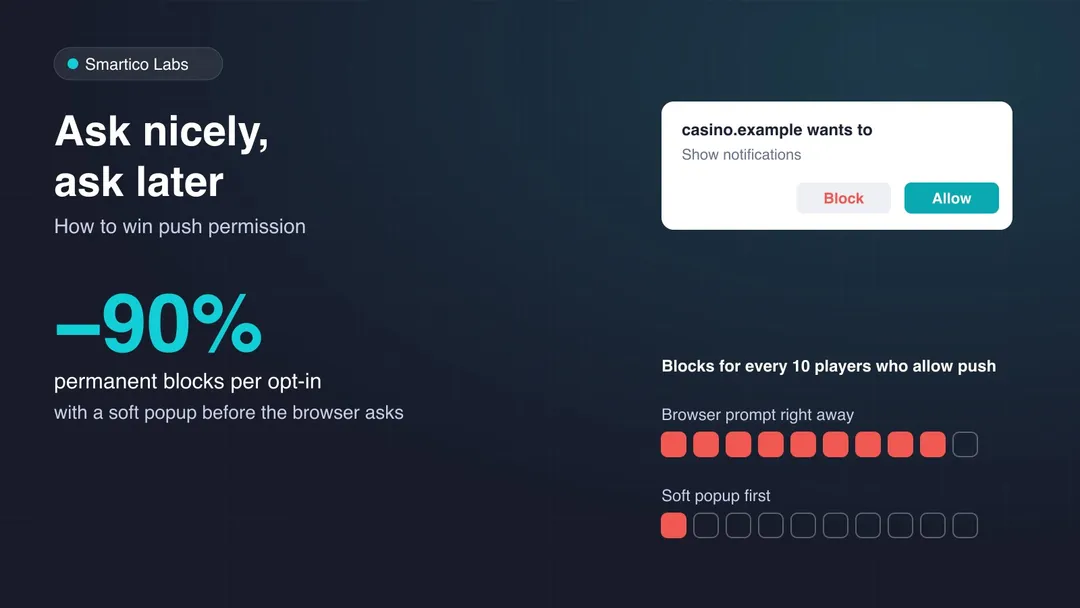
Ask Nicely, Ask Later: How to Win Push Permission Without Losing Players for Good
Asking for push permission straight away loses about one player for good per opt-in. A soft popup first cuts those losses by 90%. Data from tens of millions of casino players.
 AI
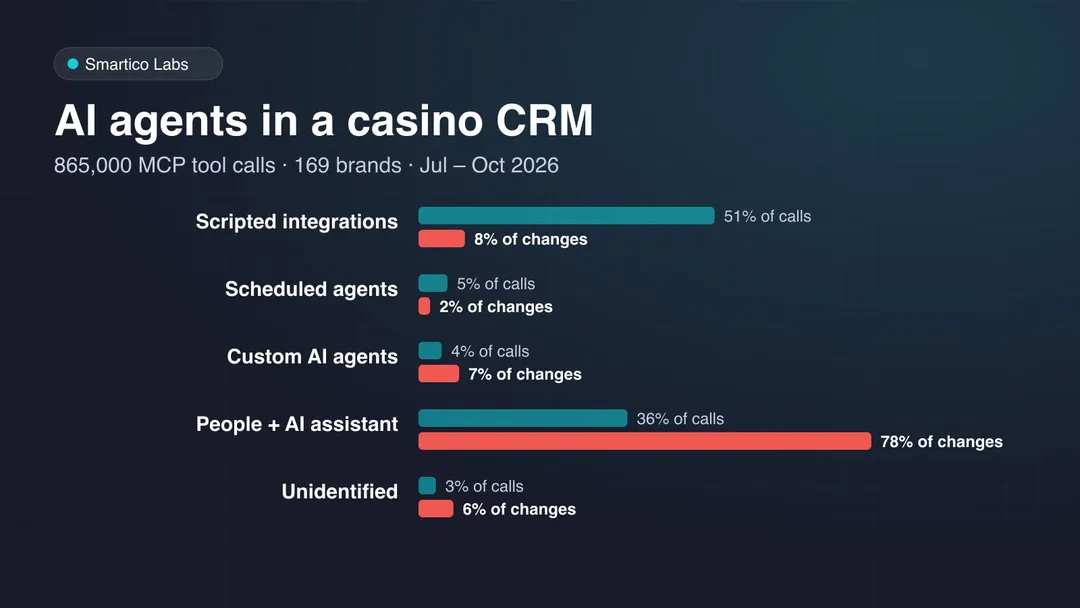
Machines Read, People Decide: What 865,000 AI Agent Calls Show About Casino CRM
Four months of AI agents working inside a casino CRM: 30 times more brands, whole journeys built from one message, and why people still make 78% of the changes.
 Data study
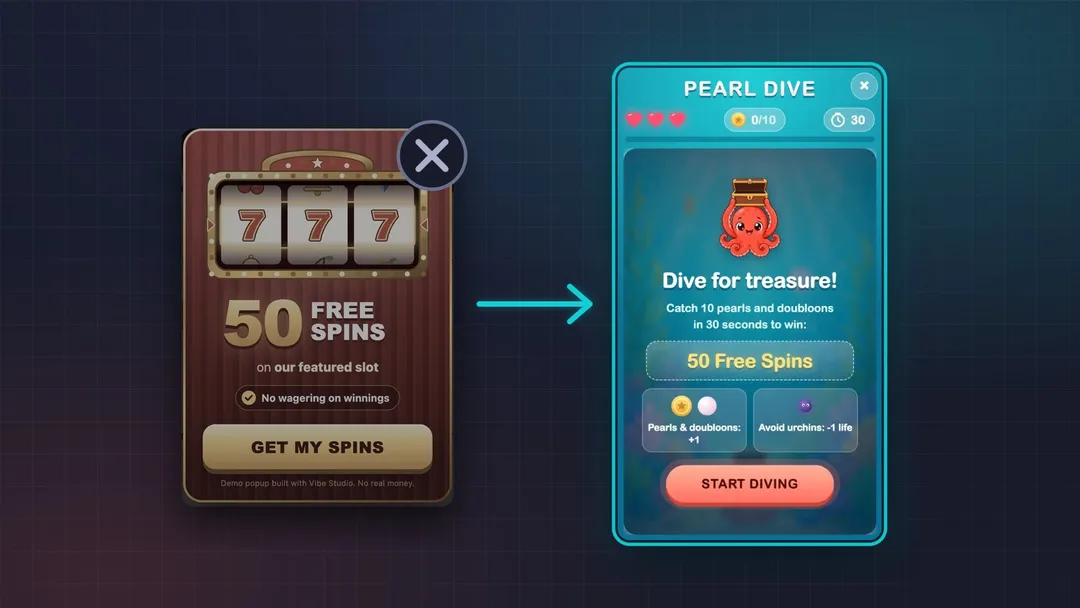
Doodles vs Plain Promo Popups: A Study of Smartico Brands, 2023–2026
21.8 billion popup views on Smartico, 2023–2026. At brands that added doodles, the median doodle got 2.4× the response of the same brand’s plain promo popups.
Try what we build
Much of our R&D is open to try: a demo casino, games made in Vibe Studio and the code we publish.