Ask Nicely, Ask Later: How to Win Push Permission Without Losing Players for Good
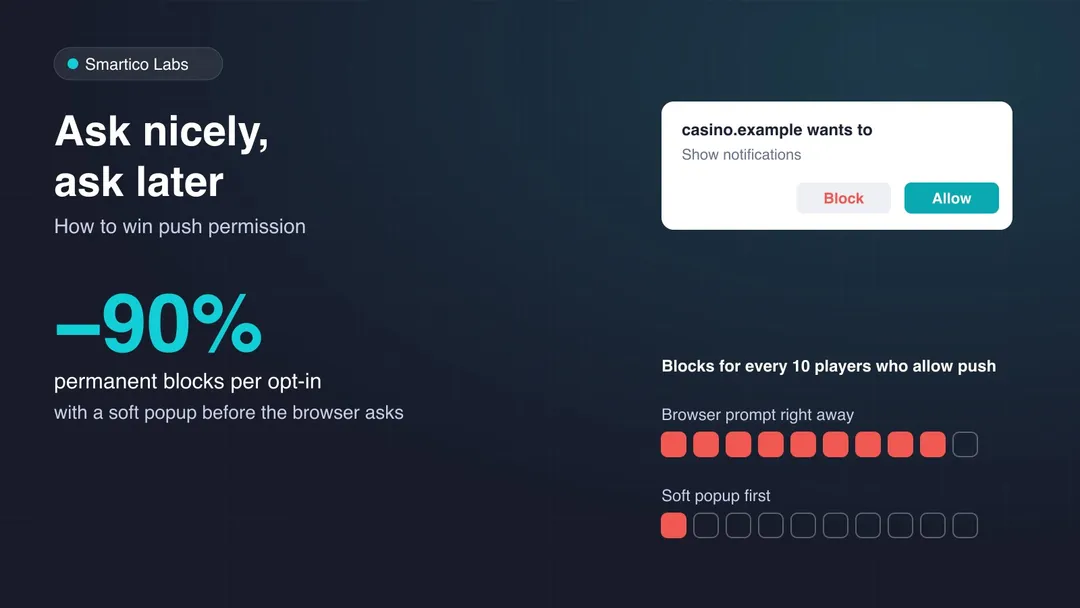
Asking for push permission straight away loses about one player for good per opt-in. A soft popup first cuts those losses by 90%. Data from tens of millions of casino players.
Why we looked
Every casino site wants push permission, and every CRM team asks the same questions. Should we ask at registration? With our own popup first, or with the browser prompt straight away? Inside a gamification mission? In the middle of a deposit or a withdrawal? And what should the popup say?
The browser makes this choice harder than it looks. When a player clicks "Block" in the browser window, the site can never ask again. The player would have to find the site settings in the browser and change them by hand, and almost nobody does. So every way of asking has two results: how many players say yes, and how many are lost for good.
We followed tens of millions of new players across brands that use Smartico, from registration to their push status months later. We compared the ways brands ask, read the popups they show (we paraphrase them here; no brand is named), and looked at what happens to push after players allow it.
Two windows: yours and the browser's
There are always two questions.
- The first is yours. It is a popup in your design and your words, often called a soft popup or soft onboarding. A "no" here costs nothing: you can ask again another day.
- The second is the browser's. You cannot change a word of it, and it looks different on every device. A "Block" here is permanent for your site. On iPhone, web push only works when the player has added the site to the Home Screen, so many iPhone players never see this window at all.
A good permission flow uses the first window to make sure the player is ready for the second. The browser window should only appear to players who have already said yes.
The four ways brands ask
- Browser prompt right away. The site shows the browser's own window, usually at registration.
- Soft popup first. The brand shows its own popup. Only players who click "Subscribe" see the browser window.
- Mission with a push task. A gamification mission rewards the player for turning push on.
- Not asking at all. Some brands never ask. We use them as a baseline: even there, about 8% of new players show as blocked, because they blocked the site on an earlier visit.
The browser prompt wins volume and burns players
Each group of bars shows what happened to the new players of a typical brand, months after they registered. "Allowed" players can receive push. "Blocked for good" players can never be asked again. "Can still be asked" players have not decided yet, so the brand can try again.
- Browser prompt right away: 27% of new players allowed push, but 36% blocked it, and only 22% can still be asked.
- Soft popup first: fewer opt-ins at once, 9%. But blocks stay close to the baseline (9% against 8%), and 74% of new players can still be asked another day.
The cost of each opt-in
To compare the two ways fairly, we count only the extra blocks: blocks above the 8% baseline that every brand has anyway. Then we divide them by the number of players who allowed push.
- With the browser prompt, the extra blocks equal about 90% of the opt-ins. For every 10 players who say yes, about 9 more are lost for good.
- With a soft popup first, they equal about 10%. For every 10 players who say yes, about 1 more is lost.
That is the 90% reduction. The direct prompt borrows from your future audience: almost every yes today costs one player you can never reach by push again.
The soft popup also brings better subscribers. Players who said yes to it had read what they were signing up for. In the same brand, 30% of soft-popup subscribers later clicked a push, against 14% of the brand's other subscribers.
Where the yeses get lost
This chart follows the players who saw a soft popup, step by step.
- 41% clicked "Subscribe" on the popup.
- Then the browser showed its own window. In the end, 18% of viewers allowed push and 11% blocked it.
- The other 62% never reached a decision and can be asked again.
So of the players who clicked "Subscribe", fewer than half (about 41%) ended up allowing push. Some clicked "Block", and most simply closed the browser window. They had said yes to you, then the browser asked again in a different way, and they stopped.
This is the cheapest gain in the whole flow. The popup should tell players what comes next: "Your browser will now ask you. Click Allow." A player who has just said yes should not be surprised by a second question.
What the soft popup says
We read the soft popups that brands actually show and grouped them by what they promise and how they look. For this comparison we used only brands where the site does not also show the browser prompt by itself, so the result belongs to the popup. The percentages are shares of the players who saw the popup.
- A reward for subscribing works. "Turn on alerts and get free spins" style popups got 27% of viewers to allow push, against 17% for popups without a reward. Blocks did not go up. The few brands that tell a small story, such as a mascot handing over a small gift, often did best of all.
- "Be first to hear about bonuses" is the most common message, and a solid one: 20% allowed.
- Engagement promises (new missions, tournaments, new games) got 16%.
- The native-look bar, a slim strip that slides in from the top with a logo, one line and two buttons, gets fewer clicks. But it is the cleanest: only 6% blocked, and 56% of its "Subscribe" clicks end in "Allow".
- Account messages alone ("get withdrawal updates") did poorly when they were the only promise: 4–7% allowed.
- The banner trap is the one to avoid. It is a promo banner where any tap, even on the close button, opens the browser window. Most players "accept", but about 30% end up blocked. They never chose to subscribe.
A second "Maybe later" button made no difference to opt-ins. Give players a clear way out anyway: a player who closes your popup can be asked again; a player who is pushed into the browser window may block.
When to ask
Each bar shows the share of players who allowed push after seeing a soft popup at that moment.
- At registration, players are busy: they fill in forms, look for the deposit button, try a first game. They click "Subscribe" as often as later, but only 28% of those clicks end in "Allow". The browser window arrives at the worst moment and gets closed. In total, 11.5% of viewers allowed push.
- At the start of a later session in the first week, 49% of the "Subscribe" clicks end in "Allow", and 19% of viewers allowed push.
- Later still, 23% allowed.
- A targeted, scheduled ask, sent to a chosen group of players with a message made for them, did best: 35%. Only a few brands do this, so treat it as a strong hint.
The same pattern holds inside each brand. Players who first saw the popup after their first day allowed push in 21% of cases, against 14% for players who saw it on day one. This was true on 77% of the brands we compared. Showing the popup again also helped: 23% of players who saw it more than once allowed push, against 18% of those who saw it once, with a small rise in blocks.
Part of these gaps comes from the players themselves: players who see the popup later, or again, are the ones who came back to the site. Still, the lesson is the same: do not spend your best ask in the first minute.
Missions: when they work
A push mission is a gamification task like "Turn on notifications" with a reward for completing it. In the data, every push mission had just this one task, and on almost all of them the button opens the browser's Allow window directly. On many brands it is the only way players ever subscribe. So the mission card works as the soft popup. Whether it works well depends on four things.
- The reward size. Missions that pay a few points or coins kept 60% of their new subscribers months later. Missions that pay free spins or a bonus kept only 34%. Players took the reward and switched push off again. A big reward buys a click on "Allow", not a subscriber.
- The timing. On brands where most players complete the mission on the day they register, 30% of the brand's other new players blocked push, as high as with a direct prompt. Where the mission is done later, blocks stay at 6.5%, close to the baseline.
- The audience. The strongest result came from a mission shown only to players who had already deposited twice: about 50% of its new subscribers later clicked a push. Missions for brand-new players got few completions and few later clicks.
- The setup. Two missions failed outright. One sent players to an account page instead of the Allow window: nobody completed it, and 40% of the players who took it on are now blocked. Another paid out for any change of push status, so it rewarded players who blocked push or whose browser cannot receive it.
Overall, 47% of mission subscribers later clicked a push, against 27% of the brand's other subscribers. Missions also attract the most engaged players, so part of this gap is who they are.
In Smartico, a push opt-in is one of the tasks a mission can ask for.
The push itself: buttons and images
Once a player says yes, the first pushes decide whether they stay. A push can carry a title, a message, an icon, a big image and up to three buttons. We compared these features across about one and a half billion web pushes. Each brand was compared with itself, so a brand with high click rates does not skew the result.
- Personal pushes win. Pushes that use the player's name or details got about 19% more clicks.
- Short beats long. A message of up to 60 characters got about 12% more clicks than one of 61–120 characters.
- Images and emoji barely matter. Each added 4–5%, which is within the normal ups and downs. One reason: many browsers never show the big image, and iPhone shows only the text.
- A button does not add clicks. Most players tap the message itself. Pushes with one button got 19% fewer clicks than pushes with none, probably because brands use them for different campaigns.
- A "Close" button is not a click you want. When the second button only closes the push, about 5% of taps land on it, and they still count as clicks in reports. Use a second button only for a real second choice, such as "Claim now" and "Show tournaments".
Push as a channel: speed is the strength
Push is not a high-click channel. At the median brand, 1.2% of pushes get a click, a little less than email (1.6%). Its strength is speed: half of push clicks come within 23 minutes, and 67% within the first hour. For email, half of the clicks take 7.5 hours, and only 22% come within the first hour.
So push is the channel for messages that must land now: a tournament that starts in an hour, a bonus that ends tonight, a withdrawal that has just been approved.
Asking hard to win depositors: does it work?
Some brands have few players who deposit. To fix that, they show the browser prompt to every player, as early and as often as they can. The plan: get push permission first, then use push to make the player deposit.
We checked this plan against real first deposits. It does not work.
- Most players make their first deposit on day one. 80% of first deposits happen on the first day. At that point push has not had a chance to help.
- Push rarely brings the other 20%. When a player made the first deposit later, only 1.5% had clicked a push in the day before.
- The same at brands with low conversion: 1.3%.
- Asking more did not help. In months when a brand showed the browser prompt to many more players, the share who deposited later stayed about the same.
A number that can fool you. Players who allow push deposit later more often than players who block it: 19% against 9%. But push is not the reason. Active players are simply more likely to do both. Only about 4% of their deposits came right after a push click.
What we cannot see. Some players see a push, ignore it, and come back on their own later. We cannot count those cases, so the real effect may be a bit bigger. But the cost is clear: for almost every player who says yes, one more blocks push and can never get your push again.
What to do instead: do not use the browser prompt to fix low conversion. Ask later, with a soft popup. In later sessions 23% of players said yes; at registration only 11.5% did.
The playbook: how to ask
These recommendations are not opinions or general good practice. They come from the data in this study: tens of millions of new players, millions of soft-popup views, the popups and missions that brands really run, and one and a half billion pushes. Where a point rests on few brands, we say so.
1. Pick the moment
The data shows that the same popup does better when the player is settled in (from 11.5% at registration to 19–23% later) and best when the message is made for the moment (35%). Good moments to test:
- The second or third session, once the player knows the site.
- Right after a deposit is approved: "Want your next bonus the moment it drops?"
- After a win, while the mood is good.
- When a withdrawal is requested: "Know the second your money is sent." A service promise at the most anxious moment, paired with a promise of offers.
- On joining a tournament or opening a mission: "Get told when you move up the leaderboard."
- Before a match, for sports players: goals, odds boosts and bet results, live.
- For returning players, in a scheduled campaign to a chosen group.
Avoid the registration form and the first minutes of the first session. The deposit, win and withdrawal moments are still rare in the data, so treat them as ideas to test, not proven results.
2. Write the popup for that moment
- Promise one thing the player cares about now, not "notifications" in general.
- Say what will follow: "One alert per offer. No spam."
- A small thank-you helps: a few points, a small gift. In the data, a reward lifted opt-ins from 17% to 27%. Keep big bonuses out of missions, where they attract players who switch push off again.
- Prepare them for the browser: "Your browser will ask next. Click Allow." This is where most yeses are lost.
- Give a real way out. "Not now" must close the popup, not open the browser window.
3. Build it as a journey
In the campaign builder, the flow is short:
- Trigger on a login or a value moment. Target only players whose push status is "Ask", and not on day one.
- Popup: the soft popup, with "Subscribe" and "Not now".
- After "Subscribe": wait for the push status to change to "Allowed". Then send a welcome push that delivers the promise at once, and give the thank-you reward.
- After "Not now" or no answer: wait a few days and ask again with a new benefit or at a new moment. Stop after two or three asks.
- Players who blocked or allowed leave the flow.
4. Use missions as a second way in
Make "Turn on notifications" a mission with one task and a small reward. Show it from the second session, ideally to players who already deposit. Point its button straight at the browser's Allow window, and check that the mission counts only a real opt-in.
5. Keep the browser prompt for special cases
Show the browser prompt straight away only if volume today matters more than your audience tomorrow. Expect about one extra player lost for good for every player who says yes.
6. Then send each push at the right hour
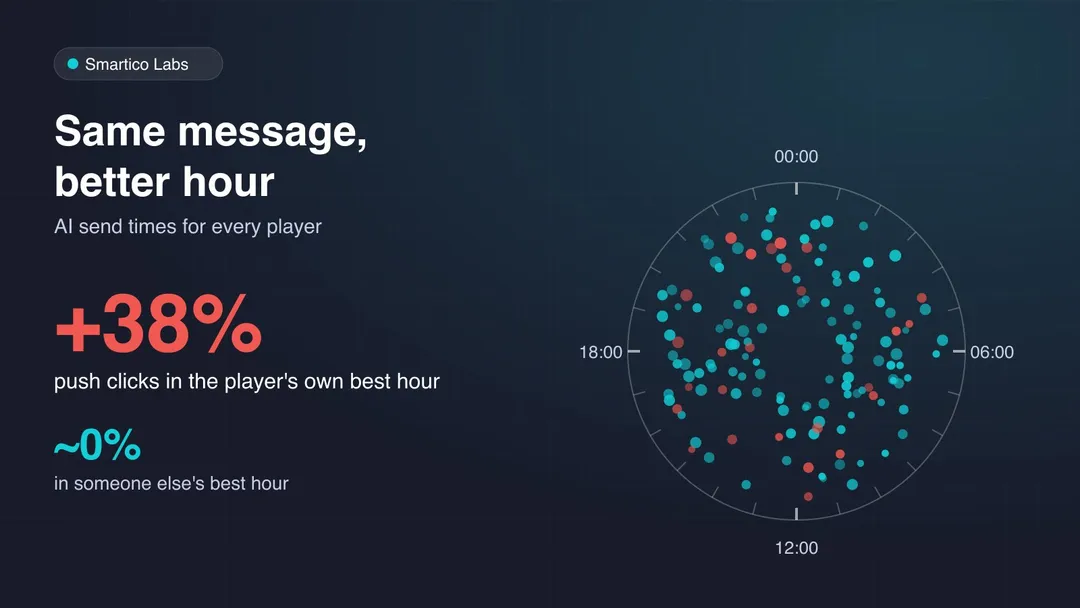
Once players are subscribed, timing decides the clicks. In our send time study, a push sent in the player's own best hour got 38% more clicks. In Smartico, the soft popup is made in Vibe Studio, and the pushes go out from Smartico CRM.
FAQ
When should you ask for push notification permission?
Not on day one. At registration, only 28% of the players who click "Subscribe" finish with "Allow" in the browser; at a later session, 49% do. Good moments to test: the second or third session, right after a deposit, after a win, or when a player joins a tournament.
Should you show the browser's push prompt straight away?
It wins the most opt-ins, 27% of new players. But for every yes, about one more player blocks push for good, and a blocked player can never be asked again on that site. Showing a soft popup first cuts those losses by 90%.
What is a soft ask for push notifications?
A soft ask is the brand's own popup, shown before the browser's "Allow / Block" window. Only players who say yes see the browser window. After a soft popup, 74% of new players can still be asked later, against 22% after a direct browser prompt.
Does a reward increase push notification opt-ins?
A small one does. Popups that offered a small reward got 27% of viewers to allow push, against 17% without one, with no extra blocks. Big rewards backfire: missions that paid free spins kept only 34% of their new subscribers months later, against 60% for a few points.
Data and method
- Data. Smartico data from production brands, with no sampling:
- new players registered January – August 2026, tens of millions in total, with their push status in October 2026 and the date of their first deposit;
- soft-popup viewers January – September 2026, with the popup's content and the campaign trigger that showed it;
- push missions completed in 2026;
- billions of push and email sends, June – October 2026.
Show the full methodHide the full method
- Web brands. The comparison of ways to ask uses brands where most push subscribers are on the web, so the browser prompt is the one that counts.
- Way of asking. Assigned per brand and month from what players saw: a soft popup with a "Subscribe" button, a mission with a push task, or many decisions with neither (a direct browser prompt). We report the median brand.
- Popup messages. Grouped by hand by what they promise and how they look. Popup examples in this article are paraphrased and drawn with a made-up brand. For message and style results we used brands where the site does not also show the browser prompt by itself.
- Blocked for good. The browser's "Block" state for the site. Brands that never ask show the baseline level.
- Comparisons inside a brand. Subscriber quality, timing, repeat views and push features compare players or pushes of the same brand. Players choose when they come back, so these show strong patterns, not proof of cause. Mission and popup-style groups are small; read them as patterns.
- First deposits. The first-deposit date in the player profile, on brands where it is filled in reliably. A first deposit "follows a push" when the player clicked a push in the 24 hours before it. The month-by-month check compares each brand with its own average.
- Clicks, not opens. We use clicks only.
- Privacy. We report shares and medians only. No brand or player is named.
How to cite
Smartico (2026). Ask nicely, ask later: how to win push permission without losing players for good. https://www.smartico.ai/resources/labs/push-notification-permission-study
Smartico runs push, email, SMS, popups and missions from one CRM and gamification platform, with the player's best send time built in.
More from Smartico Labs
 Data study
Same Message, Better Hour: AI Send Times Lift Push Clicks by 38%
Send time optimization tested on casino players: a push sent in the player's own AI-predicted best hour got 38% more clicks. Someone else's best hour did almost nothing.
 AI
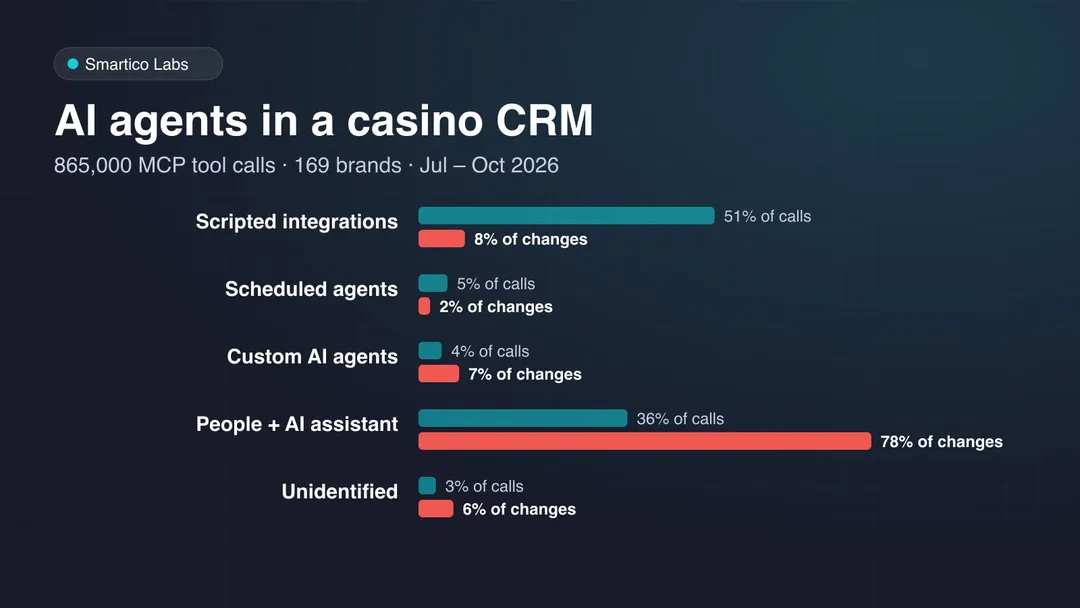
Machines Read, People Decide: What 865,000 AI Agent Calls Show About Casino CRM
Four months of AI agents working inside a casino CRM: 30 times more brands, whole journeys built from one message, and why people still make 78% of the changes.
 Data study
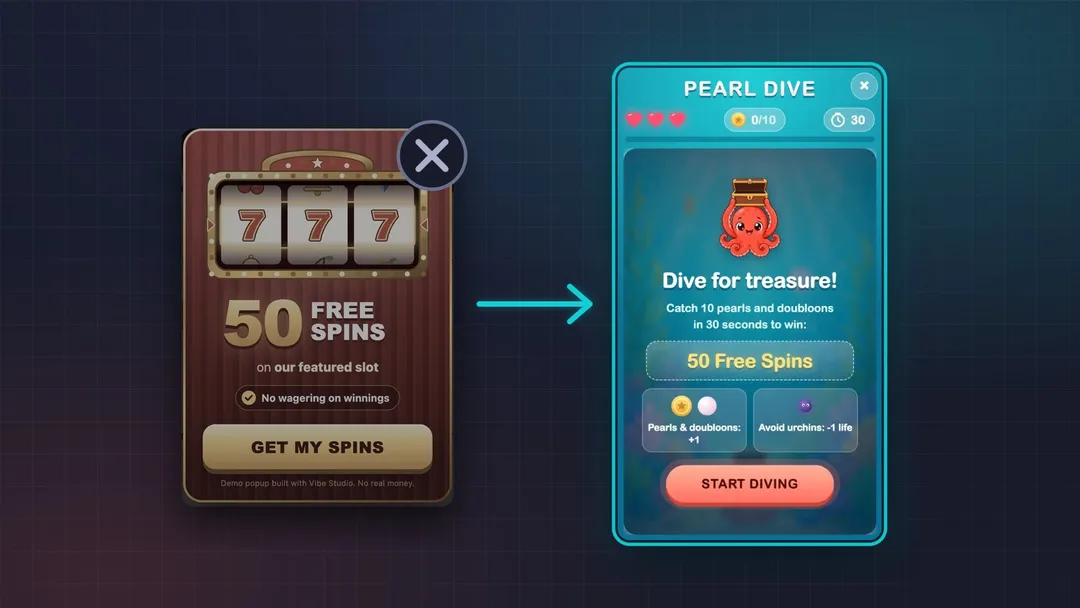
Doodles vs Plain Promo Popups: A Study of Smartico Brands, 2023–2026
21.8 billion popup views on Smartico, 2023–2026. At brands that added doodles, the median doodle got 2.4× the response of the same brand’s plain promo popups.
Try what we build
Much of our R&D is open to try: a demo casino, games made in Vibe Studio and the code we publish.