


From First Deposit to Second: The iGaming Onboarding Window That Decides Player Value
.png)
Most operators celebrate the first deposit. It's the moment acquisition pays off, the point where a registration turns into a paying player. But the first deposit tells you almost nothing about whether that player is worth keeping. The second deposit does.
A player who deposits once and disappears cost you the full acquisition spend and gave back a single bonus-inflated session. A player who comes back and deposits again has started to build a habit, and habit is where player value actually lives. The difference between those two outcomes gets decided in a short window most operators barely manage: the hours and days right after that first deposit.
This is a guide to that window. What happens in it, why it matters more than the first deposit itself, and how to structure onboarding so more first-time depositors come back for a second.
Why the second deposit is more important than the first
The first deposit is usually bought. A player signs up for a welcome offer, deposits to unlock it, and plays through the bonus. None of that is a reliable signal of intent. Plenty of first-time depositors are there for the bonus and were never going to stay.
The second deposit is different. By the time a player deposits again, the welcome bonus is spent or close to it. They are depositing because they want to keep playing, not because an offer pushed them into it. That is the first real evidence that a player has lasting value, and it shapes everything that follows:
- Retention diverges sharply. Players who make a second deposit tend to retain at much higher rates than those who don't. The second deposit is one of the earliest and strongest predictors of whether a player will still be active a month later.
- Lifetime value follows. Your high-value players almost all deposited a second time early. A first-time depositor who never returns caps their player lifetime value at whatever that one session produced.
- The economics turn. Your acquisition cost is already spent before the first deposit even clears. The second deposit is where you start earning it back. Improving second-deposit conversion improves the return on every acquisition dollar you've already committed.
If you track one onboarding metric, track the share of first-time depositors who make a second deposit. It's the number that connects acquisition to retention.
{{cta-banner}}
The window is shorter than most operators think
Operators make the same mistake here. They treat onboarding as a welcome email and a bonus, then go quiet and wait to see who comes back. By the time they follow up, the window has closed.
New-player momentum decays fast. A player is most engaged during the first session and the first day or two after depositing. Every day that passes without a return visit, the odds of a second deposit fall. A player who hasn't come back within the first few days rarely does. The decisive part of onboarding plays out in hours and days. Treating it as a month-long nurture track means most of your effort lands after the moment that mattered.
That timing is why batch newsletters and weekly sends miss it. If your first real follow-up reaches a new depositor three days later inside a Tuesday campaign, you've already lost most of the players who were going to lapse.
What a strong onboarding sequence does
Winning the window comes down to doing a few specific things well at the right moment, rather than simply sending more messages.
Match the welcome offer to the player. A blanket welcome bonus is easy to run and easy to abuse. Matching the offer to how a player actually deposited and played, their payment method, the games they opened, their stake level, makes the offer relevant and blunts the pull of pure bonus-hunters. Smart bonus design at this stage sets up the second deposit instead of just clearing the first.
Give the first session a goal. A welcome bonus dropped into an account is passive. A welcome mission, "play through your bonus and verify your account to unlock your next reward," gives the player something to work toward. People place more value on rewards they put effort into, and a player working toward a goal has a reason to return that a bonus balance alone doesn't provide.
Help them find what to play. A large share of new players leave simply because they don't know what to do next. They open the lobby, see hundreds of games, and bounce. Guiding product discovery, pointing a player toward games similar to the ones they already tried, removes that friction and extends the first session, which is when the habit starts to form.
Trigger the right message at the right moment. The follow-ups that matter are tied to events, not the calendar: a message right after the first deposit clears, a nudge when the first session ends, a re-engagement the moment a new player shows the first sign of hesitation. Real-time triggers reach the player while the window is still open. A scheduled campaign reaches them after it has shut.
Make the second deposit effortless. If a returning player hits friction at the exact moment they're ready to deposit again, a slow page, a payment method that isn't saved, an unclear path, you lose them at the point of highest intent. The second-deposit experience should be the smoothest thing on your platform.
Read the early signals before the window closes
You don't have to wait to see who lapses. The first days after a first deposit produce signals you can act on:
- Session length that shrinks from one visit to the next.
- A long gap before the second session when the player came back quickly the first time.
- Narrow product engagement: one game, one visit, then nothing.
- A bonus played all the way through with no further deposit activity.
These are the early version of the same behavior that session-based churn signals surface later in a player's life. During onboarding you're reading them on a player with no history, which means behavior in the first days counts for more than any static profile. Grouping new players by how they behave in their first sessions, rather than waiting weeks for data, is what lets you step in while stepping in still works. It's the same predictive logic behind player lifetime value modeling, applied at the earliest possible moment.
The onboarding mistakes that cost the second deposit
Most second-deposit problems trace back to the same handful of errors:
- The welcome bonus with no follow-through. Give the bonus, then go silent. The player clears it and leaves.
- Over-bonusing. Pile on generous welcome offers and you train bonus-hunters. The players you attract this way are the ones least likely to deposit again with their own money.
- No product guidance. Leaving a new player to navigate a full lobby alone is a reliable way to lose them in the first session.
- Calendar-based follow-up. Reaching new depositors on a fixed campaign schedule instead of at the moment of their behavior means most messages arrive after the window has closed.
- One-size onboarding. A high-roller who deposited large and a low-stakes player exploring the product need different treatment. Onboarding both identically underserves both, which is where good player segmentation earns its place from day one.
How to measure whether your onboarding works
Onboarding is measurable, and a few metrics tell you most of what you need:
- Second-deposit conversion rate. The one to lead with. The share of first-time depositors who deposit again, ideally within a defined window such as the first 7 or 14 days.
- Time to second deposit. How long the average returning player takes to deposit again. Shorter is healthier, and a lengthening trend is an early warning.
- First-week retention. Day 1 and day 7 activity for each new-depositor cohort, tracked alongside your broader player retention reporting.
- Cohort break-even. Using cohort analysis to see when each intake of new depositors covers its acquisition cost, which strong onboarding directly speeds up.
Watch these by cohort, not just in aggregate. A drop in second-deposit conversion for last week's intake tells you something changed, and it tells you early enough to fix it.
How Smartico can help you
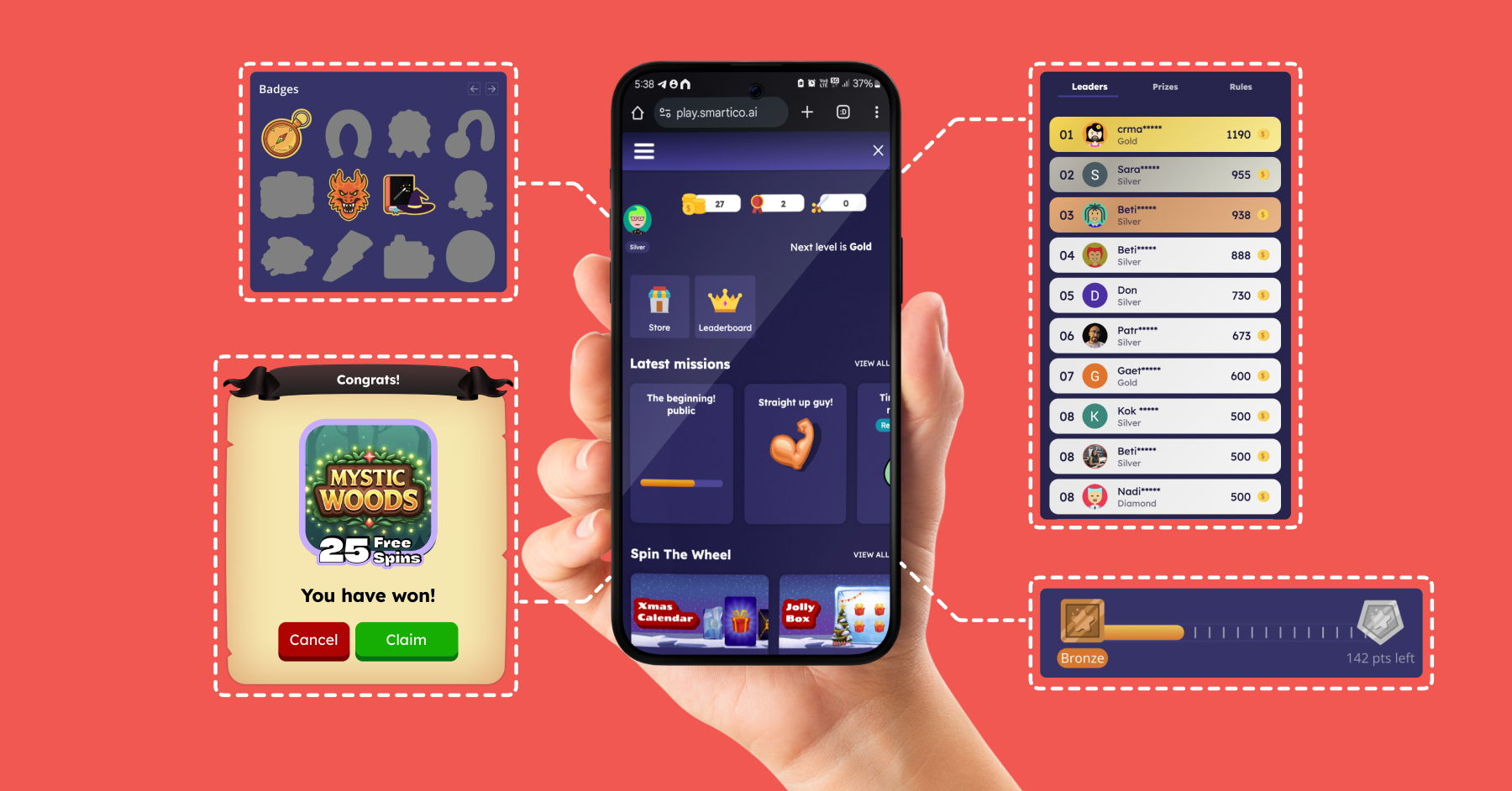
Everything above depends on acting in real time, which is hard when your bonus engine, your messaging, and your player data sit in separate tools that update on a delay.
Smartico brings them into one system built for iGaming. Welcome missions, real-time triggers on events like the first deposit or the end of the first session, early behavioral signals on brand-new players, and personalized offers all run from the same place, so a message can fire the moment a player's behavior calls for it rather than in the next scheduled send. That is what makes it possible to win the onboarding window across your whole player base, not just one VIP at a time.
If you want to see how your own onboarding converts, and where in that first-to-second-deposit window you're losing players, book your demo below and we'll walk through it against your numbers.
{{cta-banner}}
Frequently asked questions
1. What is player onboarding in iGaming?
Player onboarding is the process of guiding a new player from registration and first deposit into becoming an active, returning player. In practice, the part that matters most is the short window after the first deposit, when the player decides whether to come back at all.
2. Why is the second deposit so important?
The first deposit is often driven by the welcome bonus and says little about intent. The second deposit is the first real sign that a player wants to keep playing, and it's one of the strongest early predictors of retention and lifetime value.
3. How long is the onboarding window?
Shorter than most operators assume. The decisive period is the first session and the first few days after the first deposit. Engagement decays quickly after that, so follow-up needs to happen in hours and days rather than weeks.
4. How do you increase second-deposit conversion?
Match the welcome offer to the player, give the first session a clear goal, help players find games they will enjoy, trigger follow-ups based on behavior rather than a schedule, and make the second-deposit process frictionless.
5. What signals show whether a new player will stay?
Shrinking session length, a long gap before returning, narrow product engagement, and a bonus played through with no further deposit are early signs that a new player is about to lapse. Reading these in the first days lets you act while it still matters.
Did you find this article helpful? If so, consider sharing it with other industry professionals such as yourself.